Cam 11 — Test 2 — Reading | Vocabulary & Maritime Archaeology
 Call Kai
 Learn
 Practice Test
 Spaced Repetition
 Match
 Flashcards
 Knowt Play
1/47

Earn XP
Description and Tags
48 thẻ từ và cụm từ từ file Cam 11 test 2.docx. Đã sửa intermittently, accurate; tách precise/accurate, starboard/port và sunken ship/wreck. Định nghĩa tiếng Anh và ví dụ viết mới theo ngữ cảnh hàng hải, khảo cổ. Mỗi đáp án chỉ chứa từ/cụm từ, từ loại viết tắt ở mặt giải nghĩa.
48 Terms
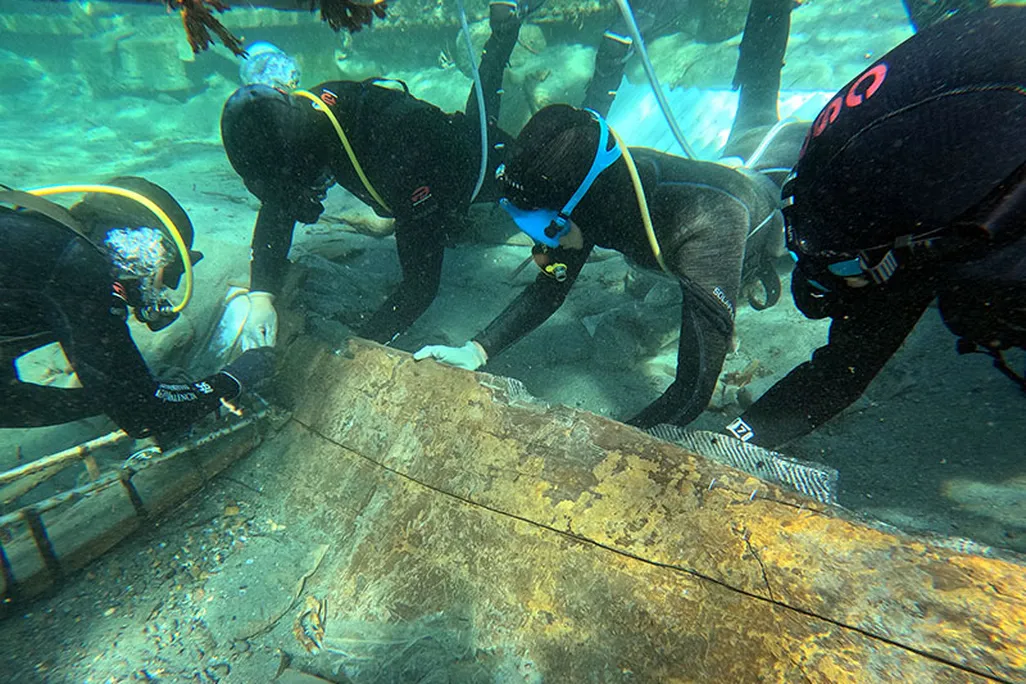
recover
(v.)
Definition: to bring something lost or sunk back to a safe place
Example: Divers recovered several objects from the seabed.
be engaged in
(v. phr.)
Definition: to be involved in a particular activity
Example: The team was engaged in underwater research.

account
(n.)
Definition: a spoken or written description of an event
Example: The sailor gave a detailed account of the accident.

witness
(n.)
Definition: a person who sees an event happen
Example: A witness saw the ship disappear beneath the waves.

maintain that
(v. phr.)
Definition: to state firmly that something is true
Example: The captain maintained that the vessel was safe.

undisputed
(adj.)
Definition: accepted as true or correct by everyone
Example: The age of the wreck is an undisputed fact.

exposed
(adj.)
Definition: not covered or protected; open to view or damage
Example: The exposed wood was damaged by seawater.
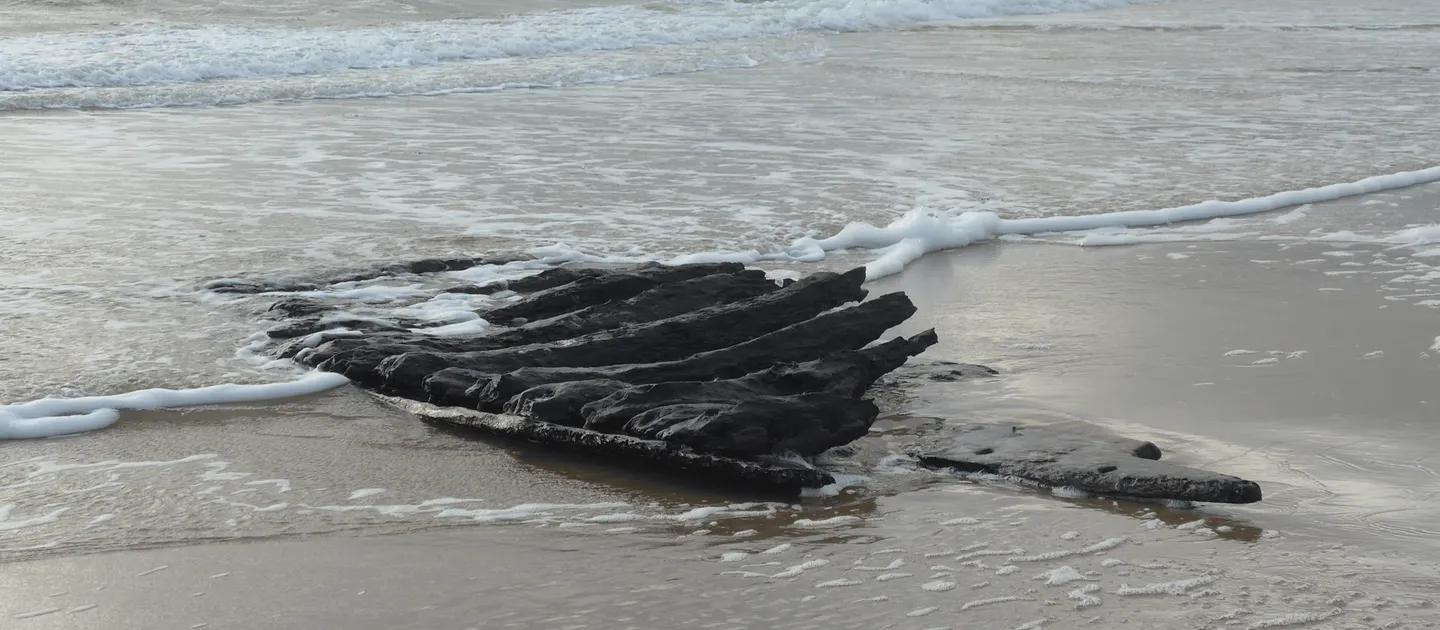
erode
(v.)
Definition: to gradually wear away rock, soil, or another material
Example: Strong currents eroded the sand around the wreck.

erosion
(n.)
Definition: the gradual wearing away of rock, soil, or another material
Example: Coastal erosion revealed an old wooden structure.

degradation
(n.)
Definition: the process of becoming damaged or less good in condition
Example: The protective layer slowed the degradation of the wood.

intact
(adj.)
Definition: complete and not damaged or broken
Example: The divers found an intact bowl inside the wreck.

obstruction
(n.)
Definition: something that blocks a path or prevents movement
Example: A fallen beam formed an obstruction at the entrance.

uncover
(v.)
Definition: to remove a covering or discover something previously hidden
Example: Archaeologists uncovered a chest beneath the sand.

intermittently
(adv.)
Definition: at separate times, with pauses in between
Example: The divers worked intermittently because of bad weather.

initiate
(v.)
Definition: to cause a process or activity to begin
Example: The museum initiated a project to study the wreck.

feasible
(adj.)
Definition: possible and practical to do
Example: The engineers decided that lifting the vessel was feasible.
distinct
(adj.)
Definition: clearly different or separate from something else
Example: The survey revealed two distinct sections of the hull.

precise
(adj.)
Definition: exact and clearly detailed
Example: The team recorded the precise position of each object.

accurate
(adj.)
Definition: correct and free from mistakes
Example: Accurate measurements were essential for the lift.

delicate
(adj.)
Definition: easily damaged and needing careful handling
Example: The delicate pottery was packed in soft material.

warship
(n.)
Definition: a ship built and equipped for fighting at sea
Example: The warship carried heavy guns on its lower deck.

fleet
(n.)
Definition: a group of ships controlled by one country or organisation
Example: The fleet sailed out of the harbour at dawn.

vessel
(n.)
Definition: a ship or large boat
Example: The research vessel remained above the wreck.

seabed
(n.)
Definition: the ground at the bottom of the sea
Example: The anchor lay on the seabed.

overladen
(adj.)
Definition: carrying more weight than is safe or suitable
Example: The overladen boat sat unusually low in the water.

mishandle
(v.)
Definition: to handle or control something badly or incorrectly
Example: The vessel may capsize if it is mishandled.

undisciplined crew
(n. phr.)
Definition: a group of people working on a ship who do not follow rules or orders
Example: An undisciplined crew can put a vessel in danger.
starboard
(n.)
Definition: the right side of a ship when facing forward
Example: The rescue boat approached from starboard.

port
(n.)
Definition: the left side of a ship when facing forward
Example: The vessel leaned heavily to port.

hull
(n.)
Definition: the main outer body of a ship or boat
Example: Part of the wooden hull remained under the sand.

current
(n.)
Definition: a continuous flow of water in a particular direction
Example: A strong current carried sand away from the wreck.

marine organisms
(n. pl.)
Definition: living things that inhabit the sea
Example: Marine organisms damaged the exposed timber.

sunken ship
(n. phr.)
Definition: a ship that has gone below the surface of the water
Example: Divers explored the sunken ship near the coast.

wreck
(n.)
Definition: the remains of a ship that has been destroyed or sunk
Example: The wreck was hidden beneath a layer of mud.

excavation
(n.)
Definition: the careful removal of earth or other material to find buried objects
Example: The excavation revealed tools used by the crew.

artefact
(n.)
Definition: an object made by people, especially one of historical interest
Example: Each artefact was photographed before it was moved.

archaeological
(adj.)
Definition: relating to the study of the past through objects and structures left by people
Example: The site has great archaeological importance.
salvage
(v./n.)
Definition: to rescue a ship or valuable objects from loss or destruction; the activity of doing this
Example: The team planned to salvage the damaged vessel.

off the coast of
(prep. phr.)
Definition: in the sea near the land of a particular place
Example: The wreck lies off the coast of England.
come to rest
(v. phr.)
Definition: to stop moving and remain in one place
Example: The vessel came to rest on its side.

act as a trap for
(v. phr.)
Definition: to catch or hold something, like a trap does
Example: The hull acted as a trap for sand and mud.

turn out to be
(v. phr.)
Definition: to be discovered or found to be something
Example: The object turned out to be an old navigation tool.
happen to be doing something
(v. phr.)
Definition: to be in the middle of an activity by chance at a particular time
Example: A fisherman happened to be working nearby when the divers surfaced.
fade into obscurity
(v. phr.)
Definition: to gradually become forgotten or unknown
Example: The story of the lost vessel faded into obscurity.
in conjunction with
(prep. phr.)
Definition: together with or in cooperation with
Example: The museum worked in conjunction with marine engineers.
give something the go-ahead
(v. phr.)
Definition: to give permission for a plan or activity to begin
Example: The authorities gave the recovery project the go-ahead.
carry out an operation
(v. phr.)
Definition: to perform a planned activity or series of actions
Example: The team carried out an operation to raise the hull.
be fitted with
(v. phr.)
Definition: to have a particular piece of equipment installed
Example: The vessel was fitted with modern sonar equipment.