Ch. 17 Blood
 Call Kai
 Learn
 Practice Test
 Spaced Repetition
 Match
 Flashcards
 Knowt Play
1/148

There's no tags or description
Looks like no tags are added yet.
149 Terms

What is the historical significance of blood?
a. Blood has long been viewed as essential for life
b. Early humans linked blood loss to weakness and death
c. Led to the concept of “lifeblood” as something vital

What were ancient China’s thoughts on blood?
a. Blood associated with energy flow
b. Circulation described long before modern Western medicine
c. Changes in blood flow and pulse used for diagnosis
d. Blood was conserved; bloodletting was not common

Ancient western cultures, believed what?
a. Disease believed to be caused by evil spirits in blood
b. Treatment involved bloodletting to remove spirits
c. Methods included:
• Venesection (cutting veins)
• Leeches

Who was Galen? (c. 129-216 AD)
a. was a prominent Greek
physician, surgeon, and
philosopher in the
Roman Empire whose,
studies on anatomy
dominated Western
medical science for over
1,300 years.

What was the influence of Galen?
a. Galen of Pergamum (2nd century)
promoted bloodletting
• Bleeding used to treat many disorders
• Amount and timing varied by disease
• Often removed blood until fainting
• Practice persisted for nearly 2000
years
• Likely caused more harm than benefit
What is the modern perspective on bloodletting?
a. Bloodletting was still recommended as late as 1923
• Used for infections like pneumonia
• Modern medicine recognizes blood’s role in:
• Immune defense
• Overall health and homeostasis
• Blood removal is no longer used broadly
• Still used selectively for certain hematological disorders

What are the roles and interactions of the cardiovascular system?
a. Essential for proper function of all
organ systems
• Delivers O2 and nutrients to tissues
• Removes CO2 and metabolic wastes

What is the role of blood in the endocrine system?
• Blood transports hormones to target
cells
• Heart acts as an endocrine gland

What does the heart secrete in the endocrine system?
Secretes atrial natriuretic peptide
(ANP)

What does the blood vessels contain in the endocrine system?
Blood vessels contain
angiotensin-converting enzyme (ACE)
• Required to activate angiotensin II
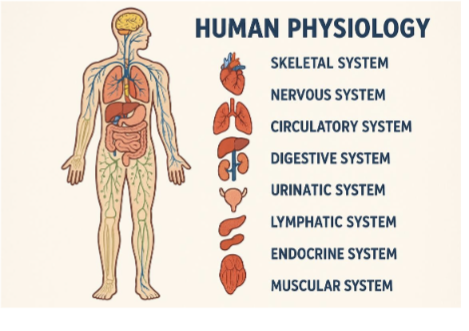
What does the immune system do?
• Transports leukocytes to fight infection
• Helps remove cellular debris
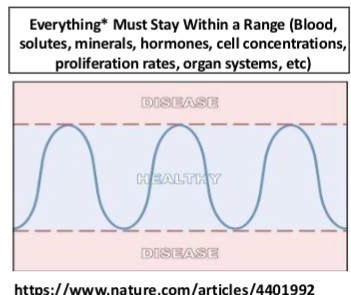
Lungs:
add oxygen and remove carbon dioxide

Gastrointestinal tract:
supplies nutrients to the blood

Urinary system:
filters plasma & removes waste
chemicals

spleen:
removes old red blood cells

bone marrow produces:
new blood cells

Nervous and endocrine systems regulate:
Heart activity & Blood vessel diameter
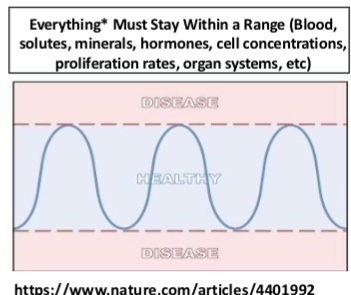
Regulation maintains ___________.
mean arterial pressure
Driving force for blood flow to tissues
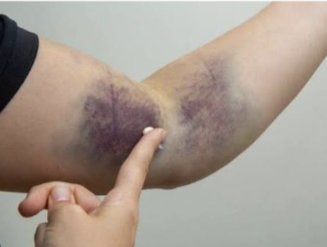
When does a bruise occur?
A bruise (contusion) occurs when blood vessels are damaged
Blood leaks into surrounding tissues

Larger bruises result from ________.
more bleeding

More visible/colorful bruises occur when damage is
closer to the skin. Where does the bruise color come from?
Bruise color comes from hemoglobin in red blood cells
Red (early): bruise color meaning
fresh bleeding, swelling, tenderness
Blue/Purple: bruise color meaning
: pooled blood under the skin
Green: bruise color meaning
hemoglobin breaks down into biliverdin
Yellow: bruise color meaning
biliverdin converts to bilirubin
Normal skin color
returns as pigments are absorbed into the bloodstream

Exercise increases oxygen demand
Some athletes increase hemoglobin & erythrocyte
levels to improve O2 delivery

High-altitude training:
Lower O2 levels stimulate erythrocyte
production
• More erythrocytes → greater oxygen-carrying
capacity
After returning to sea level:
O2 capacity exceeds daily needs
• May improve endurance during competition

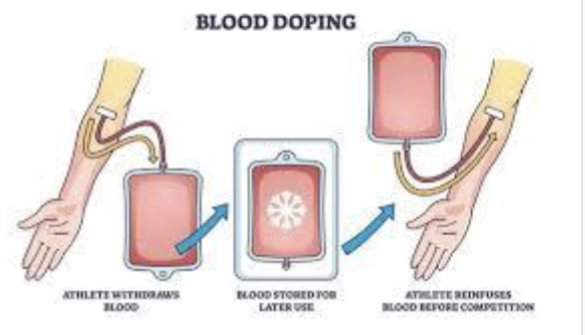
What is blood doping?
Some athletes artificially increase
erythrocytes by:
• Injecting red blood cells
• Injecting erythropoietin (EPO), which
stimulates RBC production
•Blood doping is illegal in most professional sports
What are the risks of excessive erythrocytes?
• High erythrocyte levels increase blood viscosity
• Hematocrit > 60%:
• Blood flow resistance outweighs oxygen
benefits
• Increased friction damages blood vessel walls
• Raises risk of atherosclerosis & other health
problems

Circulatory system is divided into:
cardiovascular system & lymphatic system

Blood transport mechanism for:
nutrients, signaling molecules, respiratory gases,
waste products

Blood Circulation— powered by the pumping action of the
heart
oxygen & nutrients diffuse across capillary walls to
body tissues
• transports hormones from endocrine glands, conveys
cells of immune system, regulates body temp.

Alot of information
about health is
obtained from _______.
blood
samples

Blood has cellular & liquid
components:
Plasma/ Blood cells

Plasma-
liquid portion of blood
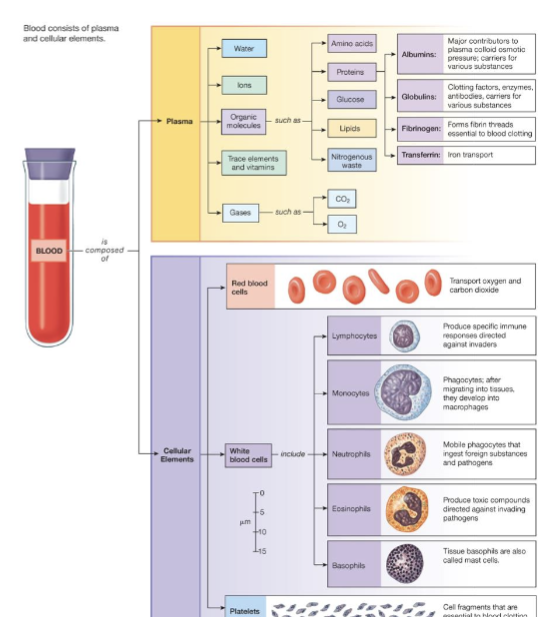
Blood cells-
formed elements

Plasma is extracellular matrix (fluid matrix)— what is included?
• Water (~92 %); Proteins (~7 %)
• Remaining 1%
• ions (Na+, K+, Cl-, H+, Ca2+, & HCO3-)
• Organic molecules
• Gases (O2 and CO2)
• Trace Elements
• Vitamins
Identical in composition to interstitial fluid but
has plasma proteins
Albumins, globulins, fibrinogen, transferrin
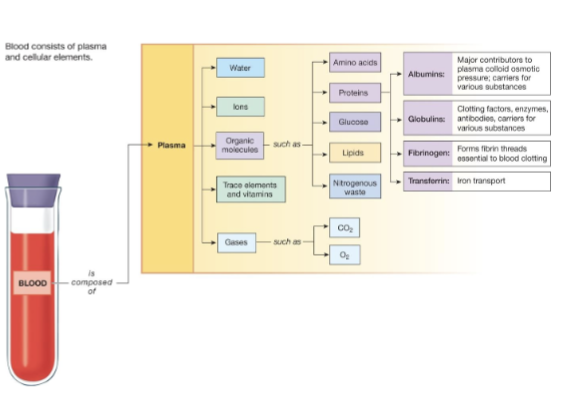
Plasma proteins-
involved in blood clotting,
defense, transport (carriers), signaling,
enzymes

Albumins (plasma protein):
*Major contributor to plasma colloid osmotic pressure, carriers for various substances
• Synthesized by the liver
• Most abundant plasma proteins
• Major contributors to plasma osmotic pressure
• Help regulate fluid movement across capillaries


Globulins (plasma protein):
Clotting factors, enzymes, antibodies, carriers for various substances
Diverse group of proteins
• Transport of lipids, steroid hormones, and other substances
• Roles in blood clotting
• Immune defense against foreign substances

Fibrinogen (plasma protein):
Forms fibrin threads essential to blood clotting
Synthesized by the liver; essential for blood clot formation


Transferrin (plasma protein):
Iron transport
Serum=
plasma without fibrinogen and other clotting
proteins
Red blood cells (RBCs) –
also called erythrocytes
Platelets –
split off from
megakaryocytes

White blood cells (WBCs) – also called
leukocytes
1) Lymphocytes – also called immunocytes
2) Monocytes – develop into macrophages;
phagocytes
3) Neutrophils – phagocytes and granulocytes
4) Eosinophils – granulocytes
5) Basophils – granulocytes; tissue basophils
are called mast cells

What are neutrophils (WBC)?
• 50–80% of leukocytes
• Primary role: phagocytosis
• Circulate 7–10 hours, live a few
days in tissues
• Neutrophilia indicates infection
or inflammation

What are Eosinophils? (WBC)
• 1–4% of leukocytes
• Are phagocytic
• Target large parasites by
releasing toxic granules
• Can damage tissues →
allergies & inflammation
• Elevated in parasites, allergies,
asthma, eczema

What are Basophils? (WBC)
• <1% of leukocytes
• Nonphagocytic; help defend
against large parasites
• Release histamine, heparin, and
other mediators
• Major role in allergic reactions
(e.g., hay fever)
• During acute allergies, basophils
leave blood and move to tissues

What are monocytes (WBC)?
• 2–8% of leukocytes
• Important phagocytic defenders
• Increase with viral/parasitic
infections & some cancers
• Circulate briefly, then enter
tissues and become
macrophages
• Larger, highly active
phagocytes
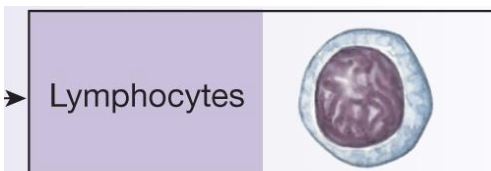
What are lymphocytes (WBC)?
• 20–40% of blood leukocytes
• ~99% of cells in interstitial fluid
• Three main types:
• B cells
• T cells
• Null cells (lack B- and T-cell
markers

Blood cells are produced in the _______.
bone
marrow

Hematopoiesis:
production of blood cells;
controlled by cytokines

Leukopoiesis:
production of WBC’s; regulated
by “colony stimulating factors” (CSFs)
site of production: endothelium and fibroblasts of bone marrow, leukocytes
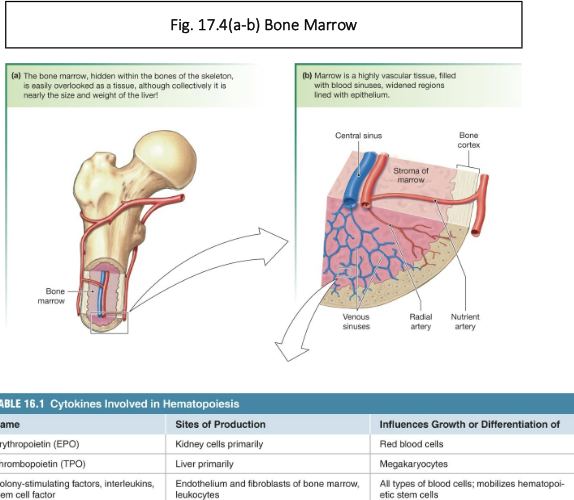
Erythropoiesis:
production of RBCs;
erythopoietin (EPO) regulates RBC production
site of production: kidneys

Thrombopoietin (TPO):
regulates platelet
production
site of production: liver primarily

Pluripotent Hematopoietic Stem Cells:
• Found mainly in bone marrow.
• Can develop into any blood cell type.
Differentiation Pathway:
Pluripotent stem cells
→ Uncommitted stem cells
→ Progenitor cells (committed to
specific lineages)
→ Specialized cells: RBC’s, WBC’s,
etc..

Developmental Progression
Fetal: Yolk sac → liver → spleen → bone
marrow
• Birth onward: Bone marrow only
• Adult: Active sites = pelvis, spine, ribs,
cranium, ends of long bones
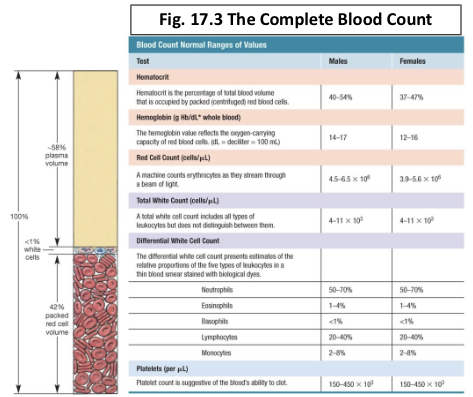
What is the purpose of differential white cell count & diagnosis?
identify types of infections or
immune responses.

If you have a bacterial infection, what will be more elevated?
↑ Total leukocyte count.
• ↑ Neutrophil percentage.
• Cytokines stimulate more neutrophil &
monocyte production.

What is a hematocrit?
Indicates RBC-to-plasma ratio
(expressed as a %

What are erythrocytes (RBCs)?
• Most abundant blood cell type.
• ~5 million RBCs per microliter of blood.
• Compare: 4,000–11,000 leukocytes; 150,000–
450,000 platelets.
• Main function: Transport oxygen (lungs → cells)
and carbon dioxide (cells → lungs)

Mature RBCs Lack a Nucleus— what’s the origin?
begins w/ committed progenitor
cells in the bone marrow.
Cells differentiate into large, nucleated
erythroblasts.

Describe the maturation phase in mature RBCs.
Nucleus condenses & cell size
decreases.
• Final stage: nucleus is expelled &
phagocytized by macrophages.
• Mitochondria & other organelles break
down.

Describe the reticulocyte stage in mature RBCs.
Immature reticulocytes enter
circulation.
• Matures into erythrocytes w/in ~24
hours.
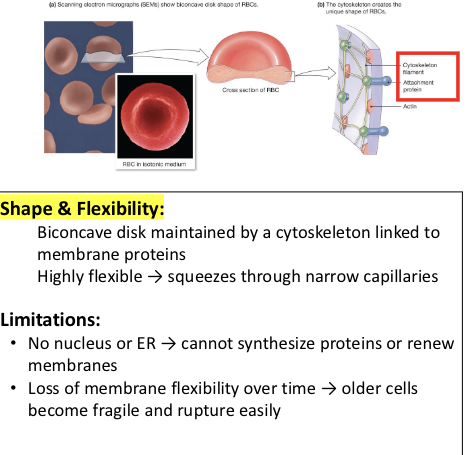
What is the shape of mature mammalian RBCs?
biconcave disks (like jelly
doughnuts w/out filling)
Shape & Flexibility:
Biconcave disk maintained by a cytoskeleton linked to
membrane proteins
Highly flexible → squeezes through narrow capillaries
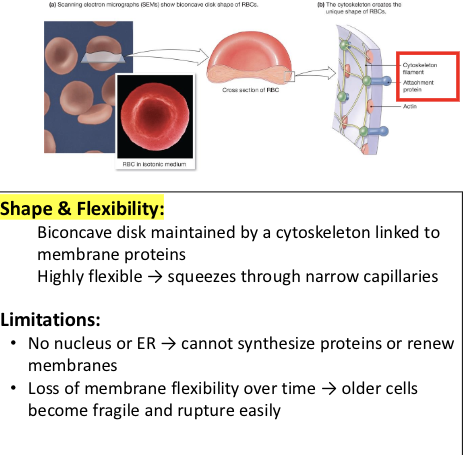
What is the structure of mature mammalian RBCs?
membranous “bags”
containing hemoglobin & enzymes

What is the metabolism of mature mammalian RBCs?
no mitochondria → rely
on glycolysis for ATP

What are the limitations of mature RBCs?
No nucleus or ER → cannot synthesize proteins or renew
membranes
• Loss of membrane flexibility over time → older cells
become fragile and rupture easily

Erythrocyte shape is maintained by ____, a
cytosolic protein
spectrin

Spectrin forms __________________-.
a flexible network linked to the
plasma membrane
This flexibility allows erythrocytes to bend and
pass through narrow capillaries
• The biconcave shape provides a large surface
area
• Large surface area makes erythrocytes efficient
for gas exchange
What is the osmotic response when its hypertonic?
shrinks,
spiky surface;
What is the osmotic response when its hypotonic?
swells into a sphere
What are disease indicators in small cells?
Microcytic: Small cells
(iron-deficiency
anemia);
What is hypochromic cells?
Pale cells
(low hemoglobin)

What is sickle cell anemia?
Genetic blood disorder affecting
hemoglobin
• Causes RBC’s to become sickle-shaped
• Sickle cells block blood flow and break
down early
• Leads to chronic anemia
• fatigue, pain, infections, swelling
• Treated with pain management,
medication, and medical care

Hemoglobin Synthesis Requires Iron. How?
Hemoglobin plays a role in O2 transport
• Four globin molecules-→ Four heme groups
• Heme is a porphyrin ring w/ an iron (Fe) atom at its
center
• Iron comes from diet
• Transported in blood by transferrin
• Iron taken up in bone marrow
• Excess iron stored in liver by ferritin

Describe Iron absorption (metabolism) & transport.
Iron is absorbed in the small intestine via
active transport. (1, 2)

Carrier protein that
transports iron in the blood. (3)
Transferrin

______ uses iron to make heme
for hemoglobin in RBCs. (4)
Bone marrow

Describe RBC lifespan.
~120 days (5)

How are older RBCs destroyed? by what means? which organ?
Older RBCs rupture in narrow capillaries or are
engulfed by macrophages in the spleen. (6)
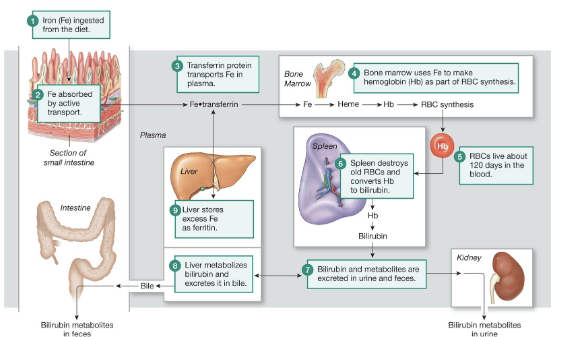
Recycling Components:
Amino acids from hemoglobin → reused in
protein synthesis.
• Iron from heme → reused in new heme groups.
Heme Breakdown:
• Spleen & liver convert heme remnants →
bilirubin (BR) (a pigment). (6)
• BR binds to albumin → transported to liver →
excreted in bile.

Bile enters digestive tract → BR leaves body in
feces. (7)
• Small amounts filtered by kidneys → contribute
to urine’s yellow color. (7)

Storage:
Excess iron stored mainly in the liver.
• Stored in ferritin, a spherical protein w/
an iron-containing core. (9)
• Iron can be released from ferritin when
needed for RBC production.

RBC Disorders Decrease Oxygen
Transport
Anemia: Low hemoglobin → reduced oxygen
transport
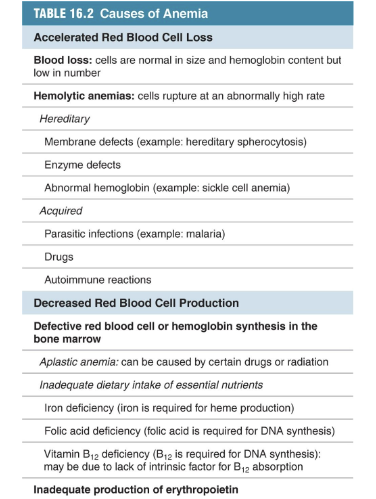
Hemolytic Anemia:
RBC destruction > production
• Often hereditary (e.g., spherocytosis: fragile, spherical RBCs)

Sickle Cell Disease:
Genetic mutation → abnormal HbS
• RBCs sickle → block vessels → pain & tissue damage

Iron-Deficiency Anemia:
Low iron → impaired hemoglobin synthesis
• RBCs are microcytic and hypochromic
• Common in menstruating women
Polycythemia:
Too many red blood cells
Polycythemia Vera:
Stem cell dysfunction → excess RBCs
& WBCs
• Hematocrit may reach 60–70%
• Blood becomes viscous, impairs
flow
Relative Polycythemia:
Normal RBC count, low plasma
volume (e.g., dehydration)
Overhydration:
Increased plasma volume → low
hematocrit
• No pathology; resolves with fluid
balance
Physiological Adaptation:
• Polycythemia can be a normal response to low-oxygen environments
• High altitude increases hematocrit
• Example: People living at ~15,000 ft may have
hematocrits up to 60%
• Hematocrit can increase within two weeks of high-altitude
exposure
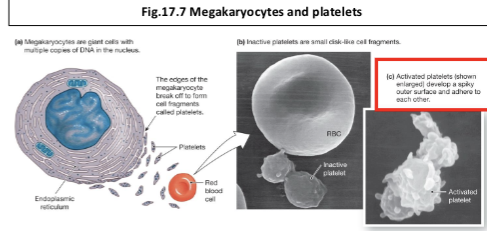
What are platelets?
• Cell fragments from megakaryocytes (giant cells of multiple copies of DNA in the nucleus).
• Smaller than RBCs, colorless, no nucleus.

What do platelets contain? Lifespan?
Mitochondria, Smooth ER, Granules
(with cytokines & growth factors)
Lifespan: ~10 days
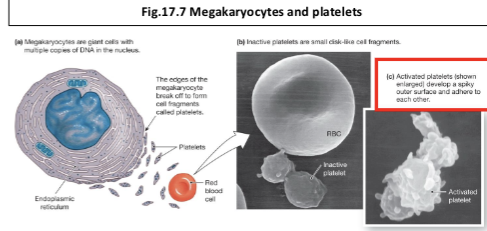
What are the primary and additional roles of blood clotting?
Primary role: Stop blood loss (clotting)
• Additional roles:
• Immune response (e.g., malaria)
• Inflammation (e.g., atherosclerosis)

What is the clinical use of platelet-therapy?
Platelet-Rich Plasma (PRP) Therapy:
• Promotes healing in tissues w/ poor blood
supply (e.g., tendons)
• Popularized by athletes (e.g., Tiger
Woods)
• Mixed research results; trials ongoing

Platelet-Rich Plasma (PRP) Therapy: what are the benefits?
• a regenerative medicine procedure that
uses a concentration of a patient's own
platelets to promote healing
• A small amount of the patient's blood is drawn.
• The blood is centrifuged to separate the
platelets from other components.
• PRP is injected into the injured or damaged
area.
• Benefits: accelerates tissue healing, reduces
pain and inflammation, improves function &
range of motion, & promotes collagen
production