ne102 4/15 lecture: signal transduction: G-protein coupled receptors (GPCR) + receptor tyrosine kinase (RTK)
 Call Kai
 Learn
 Practice Test
 Spaced Repetition
 Match
 Flashcards
 Knowt Play
1/13

There's no tags or description
Looks like no tags are added yet.
14 Terms

feedback
a way to adjust a signal sent through a receptor’s activation

intracellular signaling to switch proteins’ activity + function on/off
protein phosphorylation vs. gtp-binding proteins
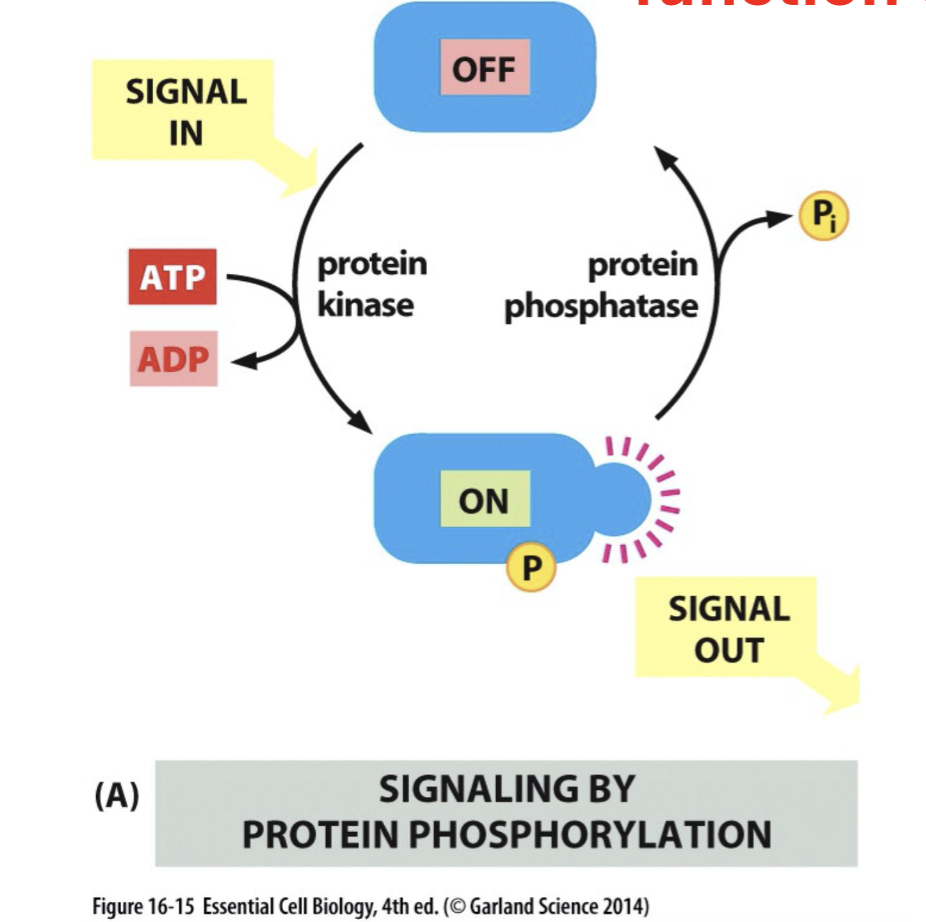
signaling by protein phosphorylation
signal in → protein kinase transfers P to substrate during ATP hydrolysis → subtrate activated, can be turned on/off via conformational changes → protein phosphatase removes P to turn off
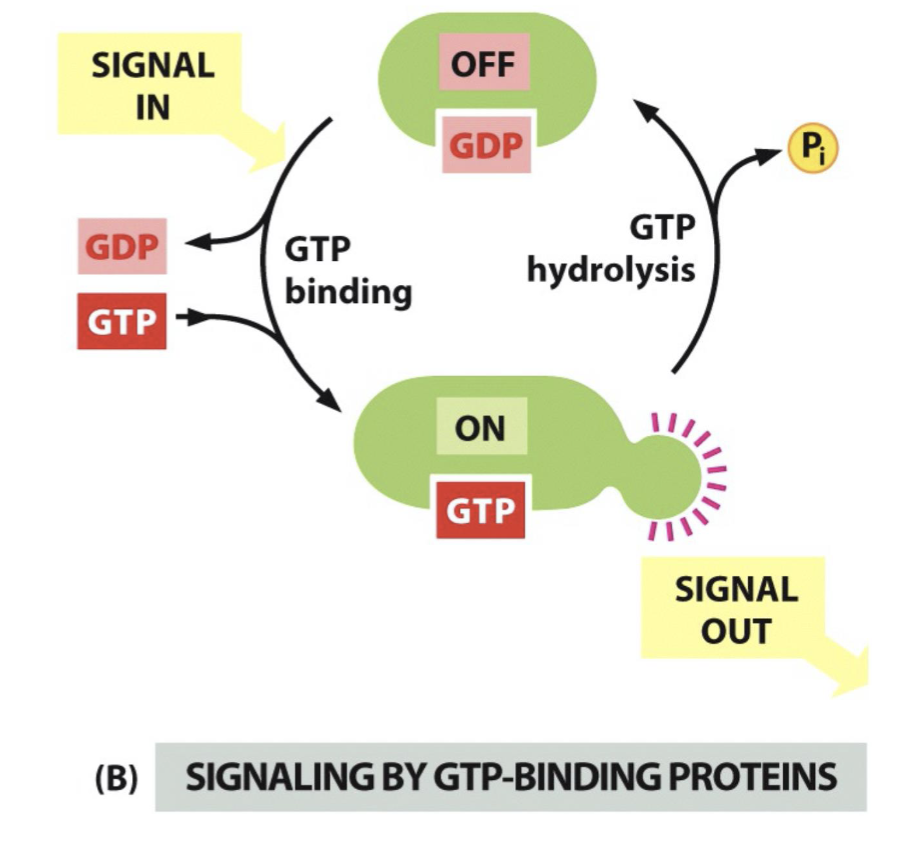
signaling by gtp-binding proteins
signal in → g-protein picks up GTP + hydrolyzes it in GTP binding -> GTP binds to substrate + changes shape + activates → GTP hydrolysis to release P to turn off

three kinds of membrane receptors
ion channel coupled receptors
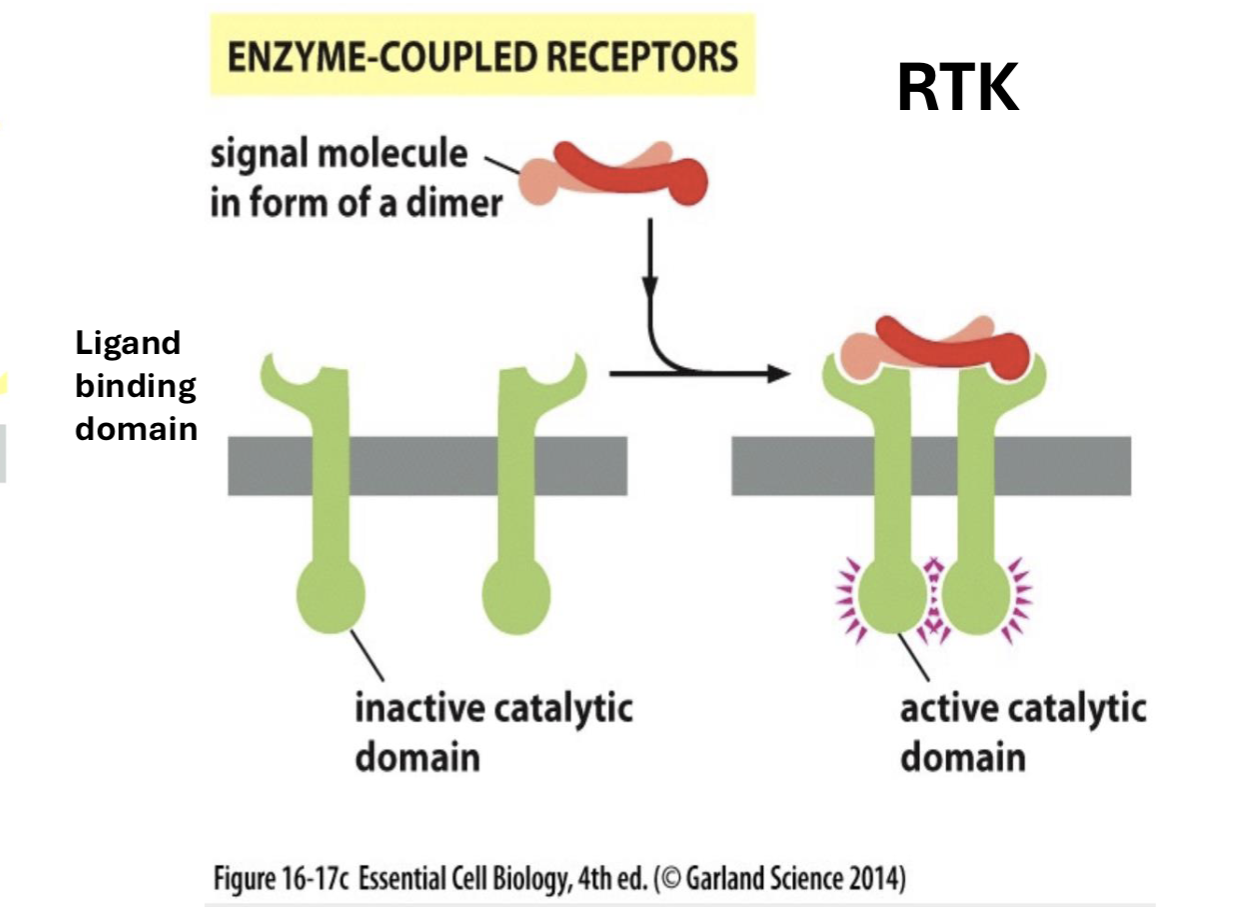
enzyme coupled receptors (RTK)
g-protein coupled receptors

enzyme coupled receptor process
ex: signaling by protein phosphorylation, RTK
SM in form of a dimer → bind to ligand binding domain → active catalytic domain due to conformational changes
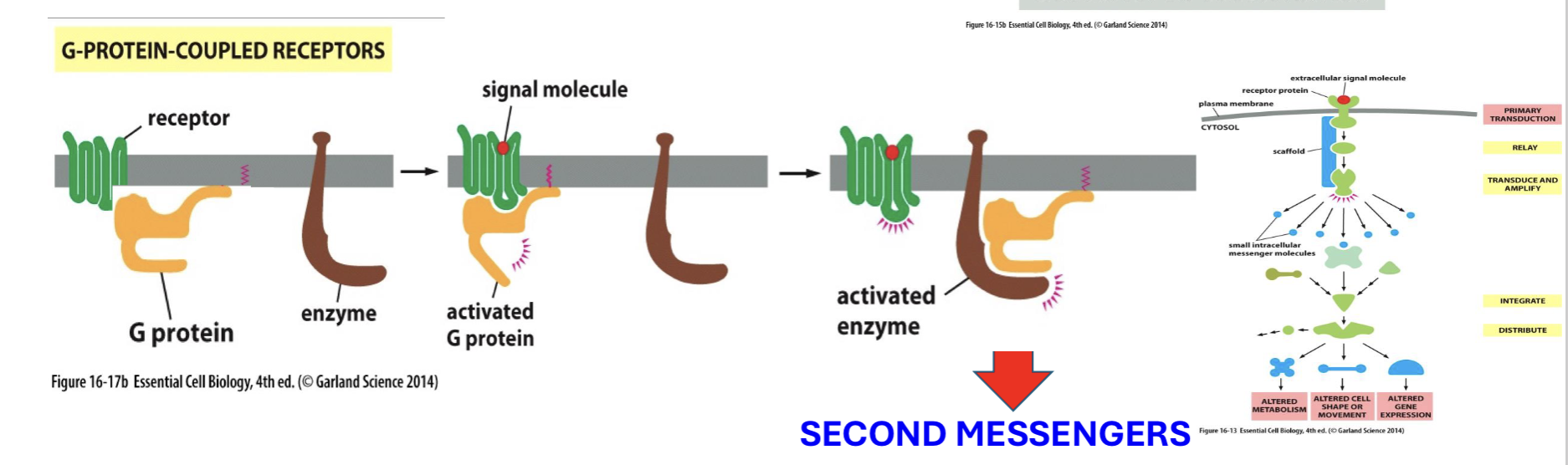
g-protein coupled receptor process
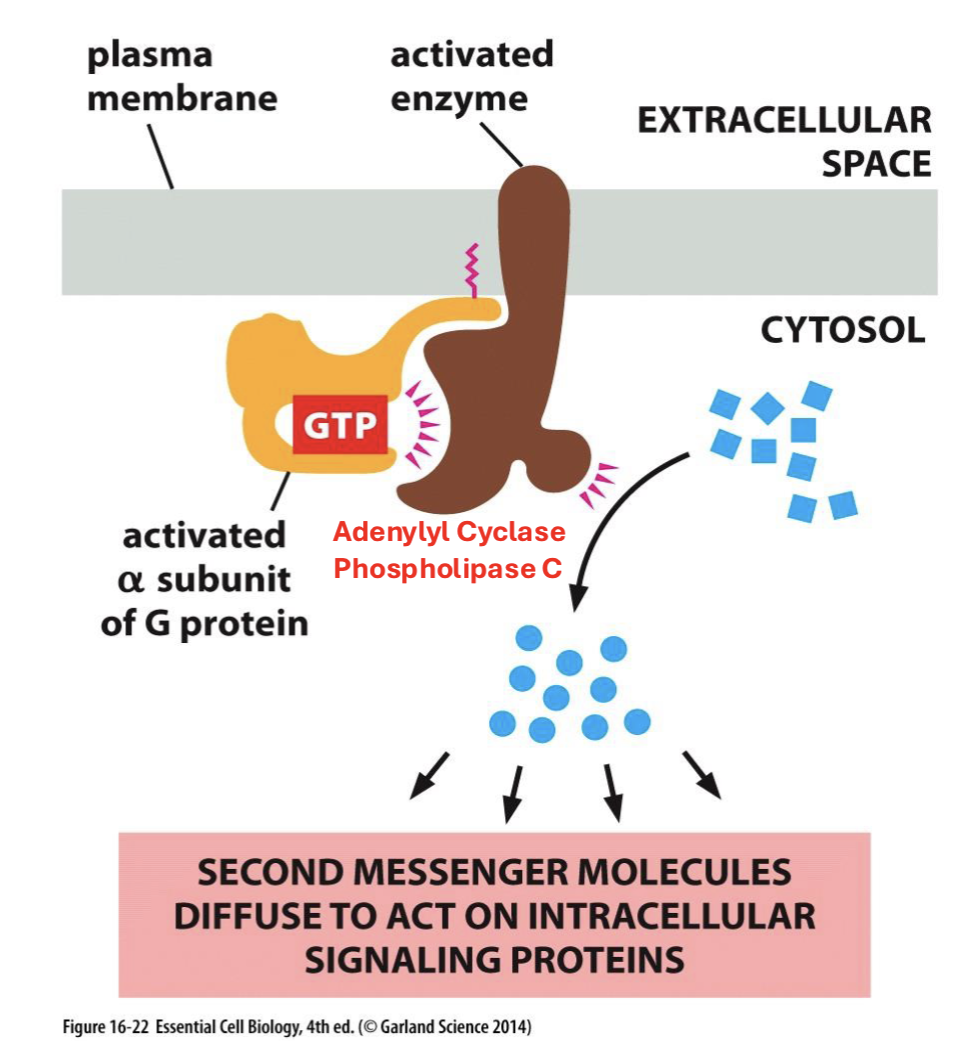
SM binds to g receptor → g protein binds to receptor + activated via conformational changes → activation of target enzyme → second messengers

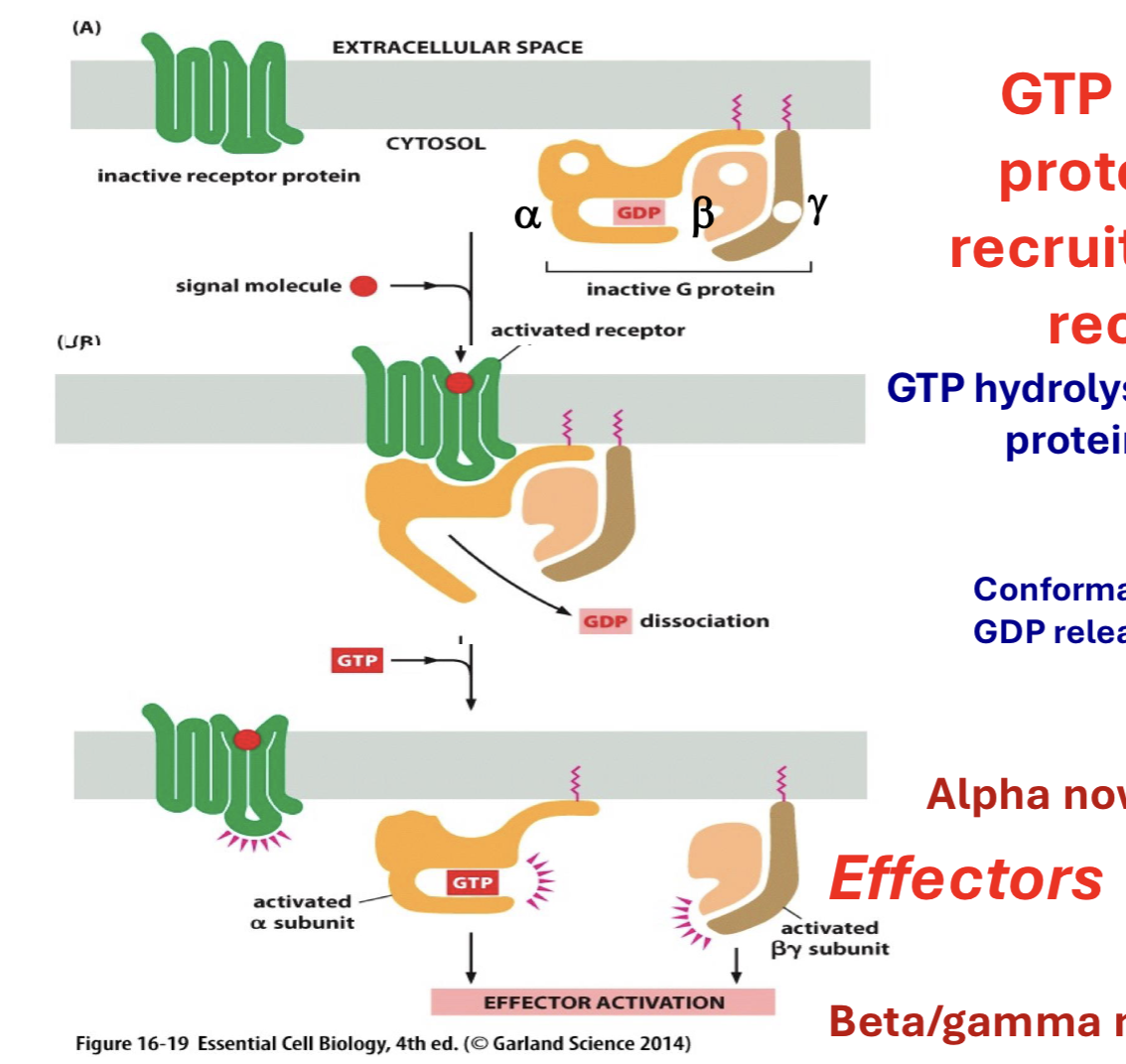
how are effectors activated?
SM binds to receptor
alpha subunit of g protein binds to receptor + changes conformation
GDP falls off alpha + GTP uptake by g protein (GTP hydrolysis to regulate g protein effectors)
alpha separated from other subunits + active on other proteins; beta/gamma now active on other proteins

what controls activation of g protein subunits?
subunits remain active b/c not associated; association of alpha or b/g subunits is prevented by presence of GTP in alpha
what happens the longer GTP is not hydrolyzed?
the longer the alpha, beta, + gamma subunits stay dissociated → stay active

how to regulate activation/deactivation of GTP binding protein?
alpha subunit has intrinsic GTPase activity: activation of target protein by activated alpha (has GTP) → GTP hydrolysis by alpha inactivates it + dissociates from target protein → inactive alpha reassembles with b/g complex to form inactive g protein

what is the effect of activated g proteins?
activate target proteins, which can initiate a response either:
directly: direct stimulation of ion channels
indirectly: by starting signal transduction pathway → activate other proteins via regulation of second messengers by interacting/regulating transmembrane proteins (adenylyl cyclase, PLC)

direct effect of activated g proteins
interaction of g proteins w/ ion channels; ex: cholinergic regulation of cardiomyocytes to reduce heartbeat, K+ outflow to reduce membrane excitability via activated g protein subunits


indirect effect of activated g proteins
g proteins regulate second messengers via mediated signal transduction
activated alpha subunit binds to activated enzyme (adenylyl cyclase, PLC) → second messenger molecules diffuse to act on intracellular signaling proteins