Intro to cells + organelles of the cell
 Call Kai
 Learn
 Practice Test
 Spaced Repetition
 Match
 Flashcards
 Knowt Play
1/23

Earn XP
Description and Tags
lesson 1
24 Terms
Whats cell theory
All living things are made of cells
Cells are the basic structure and function in living things
Cells come from pre-existing cells.

Nucleus
F - The control center of the cell, contains DNA, the cells genes.
Genes are the instructions cells use to carry out functions.
S- Has nuclear pores, usually a circle, encircled by a membrane. Smaller Nucleolus inside.
Found near the centre, near ER and golgi.
Found in both A and P cells.

Nuclear membrane/envelope
F - Surrounds and protects the nucleus, controls what goes in and out of the nucleus
S - Two layers that surround nucleus, has nuclear pores.
On the nucleus
Both A and P cells.

Nucleolus
F - To make ribosomes, which help the cell produce proteins
S - Small round spot in the nucleus, made of RNA and proteins.
inside the nucleus
Both A and P cells.
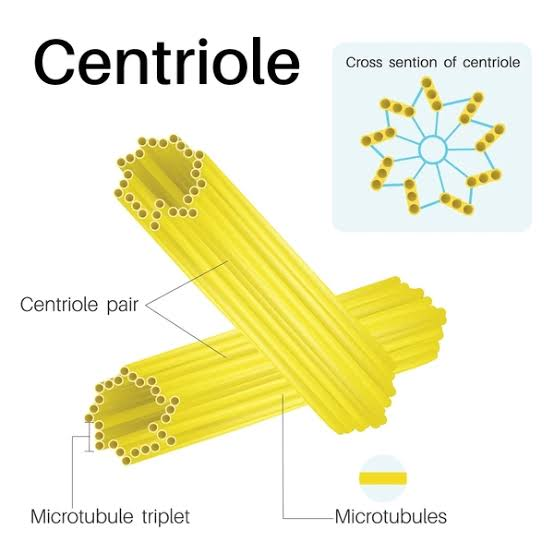
Centrioles
F - Help organize and seperate chromosomes during cell divison (mitosis)
S - 2 small cylinder structures, made of tiny tubes called microtubes.
Found near nucleus in pairs in the Animal cell
Found in Animal cells.

Cytoplasm
F - holds organelles inside cell, keeps them in place with a internal network structure.
S - Jelly like fluid in cell, takes up the negative space.
Literally everywhere it IS the everywhere
Both A and P cells.

Cell membrane
F - Regulates what comes in and out of the cell
S - Thin cover that surrounds cell, Has proteins, cholestreol, carbohydrates. Bilayer of phospholipids.
Outside the cell
Both A and P cells

Cell wall
F - the layer outside the cell membrane of the plant cell, supports and protects the cell and maintains the structure.
S - Rigid, strong outer layer, outside cell membrane.
Outside cell membrane, very thick.
In Plant cells.
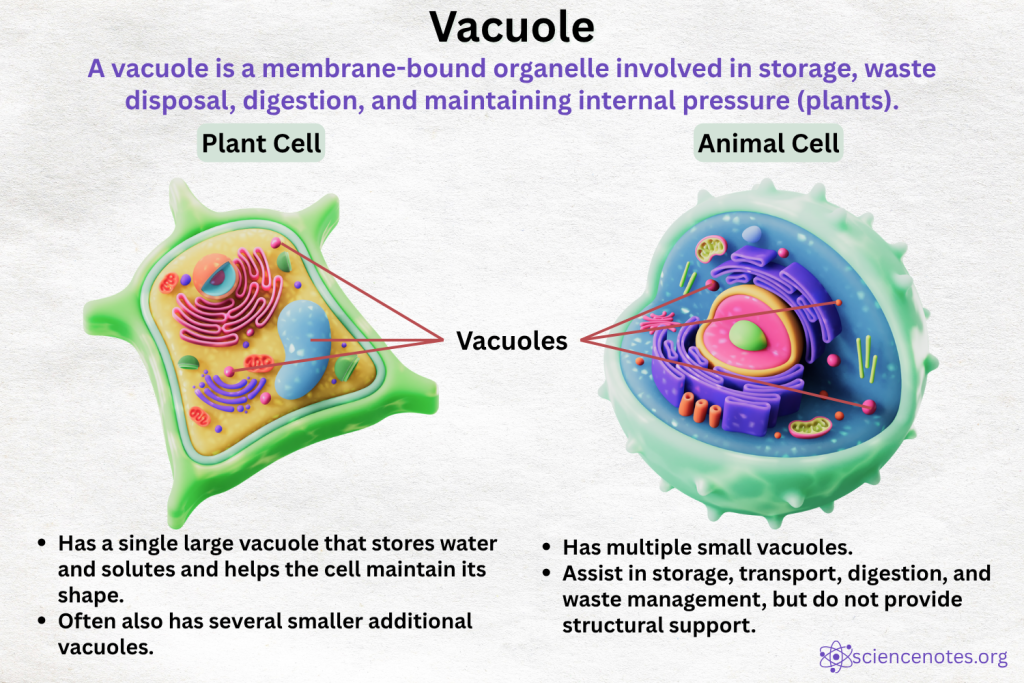
Vacuole
F - Store water, waste, nutrients.
S - Fluid filled sac, membrane bound. Pcells have one central vacuole. Acells have smaller vacuoles.
in Pcells, it takes up most of the cell as it is one central vacuole. In Acells, small vacuoles are scattered throughout cytoplasm.
Both A and P cells.

Vesicles
F - Transports and stores substances in cell, mainly transports.
S - Small, membrane bound sacs.
Found near ER and golgi because they move between them frequently.
Both A and P cells.
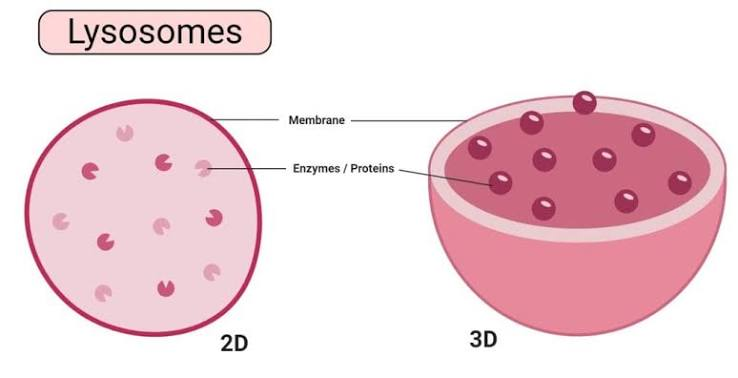
Lysosomes
F - Breaks down waste using digestive enzymes inside it. The cleanup crew.
S - Small round sacs that resemble circle pills.
Near the golgi
In Animal cells. In plants, the central vacuole fulfills this job.

Ribosomes
F - Makes protein through protein synthesis.
S - Small black dots usually on the rough ER. Or floating in the cytoplasm.
Free floating in the cytoplasm or stuck to Rough ER.
Both A and P cells.
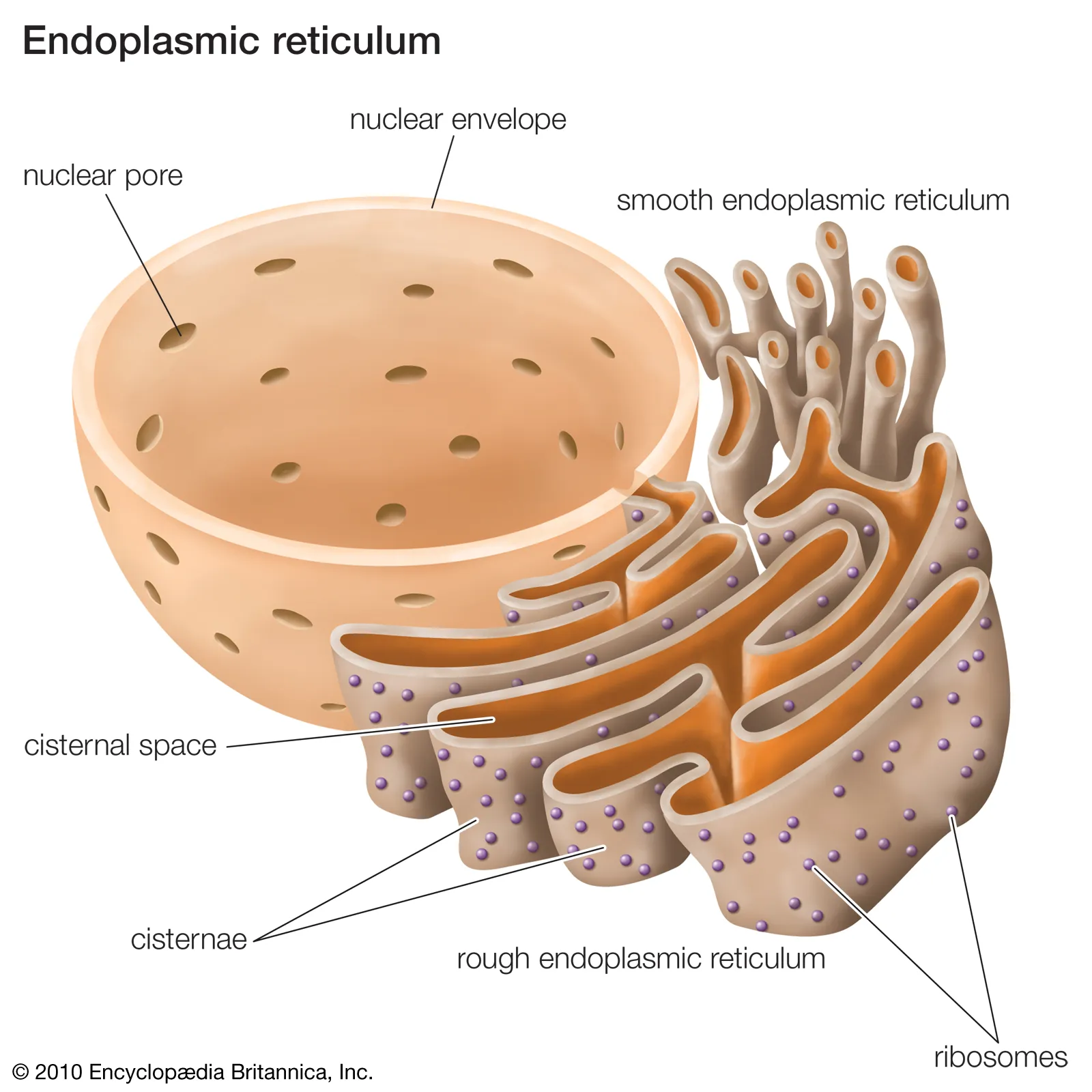
Endoplasmic reticulum
F - Helps to make and transport substances throughout cell (protein made from ribosomes)
Rough - make and transport protein
Smooth - Make lipids and help detoxify harmful substances.
S - Folded coral like membranes. Rough is covered in ribosomes, smooth has none.
It is connected to the nuclear membrane, found near nucleus.
Both A and P cells.
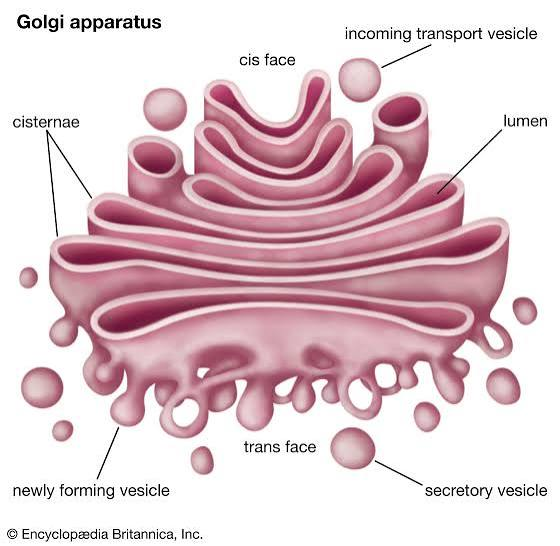
Golgi apparatus
F - Modifies/sorts packages/transports proteins and fats to where it is needed using vesicles. Amazon warehouse.
S - stacks of flattend folded membrane sacs. Usually located near ER and vesicles. Looks like a blobfish.
Usually found near ER or nucleus.
Both A and P cells.

Mitochondria
F - Breaks down sugar molecules and turns it into energy for cell to use. Powerhouse of the cell.
S - Jellybean with sqiggle thing.
Scattered within the cytoplasm.
Both A and P cells.

Chloroplast
F - Responsible for carrying out photosynthesis, produces sugars for plant cells to use as food.
S - green bean with double membrane, with chlorophyll.
often near the edge of the cell, floating in cytoplasm.
In Plant cells.
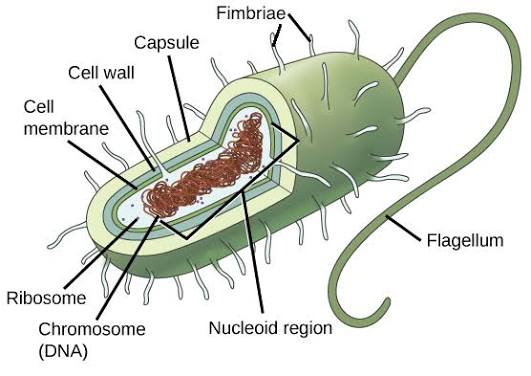
Prokaryotic cells characteristics
Single celled organisms (bacteria and archaea)
NO NUCLEUS
Simple looking, also looks like a tampon
More ancient (3.5 bill years ago)
Smaller than Euk (1-5 um)
No membrane bound organelles
Both pro and Eu have a cell membrane, cell wall, ribosomes, DNA, cytoplasm
Flagellum (tail) for movement
Reproduces asexual. Makes copies of itself.
DNA is free floating and not bound by nuclear membrane, may look like a blob, and it is in a single loop. It is in the nucleoid region (where most of cells genetic material is)

Eukaryotic cells characteristics
Can be single celled or multicellular. (animals, plants, fungi, other protists)
HAS NUCLEUS
More complex than pro cells.
Less ancient (1.5 bil years ago)
Larger (10-100 um)
Has membrane bound organelles (golgi, mitochondria)
Both pro and Eu have a cell membrane, cell wall, ribosomes, DNA, cytoplasm
Few have flagella (sperm cells do)
Often ciliated (have little hair things)
Reproduces through sex. Different types of genes come together to make a new gene.
DNA is tightly bound, organzied on chromosomes. Contained inside a nucleus bound by nuclear membrane. Looks like the stereotypical DNA.
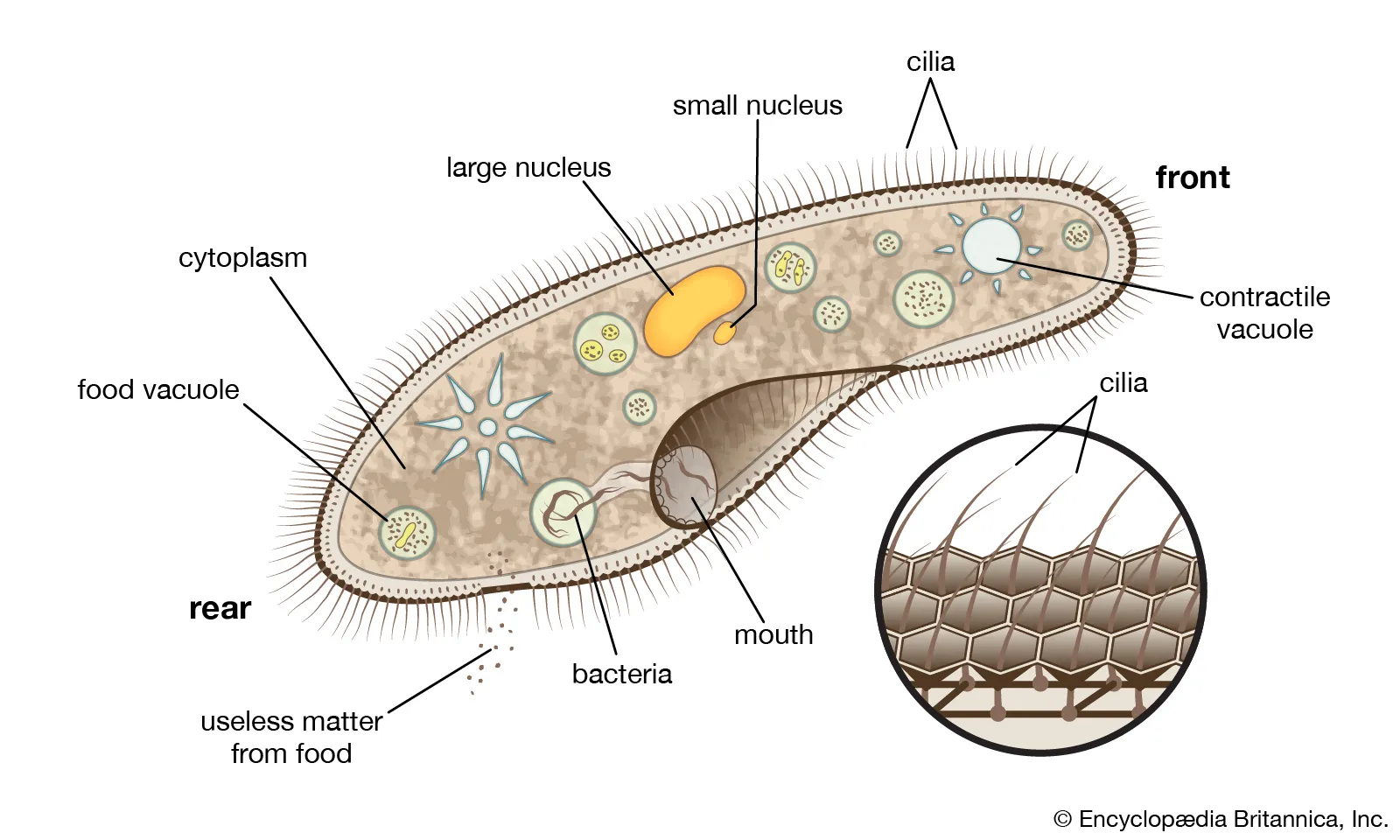
Cilia
F - help move a cell or move substances along the surface of a cell.
ex. In the respiratory system, the cilia helps move mucus and trapped bacteria out of the airway.
Found outside surface of the cell membrane.
S - Little tiny hair like structure.

Flagellum
F - Helps the cell propell forward, move faster and more efficiantly.
S - Tail like whip thing.
extending from the outside of cell membrane.
ex. Sperm cells have it, prokaryotic cells have it.
Cellular respiration equation
Glucose + Oxygen → Carbon Dioxide + Water + Energy (ATP)
C6H12O6 + 6O2 —> 6CO2 + 6H2O + ATP
Photosynthesis equation
Carbon dioxide + Water → Glucose + Oxygen
Organisms only in Plant cells
Cell wall
Chloroplast
The large central vacuole. (Though both have it)
Organisms only in Animal cells.
Centrioles
Lysosomes.