Organic Chemistry Unit 2
 Call Kai
 Learn
Learn Practice Test
 Spaced Repetition
 Match
Match Flashcards
 Knowt Play
1/96

There's no tags or description
Looks like no tags are added yet.
Name | Mastery | Learn | Test | Matching | Spaced | Call with Kai | Chat |
|---|
No analytics yet
Send a link to your students to track their progress
97 Terms

What is the pka?
-5

What is the pka of the left molecule?
-5

What is the pka?
-5

What is the pka?
-5

What is the pka of the molecule on the right?
0

What is the pka?
5

What is the pka?
5

What is the pka?
10

What is the pka?
10

What is the pka?
10

What is the pka?
10

What is the pka?
10

What is the pka of an alcohol OR water?
15

What is the pka of the alpha hydrogen?
20

What is the pka of the terminal alkyne?
25

What is the pka of the alpha hydrogen?
25
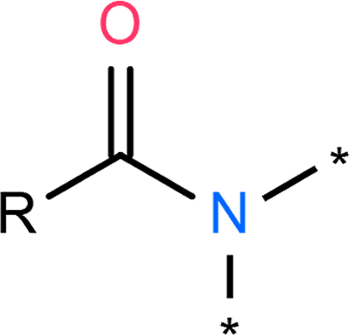
What is the pka of the alpha hydrogen?
25

What is the pka of the secondary structure?
35

What is the pka?
45

What is the pka?
45

What is the pka?
45
Is I- a good/bad leaving group?
Good
Is Br⁻ a good leaving group?
Yes.
Is Cl⁻ a good leaving group?
yes.
Is F⁻ a good leaving group?
No
Is OH⁻ a good leaving group?
No, OH⁻ is a strong base.
How can OH become a good leaving group?
Protonate it so it leaves as H₂O.
Is H₂O a good leaving group?
Yes.
Is RO⁻ a good leaving group?
No, it is a strong base.
What can the alpha carbon be for SN1?
3° works best, 2° can react, 1° usually does not.
What can the alpha carbon be for SN2?
Methyl and 1° work best, 2° can sometimes react, 3° usually does not.
What can the alpha carbon be for E1?
3° works best, 2° can react, 1° usually does not.
What type of carbon must the leaving group be attached to for substitution/elimination?
An sp3 carbon.
What are common good leaving groups?
I⁻, Br⁻, Cl⁻, OTs⁻, OMs⁻, and OTf⁻.
What kind of nucleophile is needed for SN1?
A weak base.
What kind of nucleophile is needed for SN2?
A good nucleophile.
How many steps are in SN1?
Two.
How many steps are in SN2?
One.
How many steps are in E1?
Two.
What is the slow step of SN1?
The leaving group leaves and a carbocation forms.
What happens in the only step of SN2?
The nucleophile attacks while the leaving group leaves.
What happens in the second step of E1?
A base removes a beta hydrogen and a double bond forms.
Which reactions form a carbocation intermediate?
SN1 and E1.
Which reactions can have carbocation rearrangements?
SN1 and E1.
What happens to stereochemistry at the alpha carbon in SN2?
Inversion.
When does a reaction give a racemic mixture?
When an achiral intermediate becomes chiral with no stereochemical preference.
What does racemic mean?
A 1:1 mixture of enantiomers.
What does optically active mean?
One enantiomer is present in excess.
If all chiral centers switch R/S, what is the relationship?
Enantiomers.
If some but not all chiral centers switch R/S, what is the relationship?
Diastereomers.
If two molecules have different connectivity, what are they?
Constitutional isomers.
What is a meso compound?
A molecule with chiral centers that is overall achiral.
What does a plane of symmetry usually indicate?
The molecule is achiral.
What is the alpha carbon?
The carbon directly attached to the leaving group.
What is the beta carbon?
A carbon adjacent to the alpha carbon.
What forms during elimination?
n alkene between the alpha and beta carbons.
What must be present for E2 to occur?
A beta hydrogen.
How must the beta hydrogen and leaving group be oriented for E2?
Anticoplanar.
What does Zaitsev’s rule predict?
The more substituted alkene is usually favored.
What kind of base tends to favor the less substituted alkene?
A bulky base.
What bulky base appears in your notes?
KOtBu.
Can a methyl substrate undergo E2?
No.
What reaction competes with SN1?
E1.
What reaction competes with SN2?
E2.
What can happen if a nucleophile is too basic for SN1?
Elimination can outcompete substitution.
What can happen if a substrate is too hindered for SN2?
Elimination can outcompete substitution.
What is special about neopentyl for SN2?
It is primary but still highly sterically hindered.
What kinds of carbocations can allow some primary substrates to react by SN1?
Resonance-stabilized carbocations.
What extra step occurs when water or alcohol attacks in SN1?
A proton-transfer step.
What is a meso compound?
A molecule with chiral centers that is achiral because it has internal symmetry and is superimposable on its mirror image.
What should you look for to identify a meso compound?
Chiral centers plus a plane of symmetry.
Can a molecule have chiral centers but still be achiral?
Yes. If it has internal symmetry, it can be a meso compound.
If two reaction products are diastereomers, what must you do?
Draw both products.
If two reaction products are enantiomers, how can you represent them?
Draw one enantiomer and label the product racemic.
What determines the pKa assigned to a molecule?
The pKa of its most acidic hydrogen.
When comparing resonance effects on acidity, what matters more: quality or quantity?
Quality of resonance stabilization matters more than the number of resonance structures.
What is the acidity trend for carbon hybridization?
sp > sp² > sp³.
Why is a terminal alkyne more acidic than an alkene?
Its conjugate base places the lone pair in an sp orbital with more s-character.
What happens to the inductive effect as an electronegative atom gets farther from the acidic H?
The inductive effect becomes weaker.
What are the 5 main factors that affect acidity and basicity?
Element effect, charge effect, resonance effect, hybrid orbital effect, and inductive effect. (RECHI)
What is the element effect?
The identity of the atom directly attached to the acidic H affects acidity.
How does acidity change across a row of the periodic table?
Acidity increases left → right as electronegativity increases.
How does basicity change across a row of the periodic table?
Basicity decreases left → right as electronegativity increases.
How does acidity change going down a group?
Acidity increases going down because larger atoms stabilize charge better.
Why do larger atoms stabilize negative charge better?
The charge is spread over a larger volume, lowering charge density.
What is the charge effect on acidity?
A positive formal charge generally makes attached hydrogens more acidic than on the neutral atom.
How does resonance affect acidity?
More resonance stabilization of the conjugate base makes the acid stronger.
How does resonance affect basicity?
If a lone pair or negative charge is resonance-stabilized, it is less available to react, making the base weaker.
What is the hybrid orbital effect on acidity?
More s-character stabilizes a negative charge, making the corresponding acid stronger.
What is the basicity order for carbon hybridization?
sp³ > sp² > sp.
Why does more s-character increase acidity?
Electrons are held closer to the nucleus, stabilizing the conjugate base.
What is the inductive effect?
Electronegativity effects from an atom not directly attached to the acidic H.
How do electron-withdrawing groups affect acidity through induction?
They increase acidity by pulling electron density away and stabilizing the conjugate base.
How do electron-withdrawing groups affect basicity through induction?
They decrease basicity by pulling electron density away from the basic site.
How does distance affect the inductive effect?
The inductive effect gets weaker as the electronegative atom gets farther away.
What is the overall rule connecting conjugate-base stability and acidity?
The more stable the conjugate base, the stronger the acid.
What is the overall rule connecting conjugate-acid strength and basicity?
A stronger base has a weaker conjugate acid and therefore a higher conjugate-acid pKa.