Livestock Husbandry: Global Production Challenges and Sustainability
 Call Kai
 Learn
 Practice Test
 Spaced Repetition
 Match
 Flashcards
 Knowt Play
1/40

There's no tags or description
Looks like no tags are added yet.
41 Terms
What are the intended learning outcomes of the lecture on livestock industries?
Students should be able to list major challenges, interpret scenarios based on these challenges, and describe societal and business responses.
What is a personal concern expressed regarding livestock production?
The conflation of concepts and generalization based on personal experience.
What are the most important livestock species globally?
Chickens (~29 billion), Cattle (~1.5 billion), Sheep (~1.2 billion), Ducks (~1.2 billion), Goats (~1.1 billion), Pigs (~1.2 billion), Buffalo (~200 million), Geese (~360 million).

Where are cattle predominantly found?
Cattle are widespread throughout the world.
Which livestock species is largely absent from affluent areas?
Goats.

What livestock species are particularly common in East Asia, Europe, and North America?
Pigs and poultry.
What was the total world import of beef meat in 2019?
2.0 million tonnes.
How many tonnes of chicken meat were imported globally in 2019?
13 million tonnes.
What are some challenges faced by livestock production?
Increased demand, competition for feed, intensification of production, sustainability pressures, climate change, price volatility, decreased societal tolerance, reduced agricultural land, and workforce availability.

What trend occurred in global meat production from 1980 to 2007?
Meat production increased from 136 to 285 million tons.
What was the increase in milk production from 1980 to 2007?
From 461 to 671 million tons.
What percentage of all meat produced is now pig meat?
40%.
Which regions have seen the greatest growth in demand for livestock products?
Asia and low to middle-income countries.

What does livestock production face competition from?
Bioenergy producers.
What is meant by 'intensification' in livestock production?
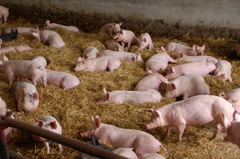
Confinement of livestock with increased mechanization, leading to fewer workers needed for feeding large groups.
What is the impact of decreased land available for agricultural production?
It limits the capacity for livestock farming.
What is a significant factor affecting the availability of veterinary drugs?
Decreased availability or efficacy.
What demographic trend is impacting livestock production?
Increasing human population.
What is the relationship between livestock feed and international regulatory frameworks?
The livestock feed industry must operate within these frameworks.
What are the implications of decreased agricultural workforce availability?
It can lead to challenges in managing livestock production effectively.
What is agricultural sustainability?
An approach to farming that meets present food needs without compromising future generations' ability to meet their own needs, balancing environmental stewardship, economic viability, and social equity.
What are the key principles of agricultural sustainability?
1. Environmental Health: Maintaining soil fertility and biodiversity. 2. Economic Viability: Ensuring farm profitability. 3. Social Equity: Fair treatment of workers and food security.
What is the impact of affluent societies on farming regulations?
Affluent societies have reduced tolerance for production systems that adversely affect the environment or animal welfare, leading to tighter government regulations.
What are some common practices in sustainable agriculture?
1. Crop Rotation: Alternating crops to improve soil health. 2. Cover Cropping: Planting crops to prevent erosion. 3. Integrated Pest Management (IPM): Using biological methods to control pests. 4. Water Management: Efficient irrigation systems.
What is the significance of climate change on agriculture?
Climate change induces variability in weather, affecting agricultural production and increasing pressure on sustainability and animal welfare.
What challenges does livestock production face?
1. Increased demand for livestock products. 2. Competition for feed with bioenergy producers. 3. Intensification of production. 4. Pressure on sustainability and animal welfare.
What is the role of veterinary drugs in livestock production?
Veterinary drugs face challenges such as reduced availability, high registration costs, and consumer resistance to drug use in animals.
What is the concept of 'One Health' in agriculture?
An approach that recognizes the interconnectedness of human, animal, and environmental health, promoting integrated strategies for health management.
What are the effects of commodity price volatility on agriculture?
Volatility in grain prices affects production costs and can lead to narrow profit margins for livestock businesses.
How do supermarket chains influence farming practices?
Supermarket chains apply pressure on suppliers to adhere to sustainability and animal welfare standards.
What is integrated pest management (IPM)?
A sustainable approach to controlling pests using biological and environmental methods, reducing reliance on chemical pesticides.
What are the benefits of sustainable farming practices?
1. Environmental: Reduced energy use and greenhouse gas emissions. 2. Human Health: More nutritious crops with less chemical exposure. 3. Economic: Greater resilience to market fluctuations.
What is the role of crop rotation in sustainable agriculture?
Crop rotation improves soil health, reduces pests, and prevents nutrient depletion by alternating crops in a field.
What is the impact of the anti-meat movement on agriculture?
The anti-meat movement can lead to tighter regulations and commercial pressures on livestock production systems.
What are NVZs in the context of environmental protection?
Nitrate Vulnerable Zones (NVZs) restrict and control the use of fertilizers to protect water quality.
What is the significance of carbon audits in agriculture?
Carbon audits measure carbon outputs from agricultural practices but do not account for the carbon sink effect of grasslands.
What is the importance of biodiversity in sustainable farming?
Biodiversity promotes ecosystem health, resilience, and the sustainability of agricultural practices.
What challenges does the agricultural workforce face?
Decreased availability of agricultural workers due to various socio-economic factors impacts livestock production.
What is the drive to reduce antimicrobial use in livestock?
Consumer resistance and regulatory pressures are pushing for reduced use of antimicrobials in animal husbandry.
What is agroforestry?
A sustainable practice that integrates trees and shrubs into farmland to enhance soil health and biodiversity.
What is the role of precision breeding in livestock production?
Precision breeding aims to improve livestock health and reduce methane production through genetic advancements.