endocrine system
 Call Kai
 Learn
 Practice Test
 Spaced Repetition
 Match
 Flashcards
 Knowt Play
1/97

There's no tags or description
Looks like no tags are added yet.
Name | Mastery | Learn | Test | Matching | Spaced | Call with Kai | Chat |
|---|
No analytics yet
Send a link to your students to track their progress
98 Terms

Multiple hormones can be made with one gland, or one hormone can be made by multiple glands

amine hormones
include thyroid hormones & catecholamines (epinephrine, dopamine , norepinephrine)
all thyriod hormons are derived from
tyrosine
thyroid hormones
hydrophobic, they don’t like being in the blood because it is a watery medium
catecholamines
a type of hormone that Includes epinephrine and norepinephrine and is secreted by the adrenal medulla ( the core of the adrenal gland )
Made up of 80% epinephrine
20% of norepinephrine
a little dopamine
dopamine is also
a hormone also secreted by your hypothalamus, making it an inhibitor for prolactin bc is secreted from the hypothalamus ( controlled by inhibition rather than exceleration )
Most hormones are polypeptides, making them
hydrophilic, making the soluble in the blood
hormones can be made
Of three to a hundred amino acids bound together by peptide bonds
can also be made in advance, packed, stored in the cell, and released as needed

Pre-hormone
an inactive form of a hormone and must be converted to a pro- hormone


pro-hormone
an active form of a hormone, which will be packaged in the Golgi apparatus and be released by exocytosis


insulin
This hormone is also a polypeptide hormone. When the pre-hormone is processed into insulin, it also creates the C-peptide, but insulin is the main messenger


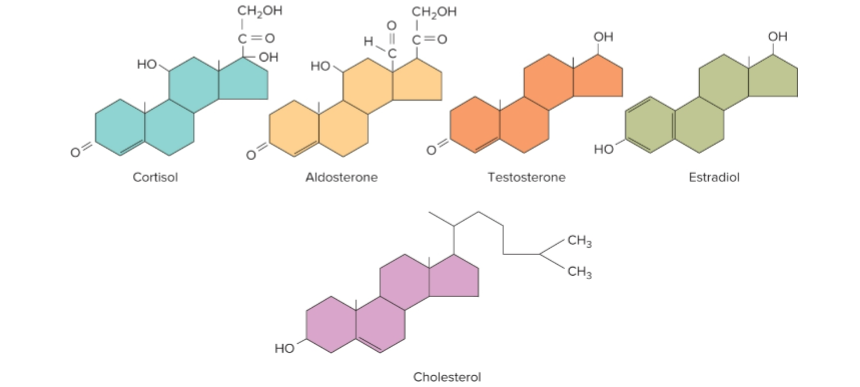
steroid hormones
Derived from cholesterol
Produced by our gonads and adrenal cortex
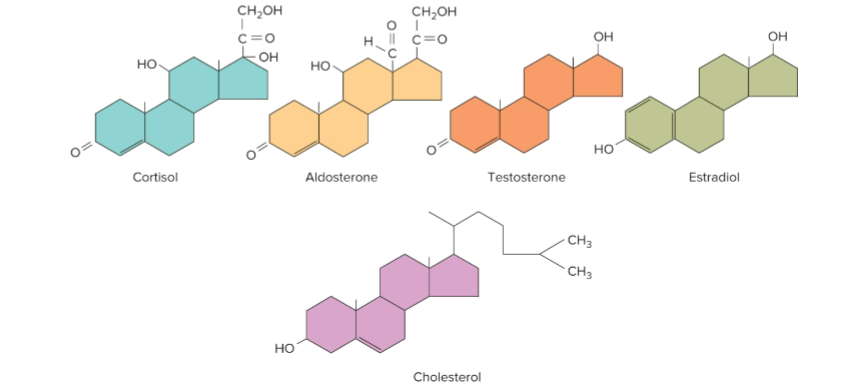

adrenal cortex
produces cortisol and aldosterone ( steroid hormones )


all steroid hormone are fatty making them
unable to be stored in the cell, instead, they are made on demand in the cell
Their lipophilic nature allows them to cross the cell membrane; they are synthesized on demand
bc the are lipophilic, they are hydrophobic, so they need to be bound to a protein to travel in the blood

albumins
A plasma protein that binds to the in the blood they are hydrophobic and carries them (steroid hormones )

Once a steroid hormone crosses the cell MB
It binds to either the cytoplasm or the nucleus, and then it binds to a hormone receptor complex
hormone receptor complex
When a hormone binds to a specific gene to be copied ( gene expression ), it acts like a switch to create new proteins. The new protein will give us the effect we want ( cause the cell to function differently)

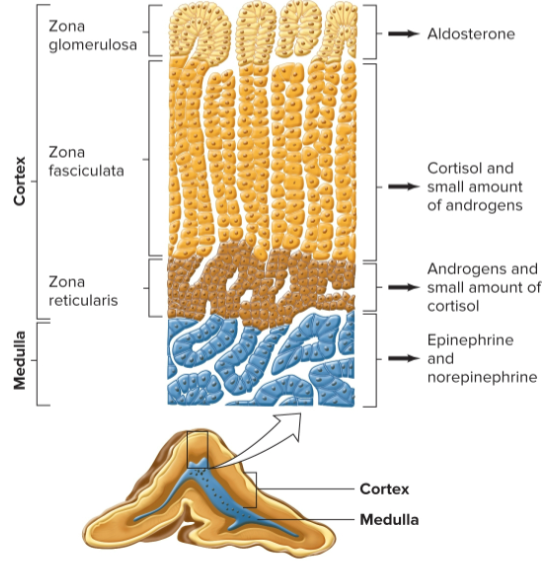
zona glomerulosa
(aka the outermost zone of the adrenal cortex ) where aldosterone is secreted (mineralocorticoid)

aldosterone
important in regulating sodium and potassium & hydrogen ions when it happens in the kidneys


zona fasciculata
aka middle zone of the adrenal cortex, where cortisol is secreted ( glucocorticoid )

cortisol
imp for the way the body handles glucose, released during times of stress or chronic stress (stress hormone), affects the immune system
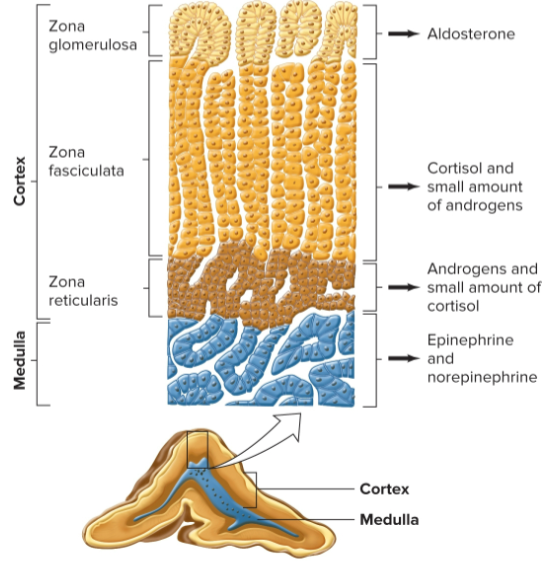
Zona reticulitis
The deepest zone of the adrenal cortex secretes androgens (and a little cortisol )

androgen
masculinizing hormone, DHEA also and androgene similar to testosterone but less effective
To control how much hormone is in the body the body must
break down and metabolize it, the kidneys and liver do a good job of this and release it in the urine
catecholamine and peptide hormones are hydrophilic, meaning they
dissolve in the blood, but they don’t last long and are broken down within minutes to hrs.
steroid & thyroid hormones are hydrophobic, meaning they must
bind to proteins, protecting them from quick degradation, which is why steroid hormones last for hours to days
thyroid hormones are an amine hormone but
They behave and act like a normal steroid hormone
water soluble hormones
like catecholamines and our peptide hormone find their receptors on the cell MB of their target cell
lipid soluble hormones find their receptors on the
nucleus of the target cell, where transcription of the gene takes place
upregulation
The response of a target cell to its hormones by increasing the number of receptors available on the target cell
Usually activates after prolonged exposure to a small amount of the hormone
will put more receptors to make sure every bit of the hormone binds to an receptor

premissivernes
The ability of one hormone to allow another hormone to exert its full effects, one hormone can affect the upregulation or deregulation of another hormone by changing their receptors, allowing the second hormone to have a weaker or stronger effect


explain this image
The thyroid hormone is the permissive hormone that causes the upregulation of receptors for epinephrine ( more epi receptors)
Estrogen is needed to progesterone to have the full effect of thickening the uterus lining

3 ways that endocrine cells are stimulated to release their hormones
Change in plasma concentration of ions or nutrients
Hormones can be changed through NT release in endocrine cells by neurons on endocrine cells
Another hormone influences the secretion of another hormone

explain this picture
When you eat, you break down glucose, making it abundant in your blood
that stimulates the pancreas to release insulin, increasing insulin and releasing it into the blood
signaling glucose target cells to put GLUT transporters on the cell membrane so they can take more glucose from the blood into the cell ( glucose uptake )
decreasing the blood glucose levels


the adrenal medulla is a
modified sympathetic ganglion, when sympathetic neurons fire from the ganglion (adrenal medulla), epinephrine is released


hypothalamus is a
Another structure in the NS has control over; its neurons release their own hormones that affect the anterior pituitary secretions
either release or inhibit the release of hormones
The anterior pituitary is a tropic hormone structure, making the hormone it secretes a tropic hormone
The hypothalamus also releases hormones into the posterior pituitary, but it just stores these hormones and releases them into the blood when needed
just stores, not produces
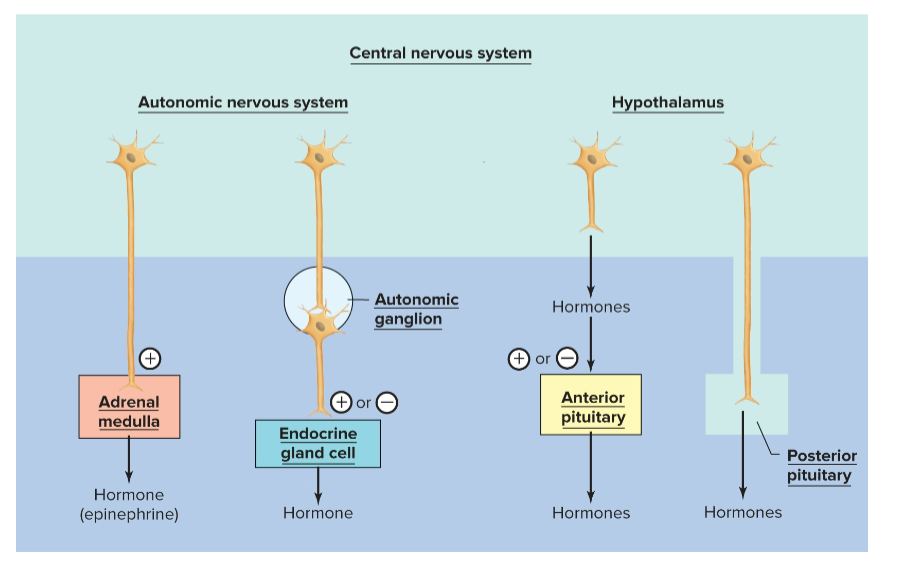
tropic hormone
A hormone that stimulates the secretion of another hormone
ex. Thyroid-stimulating hormone is released from the anterior pituitary, then travels to the blood to stimulate the thyroid gland to release thyroid hormones
Overstimulation can lead to the enlargement of glands ( goiter)
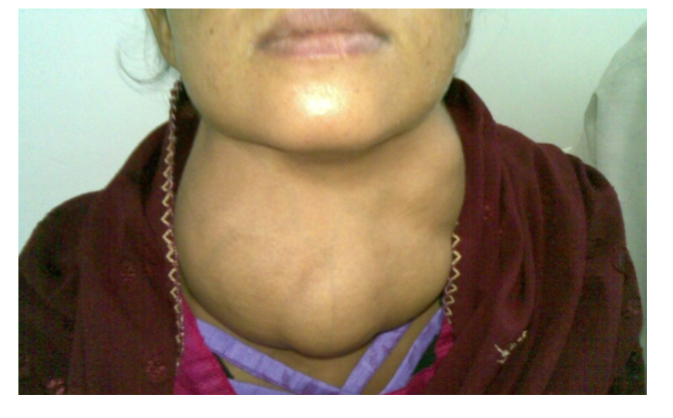
The control of hormones is mostly done through
negative feedback loops
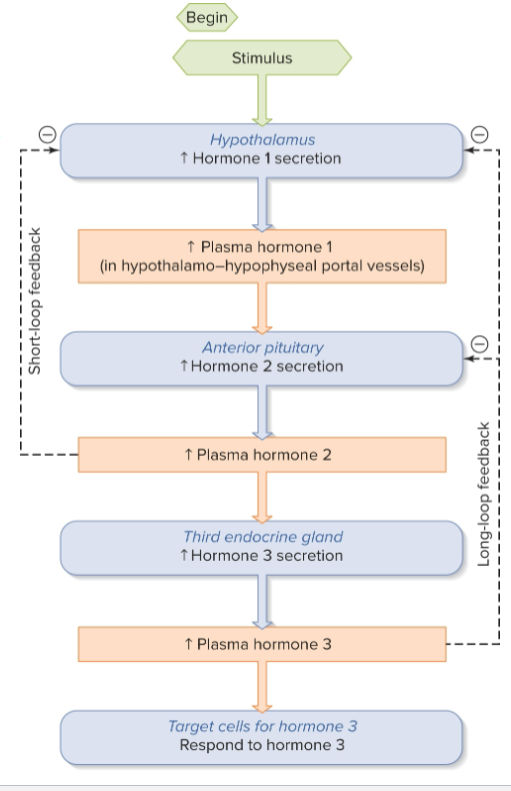
short negative feedback loop
The effect the anterior pituitary has on the hypothalamus’s secretion
The hormone secreted by the anterior pituitary provides feedback to the hypothalamus


long negative feedback loop
looking at the influence that the third hormone in sequence will have on either the anterior pituitary secretion or the hypothalamus secretion
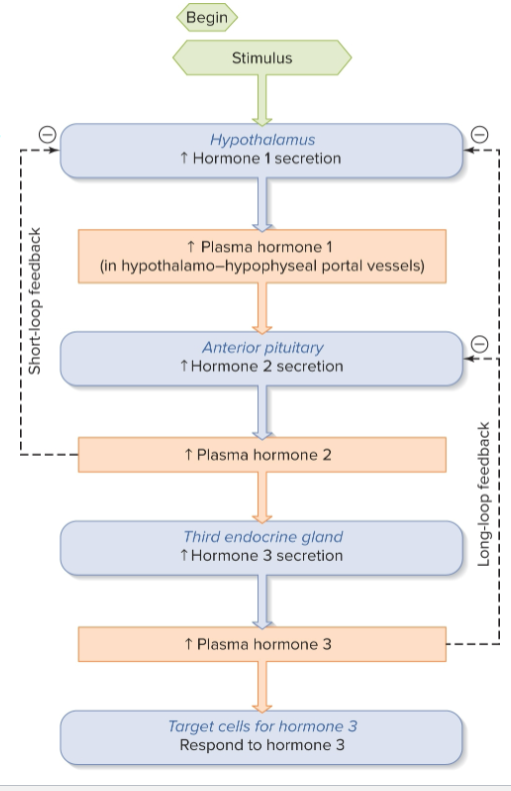
hyporesponsiveness
The target cell is no longer responding to the hormone
. ex., diabetes mellitus type 2: insulin is present in the body, but receptors don’t respond to it anymore (insulin resistance )
hyporesponsiveness is caused by
receptor deficiency ( not enough receptors)
signaling pathway problems ( the hormone binds to the receptors, but the signal doesn’t get picked up)
lacking the enzyme to activate the hormone, being able to turn into the active form of the hormone ( eg., not being able to convert testosterone to DHEA )
hyperresponsiveness
A condition that causes the upregulation of receptors; the response to the hormone increases
ex. The thyroid hormone can act permissively, enhancing the effect of epinephrine and making a person more sensitive to epinephrine, increasing the HR

The hypothalamus has special neurons that release tropic hormones
hormons os the hypothalmsu are either releasin or inhibiting hormones
affecting the anterior pituitary to secrete its tropic hormones, which will have specific target sites of their own
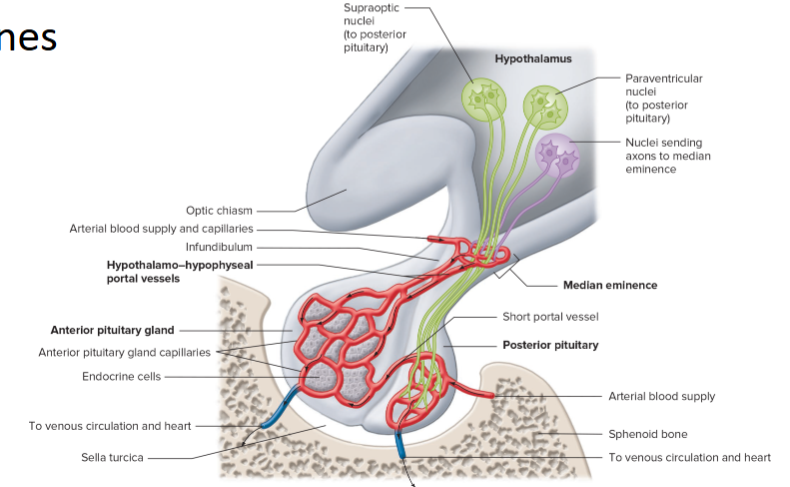

hormones from the hypothalamus reach the pituitary through the
hypothalamo-hypophyseal portal vessels
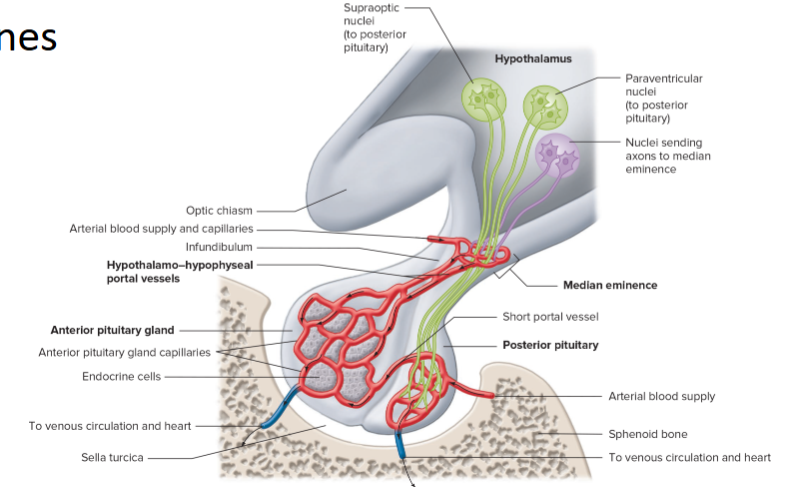

hypothalamo-hypophyseal portal
a portal system with two capillary beds connected by a vein
the first capillary bed picks up trophic hormone, then enters the portal vein, then enters another capillary bed ( loc in anterior pituitary)
quick route for hormones

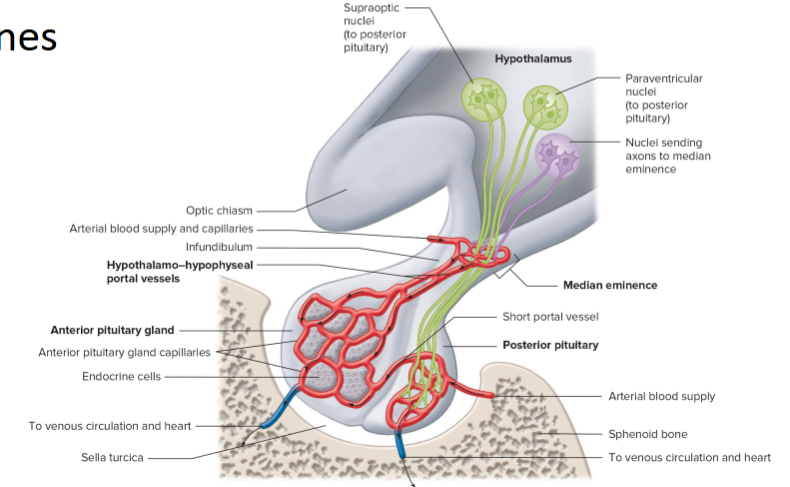
other types of hormones in the hypothalamus
These hormones make ADH (antidiuretic hormone, aka vasopressin) & oxytocin ( peptide hormone), both of which are not tropic hormones
These hormones are released directly into the posterior pituitary; they don’t have to be picked up in the portal system

Antidiuretic hormone ( ADH/vasopressin)
works in the kidneys, important in reabsorbing water, also increases BP by increasing blood volume
Binds to smooth muscle over blood vessels, causing them to contract, increasing BP
oxytocin
Important in childbirth bc it helps with uterine contraction smooth muscle); also helps in milk ejection, aka milk letdown
Released after childbirth bc its imp for mom and baby
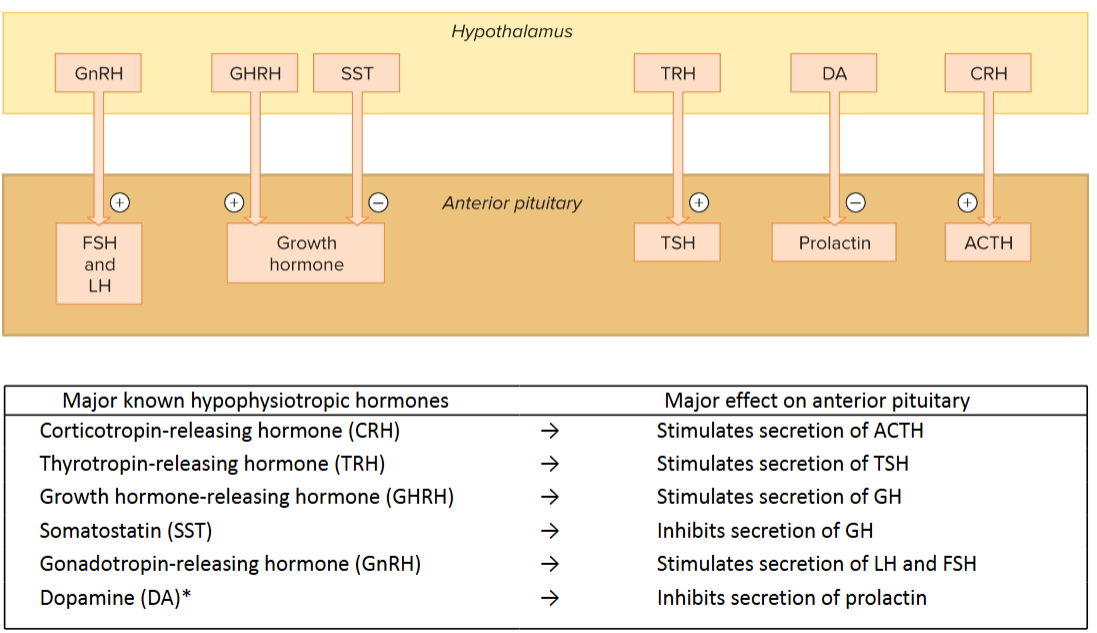
hormones from the hypothalamus that control the secretion of the anterior pituitary ( explain pic )
either inhibiting or stimulating the hormone release by the anterior pituitary
increase adrenocorticotropic hormone
increase thyroid hormone
increase growth hormone
increase follicle-stimulating hormone & luteinizing hormone
increase dopamine and decrease prolactin


Follicle-stimulating hormone (FSH) and luteinizing hormone (LH) are
are gonadotropins, affect the gonads and impact the production of sex hormones and cells

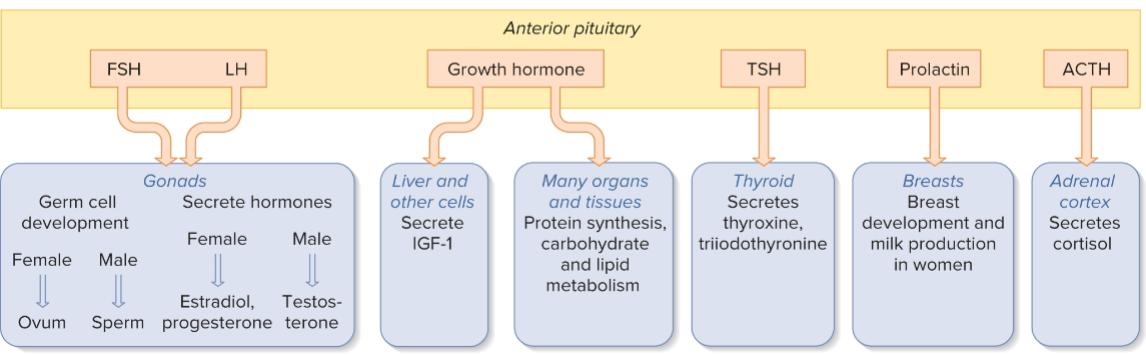
growth hormone ( GH)
Affects many parts of the body; important for growth, protein synthesis, carbohydrate and lipid metabolism, bones, muscle, and skin
Also stimulates the liver to produce something similar to GH, like insulin ( IGF, insulin-like growth factor ), which kind of acts like insulin


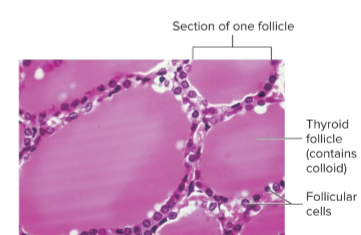
thyroid gland`
loc inferior to the thyroid cartilage has two different types of cells
follicular cells
parafollicular cells


follicular cells
Surround the sphere-shaped structure called a follicle. Within the follicle, there is a thick protein called colloid


thyroglobulin
made by follicular cells and is the main component of the colloid and also makes the main scaffolding of thyroid hormones
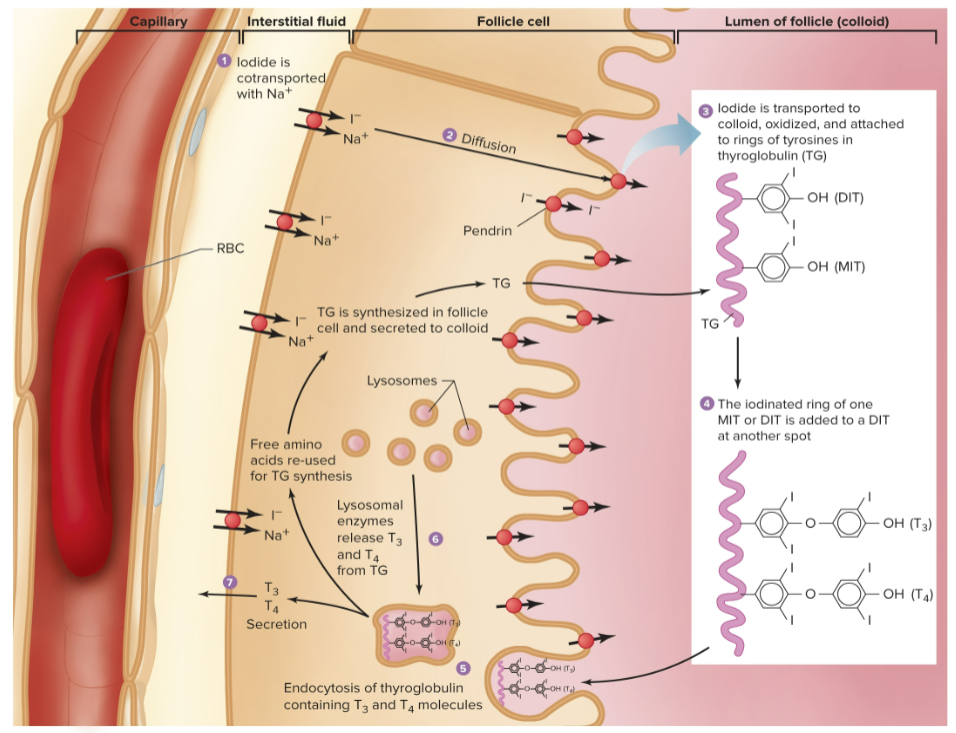
thyroxine (T4)
A hormone made by follicular cells has 4iodines; makes more of this 80% but is in active form
Converted to T3 at the target site; target cells contain an enzyme called deiodinase, and deiodinase T4 into T3


triiodothyronine ( T3)
3 iodines; the active form is the ( 20%)


thyronine ( T4) and triiodothyronine ( T3) both are made of
tyrosine, amine hormones, but also needs iodine

thyroid hormone
Will have receptors on most of the cells bc its important for metabolic activities
Absorption of carbohydrates in the small intestine
Release of fatty acids from adipocytes
stimulation Na/k pump
all the things listed also help in normal growth and brain development
metabolism
how our cells utilize the breakdown of glucose
permissive action of the thyroid hormone
Upregulating epinephrine also raises body temp
T3 is important for the development of the
NS and producing GH
cretinism
due to a lack of iodine in the mother’s body

hypothyroidism
Decreased levels of T3 and T4, due to damage or destruction of the thyroid gland or deficiency of iodine in the diet
The low level of thyroid hormone will negatively feedback to the hypothalamus and the anterior pituitary, causing an increase in the thyroid-releasing hormone from the hypothalamus, increasing thyroid-stimulating hormone from the anterior pituitary

Hashimoto’s disease
Common in areas that have a deficiency in iodine, hypothyroidism, cold sensitivity, weight gain, fatigue, and autoimmune disease, where the immune system attacks the thyroid gland
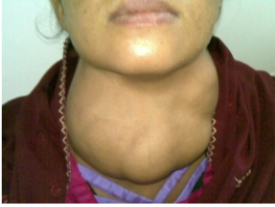
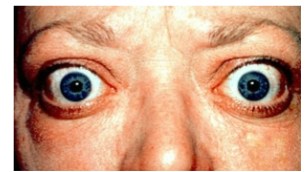
hyperthyroidism
Increased level of T3&4, due to a tumor or Graves disease ( an autoimmune disorder, where the immune system creates antibodies that bind to receptors on the thyroid gland, mimicking TSH, causing overstimulation of the thyroid gland
Weight loss, increased metabolic activity, more sensitive to heat, increased heart rate, tremors, exophthalmos ( fluid behind the eye increases)

primary hypersecretion /hyposecretion
The endocrine gland itself is producing too much or too little of a hormone

secondary hypersecretion/hyposecretion
due to an increase or decrease of a tropic hormone ( in the anterior pituitary specifically) caused by problems in either the anterior pituitary or the thyroid gland

cortisol
known as the stress hormone, released during times of stress, can include extreme temps, infection, starvation, excessive exercise, and emotional stress

explain this photo
Neural input from a stressor enters the hypothalamus, causing the hypothalamus to release CRH (corticotropin-releasing hormone)
travels in the blood through the portal system to enter the anterior pituitary
causing the anterior pituitary to increase the production of ACTH
ACTH is dumped into the blood and is recorded as elevated by the adrenal cortex when it arrives, stimulating the adrenal cortex to release more cortisol
causing blood cortisol level to increase, cortisol affects all parts of the body and is released continuously throughout the day ( not just during times of stress), but is released in smaller amounts and is important for other functions like homeostasis, permissive action on epi and norepinephrine (upregulates the receptors of both on the smooth muscles of blood vessels) to maintain normal BP

Cortisol helps maintain blood glucose by
working in the liver it help make glucose between meals (using glycogenolysis)
cortisol also has an effect on the immune system,
weakens the immune sus it has anti-inflammatory properties, and is why a synthetic form of cortisol called cortisone is used for inflammatory conditions like arthritis
High cortisol levels for a long time can also cause
Fertility issues and delayed growth in adolescence
can also cause cancer & activate autoimmune disorders
cortisol is also very important during development in the
womb and life after birth ( neonatal life ) helps produce surfactant, which helps prevent the collapse of small air sacs in the long, helping inhale & exhale air
adrenal insufficiency
meaning critically low levels of cortisol, which causes profound effects on the body, including low blood glucose, weight loss (not healthy), weakness, and increased susceptibility to ilness bc of the way it affects the immune system/ ( Addison disease)
causes include
primary adrenal insufficiency
secondary adrenal insufficiency
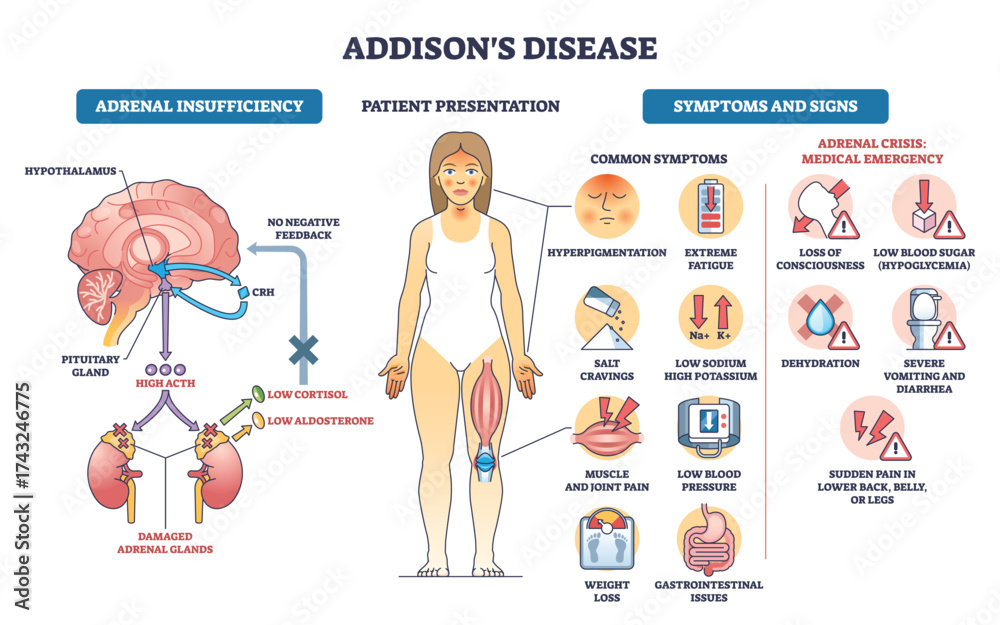
primary adrenal insufficiency
An issue within the adrenal cortex, the adrenal cortex is attacked by the immune system, destroying the cells within the cortex, leading to a decrease in cortisol and aldosterone (Addison’s disease)

secondary adrenal insufficiency
problem with the anterior pituitary, where it underproduces ACTH, causes a decrease in cortisol

Cushing syndrome
The opposite of Addison’s disease: excess secretion of cortisol caused by a tumor in the anterior pituitary causing an excess of ACTH secretion, or a tumor within the adrenal gland itself
Symptoms - moon face ( excess fat in the cheeks ) redistribution of more fat around the belly and near the nape of the neck and upper back, giving a buffalo hump, causing striae (stretch marks), muscle wasting, not treated, developed diabetes, high blood pressure, osteoporosis ( brittle bones disease)

dont want insuline in the blood during times of stress because
We want to keep glucose levels elevated and insulin decreases them
beta endorphins
has pain-killing effects, helps the body deal with pain during times of stress

Hormone influence of growth (explain this pic)

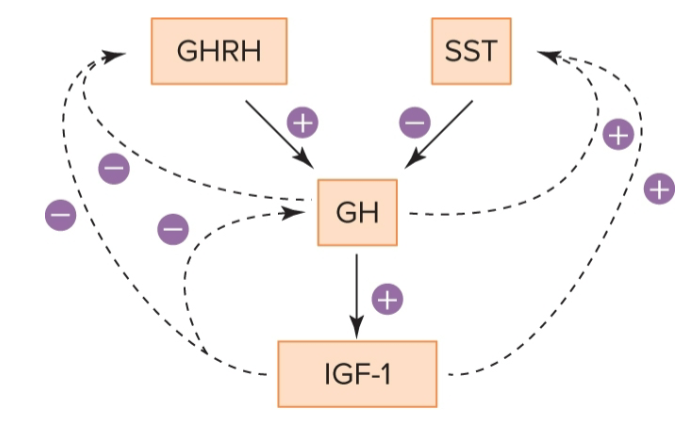
What other hormones must be present for proper growth
Insulin-like growth factor (released from the liver and influenced by GH
T3 (thyroid hormones)
sex hormone (testosterone and estrogen)


GH is released by the ___ and controlled by the release of GHRH release by the ___
anterior pituitary, hypothalamus


somatostatin
Growth hormone-inhibiting hormone inhibits growth hormone; when IGF-1 increases, it creates a positive feedback loop to the SST, slowing down the release of SST

triiodothyronine ( T3)
Important for GH synthesis: direct influence of chondrocyte differentiation & blood vessel formation on chondrocytes
Influencing and supporting chondrocytes for growth to occur
insulin
Has an anabolic effect, stimulates fat storage & inhibits the breakdown of protein; if you have too much insulin, you are going to have more fat storage
If you are consuming a lot of fatty food and a lot of sugar, you’re going to have higher insulin levels, meaning more fat storage
sex hormone
Stimulates both GH & IGF -1
which :
increase muscle mass ( based on gender)
stop growth at the epiphyseal growth plates ( so we’re not growing all our life ); close the growth plates
cortisol
decrease growth ( only hormone that does that ), can do this be its catabolic stress effects on proteins and also inhibits DNA synthesis within cells
pituitary adenomas
tumor in the pituitary gland (specifically anterior pituitary)
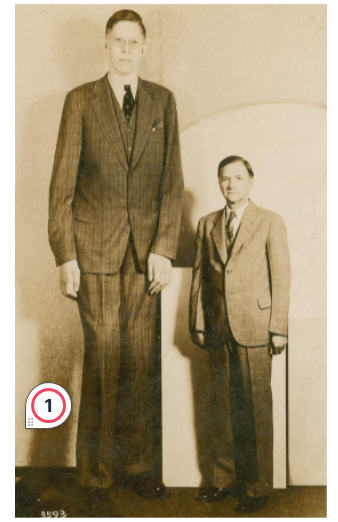
gigantisms
an overstimulation of the cells that secrete growth hormones, in children causing excessive bone growth


acromegaly
If it occurs in adults after they are already grown, it causes enlarged hands and feet, and facial bones

Osteoblasts
lay down a substance called osteoid; osteoid has to be mineralized to become the matrix of bone ( solid bone )
Osteoclasts
are larger cells in the bone responsible for breaking down the matrix of the bone so that they can release calcium into the blood
kidneys ( Ca)
filtering & reabsorbing most of our calcium
control how much calcium is reabsorbed back into the blood
GI tract ( Ca)
regulate how much calcium we absorb from the gut (from food)

parathyroid gland
loc on the posterior surface of the thyroid gland
Important for calcium regulation; regulates it by pumping it in and out
has several effects
increases bone resorption, increasing osteoclast activity, breaking down more bone and releasing Ca and phosphate into the blood
also stimulates the kidney to release an active form of vitamin D (1,25-dihydroxy vitamin D) to help reabsorb Ca. Necessary for pumping absorption from the lumen of your small intestine across the wall into the blood
Reabsorbing into kidney tubules and peeing out the phosphate
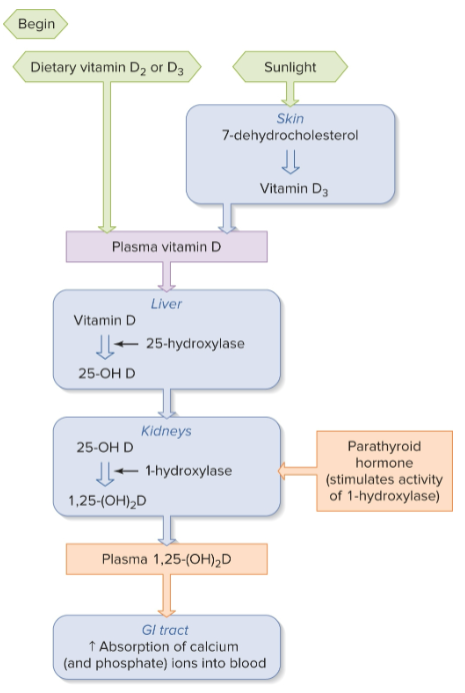

Low calcium levels are the stimulus for
the release of parathyroid hormone

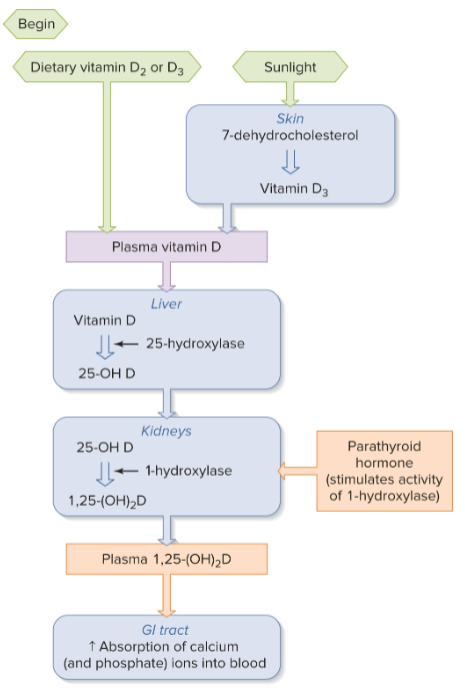
calcitonin
Released by the thyroid gland, but not by follicular cells; released by parafollicular cells in the gland
Stimulation is an elevated blood calcium level
Decreases calcium level by decreasing osteoclast activity
