370 CELL TYPES/STRUCTURES (2.1)
 Call Kai
 Learn
 Practice Test
 Spaced Repetition
 Match
 Flashcards
 Knowt Play
1/17

There's no tags or description
Looks like no tags are added yet.
18 Terms
Living things common attributes (3)
-CATALYSIS: extract energy from nutrients
-MUTABILITY: respond to changes in environment
-REPLICATION: ability to grow, differentiate and reproduce
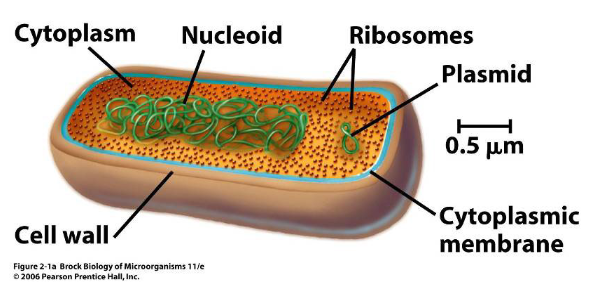
Prokaryotes
-NUCLEOID: DNA material inside, floats freely in cytoplasm, one large circular chromosome
-PLASMID: small circular DNA molecules
-NO organelles, vesicles
-Unicellular
-Flegella (motion structures)
-Asexual duplication (binary/multiple fission)
Eukaryotes
-Has organelles, compartmentalized
-More genetic information than prokaryotes
-Larger than prokaryotes
-Discrete number of linear chromosomes
-Duplicate via mitosis/meiosis

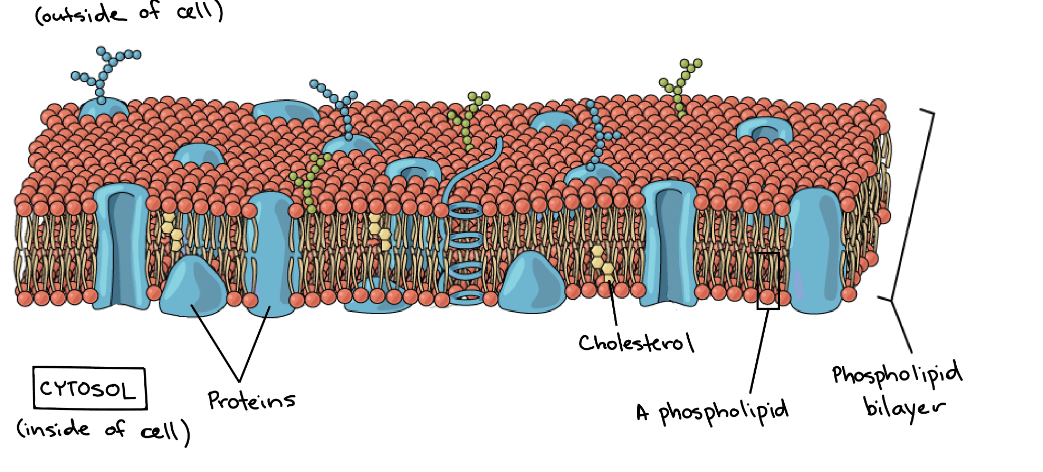
Cytoplasmic Membrane
-Double layer of lipids that seperates cell interior and outside environment
-Proteins control what can enter/exit the cell
-Prevents leakage
-Site for many proteins
Nucleus
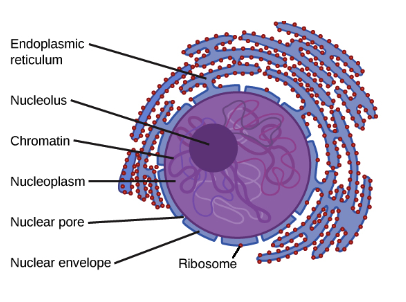
Nucleus—genetic material, site of ribosome synthesis, chromatin ( DNA wrapped around proteins) stored in nucleoplasm
Nuclear pores—small channels that let substances enter/exit
Nucleolus—where new ribosomes are assembled
Ribosomes
-Protein factory
-Made of RNA and proteins

Mitochondria
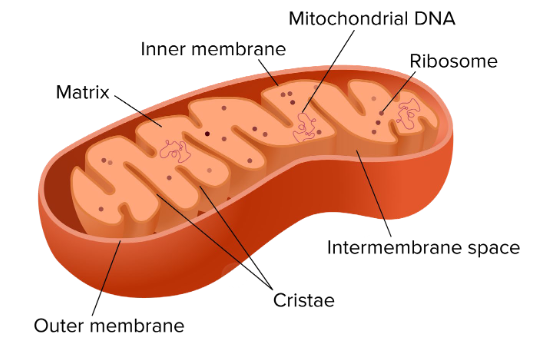
-Site of aerobic respiration
-Contains an inner membrane
—Innermost space contains soluble enzymes involved in aerobic respiration
-O2 used as electron acceptor
Endoplasmic Reticulum
-Modify proteins
-Synthesize lipids
ROUGH ER—studded with ribosomes that synthesize secreted proteins
SMOOTH ER—synthesize carbohydrates, lipids, steroid hormones, detoxification of medication/poisons
Ribosomes make proteins → feed protein chains to RER → proteins fold and undergo modifications (EX: adding carbohydrate side chains)

Golgi Apparatus
-Secreted proteins and lipids go from ER to GA
-Recieves, processes, produces vesicles (packages containing biological molecules, surrounded by a membrane)
-Final assembly and packaging unit
-Secreted proteins/lipids go through a series of modifications (EX: adding carbohydrates)

Prokaryote Eukaryote SIMILARITIES
-Cytoplasmic membrane
-Ribosomes translate mRNA into proteins
-Genetic material stored as DNA
Autotrophs
Doesn’t get energy from organic molecules
PHOTOAUTOTROPHS—uses solar energy
CHEMOLITHOTROPHS—redox reactions
Heterotrophs
Extracts energy from pre-existing organic molecules
Obligate anaerobes
O2 is toxic
Obligate aerobes
must use O2
Facultative anaerobes
Can grow in presence or absence of O2
Bacteria in biotech applications
-Rapid growth
-Easy to introduce foreign DNA
-Can select strains of interest
APPLIED IN: food products, thickening agents, nucleic acids, recombinant proteins, activated sludge
EX: ecoli
Fungi in biotech applications
-Produces metabolic by-products (ethanol, carbohydrates, amino acids, polymers)
APPLICATION: food industry, thickening agents, antibiotics
EX: Bacillus
Animal cells in biotech applications
-Recombinant proteins that require complex modifications are easier to produce with animal cells
-Slow, fragile, expensive
APPLICATION: antibodies used for chemo, cytokines used to modulate immune systems, vaccines
EX: Chinese hamster ovary cells