unit 3: nervous regulation & sensation (a&p)
 Call Kai
 Learn
 Practice Test
 Spaced Repetition
 Match
 Flashcards
 Knowt Play
1/192

There's no tags or description
Looks like no tags are added yet.
193 Terms
Muscle tension is..
force generated by actin myosin cross-bridge interactions during contraction.
What is a muscle twitch?
a single contraction and relaxation cycle triggered by one muscle action potential.
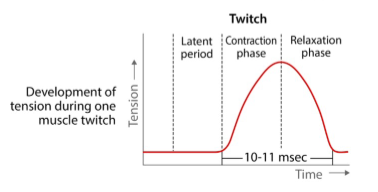
What occurs during the latent phase?
The sarcolemma depolarizes, triggering Ca²⁺ release from the SR; measurable tension has not yet developed.

What occurs during the contraction phase?
Ca²⁺ exposes actin-binding sites, allowing cross-bridge cycling and increasing muscle tension.

What occurs during the Relaxation phase?
Ca²⁺ is pumped back into the SR, reducing cross-bridge formation and muscle tension.
What is muscle force regulated by?
FREQUENCY OF STIMULATION AND THE NUMBER OF MOTOR UNITS ACTIVATED, RATHER THAN CHANGES IN ACTION POTENTIAL STRENGTH.
Single muscle twitch is..
A brief contraction resulting from one action potential.
insufficient to produce sustained movement.
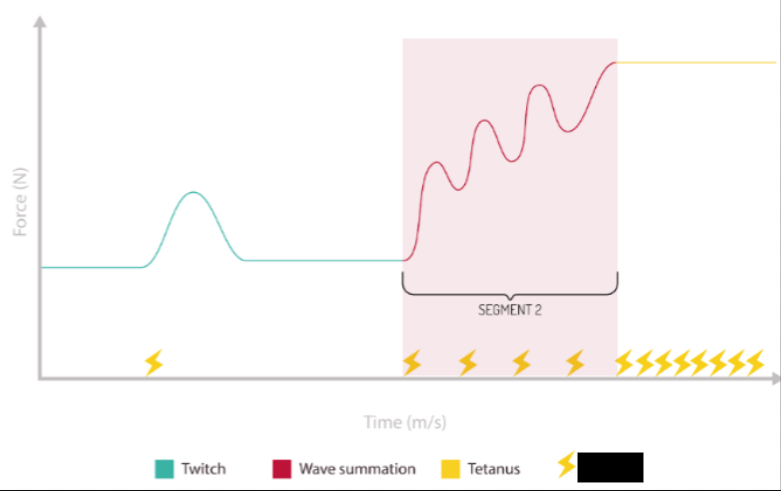
Wave summation is..
Repeated stimulation before complete relaxation.
increasing muscle tension
Tetanic contraction (tetanus) is….
A sustained muscle contraction resulting from high-frequency stimulation.
maintains elevated Ca²⁺ levels in the sarcoplasm

What is this?
Twitch

What is this?
Wave summation

What is this?
Tetanus
What is this?
Impulse

What is this?
Unfused (incomplete) tetanus
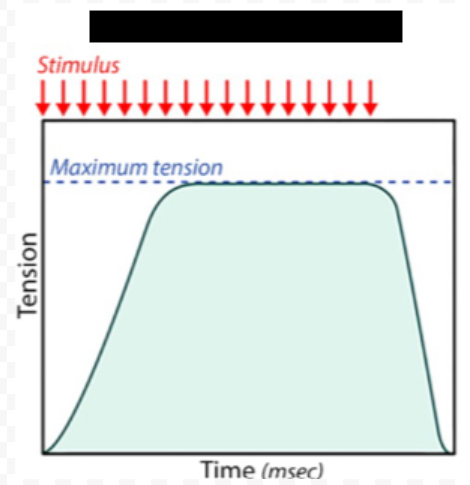
What is this?
Fused (complete) tetanus

Creatine phosphate (phosphocreatine)?
A high-energy phosphate reserve that rapidly regenerates ATP from ADP

What happens to ATP at rest?
Excess ATP is used to replenish creatine phosphate stores (Done in the mitochondria).

What happens to ATP during contraction?
Creatine phosphate donates its phosphate to ADP, rapidly regenerating ATP (Done along myofibrils).
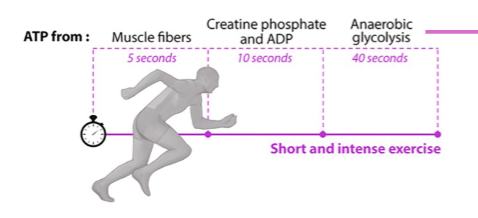
What pathway is this?
Anaerobic Metabolism (Glycolytic)

What pathway is this?
Aerobic Metabolism (Oxidative)
Characteristics of Anaerobic Metabolism (Glycolytic)?
NO oxygen required to produce ATP.
Glycolysis occurs in the cytoplasm (sarcoplasm).
Breaks down glucose or glycogen to rapidly produce ATP.
Produces much less ATP per glucose molecule than aerobic metabolism.
short, high-intensity activity.
Characteristics of Aerobic Metabolism (Glycolytic)?
Oxygen REQUIRED for ATP Production.
Occurs primarily in the mitochondria.
Uses glucose and fatty acids to produce large amounts of ATP.
Produces ATP at a relatively slower rate.
supports prolonged activity.

Direct phosphorylation pathway characteristics:
Coupled reaction of creatine phosphate (CP) and ADP.
Energy source: CP
Oxygen use: None
Products: 1 ATP per CP, creatine
Duration of energy provided: 15 seconds.
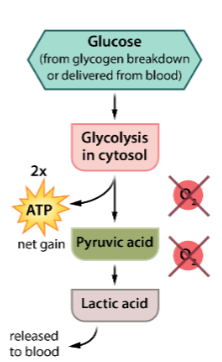
Anaerobic pathway characteristics..
Glycolysis and lactic acid formation.
Energy source: Glucose
Oxygen use: None
Products: 2 ATP per glucose, lactic acid
Duration of energy provided: 30-40 seconds, or slightly more.

Aerobic pathway characteristics…
Aerobic cellular respiration.
Energy source: Glucose; pyruvic acid; free fatty acids from adipose tissue; amino acids from protein catabolism.
Oxygen use: Required.
Products: 32 ATP per glucose, CO2, H2O.
Duration of energy provided: Hours.

Lactate production?
Increases during intense exercise; helps sustain rapid ATP production through glycolysis.

Lactate recycling?
Lactate can be converted to pyruvate and used for energy or transported to the liver.

Cori cycle?
The liver converts lactate into glucose, which can return to muscles and replenish glycogen

What is circled in blue?
Type I – Slow Twitch (Oxidative)

What is circled in green?
Type IIa – Fast Twitch (Oxidative-Glycolytic)

What is circled in yellow?
Type IIx – Fast Twitch (Glycolytic)
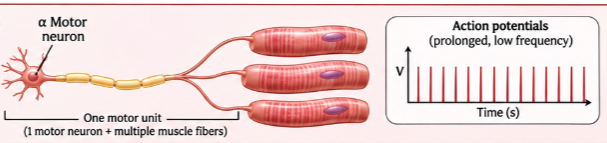
Type I – Slow Twitch (Oxidative)…
Slow contractions; relatively low force production.
Primarily relies on aerobic metabolism
High mitochondria and myoglobin [myoglobin is a protein that holds oxygen].
Highly resistant to fatigue.
lower firing rate = -5, -20 Hz
posture, walking, and endurance activities.

Type IIa – Fast Twitch (Oxidative-Glycolytic)…
Fast contractions;
moderate-to-high force production.
rate: -20, -50 Hz often in bursts.
Uses both aerobic and anaerobic metabolism.
Moderately resistant to fatigue
running and sustained, higher-intensity activities.

Type IIx – Fast Twitch (Glycolytic)…
Fastest major fiber type in humans; high force production.
Greater reliance on anaerobic glycolysis.
Fatigues relatively quickly.
intense bursts: -50-100+ Hz
sprinting, jumping, and explosive movements.
Muscle fatigue is…
temporary decline in a muscle's ability to generate force during sustained activity.

What happens to the fatigue muscle fiber (during/after intense activity)?
low ATP (not enough to sustain cross-bridge cycling and force production).
accumulation of inorganic phosphate (Pi).
reduced force and muscle fatigue.
What happens during the rest/recovery period in muscle fatigue?
ATP & creatine phosphate stores are replenished.
glycogen stores are rebuilt. (energy preserves).
ADP levels decrease.
pH returns to normal. (H+ (acidity) decreases).
temp. & ion balance return to resting levels.

What happens to the recovered muscle fiber (rested, ready for activity)?
adequate ATP available (ready for cross-bridge cycling).
lower Pi and ADP levels.
able to generate normal force/contraction.
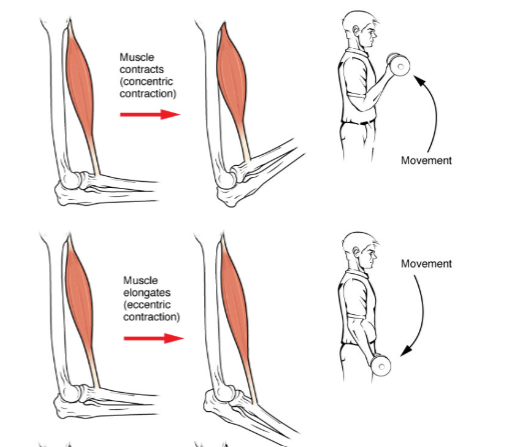
What is Isotonic Contraction?
Muscle generates force while changing in length.
2 types = concentric & eccentric
What is Isometric Contraction?
Muscle generates tension without changing length (holding a dumbbell stationary).
What is Concentric Contraction?
Muscle shortens as its force exceeds the external load (lifting a dumbbell).
What is Eccentric Contraction?
Muscle lengthens while generating force to resist an external load (lowering a dumbbell).

What type of contraction is this?
concentric

What type of contraction is this?
eccentric
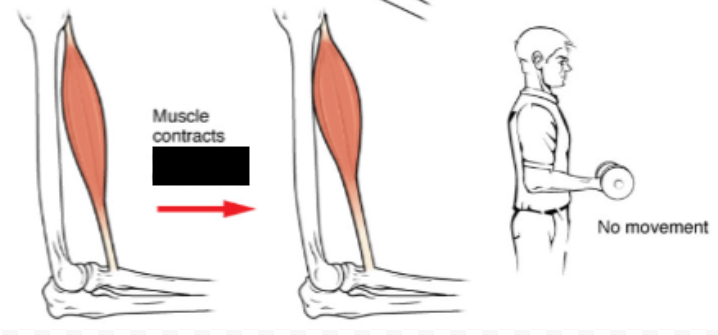
What type of contraction is this?
isometric
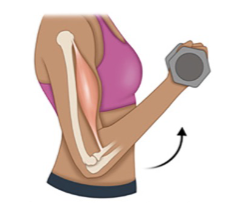
Imagine lifting a dumbbell using your biceps. this is known as?
Concentric Contraction

Ca²⁺ binds troponin, allowing actin-myosin cross- bridges to form.
Myosin generates force; pulls actin toward the center of the sarcomere.
muscle produces more force than the external load.
CONCENTRIC Contraction

Now imagine slowly lowering the dumbbell. This is known as?
Eccentric Contraction

Ca²⁺ still activates the muscle, and actin-myosin cross-bridges still generate force.
However, gravity produces a greater external torque than the biceps can counteract at that moment.
The external load pulls the muscle into a longer position despite the resistance generated by its cross-bridges.
As the muscle lengthens, attached myosin heads resist the movement and may be forcibly detached from actin.
ECCENTRIC Contraction
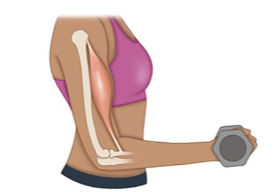
Now imagine holding a dumbbell completely stationary with your elbow bent at 90°. This is known as?
Isometric Contraction

What are Intrafusal muscle fibers?
relatively rare, specialized skeletal muscle fibers located within ordinary skeletal muscles.
They function as stretch sensors, rather than producing significant force for movement.

Alpha Motor Neurons =
Generate Muscle Force

Gamma Motor Neurons =
Maintain Stretch Sensitivity
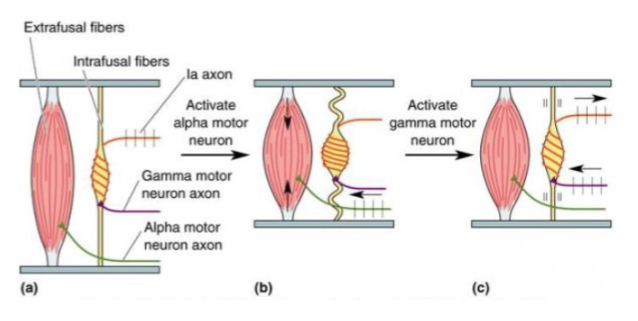
What is the target of Alpha Motor Neuron?
Extrafusal muscle fibers (ordinary skeletal muscle fibers).
Activated during voluntary movements, postural adjustments, and reflexes to generate muscle tension to produce movement or maintain posture.
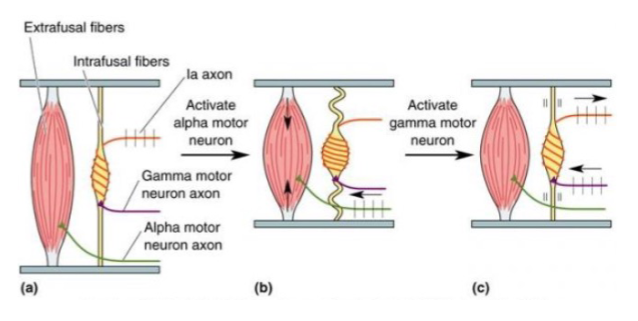
What is the target of Gamma Motor Neuron?
Intrafusal muscle fibers inside muscle spindles.
Activate commonly alongside alpha motor neurons during voluntary movement to maintain tension on the spindle's central sensory region so it remains sensitive to muscle stretch.

Group Ia sensory neurons (primary sensory neurons) do what?
Detect muscle stretch, especially rapid changes in length.
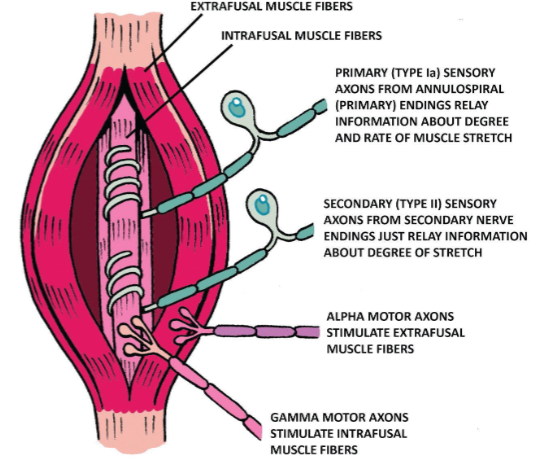
Group II sensory neurons do what?
Primarily signal sustained muscle length.
Nervous system is the…
master controlling and communicating system of body.
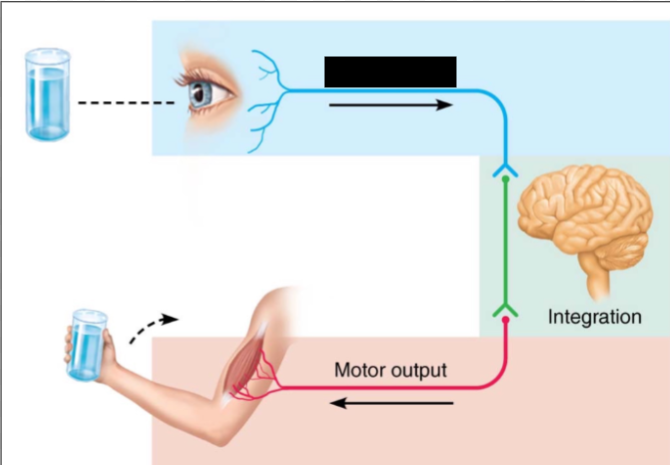
what function of the nervous system is this?
sensory input

what function of the nervous system is this?
integration

what function of the nervous system is this?
motor output
sensory input is..?
Information gathered by sensory receptors about internal and external changes.
Integration is..?
Processing and interpretation of sensory input.
Motor output is…?
Activation of effector organs (muscles and glands) produces a response
Central nervous system (CNS):
Brain and spinal cord of dorsal body cavity
Integration and control center
Interprets sensory input and dictates motor output.
Peripheral nervous system (PNS):
The portion of nervous system outside CNS
Consists mainly of nerves that extend from brain and spinal cord
Spinal nerves to and from spinal cord
Cranial nerves to and from brain

what part of the nervous system is this?
spinal cord
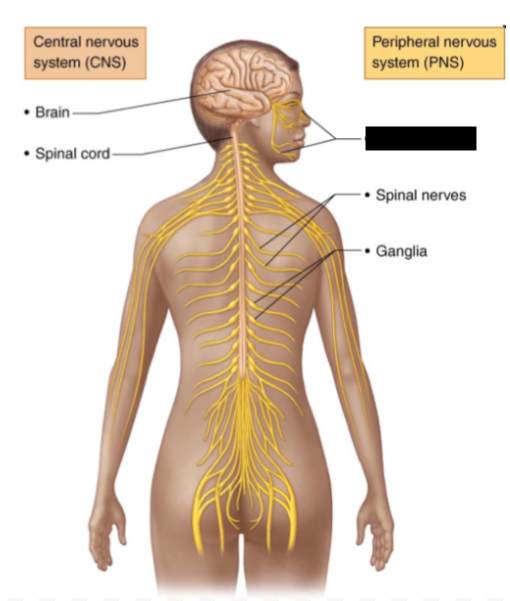
what part of the PNS is this?
cranial nerves

what part of the PNS is this?
spinal nerves

what part of the PNS is this?
Ganglia
2 functional divisions of the PNS?
sensory (afferent) division
motor (efferent) division
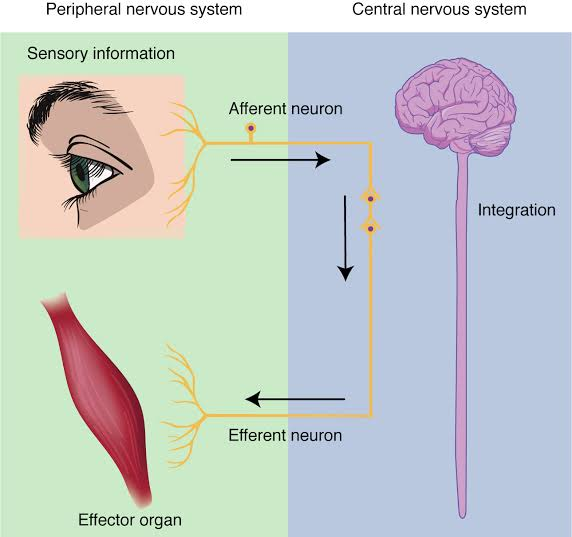
Sensory (afferent) division consists of?
Somatic sensory fibers: convey impulses from skin, skeletal muscles, and joints to CNS.
Visceral sensory fibers: convey impulses from visceral organs to CNS.

Motor (efferent) division consists of?
Transmits impulses from CNS to effector organs
Muscles and glands
Two divisions:
Somatic nervous system
Autonomic nervous system
What are the support cells of the nervous system called?
Glia
What are the glia cells of the CNS?
astrocytes
ependymal cells
oligodendrocytes
microglia
What are the glia cells of the PNS?
satellite cells
schwann cells
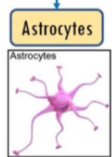
Role of Astrocytes?
Maintain blood brain barrier.
controlling the levels of neurotransmitter around synapes.
regulate ion, and providing metabolic support.

Role of Ependymal cells?
line spinal cord & ventricles of the brain.
involved in producing cerebrospinal fluid (CSF).

Role of Oligodendrocytes?
myelinate CNS axons.
provide structural framework.
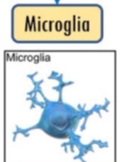
Role of Microglia?
brain’s immune cells.
remove dead cells & pathogens by phagocytosis.

Role of Satellite cells?
surround neuron cell bodies in ganglia.
regulate neurotransmitter levels.

Role of Schwann cells?
myelinate neurons in PNS.
maintenance & regeneration of neurons after injury.

what is this?
axon hillock

what is this?
schwann cell

what is this?
myelin sheath gap

what is this?
Tract
bundle of axons in the CNS

what is this?
neuron (individual cell)
what are peripheral nerves?
• Bundles of neuron processes in PNS.
anterograde =
away from cell body.
materials made in soma are transported to axon terminals
Retrograde =
toward cells body.
materials picked up in the terminals and then transported to the soma.

examples of anterograde include..
mitochondria, cytoskeletal elements, membrane components, enzymes.

examples of retrograde include..
organelles to be degraded, signal molecules, viruses, and bacterial toxins.
Myelinated axons?
Have a segmented myelin sheath; common in long or large-diameter axons.
Unmyelinated axons?
Lack a myelin sheath and generally conduct impulses more slowly.
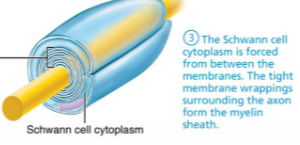
Role of myelin sheath?
Lipid-rich insulating layer surrounding many axons.
Protects and electrically insulates the axon.
Increases the speed of nerve impulse transmission.
What is Ganglion (plural: ganglia)?
cluster of neuron cell bodies located outside the brain and spinal cord (PNS).
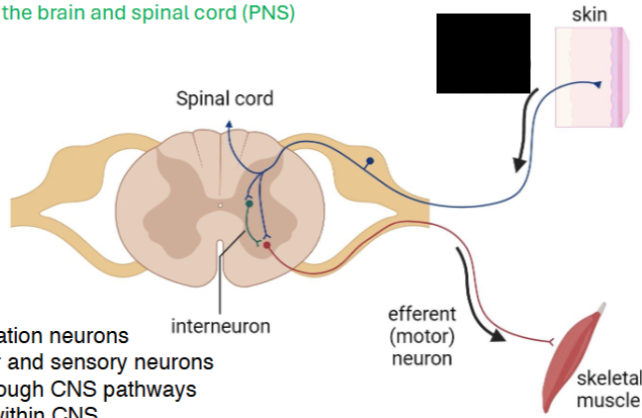
what functioning neuron is this?
Sensory
Transmit impulses from sensory receptors toward CNS
Cell bodies are located in ganglia in PNS.

what functioning neuron is this?
Interneuron
Also called association neurons.
Lie between motor and sensory neurons.
Shuttle signals through CNS pathways.
Most are entirely within CNS.
99% of body’s neurons are interneurons.

what functioning neuron is this?
Motor
Carry impulses from CNS to effectors.
Most cell bodies are located in CNS (except some autonomic neurons).
what is the typical resting membrane potential (RMP)?
-70 mV