Wound Healing
 Call Kai
 Learn
 Practice Test
 Spaced Repetition
 Match
 Flashcards
 Knowt Play
1/83

There's no tags or description
Looks like no tags are added yet.
84 Terms
what can cause skin breakdown?
Items left in prolonged contact with the skin.
For example: if a patient lays on a bed for too long, bedpans, support boots
Friction
skin slides against objects
shear
the skeleton moves but the skin stays
how often should someone be repositioned?
every two hours
how much of a position change should occur when repositioning
at least 30 degrees
what can help prevent shearing and friction?
limiting the amount of time the head of the bed is elevated
(recommended height of bed is less then 30 degrees or as low as tolerated)
chair bound individuals should reposition how often? and shift weight how often?
every hour and shift their weight every 15 minutes
what can be used to support positioning with boney prominences?
pillows or wedges
friction causes damage to the ______?
superficial skin layers
shearing causes _______ to the skin that causes injury
diminished blood flow
slide sheet
a special fabric sheet that makes moving immobile or obese patients easier

why should we NOT use donut rings for pressure reduction? what should we use instead?
the ring of the donut ring can cause intense pressure which causes additional damage. Instead, we should use a waffle mattress
waffle mattress
helps relieve pressure

partial wound
extend through the epidermis but not through the dermis

full thickness wound
the dermis, epidermis, and subcutaneous tissue are penetrated; muscle and bone may be involved

incision
A cut made in order to get inside something

Abrasion
Scrape of the skin

contusion
bruise

penetrating
entering into, going through, or piercing

laceration
a cut

Primary intention healing
tissue surfaces are approximated (closed) and there is minimal or no tissue loss, formation of minimal granulation tissue and scarring

examples of primary intention healing
closed surgical incision and minimal tissue is lost
Secondary intention healing
a considerable amount of issue is lost, repair time is longer and more scarring

Tertiary intention healing
Wound is left open for 3-5 days to allow edema or infection resolve then later closing with sutures
the three phases of wound healing
inflammatory, proliferative, maturation
inflammatory phase
follows hemostasis and lasts 4-6 days, white blood cells move to wound, macrophages enter wound and remain extended time, they ingest debris and release growth factors, pt has generalized body repsonse
Proliferative phase of wound healing
begins to synthesize collagen
granulation tissue forms (fragile and bleeds easy)
capillary network is developing
maturation phase
the third phase of wound healing, in which scar tissue forms
scar tissue is
never as strong as the original tissue
Complications of wound healing
hemorrhage, infection, dehiscence, evisceration
Dehiscence
Bursting open of a wound, especially a surgical abdominal wound
Evisceration
The displacement of organs outside of the body.
internal hemorrhaging is indicated by
swelling
dishiscene can lead to
evisceration
how can a patient help their wound heal?
While the patient lays in bed, they can bend the knees so there is less pull on the incision
dishiscene and evisceration means the nurse must
notify the surgeon immediately
how does saline clean a wound
Normal sterile saline is regarded as the most appropriate and preferred cleansing solutionbecause it is a nontoxic, isotonic solution that does not damage healing tissues.
Passive dressings
Dressings that serve a protective function only.

Interactive dressings
Dressings that create a moist environment and interact with the wound they cover to stimulate cell activity and growth
active dressings
improve healing process/decrease healing time-skin grafts, biologic skin substitutes
what two dressings create a moist environment?
active and interactive
Undermining wound
dead space under the edges of the wound

Wicker dressings
roselike dressings used to manage wounds that have undermining injuries.
wicker dressings are affective at
absorbing drainage
wicker dressings can be
plain or have antimicrobial properties
filler dressings
best for deeper wounds;
these fill the contour of the wound, allowing the wound to heal by secondary intention

cover dressings
best of surface wounds and can be used as a secondary dressing over filler dressings. they can be absorbing, hydrating, plain, or antimicrobial
necrotic tissue
dead tissue that usually presents as black or brown and is hard or leathery in texture

debridement
removal of foreign material and dead or damaged tissue from a wound
slough tissue
YELLOW, GREEN, OR GREY
DEAD TISSUE
THIN
WET STRINGY

granulating tissue
pink, healthy, healing tissue

Epithelialising
pink blush tissue
advancing wound edge
very fragile tissue

acute infection tissue
acute inflammatory response
heat
pain
erythema
infected tissue
chronic inflammatory response
dull beefy tissue
friable
what phase of healing is necrotic tissue
inflammatory
what phase of healing is slough tissue
inflammatory
what phase of healing is granulating tissue
proliferative
what phase of healing is epitheliaising tissue
remodeling
what phase of healing is granulation tissue
proliferative
Silver dressings
antimicrobial dressings used for infected wounds
bacteria can not grow where silver is
venous ulcers
Injury to poor venous return, blood pools or collects and causes edema and poor circulation

arterial ulcers
Injury and underlying ischemia, resulting from underlying conditions, such as atherosclerosis or thrombosis
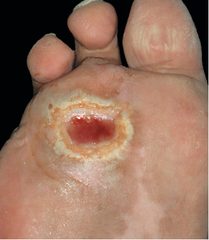
Neuropathic/Diabetic Ulcers
Due to Pressure in Numb Areas, Such as Feet
Deep
Painless
Heads,Areas Where Shoes Rub

pressure ulcer
any lesion caused by unrelieved pressure that results in damage to underlying tissue

stage one pressure ulcer
has intact with non blanchable redness of a small area of skin usually over a bony prominence

stage two pressure ulcer
partial thickness skin loss
shallow open ulcer
red/pink wound bed

stage 3 pressure ulcer
full thickness tissue loss with visible fat
bone muscle and tendon is not exposed
may included tunneling
stage 4 pressure ulcer
Full-thickness tissue loss with exposed bone, muscle, or tendon
slough mat be present
undermining and tunneling
eschar
dead matter that is sloughed off from the surface of the skin, especially after a burn

unstageable ulcer
Full thickness tissue ulcer where the extent of the tissue damage can not be confirmed because its covered by slough or eschar
deep tissue pressure ulcers (DTPI)
the skin is intact but the tissue beneath is damaged and appears purple or dark red

Braden Scale for Predicting Pressure Sore Risk
19-23 not at risk
15-18 low risk
13-14 moderate risk
10-12 high risk
Less than or equal to 9 very high risk

Braden Scale
sensory perception, moisture, activity, mobility, nutrition, friction and shear
when moving a patient, you should
LIFT not pull
risk factors for pressure ulcers
aging skin
immobility
altered LOC
moisture
obesity
poor nutrition
dehydration
sedation
anemia
impaired circulation
edema
sensory deficits
chronic diseases
friction
shear
sinus tracts
narrow openings or passageways underneath the skin that results in dead space with potential for abscess formation

most common areas for a pressure ulcer include
sacrum and coccyx
heels
ankles
hip bones
shoulders
elbows
risks for pressure ulcers
bed ridden
incontinent
what should you monitor for pressure ulcers
monitor stage, size, color
if a patient has a urine output of 30 mL or less that means they have
kidney distress! It is a problem
incontinence associated dermatitis is usually located where?
perianal areas
perineal
inner thighs
buttocks
groin
how deep is incontinent associated dermatitis
superficial
partial thickness
what does incontinence related dermatitis look like on the skin?
in lighter people it can range from pink to red. in darker skinned people It can be blue or purple. The affected area usually has poorly defined edges and may be patchy or continuous over large areas.
what does floating heels mean?
float heals off of a block or a pillow so they dont touch the bed