BOTANY 400 - Lecture Exam 2
 Call Kai
 Learn
 Practice Test
 Spaced Repetition
 Match
 Flashcards
 Knowt Play
1/120

Earn XP
Description and Tags
121 Terms
Thomas Burnet
1681
Typical Pre-18th Century View of Earth, its Changes, & Truth
Wrote The Theory of the Earth
Believed finding the Truths of the Natural World was respecting God’s Truth
Jean Baptiste Lamarck
1744 to 1829
Author of Zologische Philosophie
Early Evolutionary Thought of “Ladder Thinking”
Used a Scalae Naturae or Ladder Model
Eventually used a Tree Model
Lamarck’s Ladder
Continuum between Physical & Biological World
Transmutation: Life progresses Upward due to Internal Drive towards Perfection
Current Primitive Organisms due to Constant Spontaneous Generation of New Life
Inheritance of Acquired Characters leads to Change
Hierarchy of Fourteen Levels
Georges Cuvier
Critic of Jean Lamarck
Argued there is No One Linear Ladder
Led to Creation of Lamarck’s Tree
Lamarck’s Tree
Two Lines of Spontaneous Generation with Subsequent Branching
Branching as Fundamental Pattern of Evolution in 1815
Some Odd Branches connecting Very Different Groups of Animals
Robert Chambers
1844
Author of Vestiges
Only Pre-Darwin “Evolution” Book in English in 1840s & 1850s
Began setting Acceptance of Evolution & Origin of Species
Denied Special Creation for Each Species
Received Criticism from Biblical Scholar Bosanquet
Charles Darwin
1859
Formulation of Evolutionary Theory
Refers to Evolution as “Descent with Modification”
Used Tree-Thinking
Author of Origin of Species 1859
The Three Main Claims of Darwinian Evolution
Descent: Living Species are Related by Common Ancestry
Change through Time occurs not at the Organism Level but at the Population Level
Modification: Main Cause of Adaptive Evolution is Natural Selection
Definition of Evolution
Change of Genetic Materials
Genotype: DNA, Genes, Chromosomes, Genomes
Change in Genotype leading to Change in Physical Attributes
Phenotype: Morphology & Physiology
Occurs within & among Populations of Species through Time & Space
Evidence for Evolution
Classification & Hierarchical Distribution of Traits
Homology & Vestigial Structures
Fossil Record & Biogeography
Variation Among Populations & Speciation
Agreement between Gene Trees
Hierarchical Classification
Evidence of Evolution
Species within Groups appear more similar than they do to Other Groups
Shared Morphological Features amongst Group
More likely that Traits evolved Once in Common Ancestor
Characters as “Fossil” Footprints
Distribution of Characters can be Explained by Trees
Clades are Nested within Larger Clades
Same Genes in Same Places in Genomes of Species with Common Ancestor
Clades
Monophyletic Groups defined by Shared Characteristics
Homology
Evidence of Evolution
Modification of Shared Character
Derived from Same Structure, but Diverged to Match Niche
Shown through EvoDevo Studies
Convergence
Phenomena of Unrelated Species in Very Similar Niches having Similarities in Morphology or Other Characters
Darwin’s Orchids
Group of Flowers that all possess Basic Homologous Floral Parts but are Highly Modified for Specific Pollinators
EvoDevo
Provides Genetic Basis for Basic Features
Reveals Modification of Homologous Genes
ABC Model of Angiosperms
Only a Few Gene Differences involved in Very Different Looking Flowers
Transcription Factors Important
Vestigial Structures
Homologous Parts with No Known Function
Found in Highly Diverged Species in Different Niches
Examples: Pelvic Girdle in Whales & Non-Functional Chloroplasts in Parasitic Dodder Plants
Fossil Record
Evidence of Evolution
Missing Links as Transitional Forms
Rich & Consistent with Information from Hierarchical Relationships based on Morphology & DNA
Archaefructus in Plants

Archaefructus
Plant Fossil consistent in Terms of Age & Morphology with Basal Angiosperms
Missing Links
“Transitional” Forms
Not Truly Intermediate
Each Descendant Species is Own Tip with its Own Derived Traits & Equal Time to Evolve/Diverge
Biogeography of Life
Evidence of Evolution
Large Amount of Evidence
Law of Representative Species
Convergent Forms in Similar Environments on Different Continents
Distribution of Extinct Organisms as Fossils provides First Evidence of Continental Drift
Similar/Closely Related Species found Across Continents that would’ve been Next to Each Other or Connected
Law of Representative Species
Evidence of Evolution
Part of Biogeography
Closely Related Species replace Themselves across a Continent
Ranges Neighbor Each Other but do Not Overlap
Direct Observation of Evolution
Evidence of Evolution
Documented Change due to Human/Artificial Selection
Change within & among Populations due to Directional Selection
Example: Origin of New Polypoid Species in Tragopogon
Pam & Doug Soltis
Discovered Origin of New Polypoid Species in Last 150 Years
Occurred Multiple Times in Different Places
Study the Genus Tragopogon
Botanist Spotlight #4
Molecular Evolution
Evidence of Evolution
Fossil Footprint of DNA in Organisms
Mitochondria, Nucleus, & Chloroplasts all Originally Bacteria absorbed by an Early Eukaryote
Genetic Variation within Species
Required for Evolution
Driven by Selection or Random Events
Variation in Flowers, Pollinators, Light Regimes, Moisture Regimes, and Chromosome Numbers
Substantial Amount within & among Populations
Natural Selection
Mechanism by which Populations are Modified in Response to their Environment
Adaptation
Adjustment in a Population to their Environment
Spring Beauty (Claytonia)
Single Species
High Variety in Flowers based on Different Environments
Highest Variation in Number of Chromosomes in a Single Species
Example of Genetic Variation within Species
Random Events
One Driver of Evolution
Gene Frequencies may fluctuate despite Natural Selection
Caused by Random Sampling of Genes
Genetic Drift & Founder Events
Study by Clausen, Hiesey, & Keck
Studies on Variety of Plant Species during 1940s to 1950s
Conducted by Three American Botanists in California
Work on Achillea millefolium & Potentilla glandulosa Best Known
Used reciprocal transplant design by setting up common garden site across elevation gradient.
Common Garden: Plants from different environments/gene pools grown in same garden.
Examines if phenotypical differences are genetic or environmental.
Phenotypic plasticity in Achillea clinal genetic.
Common Garden Experiments
Plants from Different Environments/Gene Pools are grown in the Same Conditions to examine if Phenotypical Difference are Genetic or Environmental
Ecotypes
Genetic Variations adapted to Different Ecological Conditions
Cladogenesis
Formation of New Species Lineages
One Population branches to form New Species
Darwin’s Descent
Anagenesis
Evolution within a Species Lineage
Species continues to diverge from Ancestral State
Darwin’s Modification
Overview of Chemosystematics
Use of Chemical Compounds to tell how Plants are Related
Pigments, Volatiles, Deterrents
Type of Molecular Systematics
Uses Secondary Compounds or Micromolecules instead of Macromolecules like DNA & Protein
Reasons for Chemosystematics
Unequal Rates of Morphological Divergence in Different Lineages
Faboid & Mimisoid Legumes are Highly Modified but from Same Common Ancestor of Caesalpinoids
Issues of Homology & Character Divergence vs. Analogy & Convergence
Independent Origin of Yellow Perianth in Marsh Marigolds & Buttercups
Independent Origin of Swollen & Green Barrel Stems in Cacti & Spurges
Plant Pigments
Predominantly Green from Chlorophyll
Absorb Red & Blue Wavelengths while Reflecting Green & Some Yellow Wavelengths
Important in Systematics at Deepest Levels of Tree of Life
Other Colors that contrast Green attract Animals
Aids in Pollination, Seed Dispersal, or Warning Coloration
Types: Anthocyanins, Yellow Flavonoids, Colorless Flavonoids, Betalains, & Carotenoids
Challenges of Using Plant Pigments
Often Unstable: Breakdown & Fade in Herbarium Specimens
Environmental Variation: Effected by pH, Elevation, UV, Etc.
Chemical Mimicry & Convergence
Flavonoids
Usually Most Important Source of Non-Green Color in Plants
Benzene Rings with Infinite Variety of Side Chains
Important in Yellow, Blue, White, & “Black” Flowers
Potentially have Health Benefits for Humans
Absorb UV & Appear Dark to Insects
Guide Pollinators to Nectar
Anthocyanin Flavonoids
Most Important & Widespread Group of Coloring Matter in Plants
Found in Almost All Families of Angiosperms
Replaced by Betalains in Most Members of Caryophyllales
Present instead of Betalains in Families Caryophyllaceae & Molluginaceae
Yellow Flavonoids
20+ Families in Distribution
Give Yellow Colors to Flowers (In Part)
Also Found in Leaves but Masked
Works with Yellow Carotenoids
Chemical Mimicry
Absorbs UV while Carotenoids reflect UV
Creates Bull’s Eye Pattern for Insect Pollinators
Utility in Classification of Gesneriaceae
Present in Subfamily Gesneriopodeae in addition to Carotenoids
Absent in Subfamily Cytrandroideae which only has Carotenoids
Colorless Flavonoids
Most Important Secondary Compound in Systematics
Contributes to Body or Expression of Anthocyanins
Strongly Absorbs UV
Detectable with Gas/Gel/Paper Chromatography
2D Spot Pattern is Specific for Each Type
Used to prove Physalis lanceolata is Not a Hybrid between P. heterophylla & P. virginianum
Chromatography Pattern Not Additive
Betalains
Named after the Beet Genus, Beta
Nitrogen-Containing Pigments different from Flavonoids
Absent in Plants with Anthocyanins
Only Found in Families of Core Caryophyllales
Beets, Cacti, Pokeweeds, Amaranths
Absent from Families Caryophyllaceae & Molluginaceae which have Anthocyanins Instead
4 Parallel Origins discovered by Samuel Lopez-Nieves & Hiroshi Maeda in 2019
Betacyanins
Red & Violet Betalains
Betaxanthins
Yellow & Orange Betalains
Some Uses of Floral Pigments in Phylogenetics
Classification of Salvia within Sage & Mint Family
Evolution of Red Color correlated with Origin of Hummingbirds
All form One Clade
Blue Flowers evolved for Bee Pollination
Overview of Volatile Compounds
Often Restricted to Families, Genera, or Even Species
Form the Taste of Plants
Attract or Repulse Animals
Used Consciously or Unconsciously in Classical Taxonomy
Conifers, Mints, & Carrots
“Sensual System” used by Linnaeus
Sensual System
Artificial System of Classification
Used by Linnaeus
Based on Scent
Aromatic, Fragrant, Musk-Like, Garlic-Like, Goat-Like, Foul, or Nauseating
Six Major Volatile Groups
Terpenes: Pinenes, Menthol, & Catnip
Aliphatic Oils: Magnolia & Amyl Acetate in Orchids
Aromatics: Wintergreen
Aminoid: Nitrogen Containing & Offensive, Found in Aristolochiaceae & Araceae
Sulphides: Sulfur Containing, Found in Onions & Garlic
Glucosinolates: Sulfur Containing, Found in Mustard
Chewing/Damage forms Isorhiocyanates
Mustard Oil
Glucosinolates form Isothiocyanates as an Anti-Herbivore Defense
Shared by 18 Different Looking Families
Dalhgren believed Families Related and it Evolved Only Once or Twice
Denied by Cronquist
DNA proved Two Evolutionary Origins
17 Families in Brassicales & 1 Family in Malpighiales
Caryophyllids (Order Caryophyllales)
Member of Core Eudicots
Order including Carnations, Cacti, & Chenopods
11,155 Species in 34 Families
6% of Eudicot Diversity
Unusual Group that was Not Previously Thought to Form a Monophyletic/Natural Order
Sister Clade to Asterids
Arose about 110 to 100 Million Years Ago
Characteristics of Caryophyllids
Usually Only have Perianth of Sepals
If Petals Present, they appear to be of Staminal Origin
Often Live in Extreme Environments
Arid Regions, High Salt, & Low Water
Often Weedy
Adaptations: Succulence, Absent Leaves, Salt Excretion, and C4 & CAM Photosynthesis
Specialized Photosynthesis: Convergently Evolved to Reduce Water Loss during Photosynthesis
Spatial Separation of Steps in C4
Temporal Separation of Steps in CAM
Very High Diversity
Examples of Caryophyllids
New Desert Families: Frankeniaceae, Simmondsiaceae, Tamaricaceae, Halophytaceae
Halophytes: Salt Tolerant Plants like Glasswort
Cushion Plants: High Latitude/Elevation Adapted Plants like Chickweed & Spring-Beauty
Many of the Carnivorous Plants: Plants that Grow in Low Nitrogen Environments like Sundews & Asian Pitcher Plants (Nepenthes)
Weeds: Tamarix & Baby’s Breath (Gypsophila)

Antarctic Pearlwort (Colobanthus quitensis)
One of Two Flowering Plant Species in Antartica
Other is Hair Grass
Grows on North Facing Slopes
Cushion Plant in Order Caryophyllales
Plant of the Day #4
Core Caryophyllales Characteristics
Betalains: Nitrogen-Containing Pigments instead of Anthocyanin Flavonoids
Evolved Four Times within Group
Centrospermae: Free-Central (or Basal) Placentation
Produce Capsule Fruits
Pyxis: Capsule with Lid & Many Seeds Inside
Utricle: Capsule with Lid & One Seed Inside
Difficult to Recognize/Classify Families
Family Caryophyllaceae (Carnations & Pinks)
2300 Species in 87 Genera
Distributed through Temperate Regions of Northern Hemisphere
Herbaceous & Often Weedy
Dichasium Inflorescence
Usually Cyme with 3-Way Split & Oldest Flower in Middle
Opposite Leaves with Swollen Nodes
Urn-Shaped Capsule Fruit that Opens by Teeth or Valves
Often Surrounded by Calyx
Family in Order Caryophyllales

Flowers of Caryophyllaceae
5-Merous Flower
Unfused Corolla with Often Deeply Lobed Petals of Potentially Staminal Origin
1 to 2 Whorls of Anthers
Syncarpic Pistil with 2 to 5 Carpels
Free-Central or Axile Placentation


Floral Formula of Caryophyllaceae
CA5,(5) CO5 A5,10 G(2-5)
Examples of Caryophyllaceae
Mouse-Ear Chickweed (Cerastium)
Campions (Silene)
Deptford Pink (Dianthus)
Soapwort (Saponaria)

Family Amaranthaceae (Amaranths)
2050 Species in 174 Genera
Herbaceous & Often Halophytes or Weeds
Worldwide Distribution
One-Seeded Utricle Capsule Fruit or Basal-Seeded Achene
Family in Order Caryophyllales

Flowers of Amaranthaceae
Small, Bracted, & Congested
Corolla Absent
Bisexual or Unisexual
Unisexual Plants Monoecious or Dioecious
Superior & Syncarpic Pistil with 2 to 4 Carpels


Floral Formula of Amaranthaceae
CA5 CO0 A5 G(2-4)
Examples of Amaranthaceae
Desert Specialists & Tumbleweeds: Saltbush (Altriplex) & Russian Thistle (Salsola)
Native, Weedy, & Horticultural Species: Amaranth, Cottonseed, Winged Pigweed, Summer Cypress
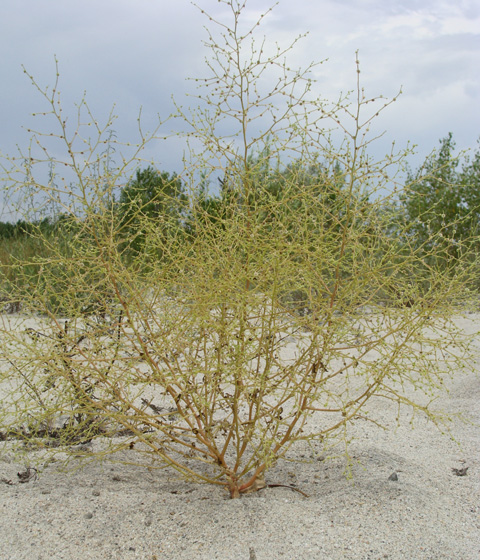
Family Cactaceae (Cacti)
1400 Species in 100 Genera
North & South American Distribution
One Taxon Dispersed in Africa
Stem Succulents protected by Spines
Often Epiphytes that Grow in Trees
Leaves Absent except in Genera Pereskia & Rhodocactus
Spines or Glochids at Areoles
Berry Fruit that is Sometimes Semi-Dry
High Diversity
Family in Order Caryophyllales

Flowers of Cactaceae
Epigynous Flower
Hypanthium with Many Tepals & Stamens
Inferior Syncarpic Pistil with 4 Carpels
Parietal Placentation
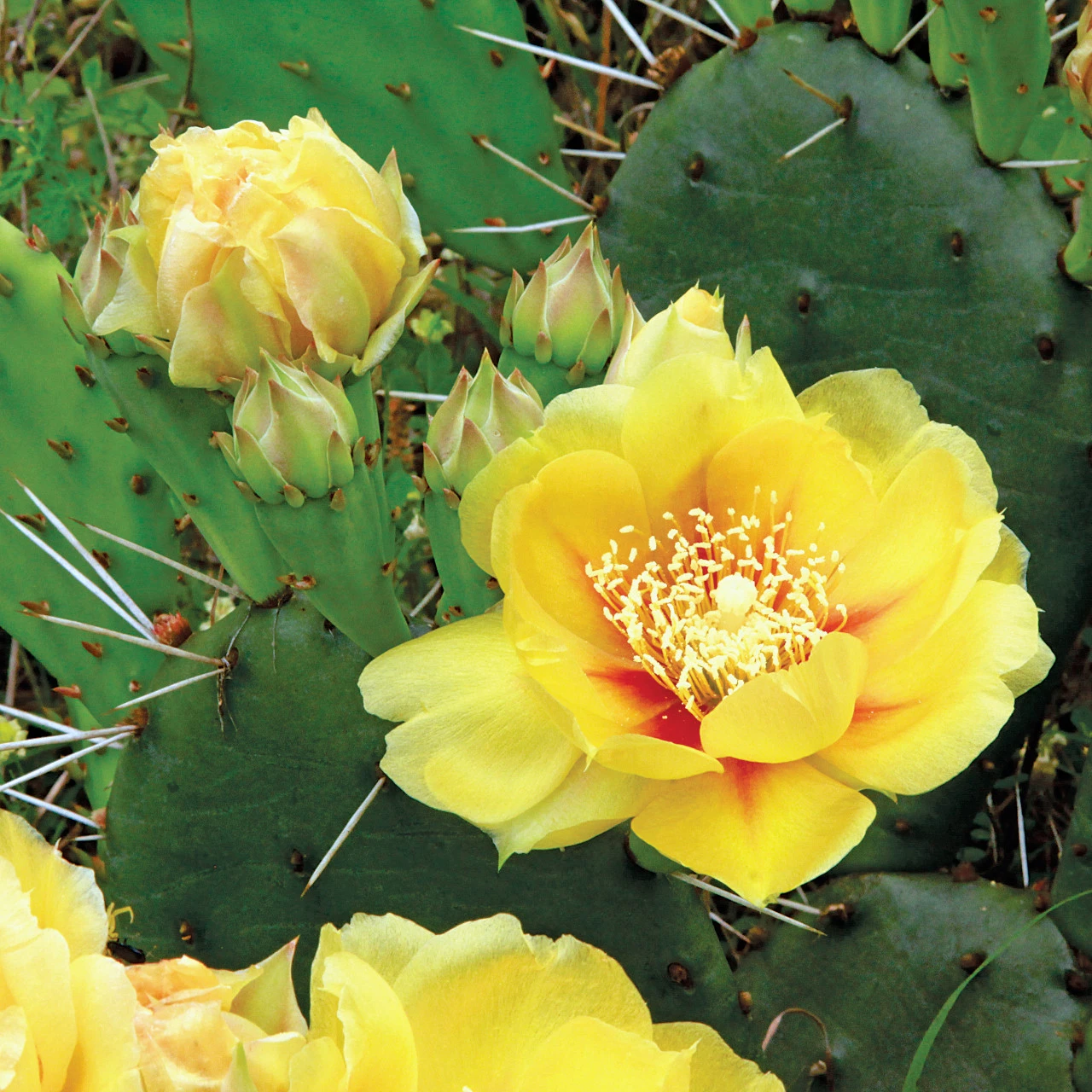

Floral Formula of Cactaceae
P♾ A♾ -G-(4)
Examples of Cactaceae
Peyote (Lophophora)
Queen of the Night (Selenicerius)
Prickly-Pears (Opuntia)

Family Phytolaccaceae (Pokeweed)
Small Family in Tropical & Temperate Regions
Shrubs & Trees
Raceme Inflorences
Berry Fruits
Often Poisonous & Good Dyes
Family in Order Caryophyllales

Flowers of Phytolaccaceae
Five Small Petaloid Sepals
Corolla Absent
Twice as Many Stamens as Sepals
Semi-Fused Carpels each with One Ovule


Floral Formula of Phytolaccaceae
CA5 CO0 A10 G(5+)
Examples of Phytolaccaceae
American Pokeweed (Phytolacca americana)
Indian Poke (Phytolacca acinos)

Family Polygonaceae (Smartweeds & Allies)
1100 Species in 61 Genera
Herbs or Some Shrubs
Wet OR Arid Regions
Alternate & Simple Leaves at Swollen Nodes
Ocrea: Stipules Modified into Sheath
One-Seeded & Three-Angled Achene Fruit
Non-Core Caryophyllid
Family in Order Caryophyllales

Flowers of Polygonaceae
Congested Flowers
Basically 3-Merous
Petaloid Tepals
Superior Syncarpic Pistil with 3 Carpels


Floral Formula of Polygonaceae
P3+3or5 A1-3X G(3)
Examples of Polygonaceae
Smartweeds (Persicaria)
Docs (Rumex)
Horticultural Taxa: Rhubarb (Rheum) & Buckwheat (Fagopyrum)

Ynés Mexía
1870 to 1938
Mexican American with Dual Citizenship
Joined Sierra Club after a Hard Time in Life
Began Professionally Collecting Plants at 55 Years Old
One of the First Female Botanists to Explore the Americas
Collected Over 145,000 Plant Specimens in 13 Years
Collected 50 New Species
Many New Species Named in Honor of Her
Died from Cancer
Rosids
Part of Core Eudicots
One of Two Very Large Groups of Eudicots
Petals Generally Separate
Usually More Stamens than Petals
High Diversity
Order Saxifragales
2500 Species in 16 Families
Sister Clade to Rosids
Diverged 120 Million Years Ago
Identified by 2+ Separate or Semi-Fused Carpels
Other Families in Saxifragales
Paeoniaceae: 33 Species in 1 Genus with Primitive Features, Hypogynous Flowers, and 5 to 8 Carpel
Cercidiphyllaceae: 2 Species in 1 Genus of Small Trees with Unisexual & Wind-Pollinated Flowers
Hamamelidaceae: 80 Species in 27 Genera of Trees & Shrubs with Inferior Ovaries & Woody Fruits
Grossulariaceae: 150 Species in 1 Genus with Lobed Leaves, Raceme Inflorescences, Inferior Ovaries, and Fleshy Fruits
(Potentially) Cynomoriaceae: Small Family of Holo-Parasites
Family Saxifragaceae (Saxifrages & Allies)
700 Species in 30 Genera
Northern Hemisphere Distribution
Herbs with Basal Leaves
Prefer Wet Woods, Swampy Conditions, or Drippy Cliffs
Family in Order Saxifragales
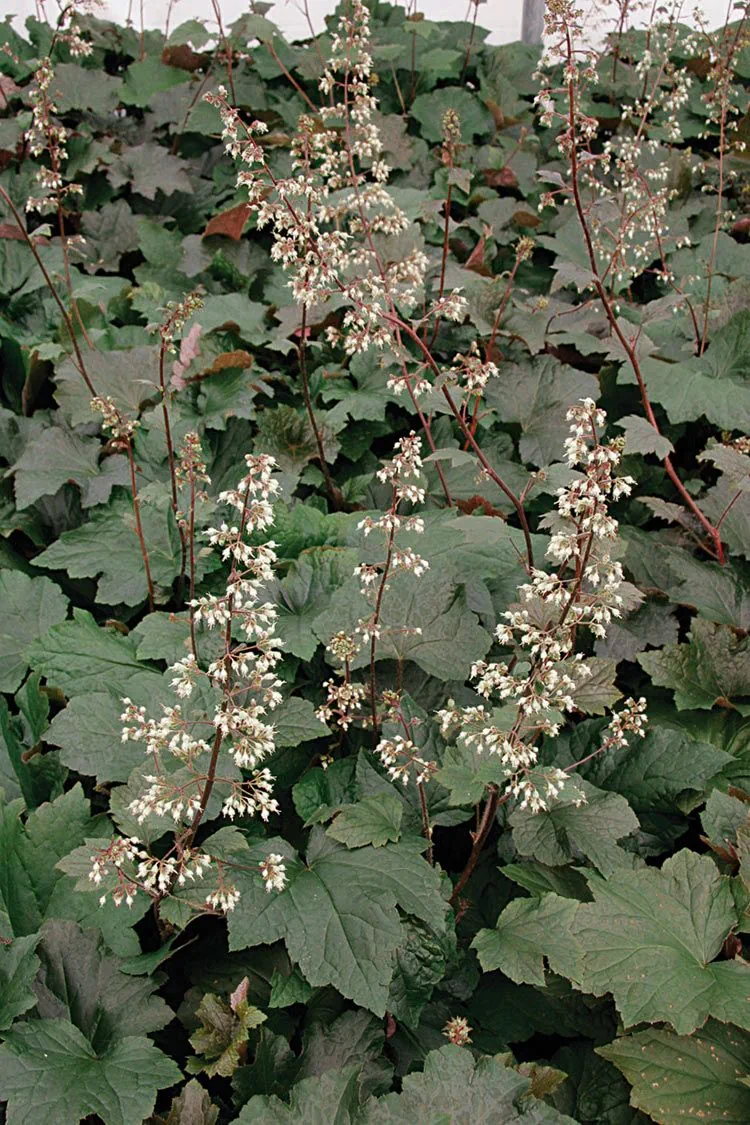
Flowers of Saxifragaceae
5-Merous & Perigynous Flowers
Superior Syncarpic Pistil with 2 Carpels & Styles
Hypanthium Often Present


Floral Formula of Saxifragaceae
CA5 CO5 A5or10 G(2)
Examples of Saxifragaceae
Genus Micranthes
Cool Wort (Sullivantia)
Bishop’s Cap (Mitella)
Prairie Alumroot (Heuchera)

Family Crassulaceae (Stonecrops & Jades)
1370 Species in 34 Genera
Distributed in Warm Temperate Regions Worldwide
Succulent Herbs or Some Small Shrubs
Perform CAM Photosynthesis
Follicle Fruits
Major Radiation in Mediterranean Climates
Family in Order Saxifragales

Flowers of Crassulaceae
Mainly 5-Merous Flowers
Some 3, 4, or 6-Merous Species
Twice as Many Stamens as Sepals
Superior Apocarpic Pistil with usually 5 Carpel
Nectary Scales usually at Base of Each Carpel


Floral Formula of Crassulaceae
CA5 CO5 A10 G5
Examples of Crassulaceae
Jade Plants
Sedum
Aeonium
Rhodiola
Echeveria
Kalanchoe

Order Rosales
Order in the Rosids
Not Well-Defined Morphologically
Includes Roses, Elms, Mariguana, Hops, Figs, Nettles, Etc.
Nitrogen-Fixing via Actinomycetes
Corolla Absent in Most Families
Serrated & Sometimes Glandular Leaves
Many Members with Unisexual & Wind-Pollinated Flowers
Family Rosaceae
Almost 3000 Species in 100 Genera
Worldwide Distribution but Most Common in North Temperate Regions
Herbs, Shrubs, and Trees
Includes Many Commercial/Culinary Fruits
Alternate & Simple or Compound Leaves
Four Basic Groups based on Gynoecium & Fruit Type
Spirea, Rose, Cherry, and Apple
Family in Order Rosales
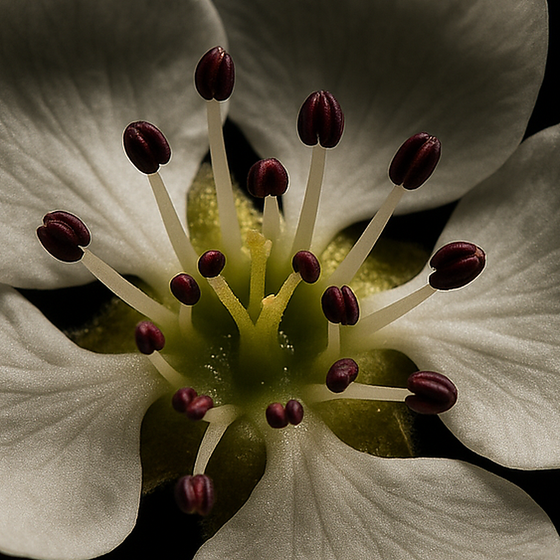
Flowers of Rosaceae
5-Merous Flowers
Non-Fused Petals of Staminal Origin
Many Stamens
Variable Gynoecium used to Define Groups
Hypanthium Present in All Species
Forms Rose Hip
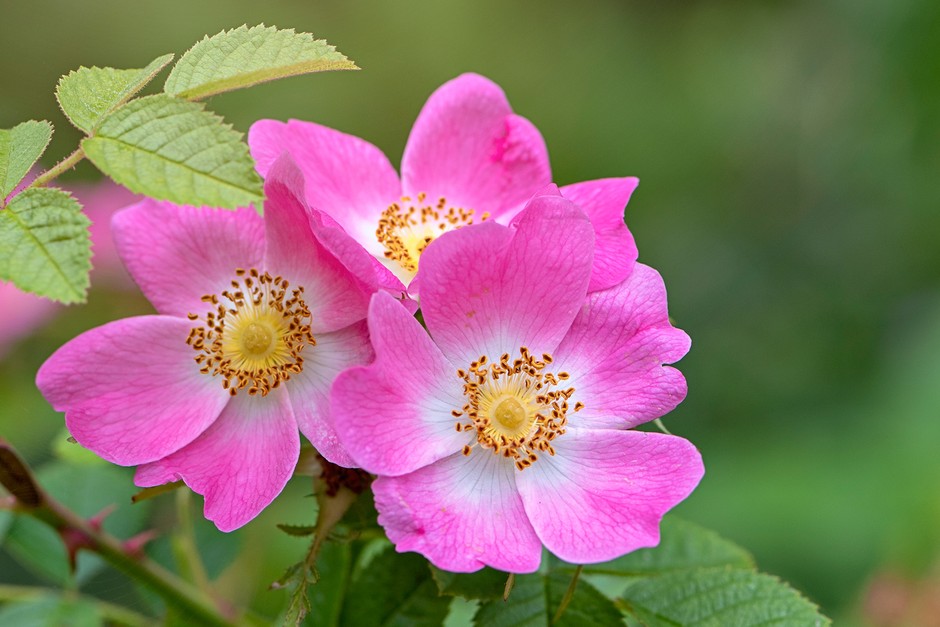
Floral Formula of Rosaceae
CA5 CO5 A♾ G[Variable]
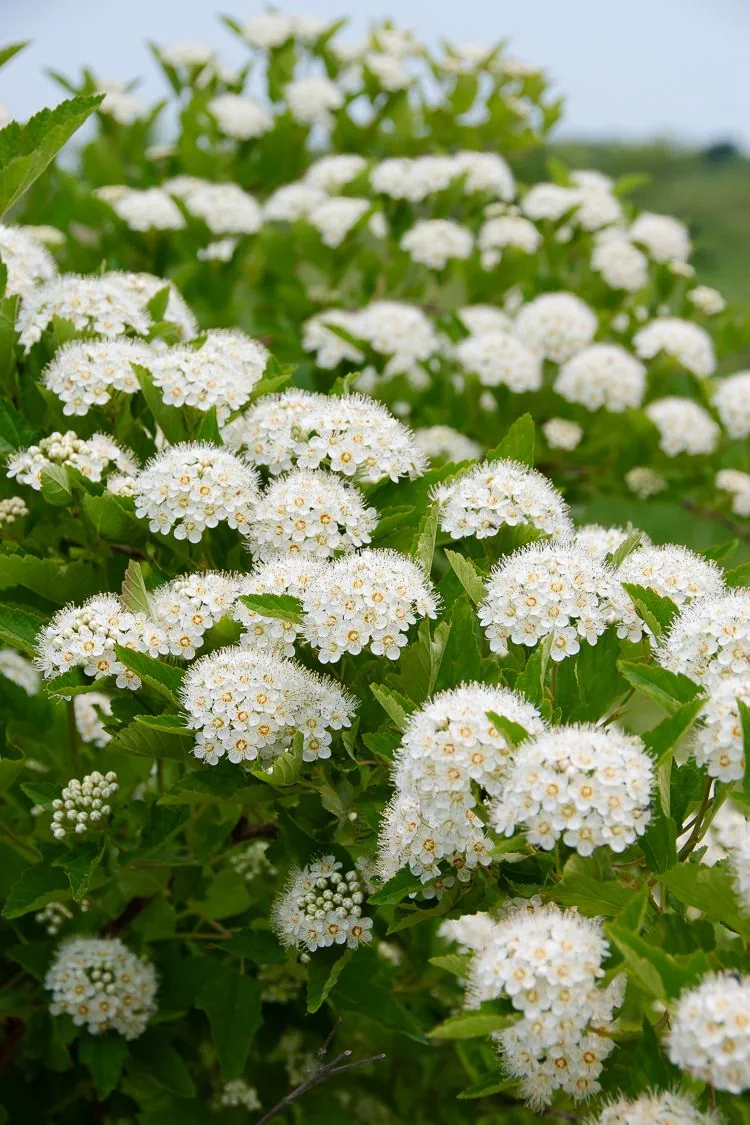
Spiraea Group
Group in Family Rosaceae
Condensed & Congested Inflorescences
Follicle Fruits

Flowers of the Spiraea Group
Perigynous & 5-Merous Flowers
Relatively Small & Congested
Short Hypanthium
Superior & Apocarpic Pistil with 2 to 8 Carpels


Floral Formula of the Spiraea Group
CA5 CO5 A♾ G2-8
Examples of the Spiraea Group
Meadow-Sweet
Hardhack
Ninebark (Physocarpus)
Rose Group
Group in Family Rosaceae
Herbs & Some Shrubs
Compound Leaves
Produce Stolons or Rhizomes
One-Seeded Achenes Common
Often Modified into Aggregate of Achenes (Strawberry)
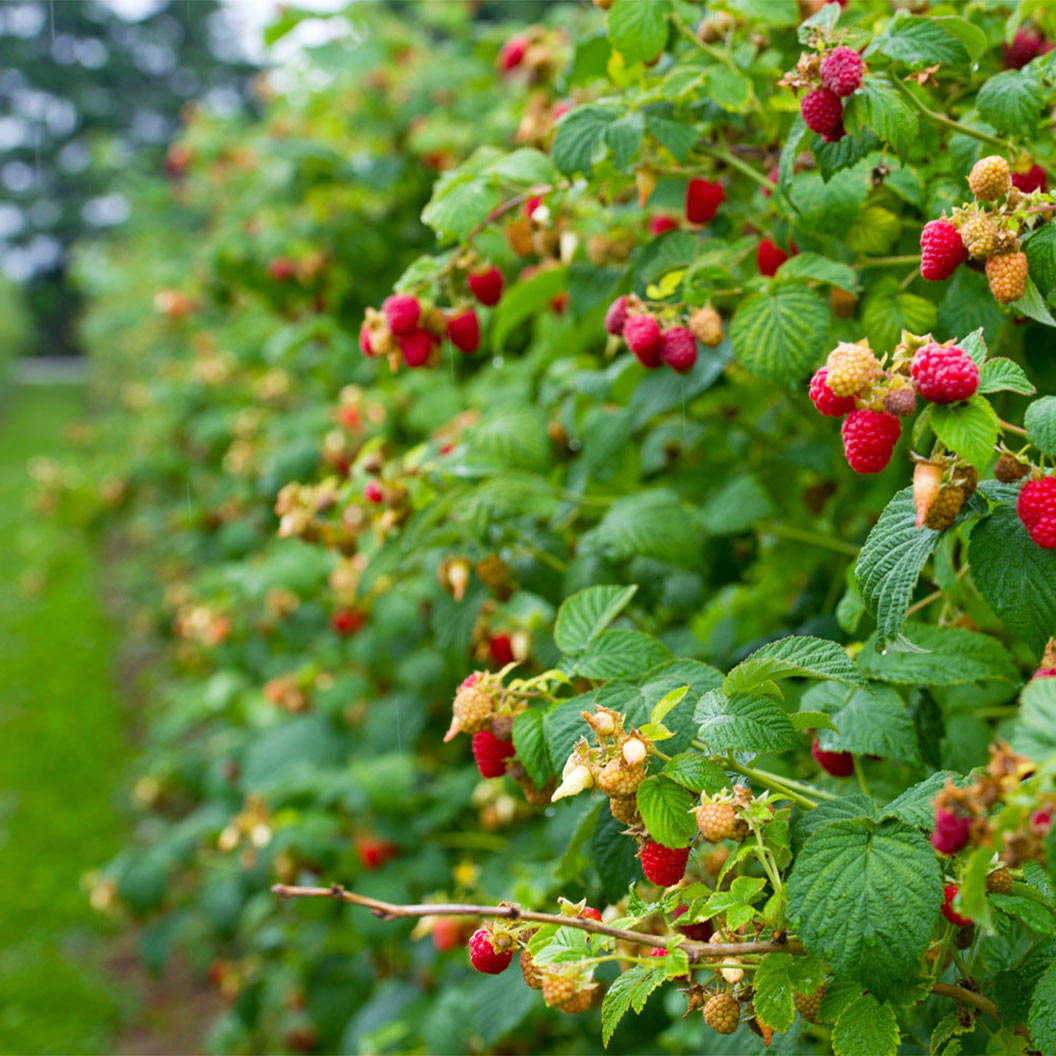
Modified into Aggregate of Drupelets in Genus Rubus
Flowers of the Rose Group
Perigynous & 5-Merous Flowers
Usually Showy
Hypanthium Well-Developed or Receptacle Elongated
Superior & Apocarpic Pistils with Many Carpels


Floral Formula of the Rose Group
CA5 CO5 A♾ G♾
Examples of the Rose Group
Strawberries (Fragaria)
Raspberries & Relatives (Rubus)
Prairie Smoke (Geum)
Agrimonia & Potentilla
Wild Roses (Rosa)
