Unit 2 Part 3: Ph and Water
0.0(0)
Studied by 8 people Call Kai
 Learn
Learn Practice Test
 Spaced Repetition
 Match
Match Flashcards
 Knowt Play
Card Sorting
1/37

Earn XP
Description and Tags
Last updated 2:44 AM on 11/9/22
Name | Mastery | Learn | Test | Matching | Spaced | Call with Kai | Chat |
|---|
No analytics yet
Send a link to your students to track their progress
38 Terms
1
New cards
Boiling point
The temperature at which the liquid's vapor pressure equals the air pressure above the liquid (basically when liquid turns to gas)
2
New cards
Heat of Fusion
The amount of heat needed to change 1.0 g of a substance from a solid to liquid phase. When the situation is reversed, and the liquid phase becomes a solid, the heat is released.
3
New cards
Latent Heat
The heat is required to create a phase change without a change in temperature.
4
New cards
Heat of Vaporization
The amount of heat needed to change 1.0 g of a substance from the liquid phase to the gas phase
5
New cards
Acidic
pH of less than 7 is...
6
New cards
Neutral
pH of 7 is...
7
New cards
Basic
pH of greater than 7 (to 14) is...
8
New cards
Sublimation
The change from the solid phase directly to the gas phase (bypasses the liquid stage)
9
New cards
Solvent
The substance in which the solute dissolves
10
New cards
Free Water
Water that readily separates from foods that are sliced, diced, or dried
11
New cards
Freezing Point
The temperature at which a liquid changes into a solid
12
New cards
Melting Point
The temperature at which a substance changes from solid to liquid
13
New cards
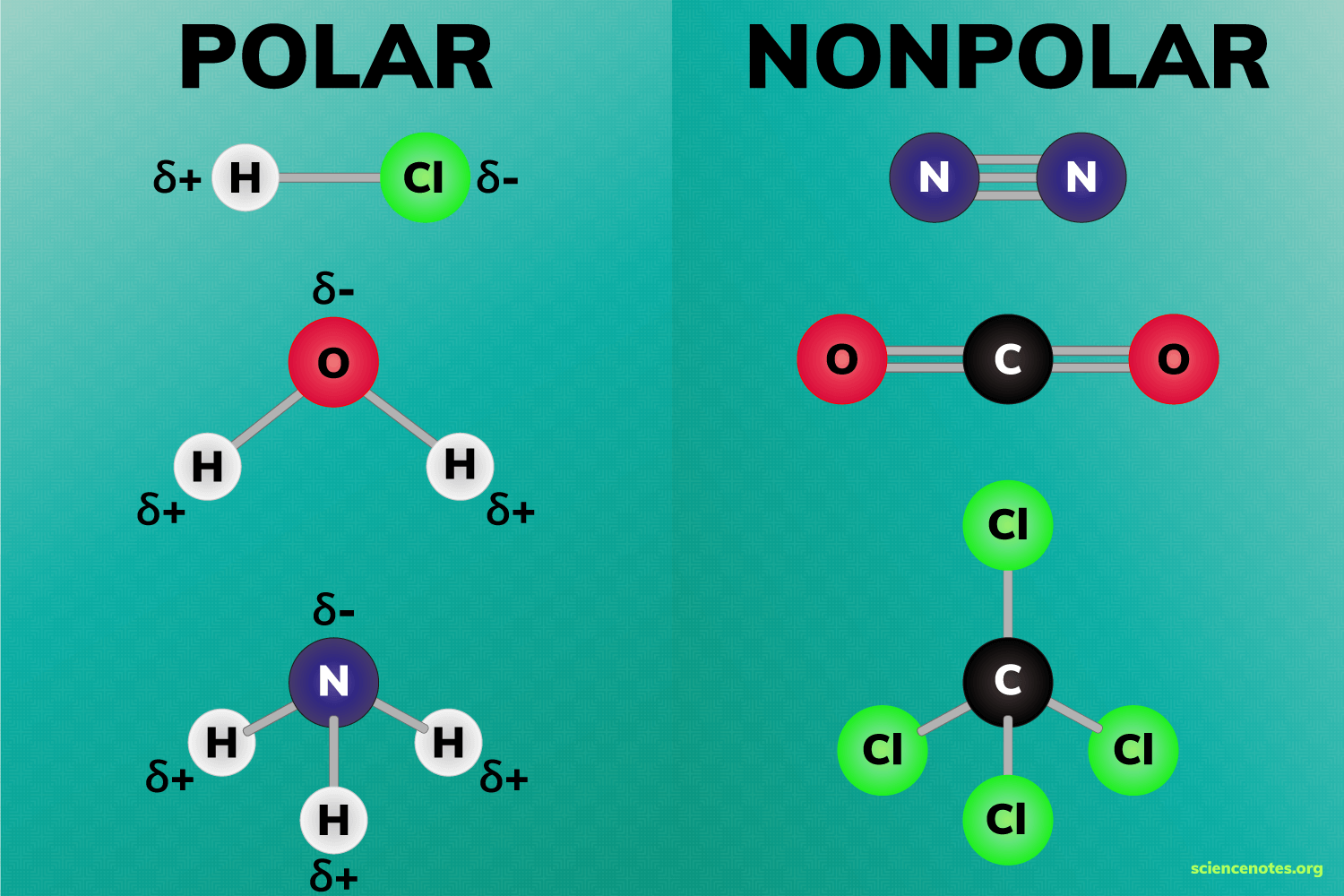
Polar Compound
A molecule that has a clear division of opposite electrical charges. One side has (a) negative charge(s) and the other side (a) positive charge(s).
14
New cards
Hydrogen Bond
An attractive force between any molecules in which hydrogen is covalently bound to a highly electronegative element
15
New cards
Molarity
The number of moles of solute per liter of solution
16
New cards
Vaporization
Can only occur when molecules gain enough energy to exert a force equal to the force of the air pressure over the liquid
17
New cards
Surface tension
An inward or pull that tends to minimize the surface area of liquid
18
New cards
Solute
A substance that is dissolved in a solution.
19
New cards
Bound water
Water that cannot be easily separated in food, it freezes at very low temperatures and doesn't evaporate
20
New cards
A physical change is an alteration of a substance that does not change it's chemical composition. Alters phase changes, shape changes, or size changes. A chemical change is the change of substances into other substances.
Compare and contrast chemical and physical changes.
21
New cards
Physical changes are not reversible. Not all chemical changes can be reversed.
Are physical change reversible? Are chemical changes reversible?
22
New cards
Since 50-65% of your body weight is water it helps maintain a constant temperature and redistributes heat. (They barely had anything on the PowerPoint about this)
How does water help regulate your body? (3 main points)
23
New cards
Extra hydrogen bonds between molecules are formed when water freezes which increases the space between molecules, causing a decrease in overall density.
What about water molecules help explain why ice is less dense than water? (2 main points)
24
New cards
A hydrogen ion is a positively charged molecule (written as H+)
What is the charge of a hydrogen ion?
25
New cards
A hydroxide ion is a negatively charger molecule (written as OH-)
What is the charge of a hydroxide ion?
26
New cards
hydroxide ion (OH-)
Out of the hydrogen and the hydroxide ions, which of the two ions would a base solution produce?
27
New cards
Number of moles of solute/volume of solution in liters = molarity
What is the formula for calculating molarity?
28
New cards
As ice melts, it absorbs heat energy without a rise in temperature. Instead, water molecules use energy to break out of the solid ice structure. That's why we put foods on ice instead of cold water.
Why do we store foods on ice to keep them cold? (2 main points)
29
New cards
When water (steam) condenses back into a liquid, heat is released. When steam contacts your skin it condenses because your body temp is well below the boiling point of water (you know when you put your hand in steam and it gets wet). As the water cools on your skin, you absorb more heat which intensifies the burn.
Why does steam burn your skin? (3 main points)
30
New cards
Water is a medium for heat to flow through. When cooking heat is transferred from the bottom of the pan to the water. Then the water transfers the heat to the food. This allows the food to not get burned.
Why is water necessary for cooking? What would happen without it? (3 main points)
31
New cards
Ionization is the process of forming ions in water. When water ionizes both hydrogen and hydroxide molecules are produced. It happens because hydrogen loses its election (positive charge) and hydroxide gains that election (negative charge).
What is ionization? What molecules are involved? How does it happen? (4 main points)
32
New cards
When equal numbers of hydrogen and hydroxide ions are present to react with each other, neutralization occurs and the acidic and and basic properties of the solutions disappear.
What happens in a neutralization reaction with a strong acid and a strong base? (2 main points)
33
New cards
sour taste, can change color of some foods, turns blue litmus paper red
What are 3 properties of acids?
34
New cards
bitter taste, feels slippery, turns red litmus paper blue
What are 3 properties of bases?
35
New cards
Concentration
The measure of the amount of substance in a given unit of volume (is expressed through moles of a material dissolved in it)
36
New cards
Titration
A common method used in a laboratory to determine the concentration of an acid or a base
37
New cards
Freezing and Melting, Boiling and Condensing, Sublimation, Surface Tension
What are the 4 properties of water?
38
New cards
its polarity
What allows water to have many of its unique properties?