Asian Art Midterm
 Call Kai
 Learn
Learn Practice Test
 Spaced Repetition
 Match
Match Flashcards
 Knowt Play
1/168

There's no tags or description
Looks like no tags are added yet.
Name | Mastery | Learn | Test | Matching | Spaced | Call with Kai | Chat |
|---|
No analytics yet
Send a link to your students to track their progress
169 Terms

Plain of Jars
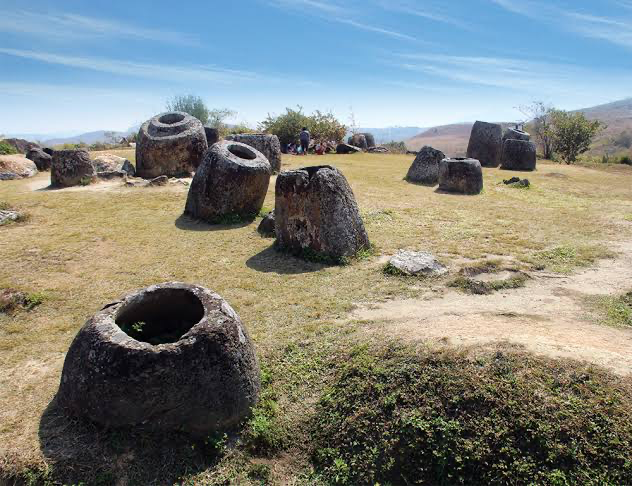
Where is the Plain of Jars?
Xianghkhoung Plateau, Laos

What periods was the Plain of Jars inhabited?
Neolithic to Bronze-Age

What materials were these vessels carved out of?
Sandstone, granite, and limestone boulders

What is the suggested function of the Plain of Jars?
Mortuary

How were the lids of the jars decorated in Laos?
Reliefs
During the Neolithic Bronze-Age of Thailand, what culture contained grave goods of ceramic
Ban Chiang

What was the typical style of the clay jars from Neolithic Thailand
post-fired pigments of red-on-buff
geometric and linear patterns

What is the context of the clay jars from Neolithic Thailand
Placed in burials
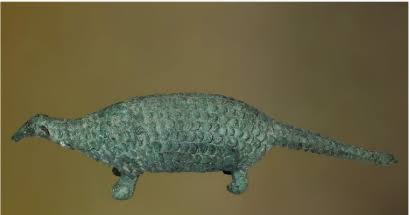
Which artifact demonstrates the skill of early bronze-casting in Vietnam
Pangolin Bronze

What culture is the Pangolin Bronze from?
Bronze Age Sa Huynh Culture
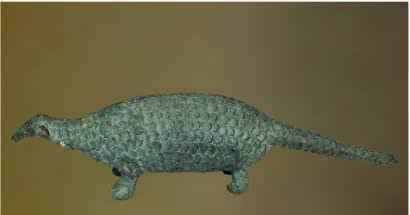
What power was the scales on the Pangolin (anteater) believed to possess?
Healing powers

What artifact comes from the Dong Son Culture in Vietnam
Ngoc Lu Drum

The designs on the Ngoc Lu Drum were incised onto what kind of surface?
Bronze
First known civilization on the Indian sub-continent
Harappa Civilization/ Dravidian Culture
Where did the Dravidians first establish themselves?
Indus River Valley
What were some urban characteristics of Mohenjo-Daro?
defined streets and domestic structures
distinct neighborhoods to separate by labor and social classes
What were impressive engineering developments for Harappa and Mohenjo-Daro?
Control of water (wells) and sewer system
Harappa and Mohenjo-Daro were individual urban centers that occurred at the same time?
At Mohenjo-Daro, what was used to build their structures?
dry masonry using ceramic bricks

What was the possible function of the Great Bath at Mohenjo-Daro?
Ritual cleansing/purification
What was found along with bodily remains in the pit burials at Mohenjo-Daro?
Burial offering in pottery vessels
What was an artistic development of the Indus Valley Culture?
Image based, hieroglyphic writing system carved on seal-stones
What visual elements reflect the Seated Three-headed Figure at Mohenjo-Daro?
Pictographic elements
animal figures
Anthromorphic figure in a seated position
Hieratic scale

Describe the content of the Torso of a Male from Harappa?
Red sandstone
Representational figure
Naturalistic
Unclothed

Which artwork is this?
The Robed Male Figure from Mohenjo-Daro
What are some visual characteristics of the Robed Male Figure at Mohenjo-Daro?
Clover-shaped ornamental dress
“eye” bead on forehead
Stylized facial features
Half-opened eyes
Prominent lips
Triangular sterner nose

What is the name of these cave paintings and where are they from
Paintings of Animals, Maros-Pangkep Caves, Neolithic, Indonesia

Title; dynasty; region
Seated Buddha; Zhao Dynasty; China
gilt bronze
earliest known Buddha of China

What is the name of this colossal sculpture and where is it located?
Colossal Shakyamuni, Yungang caves, Northern Wei Dynasty

Buddhist Memorial Stele, Eastern Wei Dynasty
Jataka
Recounts the birth stories of the Buddha

What is the context of these stele inscriptions?
Image depicts the lives of the Buddha based on sutra texts
Legalism
Political system based on the concept that society must be governed by an authoritative state
How is the interior of the Mausoleum of First Emperor Qin described?
A burial chamber created as a recreation of the empire and the celestial realm

What era are the Terracotta Warriors from?
Qin Dynasty, China
What was the Great Wall of China meant for when constructed by first emperor of China, Shihuangdi?
Geographical formalize the empire of China
Which early Chinese Dynasty following the Qin Dynasty emphasized rituals to enforce social order and harmony?
Han Dynasty
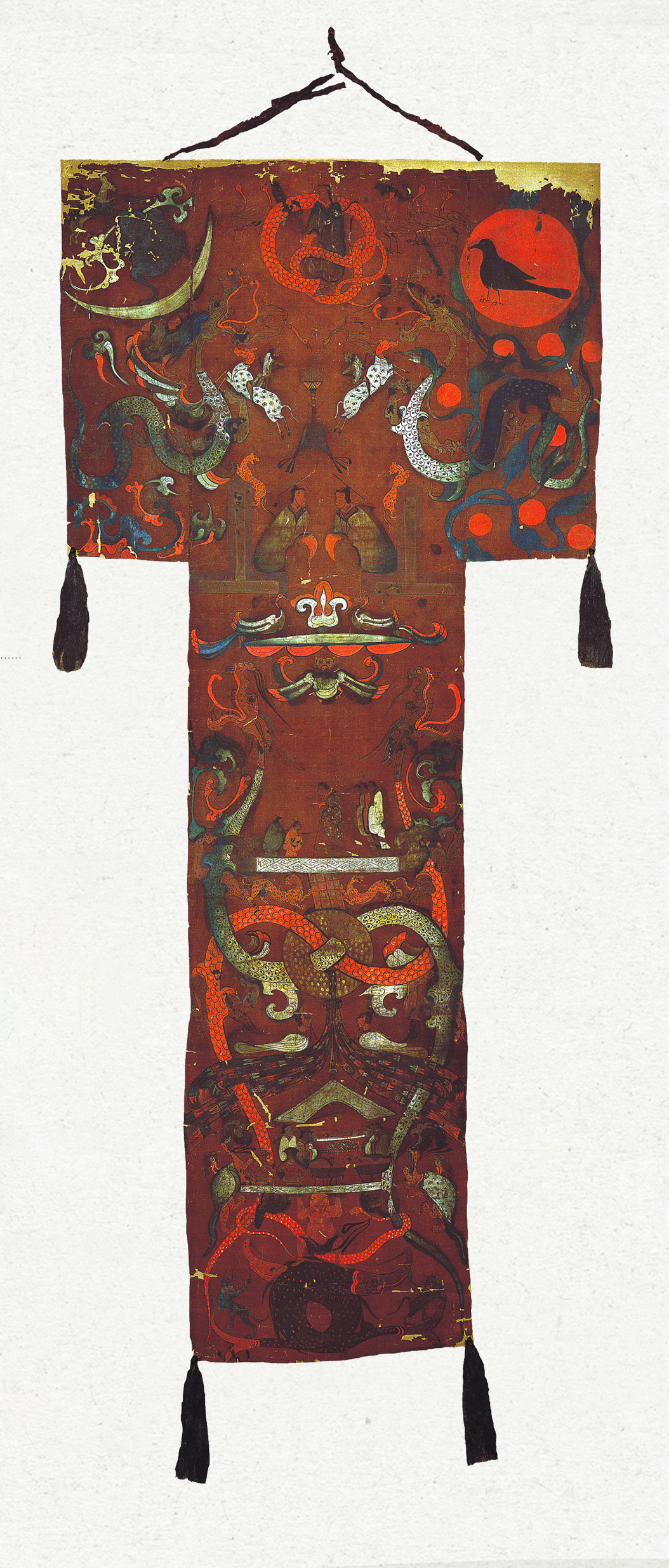
What is the title of this artwork from the Han Dynasty?
Funerary Banner of Lady Dai

What is the title of this artifact from the Han Dynasty displayed here?
Jade Burial Suit, Tomb of Liu Sheng
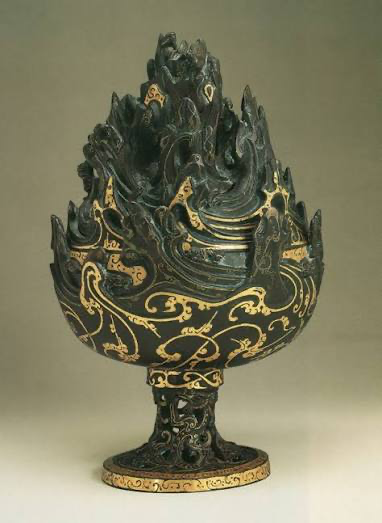
Which dynasty is this artifact from?
Han Dynasty

Title?
Incense Burner
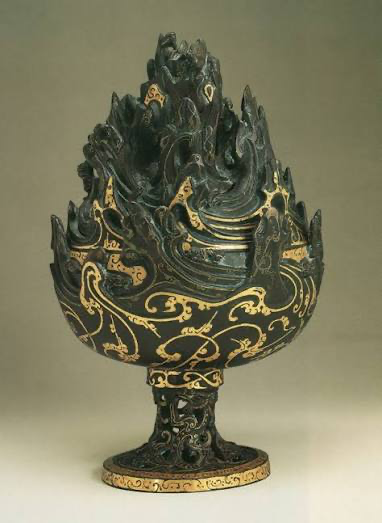
Where was the Incense Burner from Han Dynasty found?
In the tomb of Liu Sheng
What does the smoke symbolize on the Incense Burner?
That nature is a living, breathing entity
True or false: Confucianism is about following specific virtues to maintain social order and harmony?
True
True or false: Daoism pertains to inner spiritual achievement whilst acknowledging the natural forces that interfere and mold peoples lives
True

Which shrine do these reliefs belong to?
Wu Family Shrine

Which dynasty do these registers come from?
Han Dynasty
What do the various symbols and motifs suggest a connection between?
The earthly and celestial realm

How is the connection between the earthly and heavenly realm visually conveyed in the Relief Rubbing from the Wu Family Shrine?
phoenix : Mandate of Heaven, long life (top register
ceremonial pavilion scene in earthly realm (middle register)
fusing three: symbol of long life (bottom register)
Who was the first emperor of the Qin Dynasty?
Qin Shihuangdi
What was the “1st” true dynasty, the Shang Dynasty’s writing system?
Oracle bones - earliest known writing system in China
What is a pictograph?
symbol based on actual objects

What is the name of this artifact from the Shang Dynasty?
Fang Ding Vessel

What design principle does this bronze vessel utilize?
Horror vacuui
Describe early Chinese bronze-casting technique
cast molds into which molten bronze is poured into

Where was the Fang Ding vessel found?
Tomb of Lady Hao
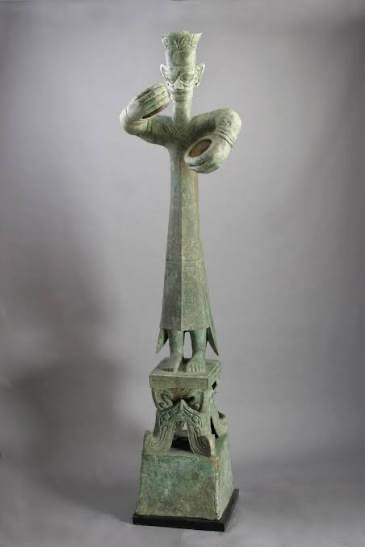
What is the title of this artifact from the Shang Dynasty?
Standing Bronze Figure
Where was the Standing Bronze Figure found?
in a pit at Shanxingdui
mask element at bottom suggests spiritual association

What is the title of the artifact depicted in this image?
Flat Wine Vessel (Hu) or Hu with Pictorial Imagery

Which Dynasty
Zhou Dynasty

What were the design techniques of this artwork?
designs incised onto surface casted in bronze

Describe the imagery contained on the vessel
Abstract imagery ‘
Stylized birds that interconnect

Name this artwork from the late Zhou era
Bi Disk - jade

How was this artifact used?
Funerary context

What are the visual characteristics and associations?
dragon motif: long association with rulers
stylized clouds and round form suggest spiritual/heavenly link

What is the title of this artifact from the Zhou era?
Rhinoceros-Shaped Wine Vessel (Zun)

Materials?
Bronze inlaid with traces of gold

Where do these bells belong to?
The Zhong Bells, Tomb of Marquis of Yi

What are the bosses on the bells used for?
facilitate even tones
produces two tones when struck from exterior

What is the title of this relief imagery?
Varaha Saving Bhudevi Relief
Mythic story of Vishnu subduing serpent demon and saving Bhudevi the earth goddess

What era is this relief from?
Gupta Era

Which temple is this?
Vishnu Temple, Deogargh, Gupta Era

What is the shakhara?
The tower-like roof of the central structure
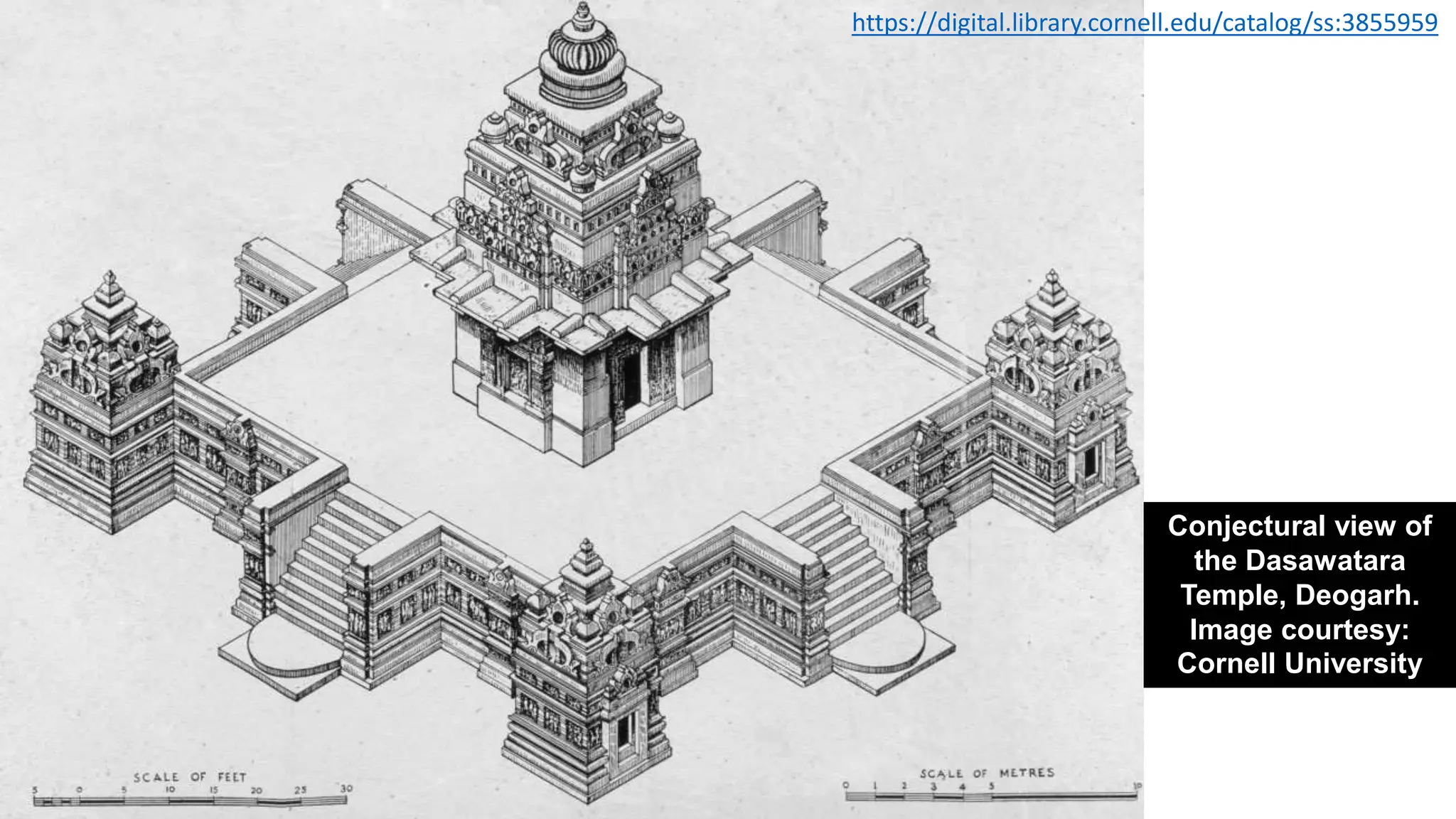
What is the mandapa
The elevated porch for circumambulation

What is the garbhagriha (sanctum)?
The “womb” house for the deity statue

What is the title of this sculpture?
Linga With Face of Shiva, Gupta Era
What does the linga represent?
The sacred universal energy and shiva’s generative power
What is the yoni in Hinduism?
the basin of water representing dive female power-the cosmic womb
What is Brahma?
The supreme creator force
Who is Vishnu?
God who protects and sustains creation
Who is Shiva?
God of destruction and regeneration
Who is Ganesha often shown as in Hinduism imagery?
An elephant
Who is Durga?
Principle form of goddess Devi, the female avatar of Brahman
What is puja?
A worship ritual performed in Hinduism to honor deities in prayer and offerings
When did urban settlements emerge in the central "heartland" river valleys of Neolithic China?
ca. 2500 BCE
Which regions comprised the central "heartland" river valleys of Neolithic China?
Henan, Shanxi, and Shaanxi regions
What is the date range for the Yangshao culture in Neolithic China?
ca. 5000-2000 BCE
What key Yangshao site in Shaanxi dates to 5000 BCE and was discovered in the early 1950s?
Banpo
How did Neolithic Chinese artisans produce earthenware ceramics?
By baking ("firing") clay at low temperatures in pit kilns

What object is shown in this image, dating to c. 2350-2050 BCE?
Jar (Guan), Yangshao Culture, Machang phase

What artifact from the Yangshao Culture is depicted in this image?
Bowl with Men's Heads and Fish (ca. 5000–4000 BCE, Banpo, Shaanxi province)
What primary function did the Bowl with Men's Heads and Fish serve in Yangshao funerary practices?
It served as a lid for a funerary urn that held the cremated remains of the deceased

What object from the Longshan culture is depicted here?
Gu Beaker (ca. 2000 BCE)
How was the distinctive black color of the Longshan culture Gu Beaker achieved?
Through its firing technique in a kiln without using slip, followed by burnishing the surface
Why was abrasion used to shape jade objects like Bi disks in Neolithic China?
Because jade cannot be cut, so it must be shaped by abrasion

What object from the Liangzhu Culture is pictured here?
Cong Prism (ca. 2000 BCE)
What symbolic associations are suggested by the form of the Liangzhu Cong prism?
The square shape may refer to the realm of the earth, while the round cylinder refers to heaven

What jade artifact from the Hongshan Culture is depicted in this image?
Cloud-like Plaque (ca. 4700–2920 BCE, Niuheliang, Liaoning province)