econs section 2
 Call Kai
 Learn
Learn Practice Test
 Spaced Repetition
 Match
Match Flashcards
 Knowt Play
1/64

There's no tags or description
Looks like no tags are added yet.
Name | Mastery | Learn | Test | Matching | Spaced | Call with Kai | Chat |
|---|
No analytics yet
Send a link to your students to track their progress
65 Terms
what is a market?
any place where buyers and sellers engage in trade
why are markets important
to allocate scarce resources through forces of demand
what is the market system (price mechanism)
allocating scarce resources through the market forces of demand and supply to establish market equiliibrium
what is a market equilibrium
no shortages or surpluses
what causes a shortage in the market
when the demand for a product exceeds the supply at a given price
what causes a surplus in the market
when the supply for a product exceeds the demand at a given price
when does a market disequilibrium occur
when the price of a product is above or below the equilibrium price
demand is
quantity of a good or a service that consumers are both willing and able to buy at various prices over a given period of time
effective demand
to distinguish genuine demand from a desire to buy something
law of demand:
there is an inverse relationship between the price of a good or service and quantity demanded.
reasons for the relationship of law of demand:
-as the price of a product falls, the customer’s real income rises (with same income, customer can buy more of a product at a lower price)
-as price of a good/service falls, larger number of customers can pay, so more likely to buy product
determinants of demand
-habits, fashion, tastes (trending products)
-income (higher levels of income: customers can and will buy more)
-substitutes and complements (other products people can use instead of another, or products that people demand jointly, eg: tennis ball+ tennis racquet)
-advertising
-government policies (taxes reduce demand, subsidies increase demand)
-economy (boom or recession)
what will cause a movement along a demand curve?
-a change in price of a good or service
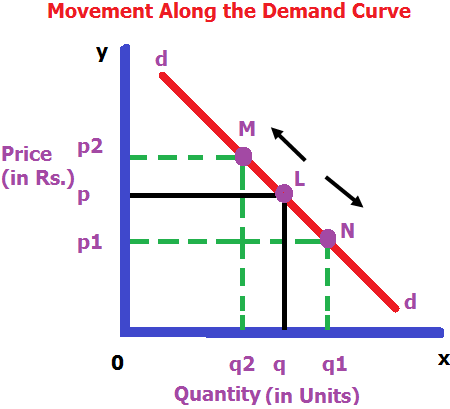
where is the contraction in demand at?
L to M
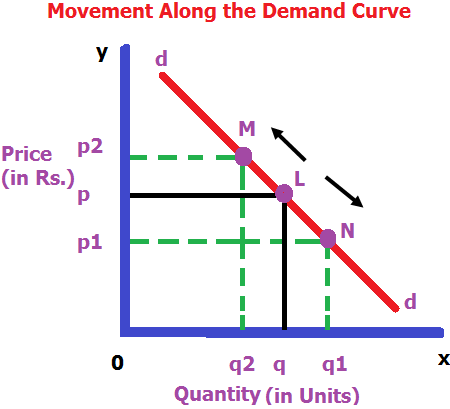
where is the extension in demand at?
L to N
What is a contraction in demand?
a fall in the quantity demanded for a product following an increase in its price
What is an extension in demand?
a rise in the quantity demanded for a product following a decrease in price
what is market demand?
the sum of all individual demand for a particular product at given prices
a rightward shift in the demand curve shows ____ while a leftward shift shows ______
increase in demand, decrease in demand
what is a shift in demand caused by
changes in non-price factors that affect demand (determinants of demand)
what is supply?
the quantity of goods and services that firms are able and willing to provide at at various prices over a given period of time
what is the relationship between price and supply? why?
direct, because: frms can earn higher profits if they supply more at a higher price, and new firms are able to join the market if the higher price covers production costs.
determinants of supply
-time (the shorter the time period=less time to increase output=less supply)
-weather (weather can shift supply of agricultural output)
-opportunity cost
-taxes (taxes imposed on supplier add to cost of production, lowering supply)
-innovations (technological advances will increase output)
-production costs
-subsidies (reduce costs and increases supply)
what is the law of supply?
there is a positive relationship between price and quantity supplied of a product
what causes a movement along a supply curve?
if a price of a product changes, causing a change in quantity supplied.
what is an extension in supply?
increase in the quantity supplied followed by an increase in price
what is a contraction in supply?
decrease in the quantity supplied followed by a decrease in price

where is the contraction in supply?
A to B

where is the extension in supply?
A to C
what is the market supply curve?
the adding up of all individual supply at each price level
a rightward shift in the supply curve is an ______ in supply while a leftward shift shows a ______ in supply
increase, decrease
what is a price mechanism?
the system of relying on the market forces of demand and supply to allocate resources
eg: wage rates are determined by demand and supply for labor
what are features of the price mechanism?
-there is no government interference
-private economic agents own the resources and have freedom to allocate them
-goods/services are allocated based on price (high price=more supply, low price=more spending)
-allocation of factor resources are based on financial incentives (maximising financial return)
-competition creates opportunities for firms and choices for individuals, who can benefit
market equilibrium is
when the quantity demanded of a product is equal to the quantity supplied of the product (no shortages or surpluses)
what is an equilibrium price
price at which demand curve for a product intersects the supply curve for a product. (no surplus or shortages)
what is market disequilibrium
when the quantity demanded for a product is either higher or lower than quantity supplied, leading to shortages or surpluses
shortage
when demand exceeds supply (excess demand)
surplus
when supply exceeds demand (excess surplus)
excess demand/supply
a situation where the quantity demanded/supplied of a product is unequal to the quantity supplied/demanded, creating shortage/surplus
changes in non-price factors that affect demand and supply will change…
equilibrium price and quantity traded
what is price elasticity of demand (PED)
extent to which quantity demanded for a product changes due to change in price
price inelastic demand
demand for a product that is relatively unresponsive to changes in price due to lack of substitutes
price elastic demand
demand for a product that is relatively responsive to changes in price due to many substitutes
formula for price elasticity of demand
percentage change in quantity demanded / percentage change in price
when price elasticity is less than ____, it is ____________, while when it is greater than ____, it is _____________.
1, price inelastic, 1, price elastic
what is a perfect price inelastic?
when the price elasticity demand of a product is equals to 0 (vertical)
quantity demanded of a product is independent on price
what is perfect price elastic?
when the price elasticity value of a product is equals to infinity (horizontal)
quantity demanded of a product is dependent on price
what is unitary elastic?
when the percentage change in quantity demanded is proportional to change in price, so there is no change in sales revenue
PED=1
determinants of price elasticity of demand
-substitutes
-income
-necessity
-habits, addictions, fashions and tastes
-advertising/brand loyalty
-time
-durability
-costs of switching
-breadth of the definition of the product (if its general or not)
What is sales revenue?
sum of money received from the sale of a good or service
what is profit?
difference between firm’s total revenue and its total costs
significance of ped for decision makers
-helping producers decide on their pricing strategy
-predicting the impact on producers following changes in the exchange rate
-price discrimination
-deciding which products to impose sales taxes on
-determining taxation policies
-wage negotiations
what is price elasticity of supply?
degree of responsiveness of quantity supplied of a product following a change in its price
price elastic supply
easily increase supply without time delay if there is an increase in price of product
price inelastic supply
firms find it difficult to change production in a given time perioddue to change in market price
how to calculate pes?
percentage change in quantity supplied over percentage change in price
when the PES is greater than 1, supply is price _____, if its less than 1, it is price ______.
elastic, inelastic
when PES equals to 0, it is perfectly price _______. when PES equals to infinity, it is perfectly price _____.
inelastic, elastic
determinants of price elasticity of supply
-degree of spare capacity
-level of stocks
-number of producers in industry
-time period
-ease and cost of factor substitution
what is an economic system
the way in which an economy is organised and run
market economy/free market
economic system that relies on the market forces of demand and supply to allocate resources
mixed economy
combination of government-controlled resource allocation with the market economic system. some is controlled by government and some are controlled by private individuals/firms
advantages of market economic system
-efficiency (firms pay attention to what consumers want)
-freedom of choice (not restricted by government regulations)