Physics 248: Intro to Modern Physics II
 Call Kai
 Learn
 Practice Test
 Spaced Repetition
 Match
 Flashcards
 Knowt Play
1/48

There's no tags or description
Looks like no tags are added yet.
49 Terms
What is Coulombs law
(Lecture 1, Covered September 2)

Do two similar charges repel or attract
Repel (Lecture 2, Covered September 4)
Do two different charges repel or attract
Attract (Lecture 2, Covered September 4)
Which force is stronger, electric force or gravity
Electric force by far. Not even close (Lecture 2, Covered September 4)
What is the charge of an electron
(Lecture 2, Covered September 4)

What is the mass of an electron
(Lecture 2, Covered September 4)

What is the value of k in Coulomb’s constant
9×10⁹ (Lecture 2, Covered September 4)
What is the equation that relates force and electric field
F = qE (Lecture 2, Covered September 4)
What are the linear charge density formulas
(Discussion 1, Covered September 8)

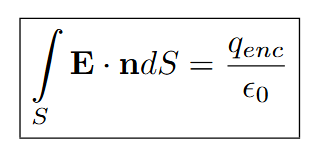
What is Maxwell’s first equation (it relates electric field and enclosed charge)
(Lecture 5, Covered September 14)
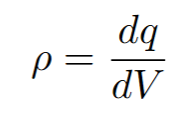
What is volumetric charge density defined as
(Lecture 6, Covered September 16)
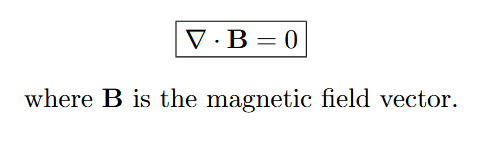
What is Gauss’s Law in differential form. What is the proof mathematically
It is proved via the Divergence Theorem (From Calc 3) (Lecture 7, Covered September 18)

What is Maxwells Second Equation in differential form
(Lecture 7, Covered September 18)
How is electric field related to electrostatic potential
(Lecture 8, Covered September 21)

What is work in terms of electrostatic potential
Where phi b is the final potential and phi a is the initial potential (Lecture 8, Covered September 21)

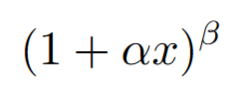
What is the Taylor expansion of the image too 2 terms
(Lecture 9, Covered September 23)


What is the Taylor expansion of the image
(Lecture 9, Covered September 23)

What is the energy stored in a capacitor
(Lecture 10, Covered September 25)

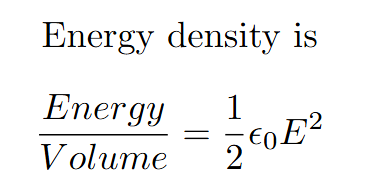
What is the energy density of a capacitor
(Lecture 10, Covered September 25)
What is current in terms of charge and time. What are the units of current
The units of current are Amperes (Lecture 11, Covered September 28)

What is the current density
It’s the amount of charge per unit crossing an area per unit time (Lecture 11, Covered September 28)

What is current density in terms of electric conductivity
(Lecture 11, Covered September 28)

What is Ohm’s Law
(Lecture 11, Covered September 28)

What is Kirchhoff’s Voltage Law
The sum of the electrical potential differences (voltages) around any closed network is 0 (Lecture 12, Covered September 30)
What is Kirchhoff’s Current Law
The total current entering a node equals the total current leaving that node (Lecture 12, Covered September 30)
What is the formula for the total charge across a capacitor that was initially discharged
(Lecture 12, Covered September 30)

What is the formula for the magnetic field produced by a charge.
(Lecture 13, Covered October 2)

How much work do Magnetic Fields do. What does the work done by a magnetic field imply
0 Work. This implies the velocity of the charge is conserved by the work energy theorem (Lecture 13, Covered October 2)
What is Amperes Law
(Lecture 17, Covered October 12)

What is the magnetic field outside and inside an infinite solenoid
B = 0 outside, B = mu_0 I n (Lecture 18, Covered October 14)
What is Faraday’s Law of Induction
(Lecture 18, Covered October 14)
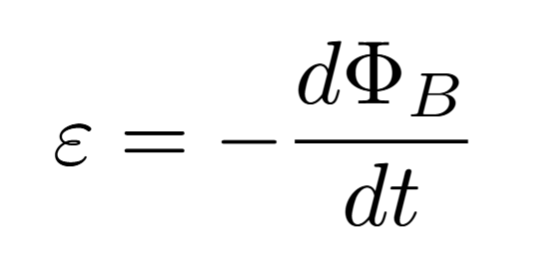
What is Faraday’s law in differential form
(Lecture 20, Covered October 19)

What’s the unit of inductance
(Lecture 21, Covered October 21)

What’s the potential difference in a solenoid
where L is inductance and L = (mu0 N² * S)/(Lz) (Lecture 21, Covered October 21)

What is the power in a circuit
P = IV = I²R = V²/R (Lecture 21, Covered October 21)
What’s the energy in an inductor
(Lecture 21, Covered October 21)

What is mutual inductance, M, defined as (For 2 solenoids)
2 represents the bigger solenoid (Lecture 21, Covered October 21)

What is the wave equation
(Lecture 23, Covered October 26)

What is the speed of light in terms of the permittivity of free space, and permeability of free space
(Lecture 23, Covered October 26)

What is electric energy density in a wave
(Lecture 25, Covered October 30)
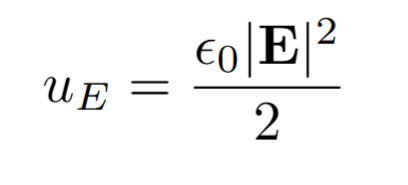
What is magnetic energy density in a wave
(Lecture 25, Covered October 30)

What is the intensity of an electromagnetic wave
(Lecture 25, Covered October 30)

What is the Poynting vector defined as
(Lecture 25, Covered October 30)

What is Poyntings Theorem
(Lecture 25, Covered October 30)

What is the magnetic potential
A is the “potential” vector (Lecture 25, Covered October 30)
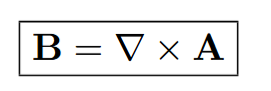
What is the curl of the electric field in terms of the potential vector
(Lecture 25, Covered October 30)

What is Fermat’s Principle
Fermat's principle says the path traveled by a light ray is the one that takes the least amount of time. Also known as the principle of least time (Lecture 26, Covered November 2)
Describe the index of refraction and give the equation it’s defined as
It’s related by this equation where V_p is velocity, n is the index of refraction and c is the speed of light. n is always greater than or equal to 1 (Lecture 26, Covered November 2)

What is Snell’s Law
(Lecture 26, Covered November 2)
