Speech and Language Disorders
 Call Kai
 Learn
 Practice Test
 Spaced Repetition
 Match
 Flashcards
 Knowt Play
1/47

There's no tags or description
Looks like no tags are added yet.
48 Terms
Speech sounds
Phonology
Vocabulary
Lexicon
Grammar/sequence
Syntax
Meaning
semantics
Stress & intonation
Prosody
Vocal tract is comprised of

Where is the larynx?
above trachea
location of vocal cords

The vocal cords create sounds of speech via?
vibration

Where is epiglottis located
valve between larynx and mouth
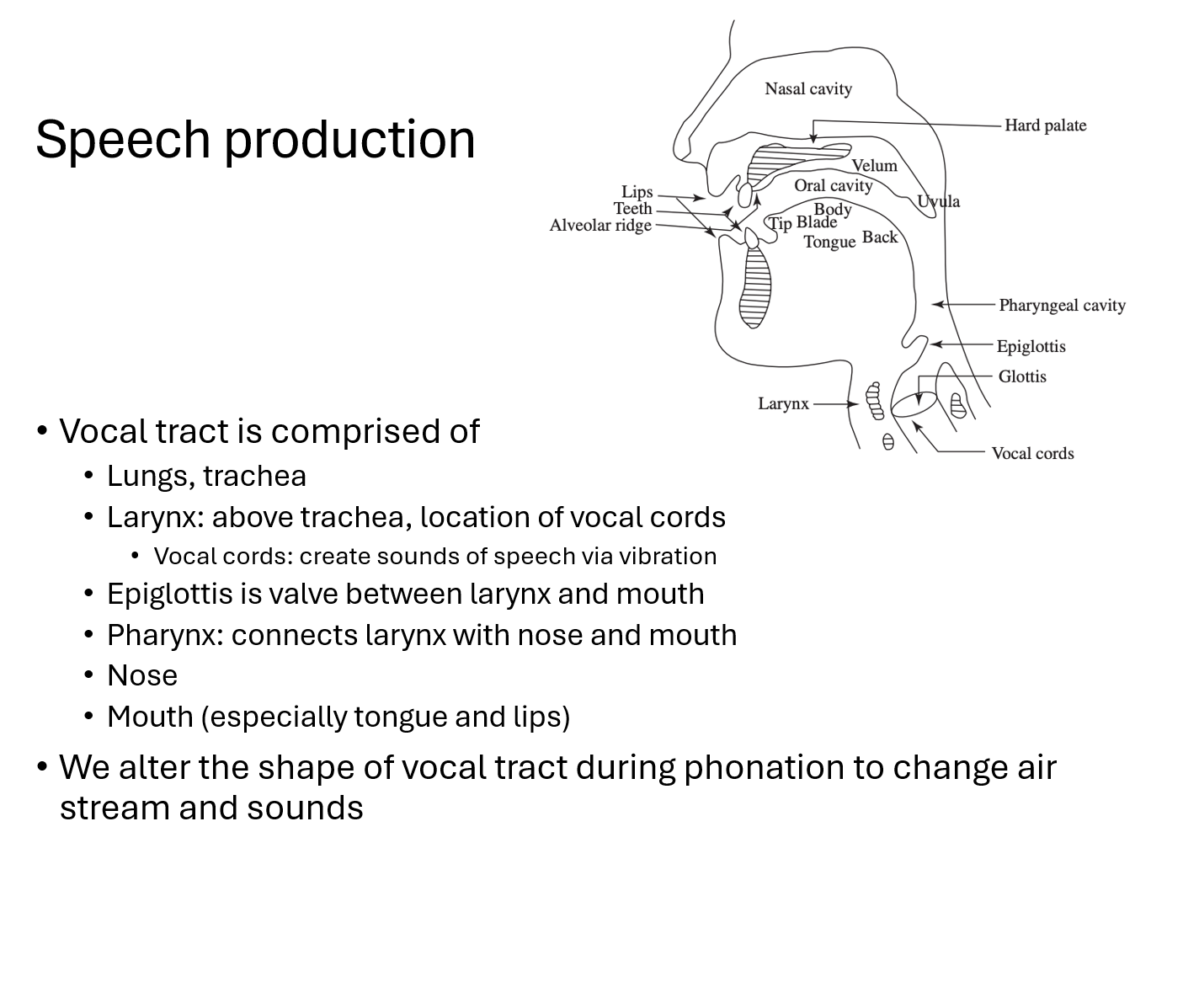
Where is the pharynx
connects larynx w/ nose and mouth

We alter the __ of vocal tract during phonation to change__
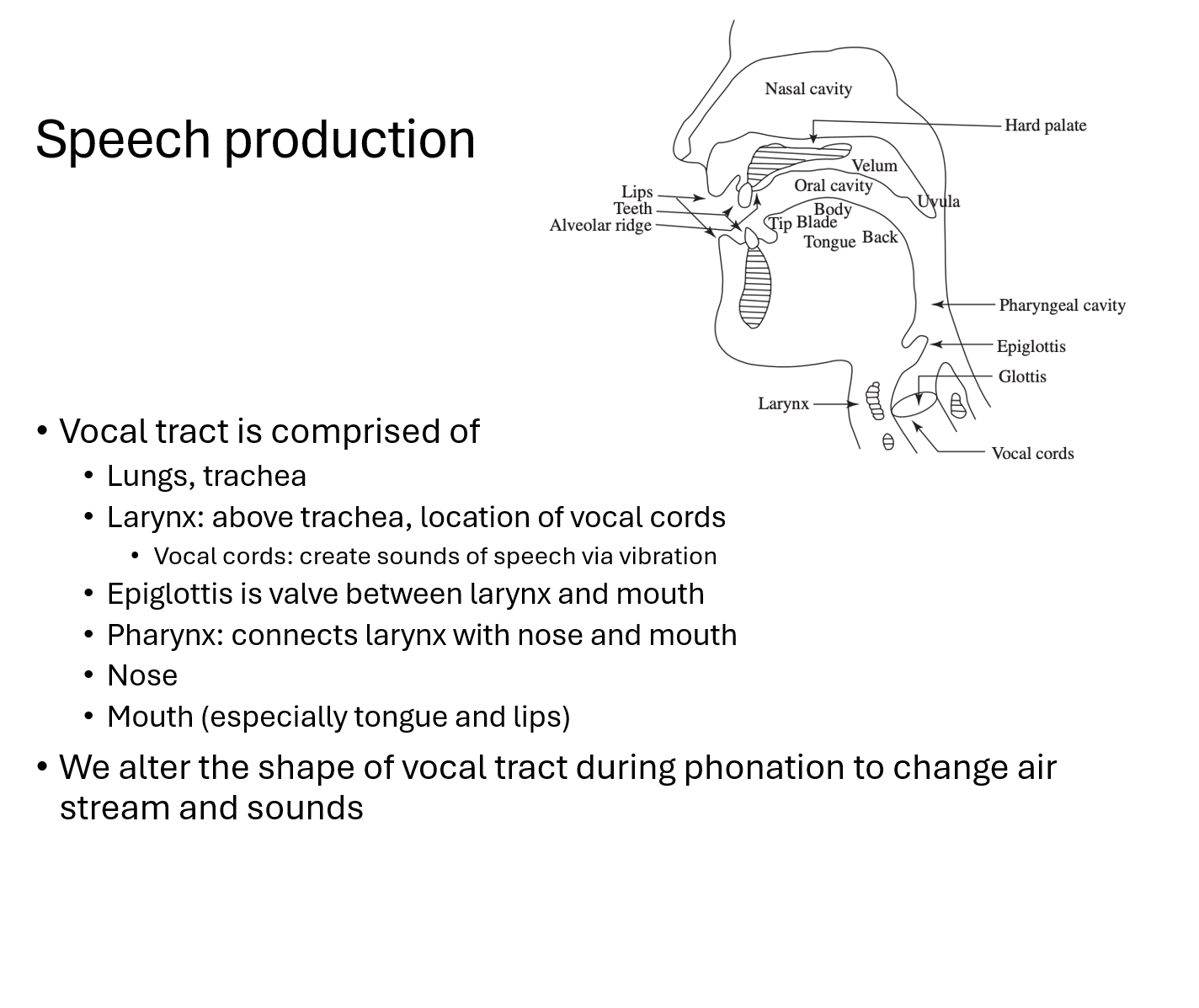
shape - air stream & sounds
how are vowel sounds made
We alter the shape of the vocal tract during phonation to change air stream and sounds.
Aphasia - main problem, associated with?
language impairment
cerebrum
Dysarthria - main problem
motor speech disorder (weakness, incoordination, impaired control of muscle for speech- slurred)
What is apraxia
motor planning
The muscles work, but the brain has trouble programming the movements needed for speech.

Aphasia occurs with what pathologies?
after stroke, TBI, neoplasm

Aphasia is what kind of disorder
acquired communication disorder

Aphasia - location of lesion?
located in brain loci - extremely vulnerable during CVA

Aphasia affects?
speech, reading, writing

Characterized by impaired auditory comprehension but fluent speech that is of normal rate and melody
Fluent aphasia
Fluent aphasia - may use?
word substitutions, especially nouns and verbs, and nonsense words

Fluent aphasia - location of lesion
posterior portion of first temporal gyrus in left hemisphere
Fluent aphasia - other impairments?
Tend to have impaired awareness but minimal physical impairments
Most common type of fluent aphasia
receptive (Wernicke’s)
Characterized by limited vocabulary, slow, hesitant speech, awkward articulation
Non-fluent aphasia

What is preserved with nonfluent aphasia
Auditory comprehension
Nonfluent aphasia - express themselves how?
Tend to express themselves with subject/verb but have difficulty with prepositions, conjunctions, pronouns
Nonfluent aphasia - other impairments
Tend to have good awareness ; often have right hemiplegia/paresis

Nonfluent aphasia- most common subtype
expressive/brocas

Severe aphasia with marked dysfunction across all language modalities and severely limited use of all communication modes
Global aphasia

Is global aphasia a type of aphasia?

Is not a TYPE of aphasia but rather a designation of severity
Aphasia measures
Most common test?
Look at?
May also test for?
Starts w/ bedside screening by SLP
Most common: BDAE
Look at: naming, take speech sample, look at repetition ability, comprehension, word retrieval, reading, writing
Also test for: functional communication

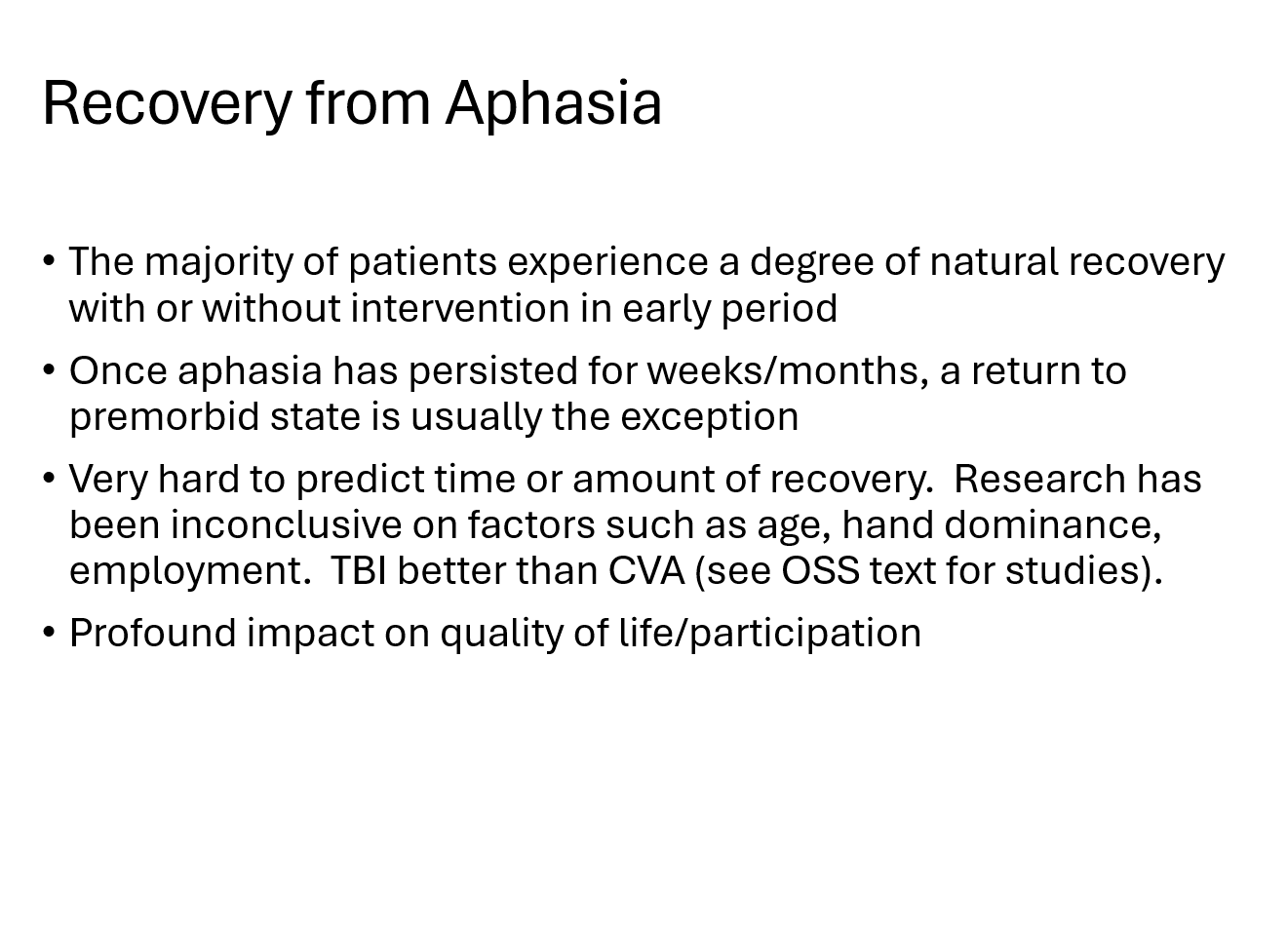
Recovery from aphasia
Once aphasia has persisted for ___, a return to premorbid state is usually the exception
TBI vs CVA recovery
Profound impact on?
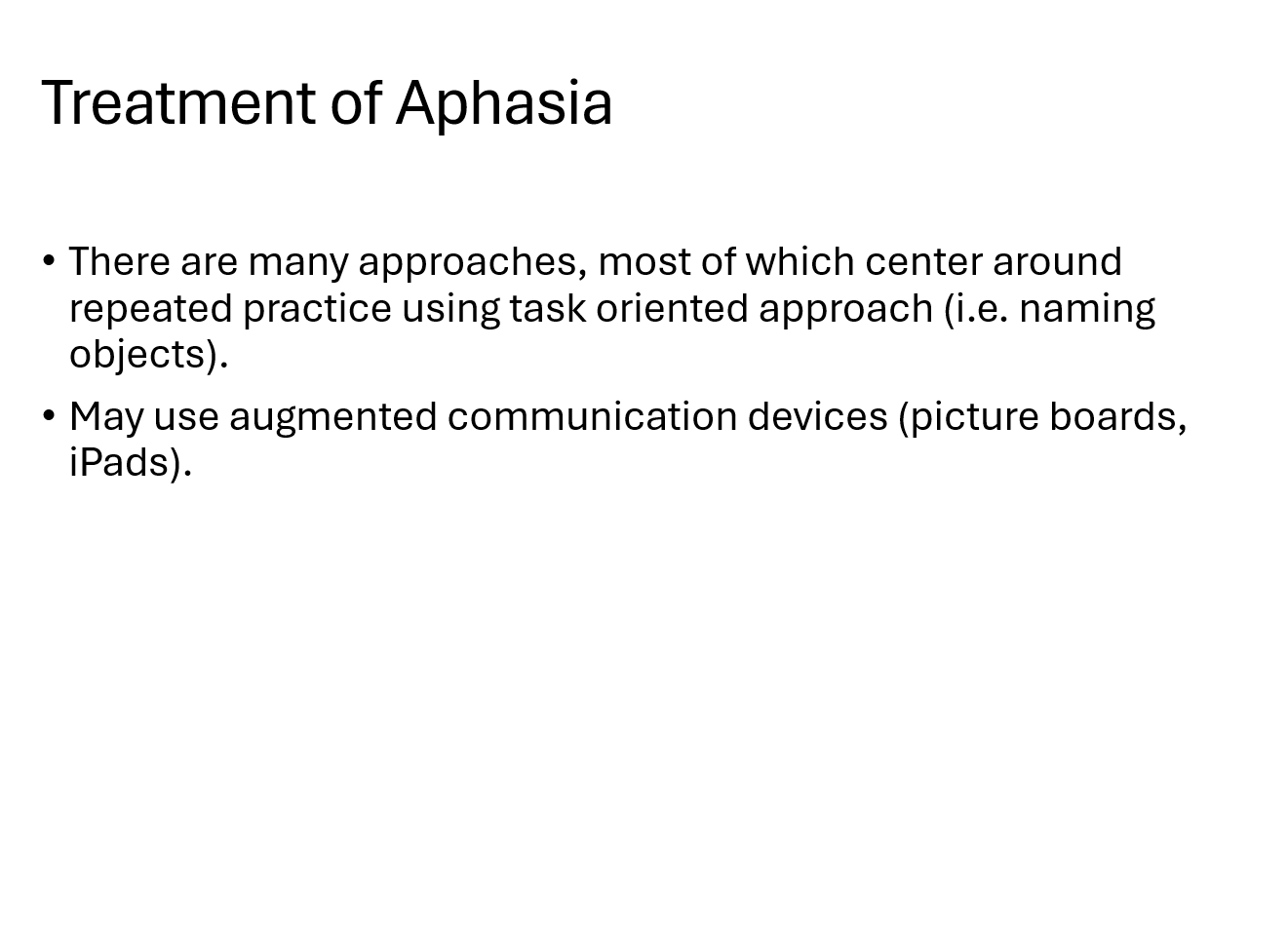
Treatment of aphasia
Most approaches center around what approach?
Most use?
Treating a patient with aphasia
Give them?
Do not equate aphasia with?
Keep it __ with?
Be __

Dysarthria is from?
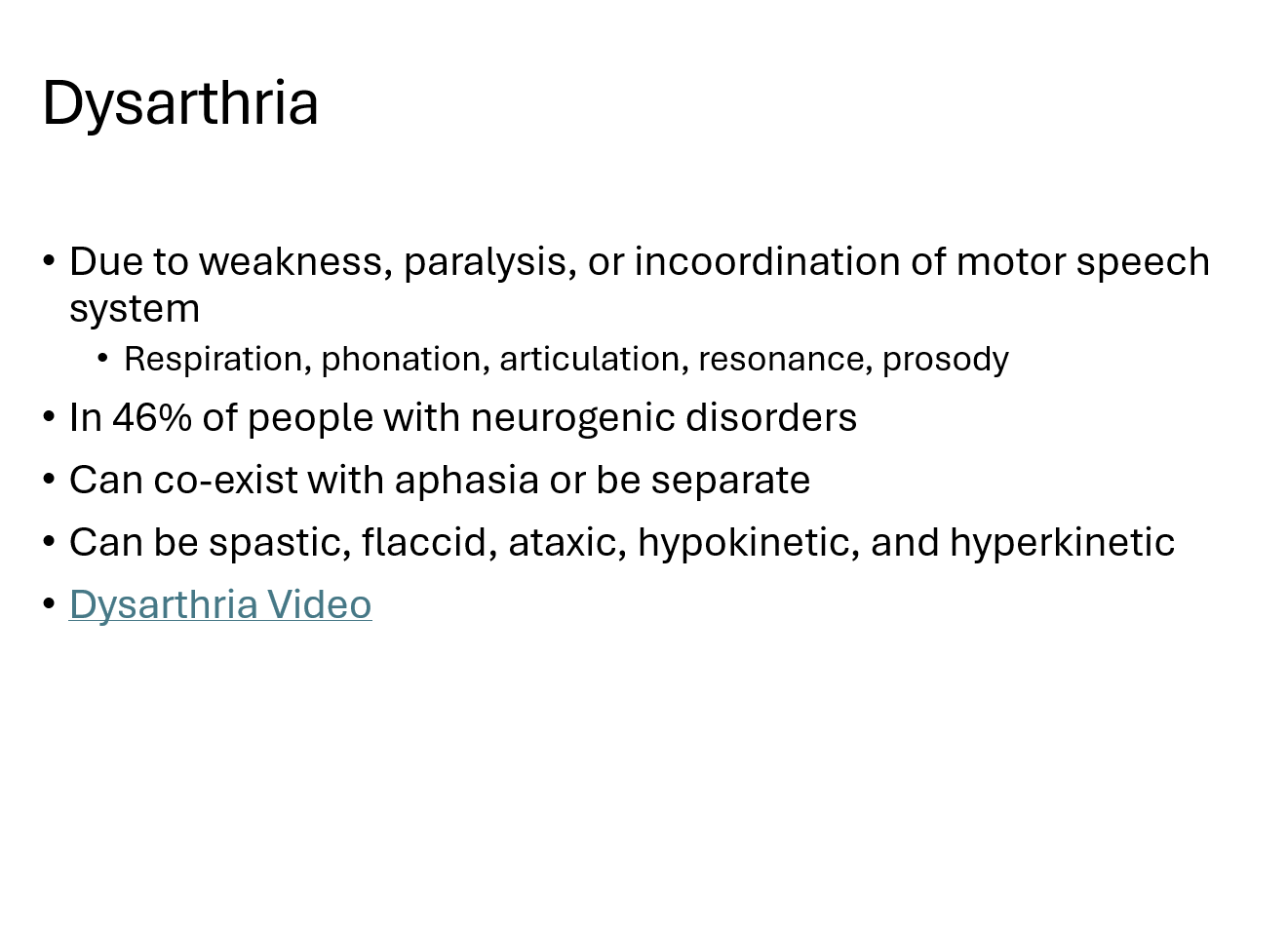
Dysarthria can co-exist with? can be?

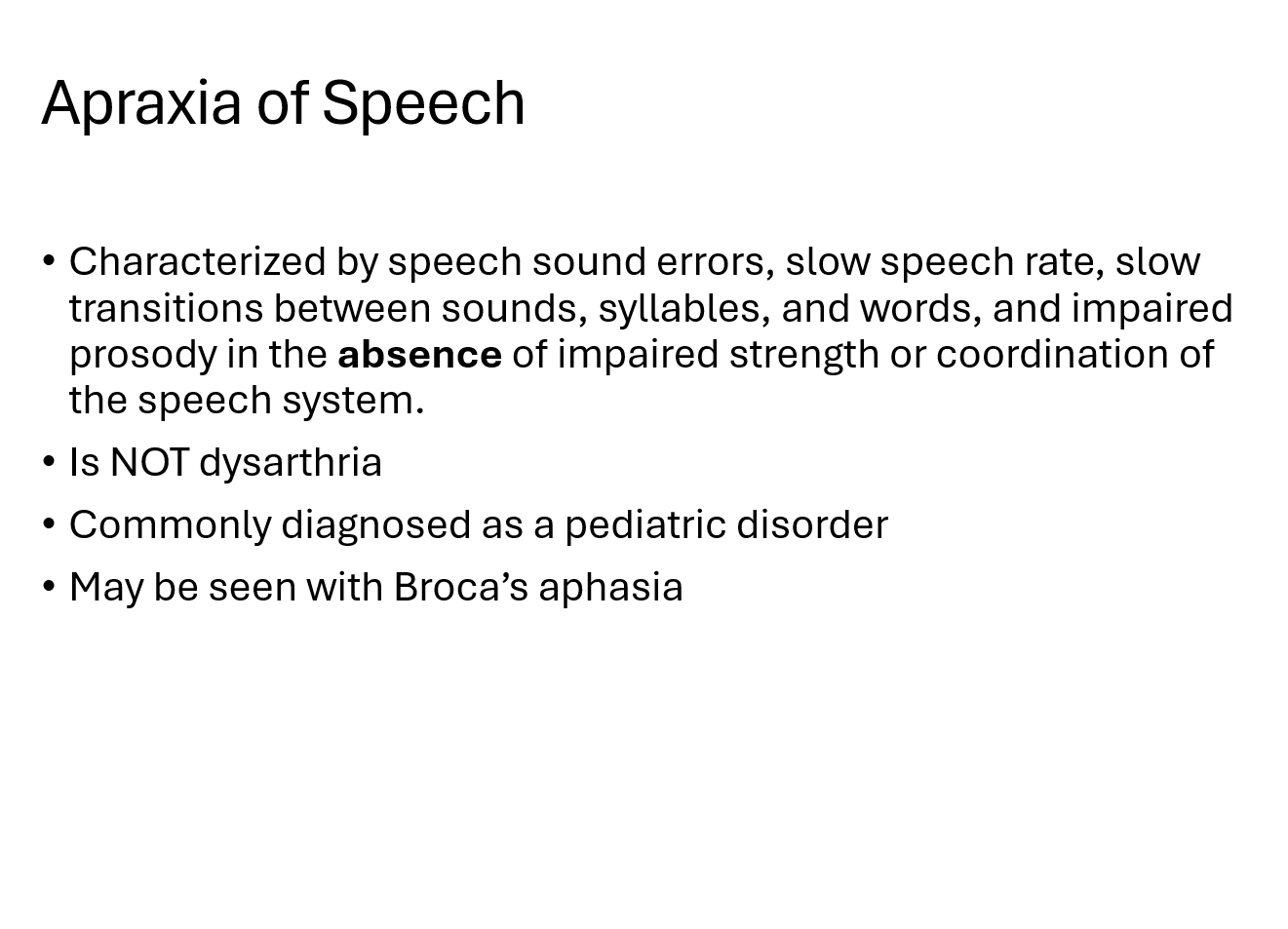
Characterized by speech sound errors, slow speech rate, slow transitions between sounds, syllables, and words, and impaired prosody in the absence of impaired strength or coordination of the speech system.
Apraxia of speech
Apraxia of speech
Is not?
Commonly dx as?
May be seen with?

Cognitive-communication disorders
Due to damage to neural regions responsible for?
Impairments of?
Can affect?

Swallowing has what phases?

Vocal folds close and ___ moves downward to prevent food from entering __
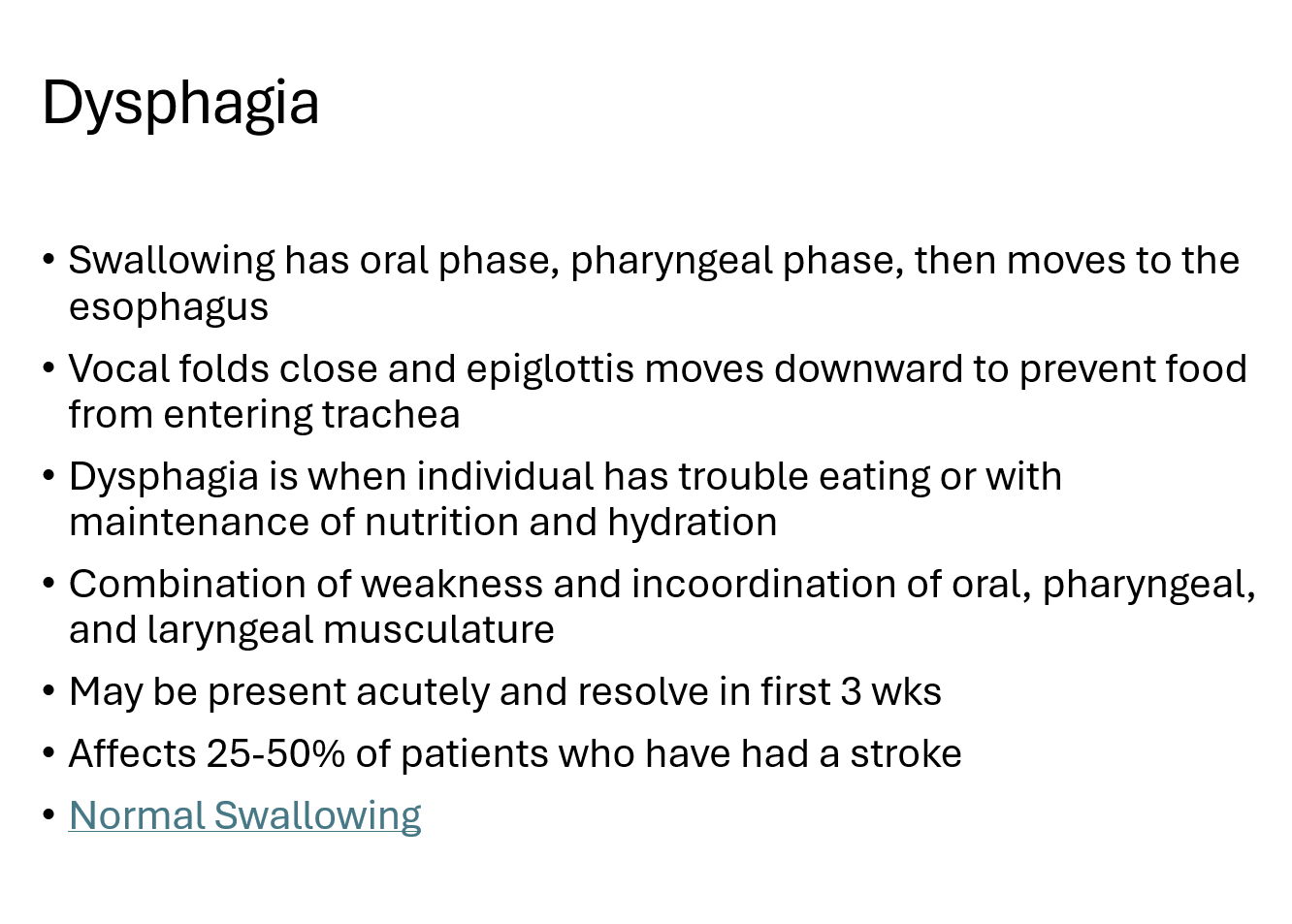
when individual has trouble eating or with maintenance of nutrition and hydration
Dysphagia
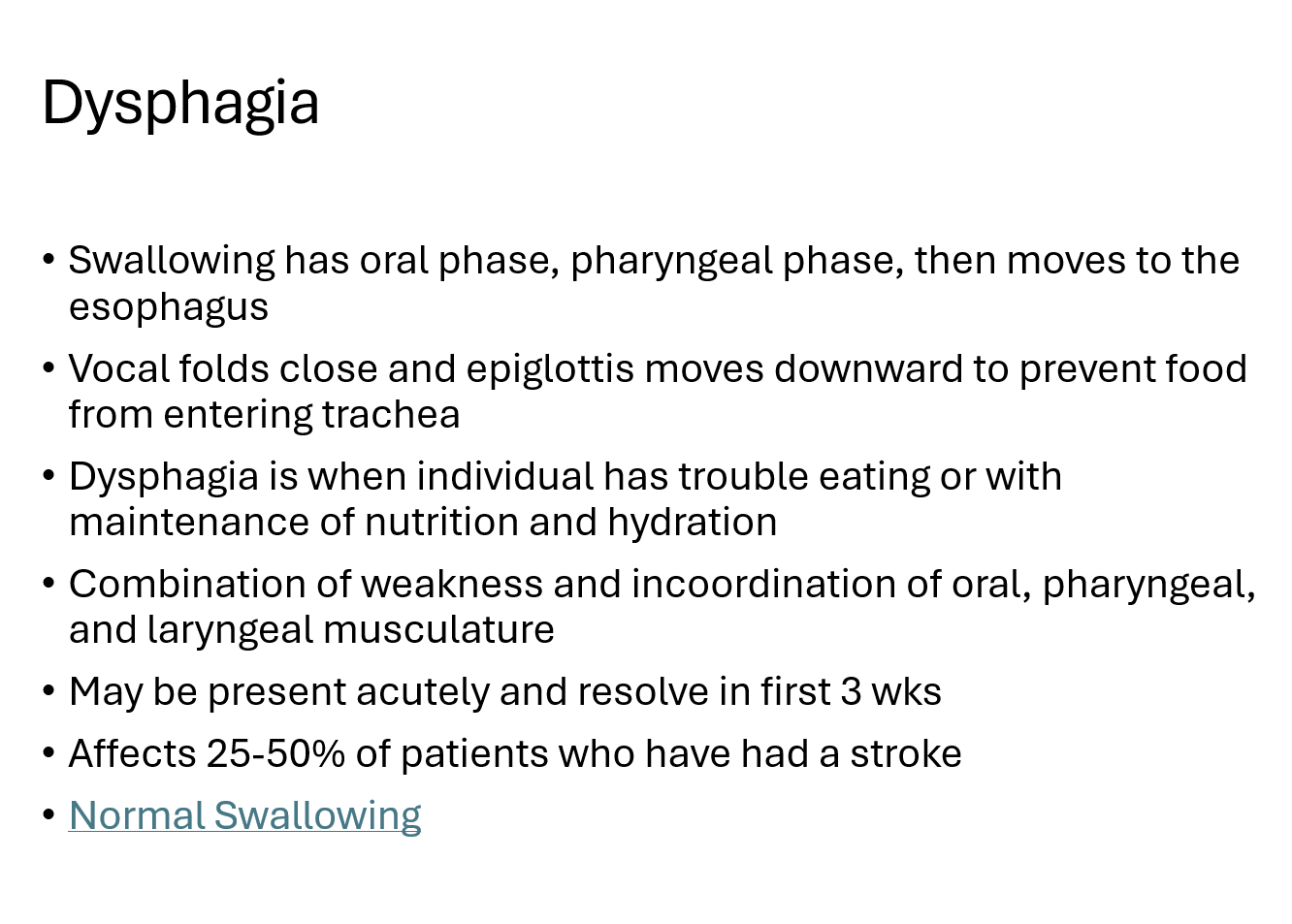
Dysphagia is a combination of?

Dysphagia
May present __ and resolve in first __

Dysphagia examination
Typically begs?
Observe?
Common objective test?
What may also be used?

Treatment of Dysphagia
Patients are taught?
PT’s need to be aware of?

Summary of PT Implications
Think about effects of __ on speech or swallowing
Strengthen what muscles?
Avoid?
