Chem 1601 Test 2
 Call Kai
 Learn
Learn Practice Test
 Spaced Repetition
 Match
Match Flashcards
 Knowt Play
1/67

There's no tags or description
Looks like no tags are added yet.
Name | Mastery | Learn | Test | Matching | Spaced | Call with Kai | Chat |
|---|
No analytics yet
Send a link to your students to track their progress
68 Terms
Heisenberg’s uncertainty principle
You cannot simultaneously know both the exact position and the exact momentum (or velocity) of a quantum particle.
Constructive Interference
When waves from two sources meet in phase, creating a single wave with a larger amplitude
Destructive Interference
When waves from two sources meet out of phase, they create a single wave with a smaller amplitude
diffraction
The bending and spreading of waves when they pass through a small opening.
Wavefunction (Ψ)
Mathematical description of the quantum state of an isolated system or particle
Probability Density (Ψ2)
The likelyhood of finding an electron in 3D space around atomic nucleus
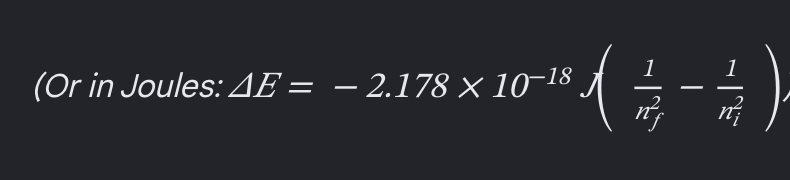
Energy Transitions in the atom
An atomic electron transition occurs when an electron jumps between discrete, quantized energy levels
Absorption (Jumping Up energy levels), Emission (Falling Down energy levels )
Radial Probability Density
The likelyhood of finding an electron in 3D space around atomic nucleus
Node
A region in space where wavefunction (Ψ) has a value of zero, no electrons can be found at this point
Radial Node
A node in radial wave function where spherical regions in atomic orbitals have a probability density of zero. # of radial nodes. n - l - 1.

Angular Node
A flat plane or cone that separates lobes. # of angular nodes = l
# of Total Nodes
# of Total Nodes = # of angular nodes + # of radial nodes = n - 1
Quantum Numbers
Numbers that quantize certain properties of the electron
Principal Quantum Number (n)
Positive integer associated with the energy and size of wave function of the electron at the highest point of the radial distribution plot. Energy levels of atom.

Orbital angular momentum Quantum Number (ℓ)
Quantized value that represents angular momentum of an electron. Range: 0 to n-1.
spdf notation
s: ℓ = 0, p: ℓ = 1, d: ℓ = 2, f: ℓ = 3, following orbitals: g, h, i, etc…
Magnetic Quantum Number ml
Quantized value that specifies the spatial orientation of an atomic orbital along a designated axis Range: -ℓ to ℓ
Magnetic Spin Quantum Number ms
Quantized value that represents spin (intrinsic angular momentum) of electrons. Range: -1/2, 1/2
Shell
All electrons with the same principal quantum number (n)
Subshell
A group of electrons within a shell with common orbital angular momentum quantum numbers (ℓ)
Orbitals
A three-dimensional region around an atomic nucleus where an electron is most likely to be found. # of orbitals per subshell = 2ℓ + 1
Shielding
The reduction of the attractive positive charge of an atom's nucleus on outer valence electrons due to the repulsive force of inner-shell (core) electrons.
Electron Penetration
Penetration describes the proximity to which an electron can approach the nucleus.
Electron Configuration
Distribution of electrons of an atom or molecule among its atomic or molecular orbitals.
Aufbau Principle
Orbitals must be filled from lowest to highest energy
Pauli Exclusion Principle
No two electrons can have the same 4 quantum numbers
Hund’s Rule
Every orbital in a subshell must be occupied with one electron of the same spin before any one orbital is occupied with 2 electrons.
Degeneracy
When two or more distinct quantum states or atomic orbitals have the exact same energy level
Effective Nuclear Charge
The charge experienced by the electron after accounting for the repulsion of inner core electrons. Equation: Zeff = z - s (z = protons, s = shielding electrons)
Ground State
Its lowest possible energy and most stable arrangement within an atom
Excited State
Occurs when it absorbs a specific amount of energy and jumps from its normal, lowest-energy position (the ground state) to a higher-energy orbital
Valence Electrons
Electrons in outermost shell that participates in chemical bonding
Identify Valence Electrons:
Main-Group Elements (s) and (p) blocks): Count all the electrons in the subshells with the highest (n) value (s) and (p) orbitals.
Transition Metals (d) block): Count the outermost (s) electrons plus the unfilled ((n-1)d) electrons
Core Electrons
Electrons closest to nucleus that do not participate in chemical bonding. all electrons that are not valence electrons.
Isoelectronic
Ions / Elements having the same number of electrons and same electron configuration.
Diamagnetic
Paired electrons in orbitals. Repelled by a magnetic field.
Paramagnetic
Unpaired electrons. Attracted to a magnetic field.
Periodic Trend
Predictable patterns in the properties of elements as you move across periods (rows) or down groups (columns)
Atomic Radii
Atomic Radius increases as you go down and to the left of the periodic table.
Ionic Radii
Cations (Atom+) are smaller than their neutral parent atoms. Anions (Atom-) are larger than their neutral parent atoms. Anions are mostly bigger than cations
Ionization Energy
The minimum amount of energy required to remove an electron. Increases as you go up and to the right of the periodic table
Electron Affinity
The neutral atom's likelihood of gaining an electron. Increases in magnitude up and to the right of the periodic table. Highest electron affinity: Cl.
Metallic Character
Increases down and to the left of the periodic table
Bond order
The number of electron pairs shared shared between 2 atoms. Single bond has bond order of 1, double bond has a bond order of 2, etc
Lewis Structures
Method of drawing atoms, Each valence electron is represented by a dot and each bond is represented by line.
Octet Rule
Most main group elements gain, lose, or share electrons in order to achieve full valence shell of 8 electrons or 4 valence orbitals (1 s orbital and 3p orbitals)
Resonance Structures
Lewis drawings differing in the position of bonding and non-bonding electrons. Represents the electron configuration of a molecule.
Resonance contributor
A Lewis structures representing the same molecule or polyatomic ion, differing only in the arrangement of electrons, which collectively describe the actual electron distribution of the hybrid structure.
delocalized
Electrons in a molecule, ion, or metallic lattice that are not confined to a single atom or bond, but are spread out over three or more adjacent atoms.
dipole moment (mu)
A measurement of the net separation of positive and negative electrical charges within a system; it quantifies its overall polarity.
mu = Q * r
q: the magnitude of the separated electric charge
r: distance between charge centers
Organic Compounds
Chemical compounds built around chains of carbon atoms
Functional Groups
a specific cluster of atoms within a molecule that gives that molecule its characteristic chemical reactions, physical properties, and reactivity, no matter what other atoms are present
Alkane

Alkene

Alkyne

Aromatic

Alcohol

Ether

Aldehyde

Ketone

Carboxylic Acid

Ester

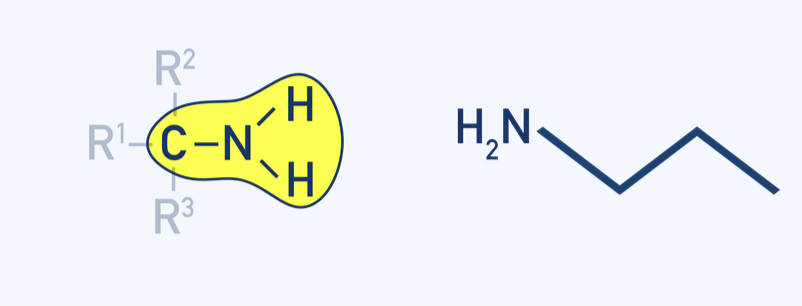
Amine
Amide

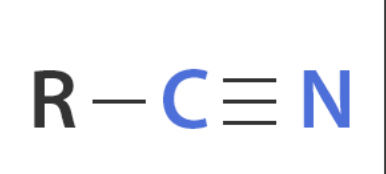
nitrile
Ground State electron configurations EXCEPTIONS

Single bond bond order, bond length, bond strength
bond order: 1
bond length: longest
bond strength: weakest
Double Bond
bond order: 2
bond length and bond strength: between single and triple
Triple Bond
bond order: 3
bond length: shortest
bond strength: strongest