ACCOUNTABILITY (W 1.5)
 Call Kai
 Learn
 Practice Test
 Spaced Repetition
 Match
 Flashcards
 Knowt Play
1/5

Earn XP
Description and Tags
NON-FINANCIAL KPIs: RELEVANCE & INFLUENCE
6 Terms
what are the 5 main building blocks to successfully do something with data?
value objectives (why) → starting point for creating value with KPIs
data assets (what)
analytics (how)
value creation (do)
capabilities (environment)
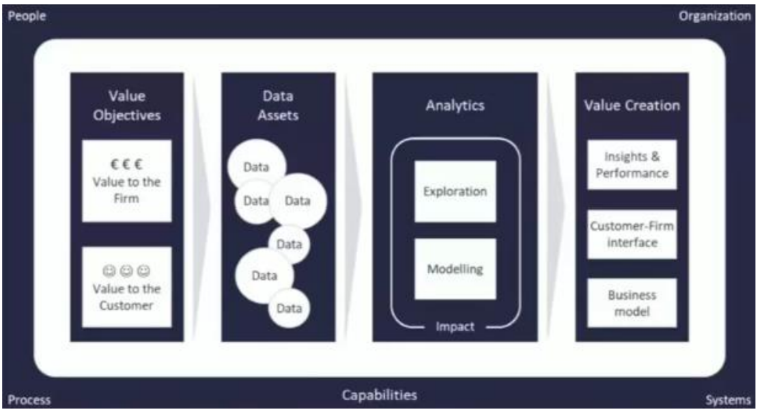
which value objectives can we focus on?
there are 2 ways to divide KPIs:
V2C (value to customer)
focused on creating value to the customer
why should I buy your products (& not the competitors)?
ex. brand awareness & customer satisfaction
V2F (value to the firm)
focused on creating value to the firm
what benefits does the company get in return
ex. market share & (marketing) ROI
what are some examples of V2C & V2F metrics?
the image shows different metrics
the clusters market, brand & customer help to cover different perspectives (ex. total market vs. an individual customer)

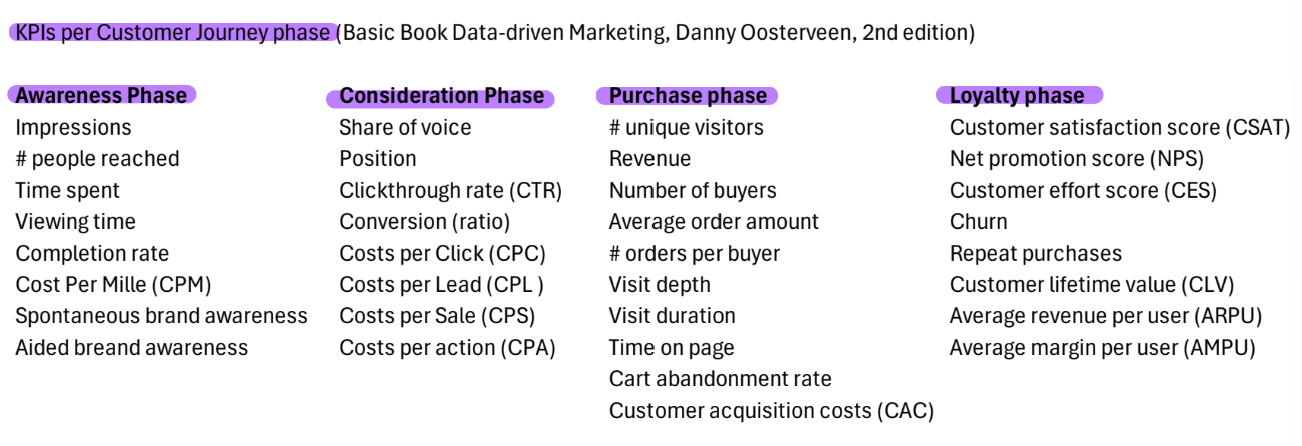
what’s an alternative approach to value objectives?
KPIs per customer journey phase
what do you know about NPS (Net Promotor Score)?
it’s an example of a KPI, that measures customer loyalty & customer satisfaction
calculation: NPS = %promotors - %detractors
main question: “how likely on a scale from 0-10 is it that you would recommend our company to a friend?“
<0 → not good; 0-30 → good; 30-70 → great; 70-100 → excellent
with a huge amount of KPIs, how to choose ones that work for you?
here are some considerations:
how relevant is the KPI?
ex. importance of customer satisfaction for KLM vs. EasyJet → it’s more critical for one brand than the other
can you influence the KPI?
ex. influencing the CTR of an individual campaign vs, global airline market growth → it’s easier to influence your own
can you measure the KPI?
ex. measuring share of wallet (% spent on a product) vs. repeat purchases → repeat purchases are easier to measure