mb w8 (fungi & protozoa infects)
 Call Kai
 Learn
 Practice Test
 Spaced Repetition
 Match
 Flashcards
 Knowt Play
1/18

There's no tags or description
Looks like no tags are added yet.
19 Terms
Fungi and Fungal Infections
• Fungal structure and characteristics
• Yeasts, moulds, and dimorphism
• Fungal reproduction and classification
• Opportunistic fungal infections
• Oral candidiasis and predisposing factors
• Antifungal medications and their targets
Protozoa and Parasitic Infections
• Protozoan characteristics and classification
• Locomotion and life-cycle stages
• Transmission and prevention of protozoan infections
• Waterborne protozoan pathogens
• Malaria; Plasmodium species
• Water purification methods and limitations
Infection Control and Clinical Applications
• Principles of asepsis and infection prevention
• Dental unit waterlines and microbial contamination
• Microbial transmission and patient susceptibility
• Epidemiological terminology and basic calculations
• Application of microbiology to dental hygiene practice
characters & growth of fungi
eukaryotic (true nucleus & membound orgs)
lack chlorophyll → no photosynth
chemoheterotrophs → get nutr from organic compounds
absorb their nutr
cell wall has chitin & complex polysaccs
most grow best in slight acidic, aerobic environ
they may live as…
saprophytes = obtain nutr from dead matter
parasites = nutr from living host
opportunistic pathogen = cause disease when host defenses weakened
changes in local environ contrib to fungal overgrowth

types & reprod of fungi
yeast = unicellular
unicellular
round/oval
reprod by budding
ex: candida albicans
moulds= multicellular
hyphae = braching filaments it forms
reprod by forming spores
dimorphic fungi= exist as yeast/mould
form depend on environ cond
budding & spores
fungal spores= conidia
conidia = asexual, nonmotile spores
easy disperse in air
can inhale in rep tract
harmless to healthy
opportunistic infect in immunocomp
larger mushrooms = fleshy fungi
pathogenicity of fungi
most dont prod exotoxins (prod by gram neg/pos bact) or endotoxins (outer mem of gram neg)
fungal infect often…
slow growing
chronic
opportunistic
spores carried by air/water to places suitable for germination + growth

Bact vs. Fungi
antibiotics target bact structures
^cell wall (peptidoglycan) & bact ribosomes
antifungals target fungal structs
^ergosterol & fungal cell mem
ANTIBIOTICS DONT TREAT FUNGAL INFECT
ribosomes = resp for protein synth
svedberg unit (S) = rate of sedimentation during centrifugation (based on differences in structure)
bact ribosome = 70S
fungal ribosome = 80S
explains why some antibiotis can selectively target bacterial ribosomes
Which characteristic best distinguishes fungi from bacteria?
A. Fungi contain peptidoglycan in their cell wall
B. Fungi are prokaryotic organisms
C. Fungi contain a true nucleus and membrane-bound organelles D. Fungi reproduce only by binary fission
Which fungal cell wall component is commonly targeted when distinguishing fungi from bacteria?
A. Lipopolysaccharide
B. Peptidoglycan
C. Chitin
D. Mycolic acid
A yeast differs from a mould because yeasts:
A. form hyphae
B. are multicellular
C. reproduce by binary fission only
D. are unicellular and reproduce by budding
A fungus obtains nutrients from decaying organic material. How would this fungus be classified?
A. Parasite
B. Opportunistic pathogen
C. Saprophyte
D. Dimorphic fungus
antifungal agents
polyene antifungals
nyastatin
amphotericin B
polyenes bind to ergosterol (fungal struct along fungal cell mem)
& disrupt the cell wall/membrane** destroy cell wall kill
azoles (imidazoles)
miconazole
clotrimazole
fluconazole
azoles inhibit ergosterol synthesis**
used to treat fungal infect like candidiasis
these target fungal specific structures
Antifungal therapy = based on organism & site/severity of infect
Nyastatin (polyene antifungal) → for ORAL CANDIDIASIS
Miconazole/Clotrimazole (azole antifungal) → topical/local fungal infects
Fluconazole (azole antifungal) → systemic/more extensive Candida
Amphotericin B (polyene antifungal) → serious systemic fungal infect, signif toxicity
some fungi show drug resistance (ex: candida auris)

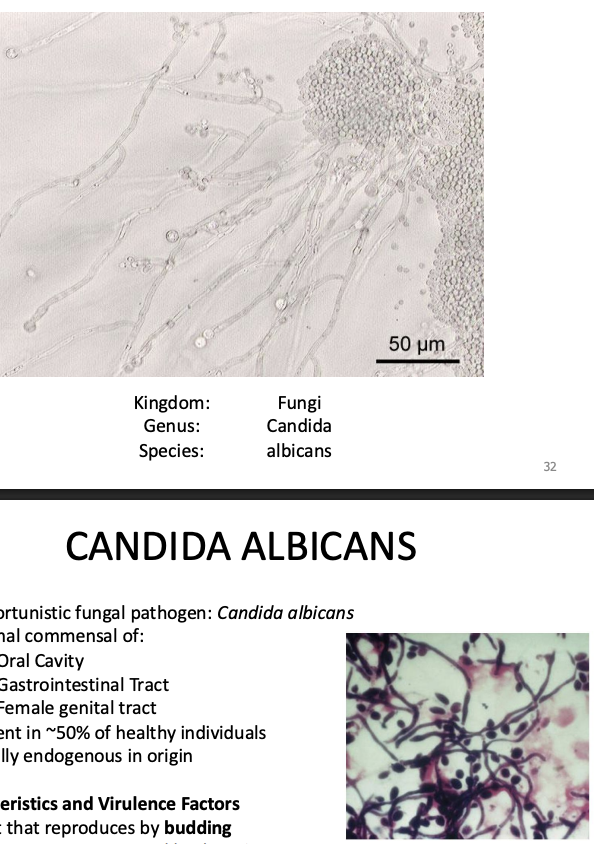
Candida Albicans = opportunistic fungal pathogen
normal commensal (org) in oral cav, GI, fem genital tract
present in ~50% of healthy individuals
usually endogenous (grow within cell/system) in origin
characts & virulence factors
yeast that reprod by budding
form pseudohyphae & hypahe → tissue invade
adhere > tissue + denture → biofilm formation
changes surf antigens → evade immune detect
produce extracell enzymes (phospholipase, proteinase, haemolysin)
Candidiasis - type of infect
superficial presenting
Oral thrush
Erythematous candidiasis
Hyperplastic candidiasis
Angular cheilitis
Skin and mucosal infections
treat w topical fungals
nystatin
clotrimazole
miconazole
systemic (deep)
Candida in bloodstream or organs
Seen mainly in immunocompromised patients
systemic antifungals
fluconazole
amphotericin B

Candidiasis - common clinical forms
Pseudomembranous candidiasis (Thrush)**
white plaque (can wipe)
leave erythematous/bleeding surf
Erythematous candidiasis**
red smooth depapillated tongue
may involve hard palate
Angular chelitis**
cracking and erythema at mouth corners
Hyperplastic candidiasis
white NON removable plaque
Chronic mucocutaneous candidiasis
persistent candida infects involving mucosa, skin, nail
Systematic Candidiasis (CANDIDA AURIS)**
emerging yeast species
cause human candidiasis
assoc w healthcare setting & immunocomps
can cause invasive candidiasis (candidaemia) affecting…
blood stream
CNS
internal orgs
important bc = frequently multidrug resistant
difficult to identify & assoc w hospital outbreak
serious opportunistic infect
Cryptococcus Neoformans**
encapsulated pathogenic yeast
in soil contam by PIGEON DROPPINGS
transmit = inhale (prim affect lungs)
opportunistic for immunocomps
major virulence fact = thick polysacc capsule
help evade host defence (like bact capsule)
diagnose = culture & antigen testing
treat = antifungal therap (amphotericin B & fluconazole)
review
Conidia are best described as:
A. bacterial spores
B. sexual reproductive organs of fungi
C. asexual fungal spores spread through air
D. fungal toxins
Candida albicans is considered an opportunistic pathogen because it:
A. always causes disease in healthy people
B. commonly causes infection after mosquito bites
C. normally exists as commensal flora but can overgrow when host defenses weaken
D. produces potent exotoxins
Which factor increases the risk of oral candidiasis?
A. Good salivary flow
B. Recent antibiotic therapy
C. Increased oxygen exposure
D. Low sugar intake
Which clinical form of candidiasis presents as white plaques that can be wiped away?
A. Hyperplastic candidiasis
B. Angular cheilitis
C. Pseudomembranous candidiasis
D. Erythematous candidiasis
Hyperplastic candidiasis differs from pseudomembranous candidiasis because the lesion:
A. is painful
B. involves the tongue only
C. wipes off easily
D. forms a non-removable white plaque
Cryptococcus neoformans is commonly associated with exposure to:
A. contaminated seafood
B. pigeon droppings
C. mosquito bites
D. untreated milk
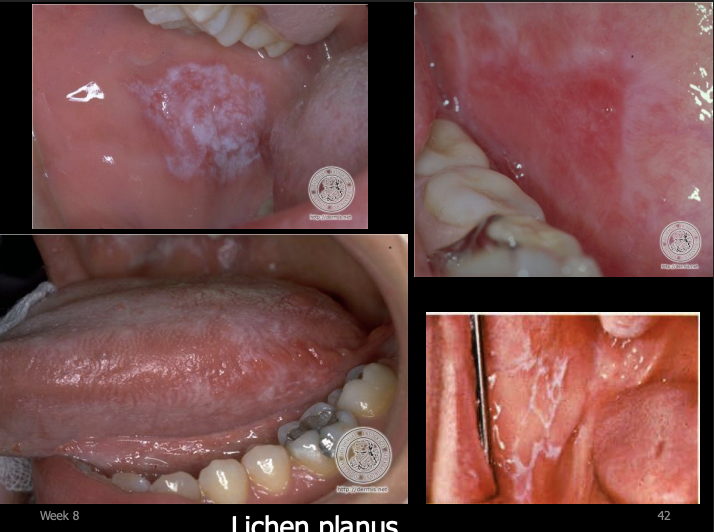
Lichen Planus - NOT candidiasis
chronic inflam mucocutaneous condition
may affect oral mucosa + skin
NOT FUNGAL, algal, or infectious
immune mediated
oral features = white lacy lesions (Wickham striae)
may be erosive/ulcerative
can hurt
diagnose = clinical appearance, biopsy may be required
management = topical corticosteroids
not infectious lesion like candidiasis
Fungal disease - Mycoses (get gist)
Superficial / Cutaneous
Affect the skin, hair, or nails
Examples: – Tinea (ringworm) – Cutaneous candidiasis (athlete foot)
Subcutaneous
Involve deeper tissues beneath the skin
Often enter through traumatic implantation
Examples include infections caused by environmental fungi
Deep / Systemic
Can spread to internal organs and tissues
Often acquired through inhalation of fungal spores
Examples: – Histoplasmosis – Cryptococcosis – Pneumocystis pneumonia (PCP_
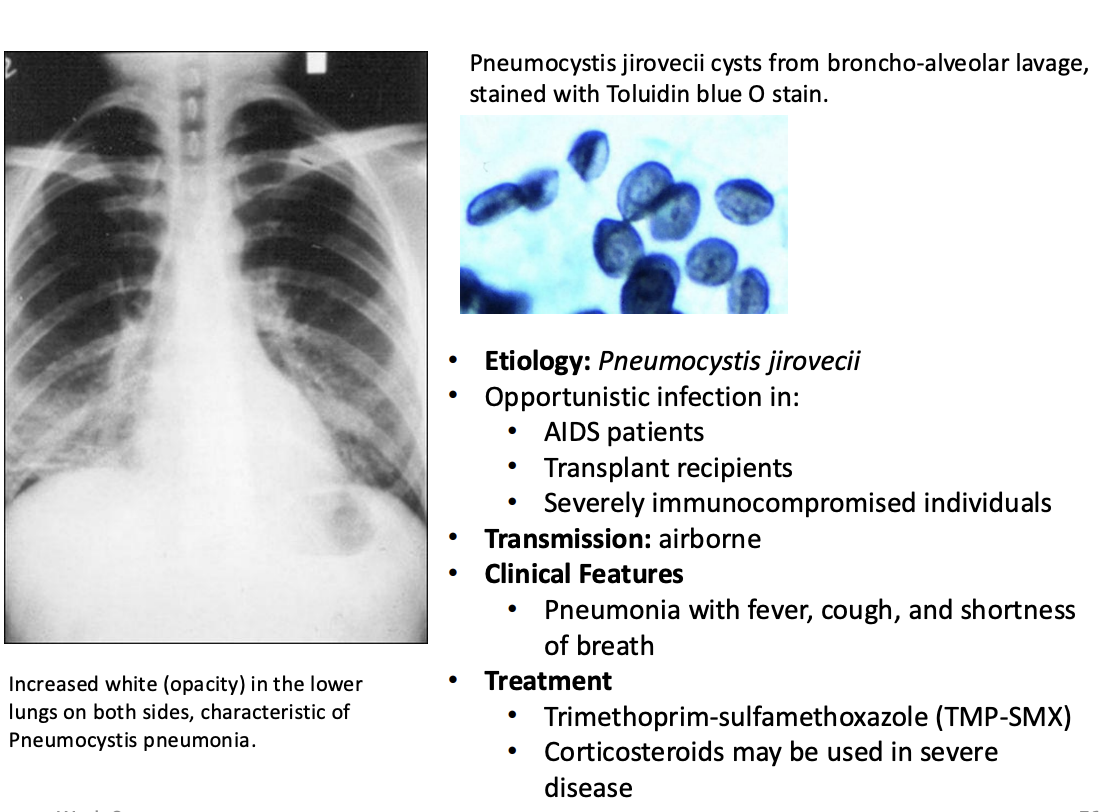
Pneumocystis jirovecii fungus (PCP)
opportunistic infect in
immunocomp
AIDS ppl
transplant recepients
transmission = airborne
pneumonia like symptoms = fever cough short breath
Apthous ulcer (canker sore) NOT FUNGAL

Which virulence factor helps Cryptococcus neoformans evade host defenses?
A. Exotoxin production
B. Thick polysaccharide capsule
C. Flagella
D. Endospore formation
Which statement about lichen planus is CORRECT?
A. It is caused by Candida species
B. It is highly contagious
C. It is considered an immune-mediated condition
D. It is treated with antibiotics
Athlete’s foot is classified as which type of fungal disease?
A. Deep mycosis
B. Systemic candidiasis
C. Cutaneous mycosis
D. Opportunistic protozoal infection
Pneumocystis jirovecii pneumonia (PCP) is most commonly associated with:
A. healthy adolescents
B. immunocompromised patients
C. food poisoning
D. skin trauma
Which medication is commonly used to treat Pneumocystis jirovecii pneumonia?
A. Fluconazole
B. Metronidazole
C. Trimethoprim-sulfamethoxazole (TMP-SMX)
D. Penicillin
Candida auris is clinically important because it is often:
A. harmless normal flora
B. spread by mosquitoes
C. multidrug-resistant
D. easily identified in laboratories
Protozoan Infections
unicellular, eukaryotic, heterotrophic
some are important human pathogens
can cause infect in…
intestine, blood, lung, liver, brain
classified by
mode of motility
cell struct
found in
water, marine environ, moist soil
feed on = bacteria, algae, other protozoa
typically lack
cell wall
photosynthetic pigments
Protozoa Stages
Trophozoite
active motile feeding stage
resp for growth & tissue damage
Cyst
dormant protective stage (can still go to host)
often the infective stage transmitted to human
can convert back to trophozoite after ingest
Reprod
Asexual = fission or budding or schizogony (mult fission)
Sexual = (some) conjugation

Plasmodium & Malaria (aka #1 parasitic killer)
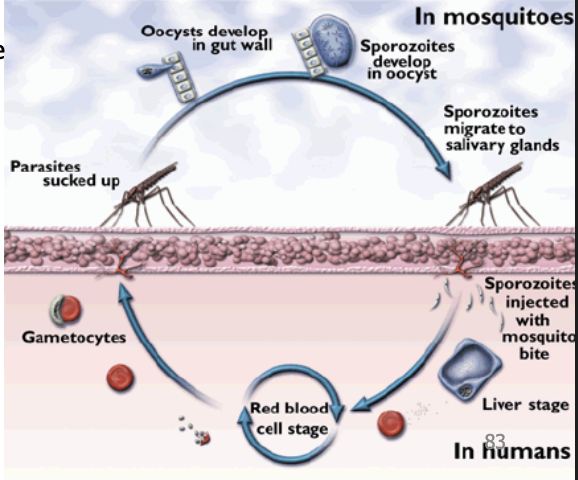
plasmodium (parasitic protozoa) → cause malaria
asexual reprod occur in
liver cells
RBC
sexual in
fem Anopheles mosquito
sporozoans
complex life cycle
parasitic protozoa
gen non-motile when mature
life cycle need mosquito vector & human host
5 species of Plasmodium
P.malarie
P.vivax (most common)
P.falciparium (most deadly)
P.ovale
P.knowlesi
Malaria - transmission, symptom, management
transmit
(prim) bite of infected fem anopheles mosquito
(less common) blood, share needle, congenital
symptom
in cycles every 2-3 days
fever chills headache nausea sweating
diagnosis
parasites idntified on thick or thick blood smears
Giemsa stain
treat
Artemisinin-based combination therapy (ACT)
chloroquine in sensitive region
prev
mosquito control
vaccine avail in some places (partial protect)
drug resistance is increasing

P.vivax (most common)
most widespread outside africa
can remain dormant in liver as hypnozoites
can relapse (month/year) and reactivate if stress/immune supression
global health prob (partic children)
P.falciparum (most deadly)
fem mosquito inject sporozoites during blood meal
parasite infect liver → then RBC
some parasite taken up by another mosquito to contiue cycle
Vax


Leishmaniasis
cause by leishmania species (protozoan parasite)
visceral (kala-azar & black fever) most severe form
parasites invade
liver, spleen, bone marrow
symptom
fever, weight loss, anemia, enlarged spleen/liver
untreated fatal
Amoebas & Flagellates
photo
review
Protozoa are best classified as:
A. prokaryotic bacteria
B. unicellular eukaryotes
C. multicellular fungi
D. obligate viruses
Which structure is primarily used by amoebas for movement and feeding?
A. Flagella
B. Cilia
C. Pseudopodia
D. Hyphae
Which pairing is correct?
A. Entamoeba histolytica — cilia
B. Giardia lamblia — flagella
C. Balantidium coli — pseudopodia
D. Trypanosoma — cilia

Immunocompromised
some protozoan infect become more severe in immunocomp
opportunistic protozoa can cause life threat disease to weak host
Protozoa opportunistic pathogens in AIDS are:
Cryptosporidium parvum
Entamoeba histolytica
Giardia lamblia
Cystoisospora belli
Toxoplasma gondii
Trichomoniasis (trichomonas vaginalis)
STD protozoan infect
more common and symptomatic in fem
bc of vag pH = acidic
symptom
itch inflam
frothy yellow green discharge
irritate uncomfy
Assoc w inc risk of HIV infect


Intestinal Protozoan Infects
left out treatment
Amoebiasis
org = entamoeba histolytica
transmit = fecal-oral (ingest of cystin contam food/wat)
site = large int (diarrhea w/ dysentery (blood) and when severe can cause liver abscess
Giardiasis
org = giardia lamblia
transmit = fecal-oral (ingest of cyst in food wat)
site = duodenum/jejunum where watery diarrhea malabsorp
Cryptosporidiosis
org = cryptosporidium parvum
transmit = fecal oral (ingest oocyst in food/wat)
site = GI tract (watery diarrhea)
Eyes Toxoplasmosis (protozoan infect)
eti = toxoplasma gondii
transmit = undercook meat, cat feces, cong transmission across placenta
symptom = blurred vision, pain, photophobia, and exudative retinitis due to the protozoan multiplying and encysts in the retina. (typically seen in immunosuppressed) eyes
dissemunated toxoplasmosis seen w inc freq in aids patients
A patient develops watery diarrhea, marked bloating and flatulence, and signs of malabsorption after drinking contaminated water. Which protozoan is the most likely cause?
A. Entamoeba histolytica
B. Giardia lamblia
C. Cryptosporidium
D. Balantidium coli
What is the primary mode of transmission for Giardia lamblia?
A. Respiratory droplets
B. Mosquito bites
C. Fecal–oral transmission through contaminated water or food
D. Direct skin contact
Which symptom is MOST characteristic of giardiasis?
A. Hemorrhagic rash
B. Watery diarrhea with bloating and flatulence
C. Paralysis
D. Productive cough
Which medication is commonly used to treat giardiasis?
A. Penicillin
B. Nystatin
C. Metronidazole
D. Ciprofloxacin
Entamoeba histolytica causes disease through ingestion of:
A. spores
B. trophozoites only
C. cysts in contaminated food or water
D. bacterial toxins
Which condition is strongly associated with invasive Entamoeba histolytica infection?
A. Otitis media
B. Liver abscesses
C. Meningitis
D. Pneumonia
Cryptosporidium parvum is clinically important because it:
A. is easily destroyed by chlorination
B. causes severe disease mainly in plants
C. is highly resistant to many disinfectants
D. only infects animals
wont ask like this ^
Which group is MOST at risk for severe cryptosporidiosis?
A. Healthy teenagers
B. Individuals with AIDS
C. Athletes
D. Patients with hypertension
Which symptom is commonly seen in cryptosporidiosis?
A. Bloody sputum
B. Watery diarrhea
C. Vesicular rash
D. Muscle paralysis
Toxoplasma gondii infection may occur after exposure to:
A. aerosolized fungi
B. contaminated needles
C. cat feces or undercooked meat
D. insect bites
Water assoc Pathogens
contam water can cause disease thru ingest or inhale of contam aerosols
DUWL (dental unit water line)
biofilms in DUWL can accum & protect microorgs
including opportunistic pathogens from disinfect
3 process of water purif
Sedimentation
allow larger particles to settle
removes particulate matter before further treatment
Filtration
phys removes smaller particles/microorgs
membrane filtration can remove Giardia cysts & Cryptosporidium oocysts
Chlorination
MOST COMMON CHEM DISINFECT
effective against many microorg
less effective against some protozoan cyst/oocyst
Limitations
why not 100% effective
some protozoan cyst/oocyst resistant to chlorination
^Giardia & Cryptosporidium
^mem filtration can phys remove these resistant forms
water can become contam after treat (ex: pipe leak, groundwater contam, untreated water source)
detection of giardia and crypto challenging
testing may underestimate contam & dont determ whether orgs are infectious
take sev days

Calculating infectivity, pathogenicity, & virulence
all percentages
Infectivity = ability of pathogen to establish infect
infected ÷ exposed x 100
Pathogenicity = ability of infectious agent to cause disease
symptomatic ÷ infected x 100
Virulence = severity of disease among symptomatic ppl
severe death cases ÷ symptomatic x 100
ex:
100 ppl exposed
80 became infected
40 dev symptoms
5 die
infectivity = 80/100 = 0.8 x 100 = 80%
pathogenicity = 40/80 = 0.5 × 100 = 50%
virulence = 5/40 = 0.125 × 100 = 12.5%
Which statement regarding dental unit waterlines is CORRECT?
A. Biofilms cannot develop in waterlines
B. Biofilms may protect microorganisms from disinfection
C. Waterlines are sterile environments
D. Protozoa cannot survive in water systems
Which microorganism associated with water systems is linked to Legionnaires’ disease?
A. Giardia lamblia
B. Shigella spp.
C. Legionella pneumophila
D. Candida albicans
Which process physically removes particulate matter during municipal water purification?
A. Chlorination
B. Sedimentation
C. Oxidation
D. Pasteurization
Why is filtration an important part of water treatment when Giardia and Cryptosporidium are present?
A. They are resistant to all forms of filtration
B. Their cysts/oocysts may be relatively resistant to chlorination
C. Chlorination causes them to reproduce
D. They are viruses and cannot be chemically disinfected
Membrane filtration is particularly useful because it can remove:
A. viruses only
B. fungal hyphae only
C. Giardia cysts and Cryptosporidium oocysts
D. dissolved salts only
Why is chlorination alone sometimes insufficient for water purification?
A. Chlorine evaporates immediately
B. Protozoan cysts such as Giardia may resist chlorine
C. Chlorine only kills fungi
D. Chlorination increases protozoal growth
During an outbreak, 200 people were exposed to a microorganism. 120 people became infected 90 infected individuals developed symptoms 30 symptomatic individuals died What is the pathogenicity of the microorganism?
A. 15%
B. 25%
C. 75%
D. 90%