(L23) IMED2003 - Research Translation
 Call Kai
 Learn
 Practice Test
 Spaced Repetition
 Match
 Flashcards
 Knowt Play
1/30

There's no tags or description
Looks like no tags are added yet.
31 Terms

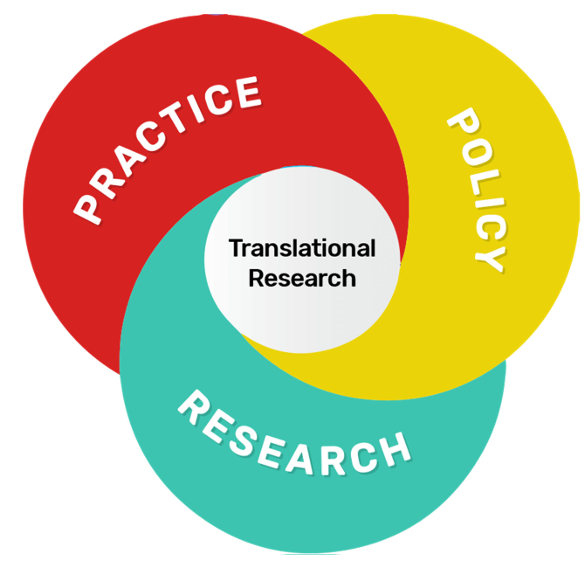
How are research, clinical practice and policy connected in translational medicine?
Translational research links RESEARCH, PRACTICE and POLICY to turn discoveries into improvements in individual and population health.
The title image shows these three overlapping areas surrounding translational research.
.
Lecturer explanation:
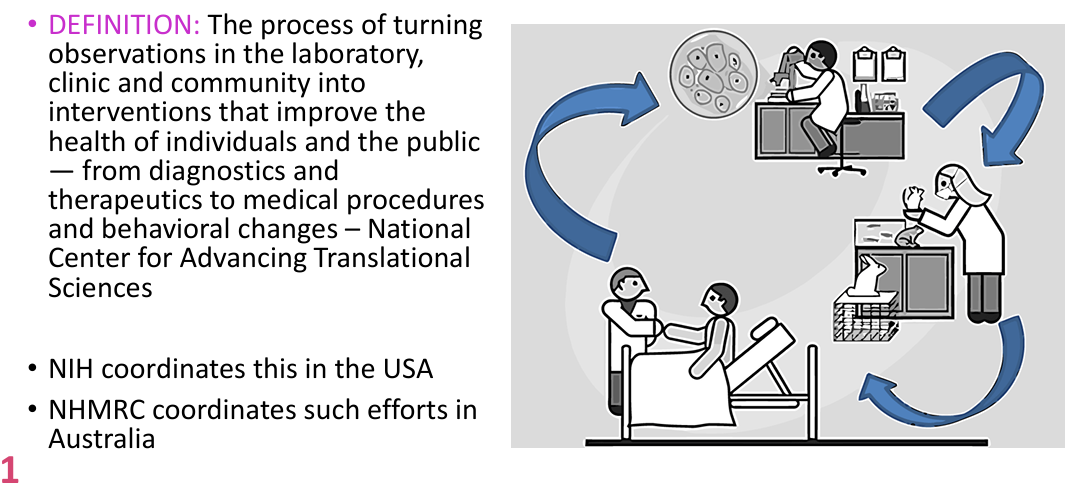
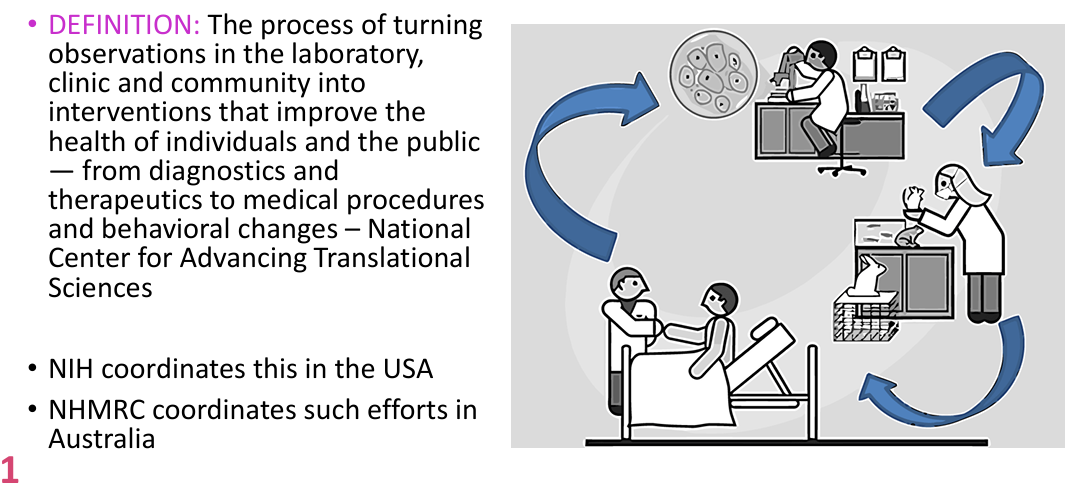
Translation is a cycle: laboratory findings are tested in people, used in healthcare, and generate new research questions.

What are the five As of research, in order?
1. Ask a question.
2. Acquire information.
3. Appraise the articles found.
4. Apply the information.
5. Audit/Assess.
Figure guidance:
- Appraise: evaluate evidence for validity and clinical applicability.
- Apply: use clinical expertise to integrate applicable evidence while considering patient values.
.
Lecturer explanation:
This lecture concentrates on APPLYING accumulated research knowledge to deliver improved treatments and outcomes.

What are the six learning outcomes for translational medicine?
1. Become familiar with the spectrum of translational medicine.
2. Describe its five phases: T0-T4.
3. Understand the premise of each phase.
4. Recognise definitions evolve and differ between disciplines.
5. Understand barriers to knowledge translation.
6. Recognise the need for multidisciplinary collaboration and diverse skill sets.
Lecturer emphasis:
Prioritise understanding the type and purpose of work at each stage rather than rigid boundaries.

What is translational medicine according to the National Center for Advancing Translational Sciences?
The process of turning observations in the laboratory, clinic and community into interventions that improve the health of individuals and the public — from diagnostics and therapeutics to medical procedures and behavioural changes.
Includes laboratory research, clinical observations, community findings and interventions beyond medicines.

Which institutions coordinate translational research in the USA and Australia in the lecture?
USA: NIH (National Institutes of Health); the definition is attributed to the National Center for Advancing Translational Sciences.
Australia: NHMRC (National Health and Medical Research Council).
Lecturer explanation:
Such bodies support efforts to move health and medical discoveries into practice.
Why do translational research phase definitions change, and what is their overall goal?
- Originally described using T1 and T2; now commonly represented as five phases, T0-T4.
- The activities assigned to each phase have changed over time.
- Different disciplines need different paths (e.g. a drug versus behaviour change).
- Focus on emerging consensus patterns, not inflexible labels.
- Translation is multidisciplinary.
GOAL: Get medical and healthcare innovations to patients and the global population faster.
.
Lecturer explanation:
Categorising the pathway helps organise and support research, but the framework is evolving.

Why is the T0-T4 translational spectrum not a strictly linear pipeline?
- Some discoveries skip stages or require additional steps.
- Results from later stages should feed back to earlier ones.
- Information flows forwards and backwards to refine mechanisms, tests, interventions, clinical implementation and population outcomes.
.
Lecturer emphasis:
A useful clinical or community result can reveal a better direction for basic scientists; continuous feedback accelerates improvement.


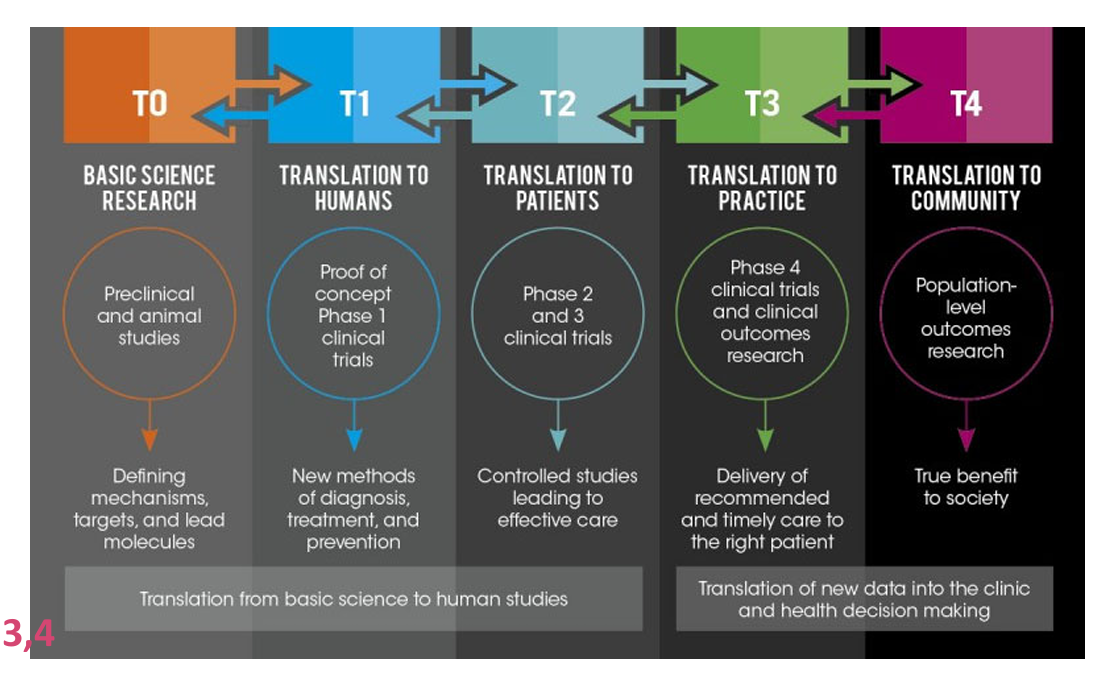
What are the five stages T0-T4 and their broad purposes?
T0 — BASIC SCIENCE: mechanisms and discovery; preclinical/animal studies, no interventions with human subjects.
T1 — TRANSLATION TO HUMANS: proof of concept, Phase I trials, controlled new approaches to diagnosis, prevention and treatment.
T2 — TRANSLATION TO PATIENTS: Phase II-III trials, controlled clinical testing, evidence and guidelines.
T3 — TRANSLATION TO PRACTICE: effectiveness and routine clinical adoption, post-marketing/outcomes, health services and implementation.
T4 — TRANSLATION TO COMMUNITY: public-health implementation, population outcomes, morbidity, mortality, risk/benefit and policy impacts.
.
Stage definitions are fluid.


How do the activities and goals of T0, T1 and T2 differ in the translational research spectrum diagram?
T0: Preclinical and animal studies → define mechanisms, targets and lead molecules.
T1: Proof of concept and Phase I clinical trials → new diagnosis, treatment and prevention methods relevant to humans.
T2: Phase II and III clinical trials → controlled studies that lead to effective patient care.
.
Two-way arrows show feedback between stages.
T0-T2 broadly translate basic science toward human studies; T3-T4 implement research in clinical and population settings.

How does the lecture use breast cancer and BRCA genetics to illustrate translation?
It follows an evolving question:
- T0: Are any inherited genetic changes associated with breast cancer?
- T1: Do BRCA mutations associate with breast cancer in humans and models?
- T2: How predictive and clinically useful is BRCA testing?
- T3: Are eligible women actually receiving testing, and what prevents uptake?
- T4: Does testing improve breast cancer incidence and outcomes across populations?
.
Lecturer explanation:
The focus moves from discovery toward meaningful clinical and public-health impact.


What is T0 basic science or "bench" research?
Fundamental discovery-focused research and the foundation for subsequent translation.
- Explores mechanisms of biology, disease and behaviour.
- Uses animal models and cultured cells.
- Examines samples from patients or animals without necessarily intervening in patients.
- Can involve technological innovations.
- Discoveries can be planned or unexpected.
- Later translational stages both build on and inform T0.
.
Lecturer explanation:
Questions include what causes a disease, why something works and which targets could be useful.


What was the T0 breast cancer question and what did early family studies find?
Aim: Identify novel approaches to a health problem.
Question: What causes breast cancer? Are particular gene mutations associated with it?
.
- Studies of high-risk families found evidence of autosomal dominant transmission of susceptibility.
- Subsequent genetic, phenotypic and genealogical work linked breast and ovarian cancer in large kindreds to chromosome 17q.
.
Lecturer explanation:
These were discovery observations of inherited susceptibility, before identifying and validating the precise clinical applications.


What is the central purpose of T1 translation to humans?
Connect basic scientific discoveries to human disease and potential human applications.
- Develop model interventions to understand and potentially treat disorders.
- Use animal/cell models, human and animal tissues, computer models and simulations.
- Examine relevance, proof of concept and new diagnostic/treatment/prevention approaches.
- Includes preclinical relevance testing and, in the broader spectrum, early human/Phase I clinical trials.
.
Example: Test a proposed anti-cancer drug on tumour cells in a Petri dish.
.
Lecturer explanation:
A finding in mice may be irrelevant if the analogous biological target does not exist in humans.


What decision must T1 research make before moving an intervention into clinical testing?
Ask: "Is this discovery relevant to the next stage?"
Investigate whether it:
- Applies to human biology/disease.
- Has a credible chance to benefit patients.
- Could become a clinically useful therapy, diagnostic or preventive strategy.
- Appears irrelevant, ineffective or harmful and should be screened out.
Lecturer explanation:
T1 is a filter: discoveries with promise progress; others need further study or should not proceed.


How was T1 illustrated by BRCA mutations and human observational studies?
Research question: Is there an association between BRCA mutations and breast cancer?
.
Approaches listed:
- Phase I and II clinical trials (as presented in the breast-cancer example).
- Observational studies in human families.
- Proof of significance in animal models.
.
Examples of papers:
- "Mutation analysis of the BRCA1 gene in 23 families with cases of cancer of the breast, ovary, and multiple other sites."
- "Breast and ovarian cancer risk due to inherited mutations in BRCA1 and BRCA2."
.
Lecturer explanation:
Researchers checked whether BRCA variants discovered during basic work were also present in human families with breast/ovarian cancer.


What did the BRCA1/p53 mouse-model studies contribute to T1 evidence?
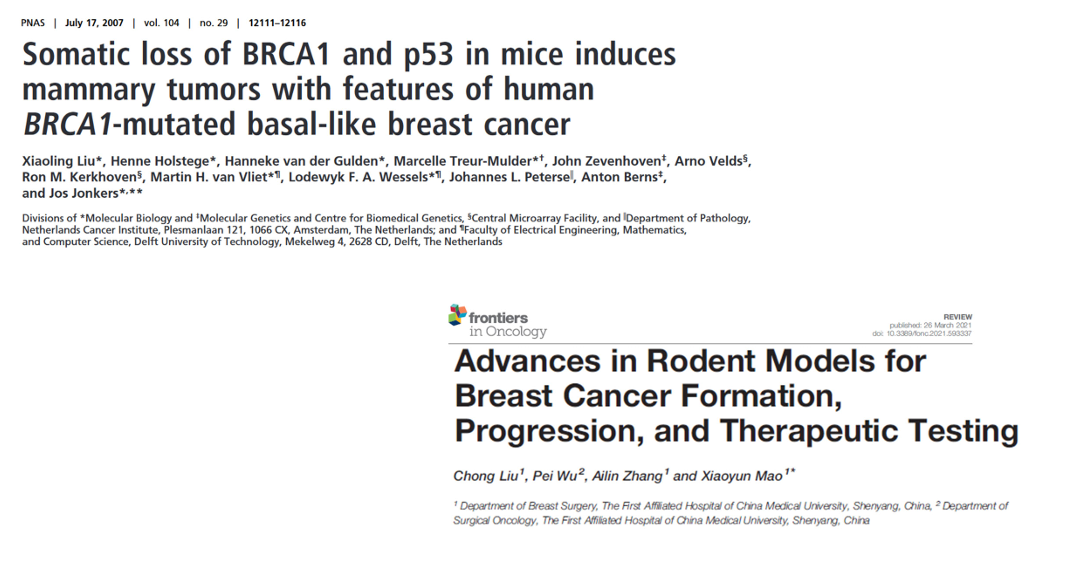
An experimental mouse model with somatic loss of BRCA1 and p53 developed mammary tumours with features of human BRCA1-mutated basal-like breast cancer.
The slide also shows "Advances in Rodent Models of Breast Cancer Formation, Progression, and [unclear]".
Interpretation: Animal work can demonstrate biological significance of candidate genetic alterations and complement human association studies before further clinical translation.

What is T2 translation to patients and what kinds of studies are included?
Move discoveries into clinical investigation with patients.
.
Includes:
- Human disease studies linked to cell and animal model findings.
- Safety and effectiveness testing in individuals with or without disease.
- Behavioural and observational studies.
- New-treatment toxicity and efficacy testing in healthy people and seriously ill patients lacking alternatives.
- Controlled studies, including Phase II and III trials and RCTs; evidence synthesis and guideline development.
Goal of many clinical trials: Data supporting regulatory approval and effective care.
.
Lecturer explanation:
The research PURPOSE, not just the design label, determines its translational stage.


What was the T2 breast cancer/BRCA testing research question?
Question: What is the positive predictive value of BRCA mutations in at-risk women?
.
Methods shown:
- Phase III clinical trials.
- Observational studies.
- Evidence synthesis and guideline development.
- Development and validation of risk/prediction models, including BOADICEA, BRCAPRO, IBIS, Myriad and Manchester scoring, using UK genetics-clinic data.
.
Lecturer explanation:
Once BRCA mutations are relevant to human disease, testing should be evaluated for predicting carrier status/risk and guiding management.


What clinical recommendations about BRCA testing illustrate T2 translation?
Examples displayed:
- "Recommendations for the implementation of BRCA testing in ovarian cancer patients and their relatives" (Critical Reviews in Oncology/Hematology 140, 2019, 67-72).
- "BRCA1/2 testing: therapeutic implications for breast cancer management" (British Journal of Cancer review).
.
The information translates evidence about BRCA1/BRCA2 into genetic testing recommendations and potential treatment/management decisions for patients and families.


What is T3 translation to practice?
Adoption of research-supported interventions into ROUTINE CLINICAL CARE.
Examples:
- Pregnancy tests.
- Genetic tests and screening.
- New drugs.
- Diagnostic tests and medical imaging.
- Devices including pacemakers and surgical devices.
Also includes evaluating clinical-trial results and identifying gaps in clinical care and new clinical questions.
.
Lecturer examples:
Screening, cholesterol medicines and CPAP devices in ordinary healthcare.


Which kinds of research and BRCA question illustrate T3?
T3 methods:
- Dissemination research.
- Implementation research.
- Diffusion research.
- Phase IV/post-marketing clinical studies.
Question: What proportion of women who meet family-history criteria are tested for BRCA, and what are the barriers to testing?
.
Lecturer explanation:
A useful test achieves limited benefit if it is not offered or used. Phase IV research can assess clinical outcomes and how interventions perform after adoption.


What is T4 translation to community?
PUBLIC-HEALTH IMPLEMENTATION and population-wide outcomes.
- Monitor disease, prevention, diagnosis and treatment outcomes at population level.
- Investigate morbidity, mortality, benefits, risks and policy changes.
- Promote broad, potentially global dissemination of evidence-based services and information.
- Feed observations back into research to improve interventions.
.
Lecturer explanation:
Public awareness can help individuals seek effective healthcare, while long-term evaluation tests whether community health actually improves.

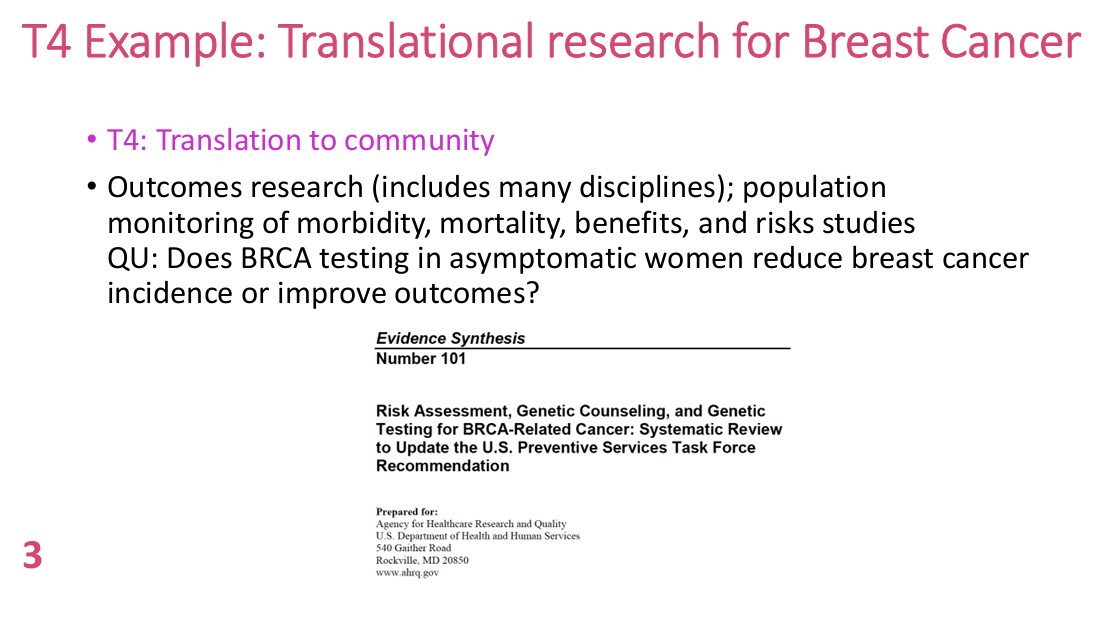
What T4 breast cancer question assesses the population-level benefits of BRCA testing?
Question: Does BRCA testing in asymptomatic women reduce breast cancer incidence or improve outcomes?
.
Study types:
- Multidisciplinary outcomes research.
- Population monitoring of morbidity, mortality, benefits and risks.
- Public-health evidence synthesis, risk assessment, genetic counselling and testing policies.


What are the five major barriers to translational research?
1. Clinical research efficiency.
2. Collaborations and partnerships.
3. Data transparency and release — effective dissemination.
4. De-risking therapeutic development.
5. Predictive efficacy and toxicology.
.
Lecturer explanation:
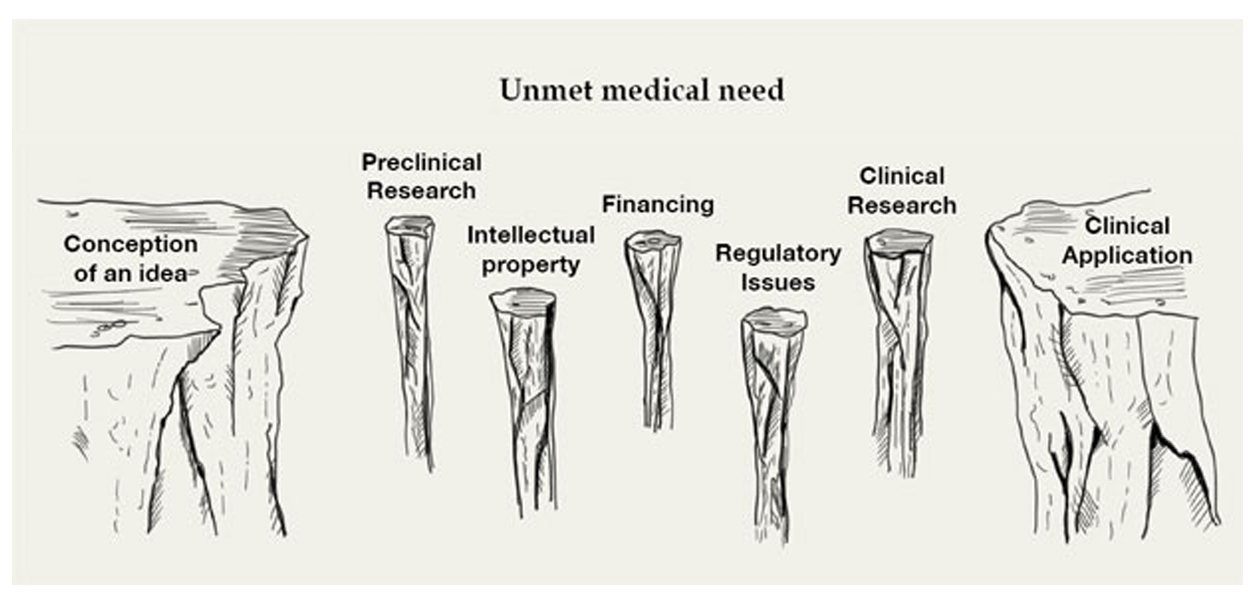
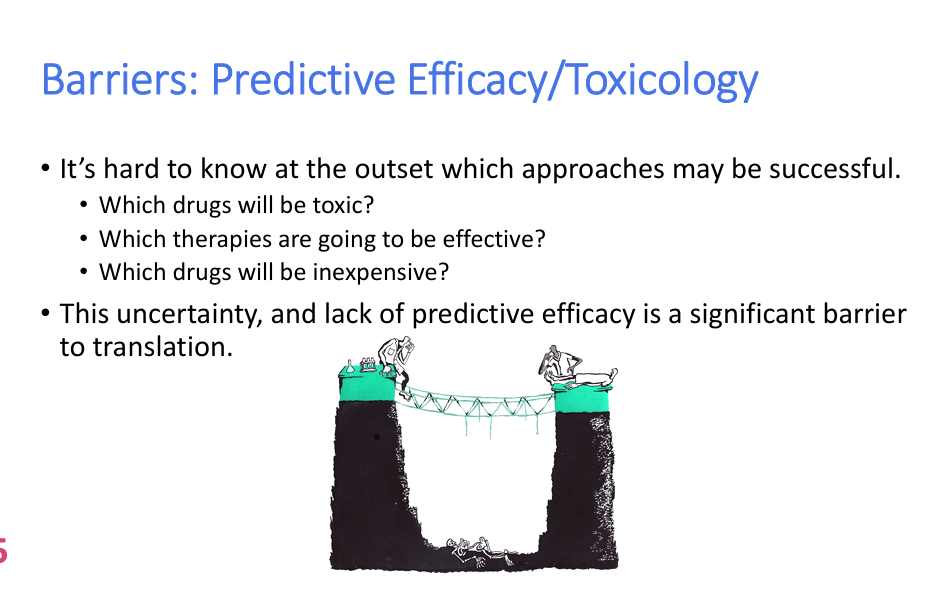
Many potentially useful discoveries never reach patients because of these barriers, often called the "valleys of death" between discovery and implementation.
.
predictive efficacy refers to the fact that investors want a prediction if it will be effective before investing money


Why is clinical research efficiency a barrier to translation?
Research is commonly slow because it takes time to:
- Develop and test new ideas.
- Assemble a team with appropriate expertise.
- Obtain funding/investment.
- Design studies and translate ideas into therapies.
- Manage projects and ethics, governance and compliance requirements.
.
Lecturer explanation:
Weak project administration or lack of specialised support can prolong approvals and development.

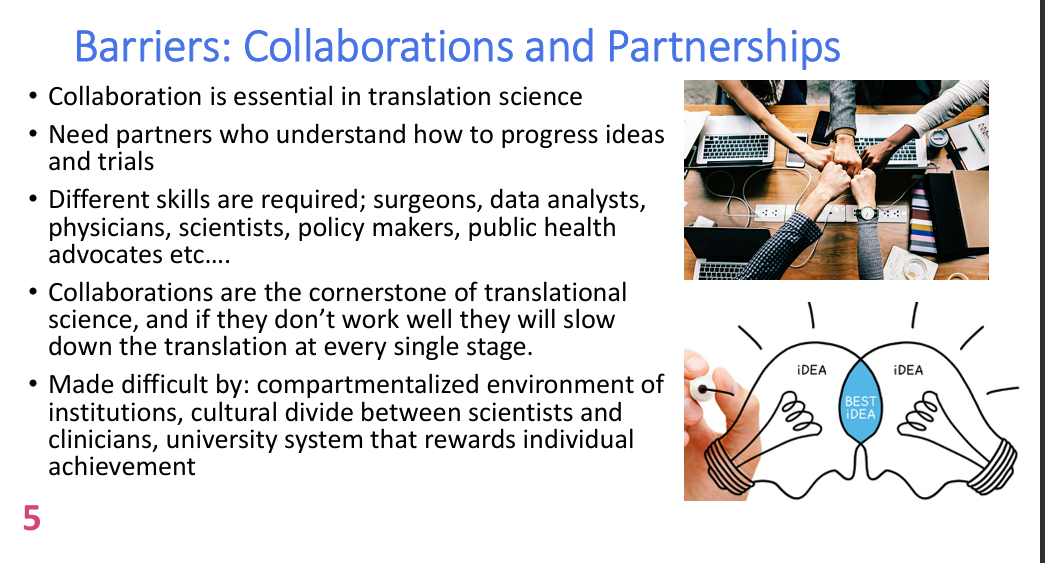
Why do collaboration and partnerships determine whether translational research succeeds?
The pipeline needs people who know how to progress ideas and trials:
- Scientists and data analysts.
- Physicians and surgeons.
- Policymakers and public-health advocates.
- Consumers/community partners.
- Other clinical and technical experts.
.
Barriers:
- Institutional silos/compartmentalisation.
- Cultural divides between scientists and clinicians.
- Academic incentives rewarding individual rather than collective achievement.
- Funding constraints.
.
Lecturer emphasis:
Poor collaboration can delay or stop progress at EVERY stage.

What is the barrier of ineffective data transparency and dissemination?
Research results must be fully and accurately reported; methods and data should be shared for verification and further research.
Without accessible, high-quality evidence:
- Findings cannot be built on reliably.
- Effective therapies may not be developed or adopted.
- Innovation and discovery stall.
- Reporting bias can distort the evidence base.
.
Lecturer explanation:
Evidence can be useful yet fail to reach policy and practice if it is not disseminated, funded or adopted.


What is de-risking therapeutic development, and why does it delay promising discoveries?
At every stage investors ask:
- Will the idea still work?
- Who will fund it?
- How long will development take?
- When is a return possible?
High-risk projects have a lower likelihood of funding success.
Even potentially beneficial discoveries can stall if they are expensive, uncertain or unlikely to yield profit.
.
Lecturer example:
A cheap, stable antibiotic suitable for low-resource countries may struggle to attract commercial investment despite potential health benefits.


Why are predictive efficacy and toxicology barriers to translational medicine?
At discovery it is difficult to predict:
- Which drugs will be toxic.
- Which therapies will actually work in people.
- Which drugs will be inexpensive.
- Whether later or long-term harm will emerge.
.
Positive cell-culture results do not guarantee benefit or safety in animals or humans.
.
Lecturer explanation:
Funders may want high certainty before financing the further testing needed to obtain that certainty.

What team and skill sets are needed to move from T0 discovery to T4 community impact?
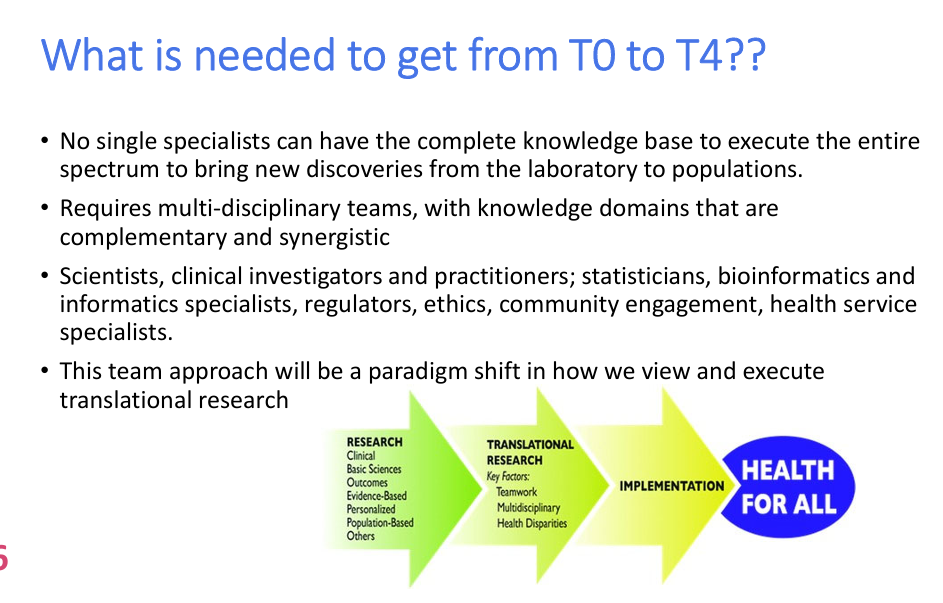
No single specialist can cover the entire spectrum.
Complementary contributors include:
- Basic scientists and clinical investigators/practitioners.
- Statisticians.
- Bioinformatics and informatics specialists.
- Regulators and ethics specialists.
- Community-engagement experts.
- Health-service and public-health specialists.
- Intellectual-property/commercial development and translational project managers (lecturer example).
Teamwork, multidisciplinary collaboration and addressing health disparities connect basic/clinical/outcomes/evidence-based/personalised/population-based research to implementation.
.
Lecturer emphasis:
Team-based work is a necessary paradigm shift for effective translation.

How does the final BRCA breast cancer example map questions, methods and aims across T0-T4?
T0 — Basic science; identify opportunities and genetic susceptibility.
Question: Are particular gene mutations associated with breast cancer?
.
T1 — Humans; discover candidate health applications; Phase I-II studies and observational evidence.
Question: Are BRCA mutations associated with breast cancer in humans?
.
T2 — Patients; validate clinical usefulness and develop evidence-based guidance; Phase III, observations and evidence synthesis.
Question: What is BRCA mutation positive predictive value in at-risk women?
.
T3 — Practice; disseminate/implement recommendations; diffusion research and Phase IV studies.
Question: How many women meeting family-history criteria get BRCA tests, and what prevents testing?
.
T4 — Community; evaluate population impact; monitor outcomes, morbidity, mortality, risks and benefits.
Question: Does BRCA testing in asymptomatic women reduce incidence or improve outcomes?
.
Feedback from each stage can reshape the others.
