Chemistry C1 particles
 Call Kai
 Learn
 Practice Test
 Spaced Repetition
 Match
 Flashcards
 Knowt Play
1/31

There's no tags or description
Looks like no tags are added yet.
32 Terms
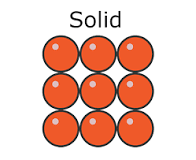
solid
particles closed together in regular arrangements
cannot be squashed or compressed
fixed shape and cannot flow
vibrates in a fixed position
liquid
close together in random arrangements
can move around each other
flow and take the shape of the container
cannot be compressed or squashed

Gas
far apart in random arrangement
move quickly in all direction
flow and completely fill their container
can be compressed or squashed

physical change
no new substances are made
change in appearance
usually reversable
e.g. state changes, cutting,dissolving
chemical changes
produces new substances
Same type of atom are rearranged to make new bonds forming new chemicals
usually hard or impossible to reverse
limitations of particle model
1. Forces between particles are moving
Particles can be different sizes,not always the same sphere
Spaces between particles is not always shown or accurate
Particles are 3D not 2D
Movements of particles can be hard to stown on paper
Standard form notation
a way of representing either very large or very small numbers more easily
How is standard form written?
A x 10ⁿ
A can be greater than or equal to 1 but less than 10
1 picometre ( 1 pm ) in standard form
1 × 10⁻¹²m
1 nanometre(1nm)in standard form
1 × 10⁻⁹
1 micrometre (1μm)
1 × 10⁻⁶
Ratio
allows us to compare numerical value interms of their relative sizes
current atomic model
an atom is the smallest particle of the element that still have chemical properties
inside an atom is mostly empty space but there are smaller subatomic particles inside
Atomic number
each element on the periodic table has an unique atomic number ( the smaller one in value )
tells us how many protons there are in the nucleus of an atom of the element
the number of protons in the nucleus determines the element of the atom
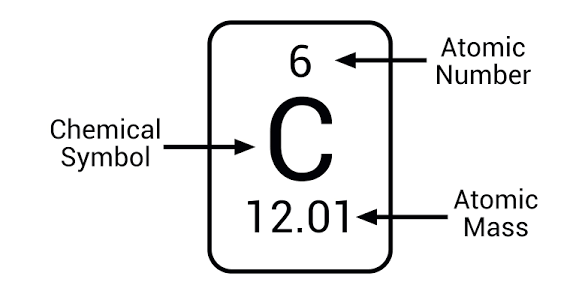
mass number
each element on the periodic table has a mass number
the mass number = the number of protons+ number of neutrons

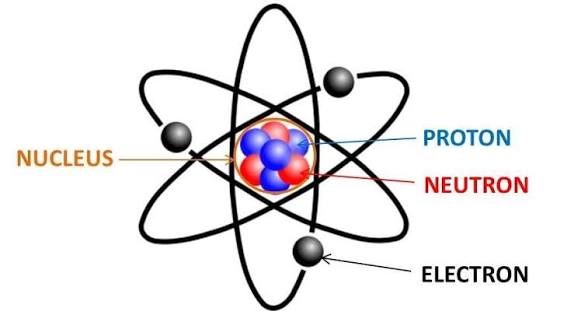
nucleus of an atom
has the vast majority of an atom's mass
has a positive charge as neutrons have no charge
consist of protons and neutrons
surrounded by electrons

Proton
Relative Charge : +1
Relative Mass : 1

Neutrons
Relative Charge : 0
Relative Mass : 1

Electrons
Relative Charge : -1
Relative Mass : 0.0005 / 1/2000
arranged in shells ( energy level )
have such a small mass that it is said that their mass is negligible
John Dalton - Dalton's solid atom model 1803
It was more detailed than those before
all atoms of an element are identical
different element contain different types of atom

J.J Thomson - Thomson's Plum Pudding Model 1897
Beams of 'cathode rays' changed directions in electric and magnetic field
atoms contain electron
atoms are neutral overall

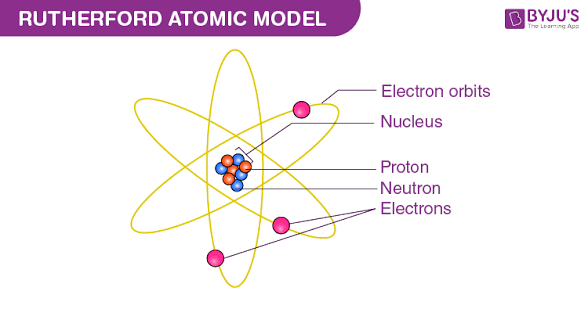
Earnest Rutherford - Rutherford's planetary model of the atom 1909
Worked with Hans Geiger
Shone beams of positively charged particles called alpha particles at thin foil
expected the particles to go straight through,although most did some changed direction slightly
Neils Bohr 1913
orbiting electrons would be attracted to the oppositely charged nucleus and would rapidly spiral inwards
electron occupy fixed energy level,or shells,around the nucleus

Isotope
atoms of the same element with different number of neutrons
they have the same atomic (proton) number but different mass number
Isotope notation

Ions
An Ion is formed when an atom lost or gained electrons
If electron has been lost a positive ion ( cation ) will form
If election has been gained a negative ion (anion)will form
Cations
metals are positive ions
they donate electrons
Anion
Non - metals are negative ions
they receive electron
Relative atomic mass ( A r)
the mean mass of an atom of an element compared to 1 / 12 the mass of a carbon 12 atom
Relative formula mass ( M r )
the mean mass of a unit of substance compared to 1 / 12 of a cabon 12 atom
Calculating RFM
1. Count the number of atom of each element
2. Find the mass number for one atom of each element from the periodic table
Multiply the mass number by the number of atoms of each element
Add the multiplied masses together to work out the total formula mass
Empirical Formulae
Simpliest whole number ratio of atom of each element
eg. the molecule octamoic acid has the chemical formula is C81H16O2
its empirical formula is C4H8O