ECON 2310 - Instrumental Variables
 Call Kai
 Learn
 Practice Test
 Spaced Repetition
 Match
 Flashcards
 Knowt Play
1/83

There's no tags or description
Looks like no tags are added yet.
84 Terms
simultaneous causality bias in the OLS regression of ln(Q) on ln(P) arises because

the interaction of demand and supply produces
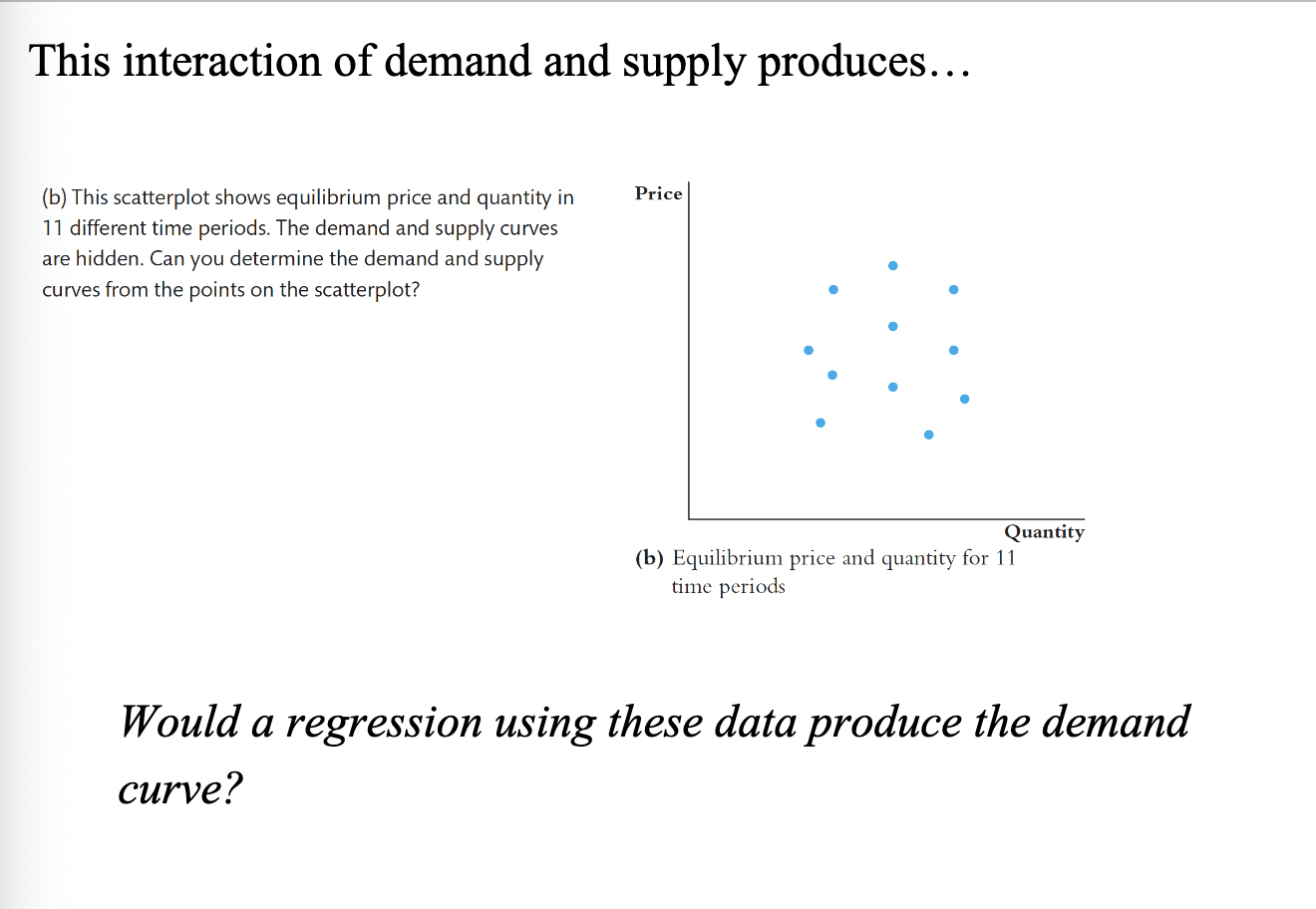
what would you get if only supply shifted?

the IV estimator with a single regressor and single instrument
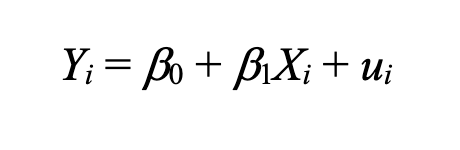
Problem: Xi and ui are

Loosely, IV regression breaks X into two parts


instrumental variable Zi detects
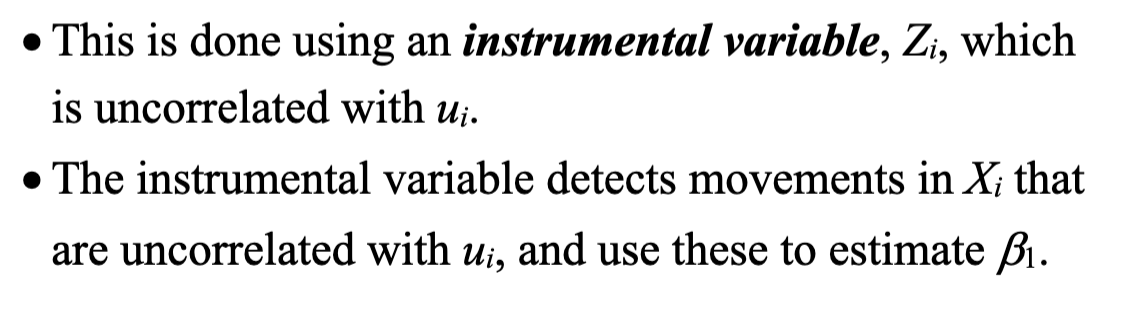
endogenous variable
variable correlated with u
exogenous variable
variable uncorrelated with u
historical note
“Endogenous” literally means “determined within the system,” that is, a variable that is jointly determined with Y, that is, a variable subject to simultaneous causality. However, this definition is narrow and IV regression can be used to address OV bias and errors-in-variable bias, not just to simultaneous causality bias.
2 conditions for valid instrument


IV estimator on X and one Z
use two stage least squares
As it sounds, TSLS has two stages – two regressions: first one

first stage notes

second stage
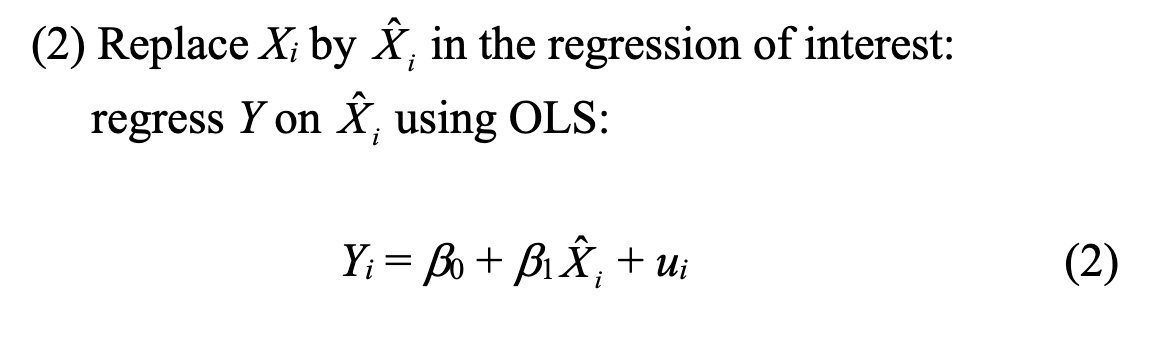
second stage notes

resulting TSLS estimator

steps to two stage least squares
suppose you have valid instrument Zi

consistency of TSLS estimator

Sample covariances are consistent

with sample covariance consistency means

instrument relevance condition

supply and demand for butter background

anatomy of butter equation


so simultaneous causality bias in OLS regression for butter arises

graph of simultaneous causality bias butter

interaction of supply and demand again
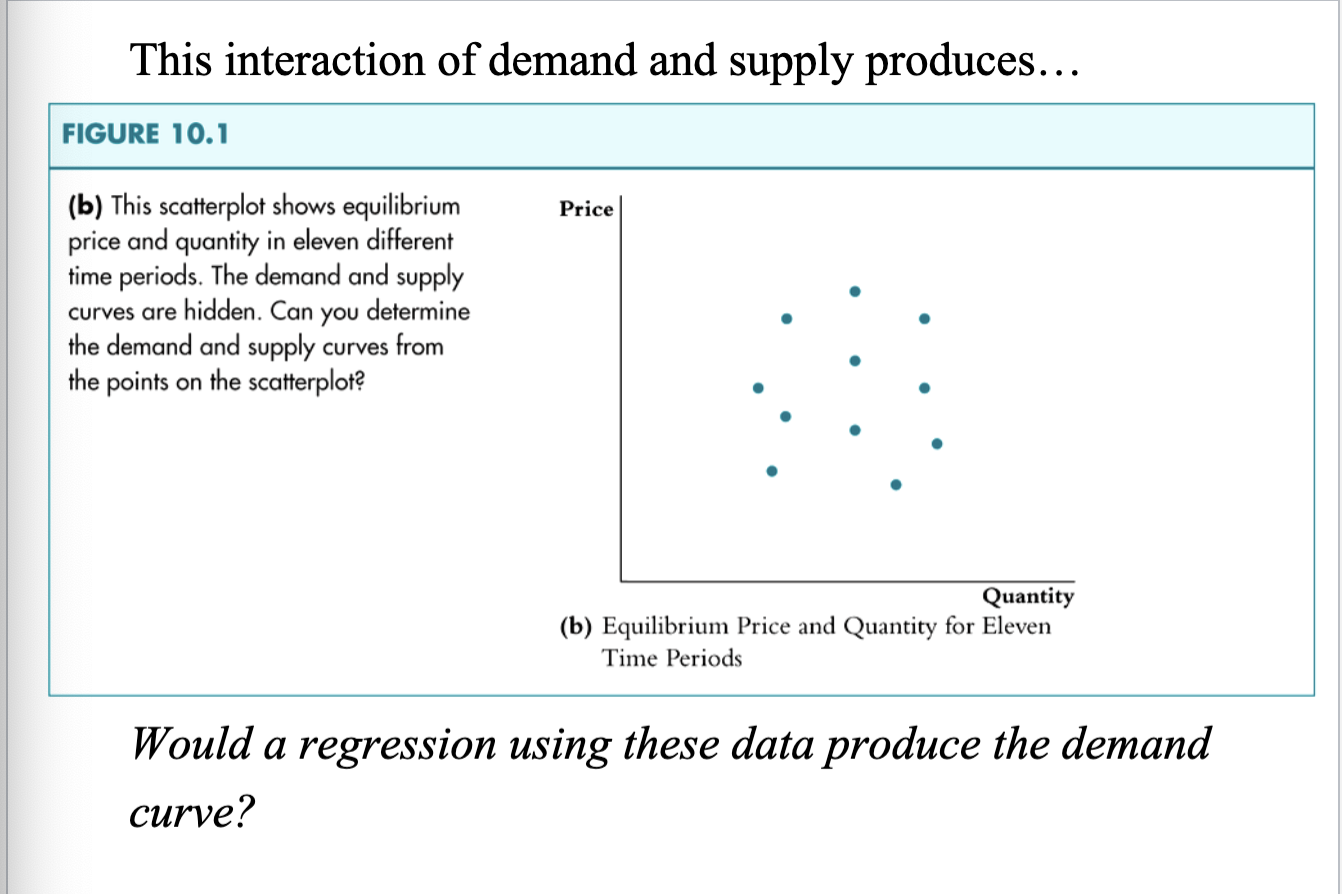
supply only shifts

TSLS in supply demand example

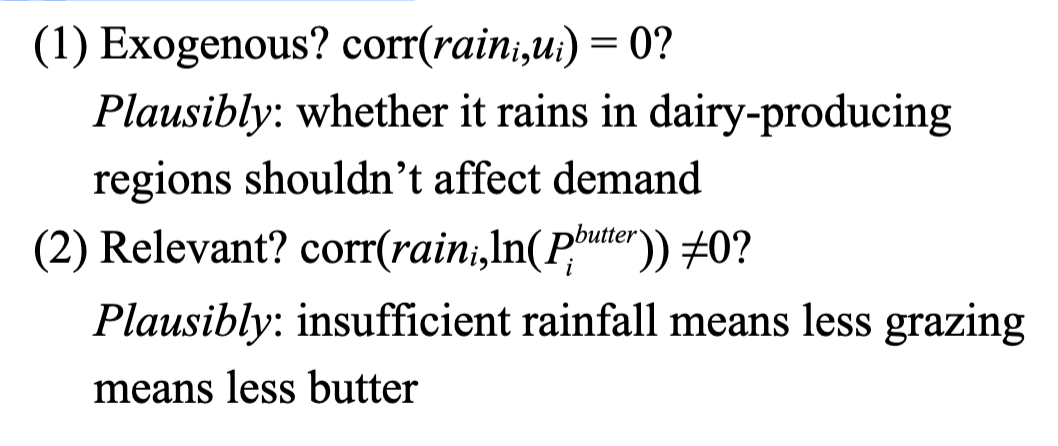
Let Z = rainfall in dairy-producing regions.
Is Z a valid instrument?


inference using TSLS
(TSLS distribution)

important note on standard errors

Beta estimator of TSLS distribution

demand for cigarettes

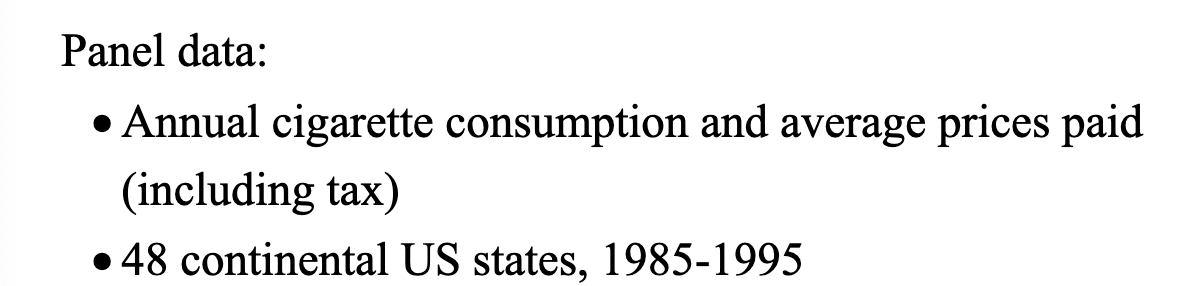
panel data cigarettes
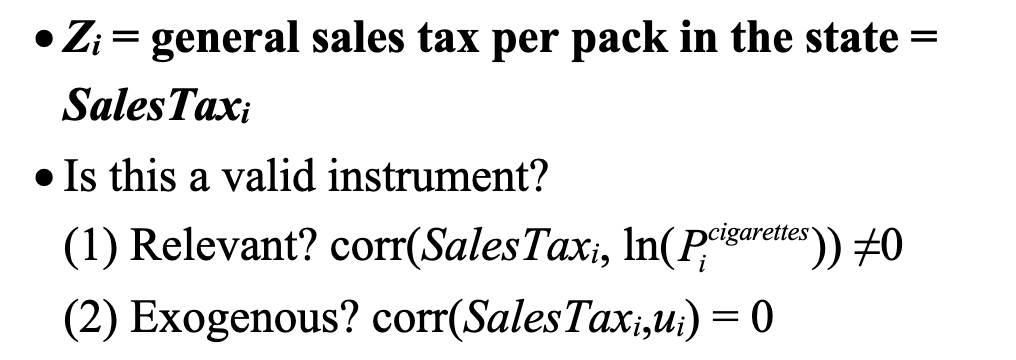
proposed instrumental variable for cigarettes
OLS regression using 1995 data

cigarette Combined regression with correct, heteroskedasticity-robust standard errors

return to schooling example

summary valid instrument

continued summary

general IV regression model

general IV regression model anatomy

W in regression model

Beta and Z

coefficients B1 to Bk if m = k
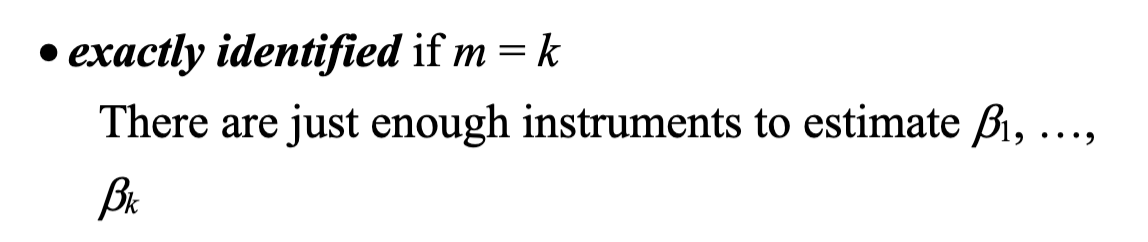
coefficients B1 to Bk if m > k

coefficients B1 to Bk if m < k

General IV regression: TSLS, 1 endogenous regressor

The population first-stage regression of TSLS:

This equation relates X to
all the available exogenous variables, both those included in the regression of interest (W) and instruments (Z).
first stage
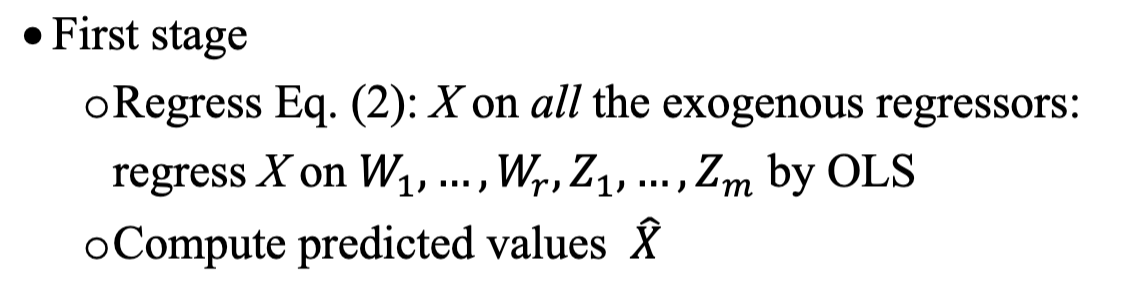
second stage

General IV regression: Extension to multiple X’s
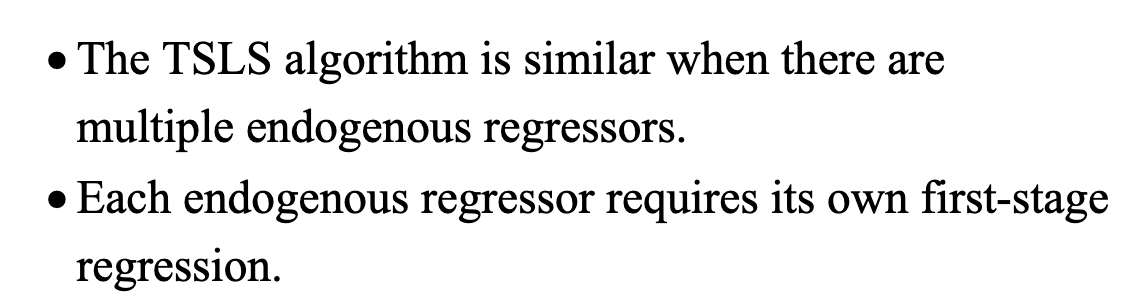
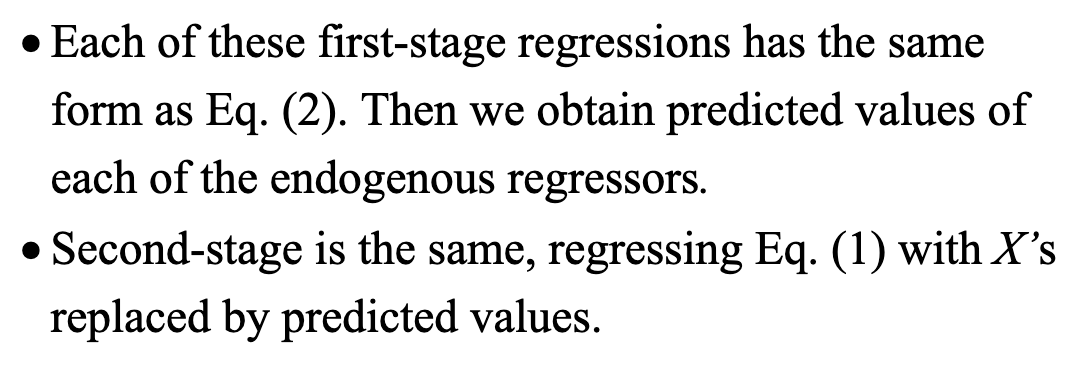
General IV regression: Extension to multiple X’s cont
2 conditions for valid instruments
relevance and exogeneity
relevance
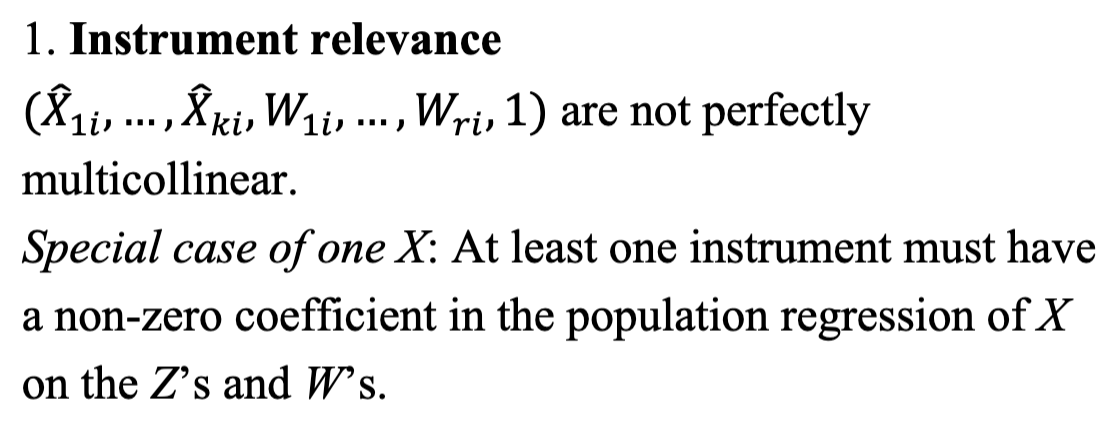
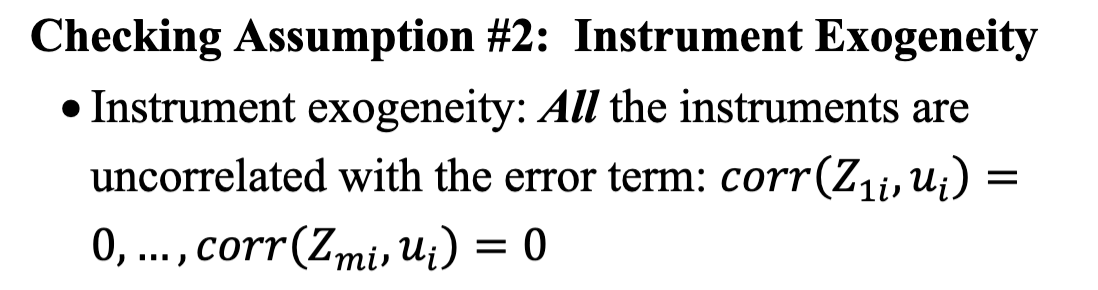
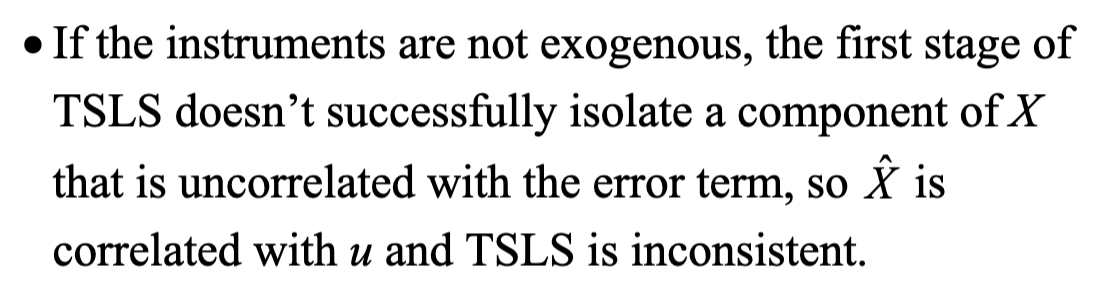
exogeneity

regression assumptions


notes on IV regression assumptions

sampling distribution of TSLS estimator

Standard errors reported by OLS estimation of second-stage regression are
incorrect

demand for cigarettes anatomy


TSLS estimates using only Z = sales tax (m = 1)

TSLS estimates using both Z = sales tax, cig-only tax (m = 2)

conclusions of different ms

checking instrument validity

checking assumption 1

notes on checking assumption 1

An example: the distribution of the TSLS t-statistic with weak instruments

Checking for weak instruments when there is single X
Measuring the strength of instruments in practice:
The first-stage F-statistic

use the first stage F stat to test the hypothesis that

Compute the first-stage F-statistic, which provides a measure of the information content contained in the instruments:
More information content = a Larger F.
Rule-of-thumb: If the first stage F-statistic is less than 10, then the set of instruments is weak.
if set of instruments is weak
TSLS estimator will be biased, and statistical inferences can be misleading.

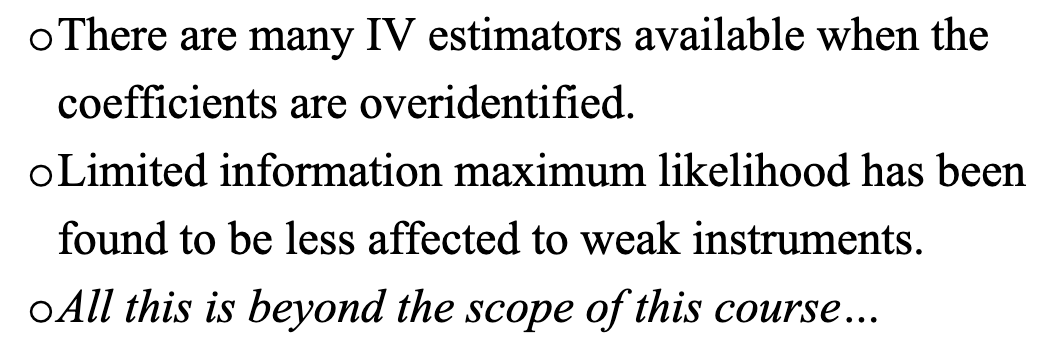
what to do if you have weak instruments

Use a different IV estimator instead of TSLS
If the coefficients are exactly identified
it is not possible to test the hypothesis that the instruments are exogenous
If the coefficients are overidentified,
it is possible to test – partially – for instrument exogeneity
overidentifying restrictions test


overidentifying restrictions test - J statistic

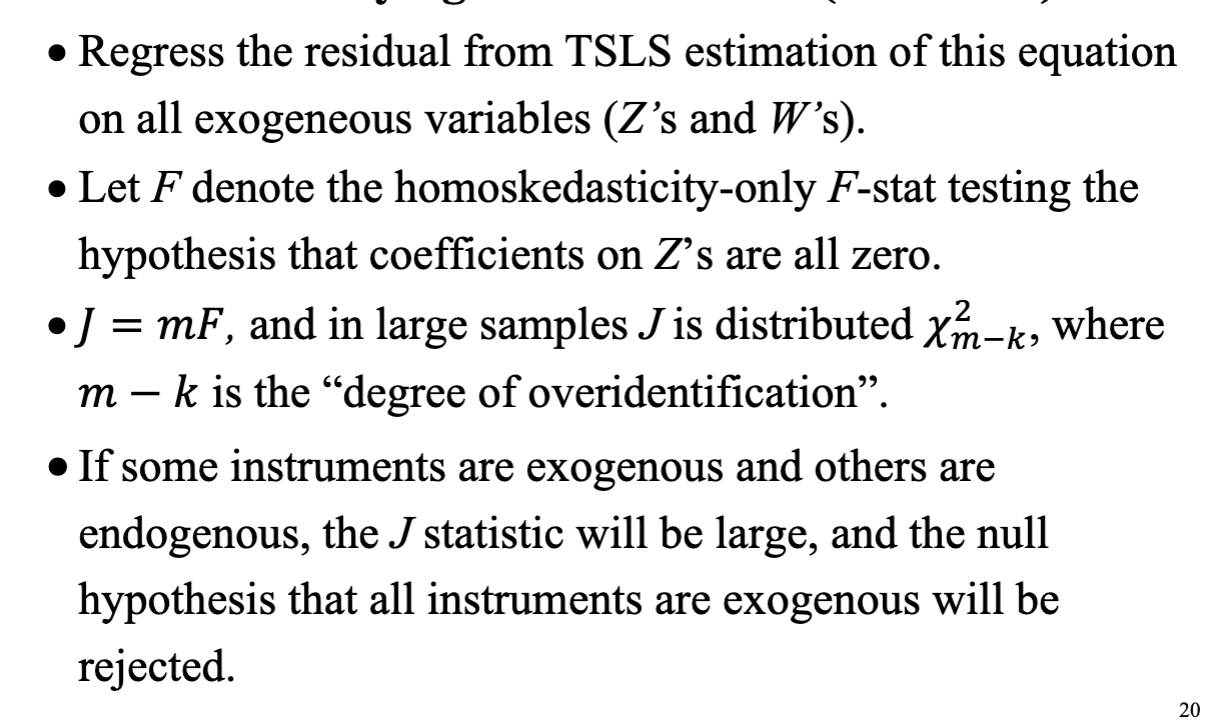
j stat inferences

IV regression summary
