Movement Across Cell Membranes: Diffusion, Osmosis, and Active Transport
 Call Kai
 Learn
 Practice Test
 Spaced Repetition
 Match
 Flashcards
1/18

Earn XP
Description and Tags
Comprehensive vocabulary flashcards covering passive and active cell transport mechanisms, solution tonicity, osmosis, diffusion, and membrane dynamics.
19 Terms

Homeostasis
The ability of a cell to keep internal conditions steady and balanced by controlling what enters and leaves.

Solution
A mixture formed when one substance (a solute, usually a solid) is completely dissolved into another (a solvent, usually a liquid).

Aqueous Solution
Any liquid mixture where water is the liquid that dissolves other substances.

Isotonic
A solution that has the exact same amount of dissolved particles as the inside of a cell.

Dynamic Equilibrium
A balanced state where molecules move in and out of a cell at equal rates, keeping the cell size unchanged.

Hypotonic
A solution that has fewer dissolved particles and more water than the inside of a cell.

Cytolysis
The swelling and bursting of a cell when too much water rushes into it from the outside.
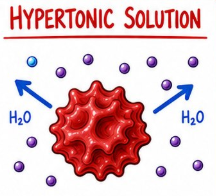
Hypertonic
A solution that has more dissolved particles and less water than the inside of a cell.
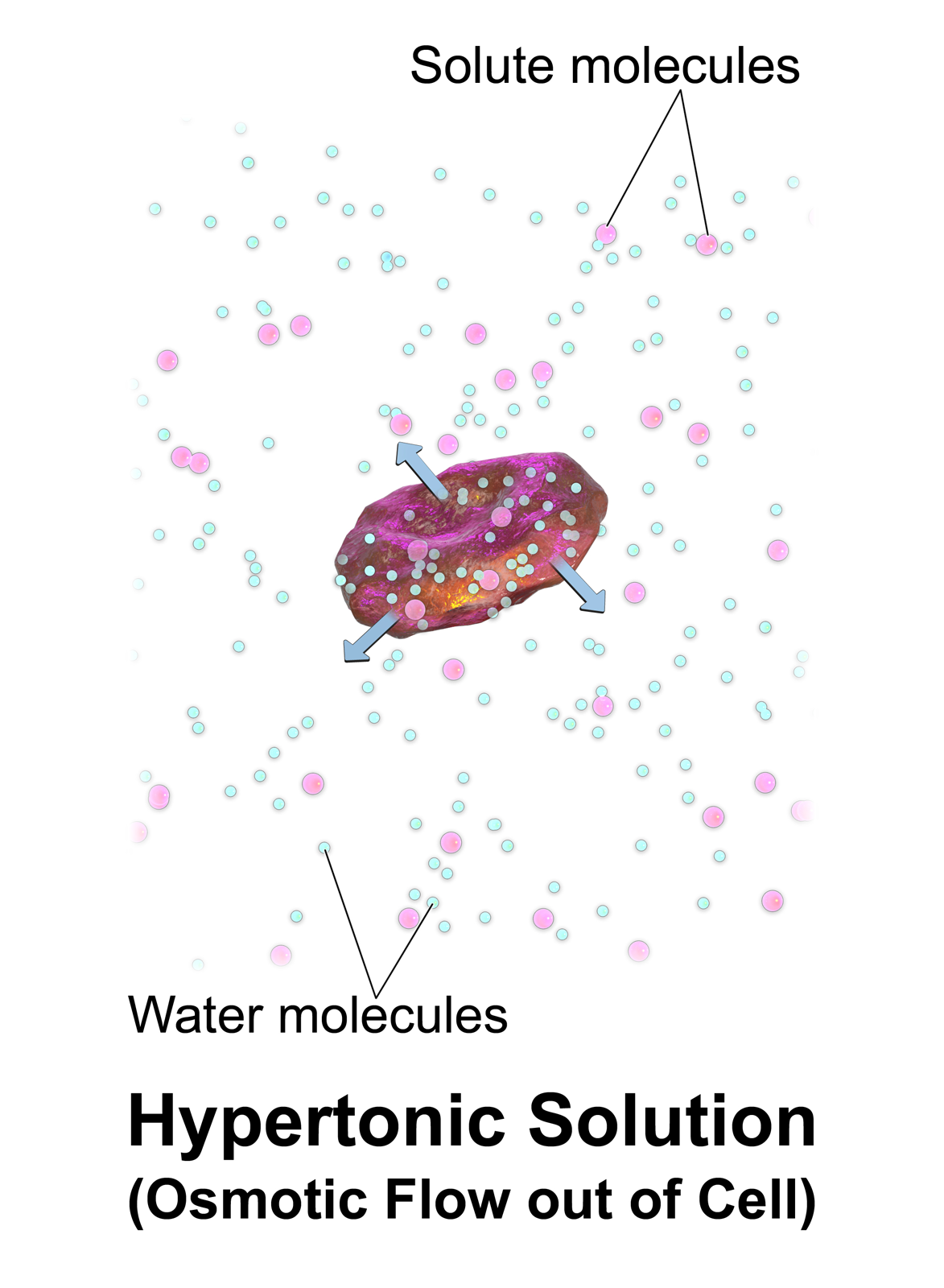
Plasmolysis
The shrinking or shriveling of a cell that happens when water rushes out into the surrounding liquid.

Diffusion
The natural movement of particles from a crowded area to a less crowded area without using energy. “Going Down the Gradient”

Concentration Gradient
The difference in the amount of particles found between two different areas.

Selectively Permeable Membrane
A cell barrier that acts like a screen door, letting only certain substances pass through while blocking others.

Osmosis
The movement of water across a semi-permeable cell barrier from areas of high water concentration to low water concentration.

Facilitated Diffusion
The passive movement of large molecules across a cell border using special protein channels, without spending energy.

Active Transport
The movement of materials from low concentration to high concentration across a membrane, requiring cellular energy.

Endocytosis
A process that uses cellular energy to take material inside by folding the outer membrane inward to create pockets.

Phagocytosis
A type of intake nicknamed 'cell eating,' where cytoplasm stretches out to surround and package large solid particles.

Pinocytosis
A type of intake nicknamed 'cell drinking,' where the membrane pinches inward to bring in tiny droplets of fluid.

Exocytosis
A process that uses cellular energy to release large amounts of material or waste out of the cell.