Exam 4 - Art History 1
 Call Kai
 Learn
 Practice Test
 Spaced Repetition
 Match
 Flashcards
 Knowt Play
1/18

Earn XP
Description and Tags
The Ottononians: Spain and Islam: The Silk Road: Romanesque Art
19 Terms

Church of Saint Cyriakus
Ottonian Period
Germany
One of the few surving Ottonian churches, most of them burned
Basilica: a large rectangular building
Used for a convent but made for his widowed daughter-in-law
It has a three part elevation, nave arcade, triforium, and clerestory
3 is the holy number, the father, the son, the holy spirit

Narrative Column of Bishop Bernward
Ottonian Period
Germany
cast in bronze
made to go inside a church
narrative: it tells a story
12 and a half feet tall
Bernward is most likely the guy who designed this
Tutor of Emperor Otto II
very educated
Similar to the column of Trajan
it was also a narrative column and a 100 roman feet tall
Tells the story of Christ’s victory cause this is a triumphant image
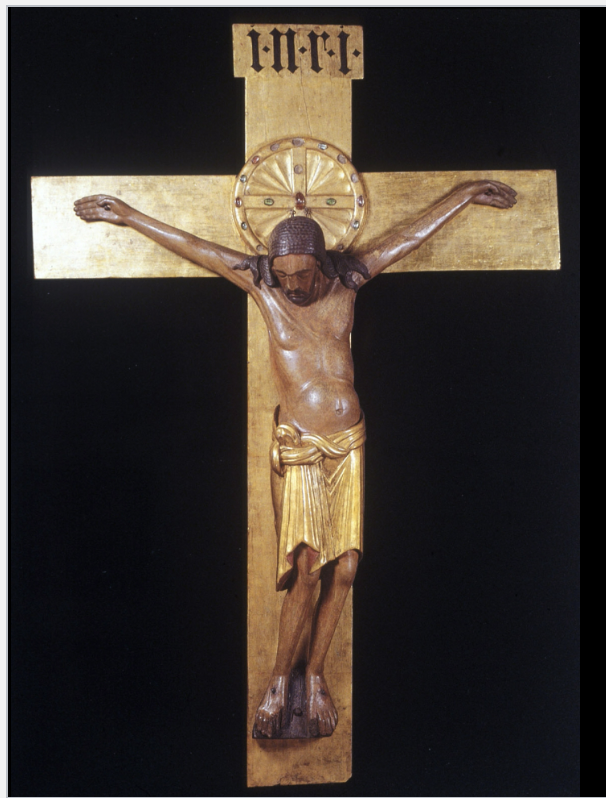
Gero Crucifix
Ottonian Period
Germany
Represents a change in the depiction of Christ and the population of Christians
Before, Jesus was depicted as more triumphant; in this, it’s after the crucifixion: he’s dead
Cruciform: cross-shaped
In early Christianity, they didn’t want to show the crucifixion because it showed a loss
It was also a real risk for Christians back then
It took almost 1,000 years for Christians to get to the point where they feel they could depict this safely
Change in viewer perception so that we can connect with his suffering.

Aachen Gospels, “Otto III Enthroned”
Ottonian Period
Germany
Sometimes called the Lutheir Gospels
We don’t know if he was the scribe, the guy who paid for it, or the painter
Propaganda painting, to show Otto III as quasi-divine
Supposed to show he had a “divine right to rule”
The woman holding up his throne is representing Earth
The hand is supposed to be the hand of God crowning him
The four evangelists are holding up the sash thing: Matthew, Mark, Luke, and John
Registers: horizontal bands of organization
The ones on the bottom are soldiers and religious figures
Shows he has the military and the church supporting him
As well as other Kings bowing to him
The whole painting feels arrogant

Great Mosque
Cordoba
Early Islam Period
They had been renting this church structure
Symbolic: taking a Christian foundation and making it Islamic
Expanded it much larger than it had been earlier
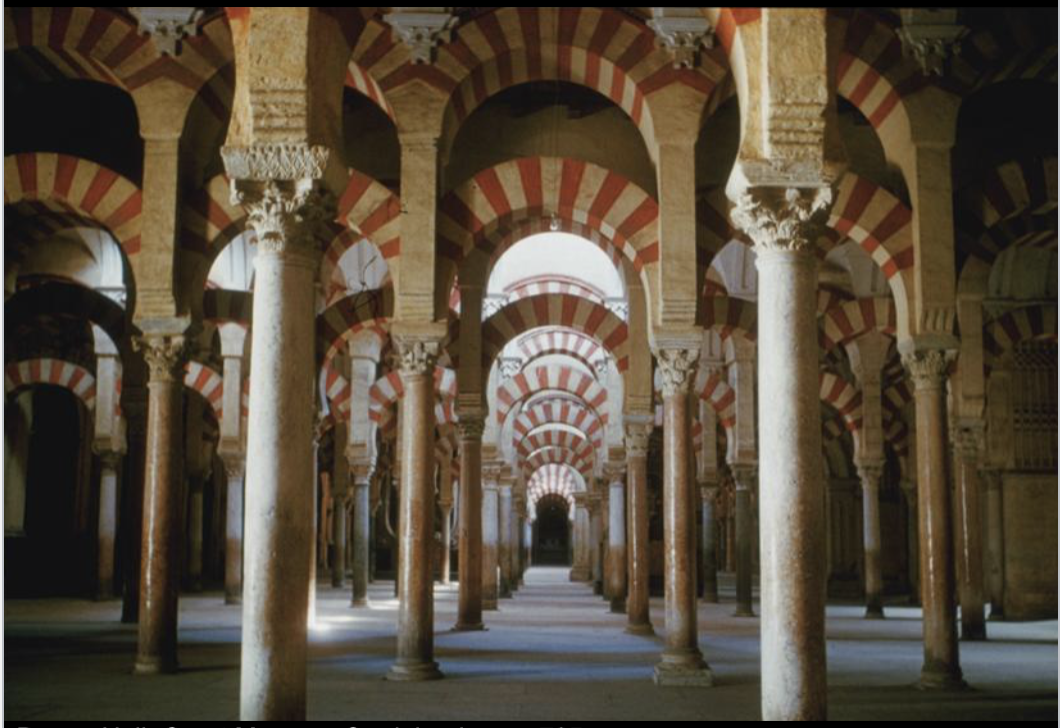
Prayer Hall
Great Mosque, Córdoba
Early Islamic Period
the columns are Spoilia: artwork stolen and reused
these were taken from other christan churches
There are two tiers of arches to make them seem taller
Alternating red and white stone for visual appeal and to help with earthquakes
the stones are made of different materials

Pyxis of al-Mughira
Early Islamic Period
Spain
As long as it’s not depicting God, you can have figural representation
Carved on Ivory
Imported from Africa or China
Ivory is a luxury and expensive
Relief Sculpture: a carving that projects from a surface
6 inches tall and 3 inches in diameter
Art moblier: portable/handheld art
Gift for the Kalib’s youngest son
Carved all the way around and has script at the top: that’s how we know who it was for
Most likely held perfume
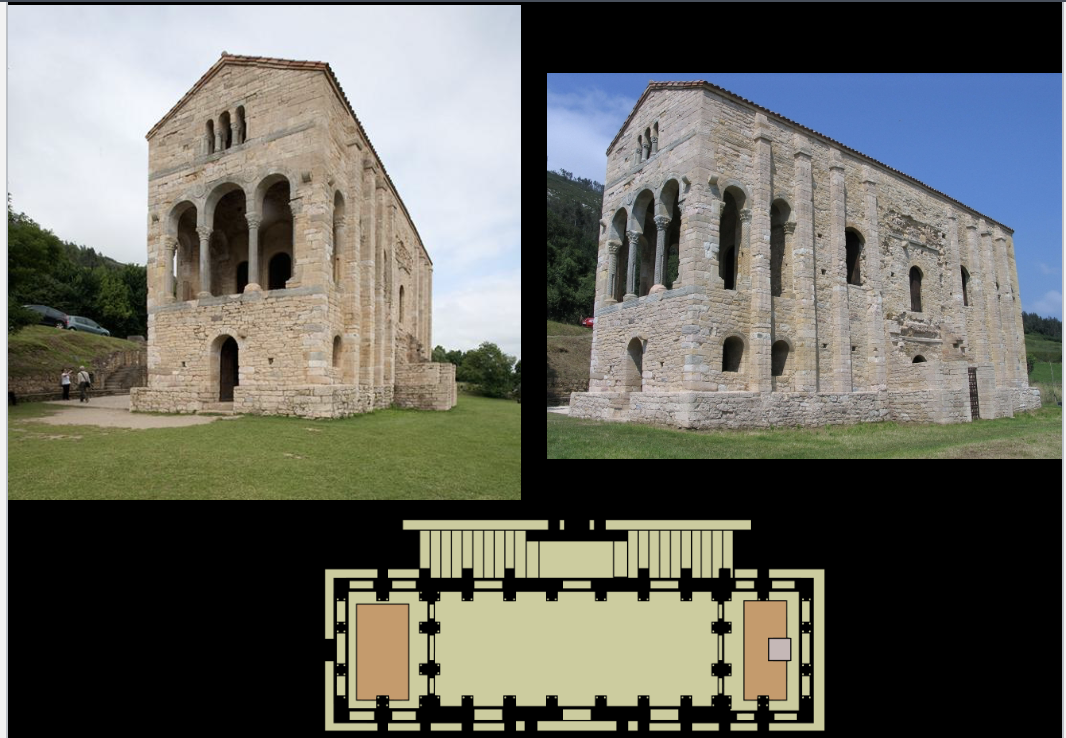
Santa María de Naranco
Early Islamic Period
Spain
Mosarabic Art
Art of Christian and Islamic people living together in Spain
Reconquista: retaking Spain from Islamic rulers
first half of the 8th Century
Part of a Christian kingdom that survived in Islamic Spain
is a church now but was a Royal audience hall
reminiscent of a basilica: a large rectangular building typically seen in ancient Rome
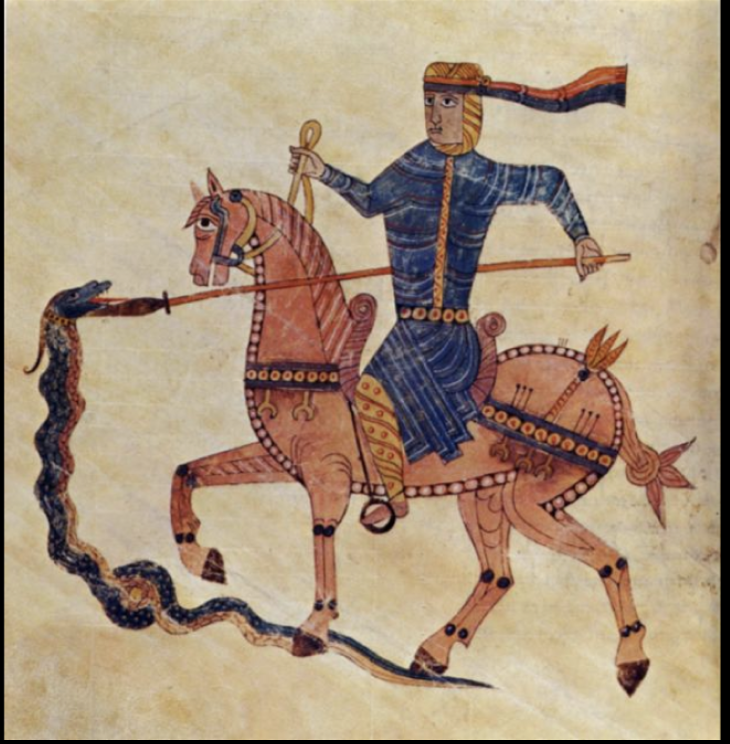
“Islamic Rider” Gerona Beatus
Early Islamic Period
Spain
From a book called the Gerona Beatus
A Beatus manuscript is named after an 8th-century Spanish monk
Beatus’s commentary on the Apocalypse
called the Gerona Beatus because it is in Gerona
This was written based on the Book of Revelation
Adoptionism: belief that Christ was born human and was adopted by God
Beatus wrote this to call out adoptionism as heritical, it was to combat the adoptionism belief
Could be representative of a triumph or victory
the painters for this didn’t adhere to what was written in the book
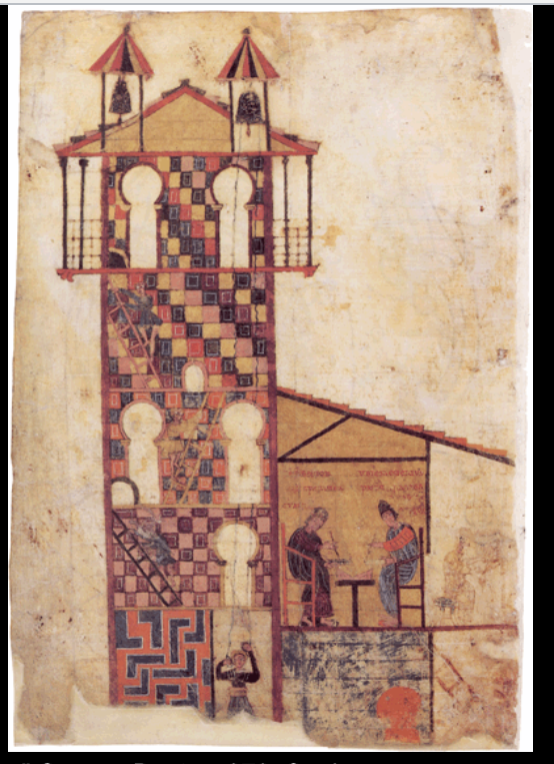
“Tower and Scriptorium” Gerona Beatus
Early Islamic Period
Spain
Scriptorium: where books are made
Gerona Beatus: apocalypse commentary by Beatus found in Gerona
Shows the writing of the book in a monastery with the help of a nun
It’s labeled so we know one of the figures is Amaratus.
Standing Buddha
Silk Road Period
Afghanistan
1 of 2 gigantic Buddhas built here
One is 115ft tall, and the other is 180ft tall
They are carved out of the stone face, and plaster was used to mold parts
Were brillantly painted at some point
One: you could circumnambulate the head
circumnambulate means to walk in a circle and pray
They were bombed by the Taliban in 2001 and no longer exist
They now use projection to show what the Buddha would have looked like
Seated Buddha from Yungang
Silk Road Period
China
This was polychrome: painted in many colors
These are religious, but they represent political power
The emperors paid to have these done
Relief Sculpture: a carving that projects from the surface
In the 5th century, Buddhism was declared the state religion
He has the characteristics of Buddha, like the elongated ears and the bun, the halo behind his hand
Connect to the Standing Buddha
Great Wild Goose Pagoda
Silk Road Period
China
This was rebuilt in the 8th century
It was built for a famous monk who went on a 16-year pilgrimage to India
He brought back scripture that he translated from Sanskrit
The pagoda is based on the Great Stupa
it’s a mixture of a stupa and the Han Dynasty watchtowers
Camel Carrying a Group of Musicians
Silk Road Period
China
Ceramic: meaning made of dried clay
26 inches tall, a little over 2ft tall
It has different colors of glaze
The musicians are Turkish
The camel was the primary beast of burden on the Silk Road
It is partially molded
Representative of different cultures that met and mixed on the Silk Road
Santiago de Compostela
Romanesque Period
Spain
Became an important pilgrimage site
It was built to hold the body of St.John
It has one apse instead of two
It is a basilica: a large rectangular building
It has a transept: which is the crossbar in a cruciform-shaped building: which means it’s cross-shaped
more defined cross shape.
It’s similar to Old St.Peters
Martin Scho