Cardio Pharm Mega Reviewer
 Call Kai
 Learn
 Practice Test
 Spaced Repetition
 Match
 Flashcards
 Knowt Play
1/241

There's no tags or description
Looks like no tags are added yet.
242 Terms
Blocks Na/Cl.
Distal convoluted tubules
First line HTN
Adjunct for edema
Metolazone is added for synergy
Do not use with:
Sulfa allergy
CrClearance < 30
Gout
Watch out for:
Low Na, K, Mg
High Glucose, lipids, uric acid, calcium
Photosensitivity
THIAZIDES
HCTZ
Chlorothiazide
Chlorthalidone
Metaolazone

Blocks Na/K/2Cl in THICK ASCENDING LOOP OF HENLE
Strongest diuretics
Indication:
Heart failure
Pulm edema
Acute decompensated HF
HTN when kidneys are poor
Do not use:
Anuria
Sulfa allergy
Watch for:
Ototoxicity
High uric acid
LOOP DIURETICS:
Furosemide
Bumetanide
Torsemide

NON-SULFONAMIDE Loop Diuretic
Edema in patient with sulfa allergy
DO not use:
Severe watery diarrhea with prior use
Watch for:
Ototoxicity
GI bleed
Diarrhea
Livery toxicity
LOOP DIURETIC:
Ethacrynic Acid

Blocks aldosterone to keep K and lose Na
Used for:
HFrEF
Resistant HTN
Hyperaldosteronism
Cirrhosis
Edema
Low K
Do not use:
K>5.5
Addison Disease
SCr>2.5
Watch for:
Hyperkalemia
Gynecomastia
ED and menstrual changes
"Potassium Sparing Diuretics"
Spironolactone
Eplerenone (Aldosterone antagonists)
Blocks Na channels (ENAC) in the Collecting Tubule
NO EFFECT ON ALDOSTERONE
Use:
Paired with a thiazide in combo pills to spare K
HTN, Edema
Watch for:
Hyperkalemia
Megaloblastic anemia, reduced platelets
"Potassium Sparing Diuretics" without effect on Aldosterone
Amiloride
Triamterene
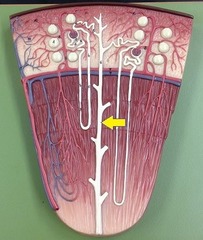
Raises GLUC (Glucose, Lipids, Uric Acid, Calcium)
Thiazides
Loses calcium
Loop Diuretics
Keeps Calcium (helps in osteoporosis)
Thiazides
Loop Side Effects
O-totoxicity
H-ypokalemia
D-ehydration
A-llergy (SULFA)
N-ephritis
G-out
Central a2 agonist turns down sympathetic outflow from brain
Use:
Refractory HTN
Do not use:
Never stop suddenly
Watch for:
Rebound hypertensive crisis
Dry mouth
Patch rash
Clonidine
Converted to alpha-methylnorepinephrine, a central a2 agonist
Use:
HTN in pregnancy (1st choice is Labetalol)
Do not use:
Active MAOI therapy
Liver disease
Watch for:
Sedation
Depression/nightmare
lactation
drug fever
Methyldopa
Blocks a1 receptors on vessels->relax
Use:
Add on for HTN
BPH
Watch for:
First dose orthostatic hypotension/fainting (give first dose at bedtime for this reason)
Nasal congestion
Prazosin
Terazosin
Doxazosin
"zosin"-Selective a1 blockers
Non Selective alpha antagonist (Reversible):
Blocks alpha 1 and alpha 2
Use:
Pheochromocytoma diagnosis
Vasopressor extravasation
Do not use:
Active MI
Coronary Insufficiency
Watch for:
Reflex tachycardia
Phentolamine
Nonselective alpha antagonist (irreversible):
Long lasting and irreversible
Use:
Pheochromocytoma before surgery
Do not use:
Any condition where BP drop is dangerous
Watch for:
Nasal congestion
Myosis
Hypotension
Tachycardia
Phenoxybenzamine
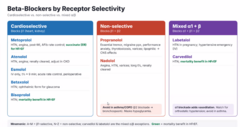
Cardioselective (Beta 1 only)
Safe choice in asthma and COPD
Metoprolol
Atenolol
Esmolol (IV and short acting)
Betaxolol
Bisoprolol
IV Cardioselective (Beta 1) Beta Blocker that is given IV and is ultra-short acting
Esmolol
Non Selective (Beta 1 and Beta 2)
Can cause bronchospasms
Avoid in severe asthma and COPD
Propanolol
Nadolol
Mixed alpha 1 and Beta Blockers
Also causes vasodilation
Labetalol
Carvedilol
Drug of choice for HTN in pregnancy
Labetalol
Mixed Beta Blocker used in Heart Failure
Carvedilol
Class of medications which can be given with:
Post MI
Angina
AFib rate control
Thyrotoxicosis
HTN
Beta Blockers
Beta Blockers used in Heart Failure with Reduced Ejection Fraction
Metoprolol
Succinate
Carvedilol
Bisoprolol
Class of medications which should be not given if with:
2nd/3rd degree heart block
Sick sinus syndrome
Cardiogenic shock
Prinzmetal (vasospastic angina)
Decompensated HF
WPW
Nonselective agents in severe asthma/COPD
Beta blockers
Class of medications which should never be stopped abruptly for risk of rebound angina/MI
Beta Blockers
B1 selective Beta Blockers
Atenolol
Betaxolol
Bisoprolol
Esmolol
Metoprolol
Non Selective Beta Blockers
Nadolol
Propanolol
Mixed alpha and beta blocking
Labetalol
Carvedilol
Never stop these cold turkey
Clonidine
Betablockers
Blocks ACE-->less angiotensin
Bradykinin build up
Used in Diabetes (Nephro protective, reduces proteinuria)
Do not use in:
Pregnancy, bilateral renal artery stenosis
Never combined with ARB or aliskiren
Watch for:
Dry cough
angioedema
Hyperkalemia
ACE Inhibitors:
Lisinopril
Captopril
Enalapril
Benazepril
Fosinopril
Ramipril
The "-pril's"
ACE Inhibitor
Blocks AT1 receptors for Angiotensin II
Use:
When an ACE causes cough
Can be used with Diabetics
Do not use:
Pregnancy
Bilateral renal artery stenosis
Never with an ACEi
Watch for:
Less cough than ACEi
Angioedema
Hyperkalemia
ARBS
Losartan
Valsartan
Zilsartan
Clandesartan
Irbesartan
Olmesartan
Blocks renin at the top of the cascade
Use:
HTN
Diabetic neph
CKD
Do not use:
Pregnancy
with an ACEi or ARB
Children
DIRECT RENIN INHIBITOR
Aliskiren
Causes:
Angioedema
Cough
Elevated K
ACE Inibitors
HTN meds never given in pregnancy
Prils and Sartan's
Pregnancy Safe Hypertensive Medications
Labs Need Moms:
Labetalol
Nifedepine
Methyldopa
This class of drugs requires checking K and Serum Creatinine a week after starting
RAAS Drugs:
ACE
ARBs
Aliskiren
Blocks L-type Ca2+ channels in Blood Vessels-->Arteriolar dilation
Use:
HTN
Stable angina
Prinzmetal angina
Hypertensive Emergency (The "IV one")
Watch for:
Peripheral edema
Headache
Flushing
Reflex tachycardia
Dihydropyridines:
Amlodipine
Felodipine
Nifedipine
Nicardipine (IV)
CCB which causes increased cardiac events
Nifedpine
CCB which are indicated in Heart Failure
Amlodipine
Felodipine
Blocks CA2+ channels in the HEART
(SA/AV node, muscle) and vessels
Use:
AFIB rate control
PSVT
Stable Angina
HTN
Do not use:
WPW
HFrEF/Severe LV Dysfunction
2nd/3rd degree block
Sick sinus
Cardiogenic Shock
hypotension
Acute MI
Non-Dihydropyridines:
Verapamil
Diltiazem
CCBs which dilates vessels
Dihydropyridines
"-dipines"
CCBs which slows the heart
Non-Dihydropyridines:
Verapamil/Diltiazem
In combination, these hypertensive medications can cause severe bradycardia
Beta blocker plus:
Verapamil/Diltiazem
Dilates arterioles
Use:
HTN
HFrEF combined with isosorbide dinitrate
Do not use:
Aortic Dissection
CAD
Rheumatic Mitral Valve Disease
Watch for:
Drug induced lupus
Reflex tachycardia
Headache
Hydralazine
Opens K Channels (arterioles dilate)
Use:
Refractory HTN
Do not use:
Pheochromocytoma
Watch for:
Hair growth (Hypertrichosis)
Fluid retention, hypotension
Minoxidil
Releases nitric oxide (NO)
Raises cGMP-->Arteries and Veins dilate
IV form acts in seconds
Use:
HTN Emergency
Severe acute HF
Do not use:
PDE-5 inhibitors (Sildenafil)
Low output acute hF
Leber optic atrophy
Watch for:
Cyanide Toxicity (Metabolic Acidosis, Arrhythmia)
Hypotension
Sodium Nitroprusside
Dopamine-1 agonist-->arteries dilate
Use:
HTN Emergency
Post-Op HTN
Do Not Use:
Increased ICP
Glaucoma
Sulfite allergy
Watch for:
Headache
Flushing
Reflex Tachycardia
Fenoldopam
Opens K channels
Looks like thiazide without the Diuretic Effect
Use:
Severe HTN
Do not use:
Functional hypoglycemia
Watch for:
Hyperglycemia (blocks insulin release)
Profound Hypotension
Diazoxide
Drugs which Induce Lupus
SHIPP:
Sulfonamides
Hydralazines
Isononiazid
Procainamide
Phenytoin
Rogaine, hairgrowth drug
Minoxidil
Prussian blue-->Cyanide Compound-->Cyanide Toxicity
Nitroprusside
Dilates arterioles
Can cause reflex tachycardia and fluid retention, THUS must be paired with a beta blocker and diuretic
Hydralazine
Minoxidil
*Remember that NO dilates both arteries and veins. These just dilate Arterioles.
First Line HTN
Thiazide, ACEi/ARB or CCB
HTN meds for Diabetes or CKD
ACEi or ARB
CAD/POST MI drugs
ACEi/ARB + Beta Blocker
BPH
alpha 1 blockers ("zosin) as add on
If with Gout, avoid these HTN meds:
Avoid Thiazides and Loops
If with Asthma/COPD, avoid:
Nonselective Beta Blockers
BP uncontrolled on full doses of 3 drugs (including a diuretic).
Resistant HTN
Add:
Aldosterone Antagonist
Loop diuretic
Beta Blocker
Alpha Blocker
Vasodilator or Clonidine
BP >180/120 with organ damage
Hypertensive Emergency
Use IV Drugs:
Nicardipine
Labetalol
Esmolol
Nitroprusside
Fenoldopam
Worsens the tear of aortic dissection
Hydralazine
Releases NO, raises cGMP and relaxes smooth muscles
VEINS > ARTERIES
Preload and O2 demand drop
Use:
Sublingual NTG for every angina patient (acute attacks)
Chronic angina prevention
Do not use for:
PDE-5 Inhibitors (Sildenafil, tadalafil) or riociguat
Inferior Wall/Right Ventricular MI
Hypotension
Nitrates:
Nitroglycerin
(NTG: SL, spray, patch, IV)
Isosorbide Dinitrate (ISDN)
Isosorbide mononitrate
Blocks the late Na+ current in ischemic heart cells
Lowers wall tension and oxygen use
Use:
Chronic angina when other drugs fail
Do not use:
Liver dysfunction
Strong CPY3A4 inhibitor or inducer
Watch for:
QT prolongation
Dizziness, constipation, headache, nausea
Ranolazine
mu-upioid agonist
Pain relief plus some venous/arterial dilation
Use:
ACS pain not relieved by NTG
Dyspnea from pulmonary edema
Do not use:
Respiratory depression
Asthma attack
GI obstruction
Other CNS depressants
Watch for:
Can cause slow aspirin absorption
Respiratory depression
Hypotension
Sedation/Constipation
Morphine
Used when Beta blockers can't be used for ACS
Can be used for Prinzmetal Angina
Dihydropyridine CCB's
Use within 24 hours of ACS
Beta blockers
If used with PDE-5 inhibitors (Viagra) can cause BP crash
Nitrates
Since these drop preload, avoid in inferior MI (Right ventricle is preload dependent
Nitrates
Blocks Cox-1 to decrease thromboxane A2
Aspirin
Blocks P2Y12 so ADP cannot bind
Clopidogrel
Prasugrel
Ticagrelor
Blocks GPIIb/IIIa from binding with fibrinogen to link platelets (final step)
Eptifibatide
Tirofiban
Irreversibly blocks COX-1-->Less Thromboxane A2
Use:
Every ACS (Chewed)
Primary/secondary prevention of MI
Stroke
PAD
81mg for life after ACS
Do not use:
Active bleeding
Asthma + Rhinitis + Nasal polyp
Watch for:
GI ulcer
Bleeding
Angioedema
Aspirin
Blocks ADP at the P2Y12 receptor
Use:
Dual antiplatelet therapy (including aspirin) for 12 months
ACS, stroke, PAD, PCI
Do not use:
Active bleeding (ulcer, intracranial)
Hold before planned CABG
Watch for: Bleeding
P2Y12 Inhibitors:
Clopidogrel
Prasugrel
Ticagrelor
Irreversible P2Y12 Prodrug
Clopidogrel
Prasugrel
Reversible P2Y12 (non-prodrug)
Ticagrelor
What is P2Y12 combined with for dual antiplatelet therapy?
Aspirin
P2Y12 which is Given for prior stroke/TIA or Age > 75
Prasugrel
Reversibly blocks GP IIb/IIIa so fibrinogen can't link platelets
Use:
ACS/PCI (Iv loading dose then infusion)
Do not use:
Low paltelts
Active or recent bleeding
Surgery/trauma within 4-6 weeks
Severe uncontrolled HTN
Increased PT
Watch for:
Thrombocytopenia
Bleeding
Hypotension
GP IIb/IIIa Inhibiors:
Eptifibatide
Tirofiban
Binds antithrombin which then inactivates thrombin (IIa), Xa, and other factors
Use:
ACS (UA/NSTEMI/STEMI)
VTE Treatment/Prevention
AFib
DO Not use:
Active bleeding
Severe thrombocytopenia
History of HIT
Watch for:
Bleeding
Heparin induced thrombocytopenia (HIT)
Increased LFTs
Monitor aPTT
Unfractionated Heparin (UFH)
Antithrombin mediated
Mainly Xa > Thrombin
Use:
STEMI
VTE
Do not use:
Actively bleeding
History of HIT
CrCl
Enoxaparin
Causes Gynecomastia and Hyperkalemia
Spironolactone
Can cause yeast infections, volume depletion
SGLT2 inhibitors
First line for heart failure
ARNI
Beta Blockers we can use in Heart Failure
Carvedilol, metoprolol succinate, bisoprolol
Adverse effects of loops
Ototox
Lowers K Mg Ca
Dehydration
Low BP
High uric acid
Increases glucose
Sulfa Allergy
Used for Acute Heart Failure with gross dyspnea, 2+ edema, pleural effusion etc.
Loop diuretics (Furosemide, Bumetanide, Torsemide)
Must Know Beta Blockers
Used in VTAC
Amiodaraone
Activates peroxisome (PPAR) receptor
Fibrates:
Gemfibrozil
Fenofibrate
Low Molecular Weight Heparin
Antithrombin mediated
Xa only (synthetic)
use:
DVT/PE treatment and prevention
Do not use:
Active bleeding
Low body weight
Severe kidney impairment
Watch for:
Bleeding
Anemia
Fondaparinux
Bind DIRECTLY to Thrombin (no antithrombin needed)
Bivalirudin:
PCI (esp with HIT or HIT risk), >75
Agatroban: HIT
Dabigatran: AFib stroke prevention, DVT/PE
Do not use:
Active bleed
Adjust for kidney function
Dabigatran: mechanical heart valves
Watch for:
Bleeding
Monitor aPTT
Direct Thrombin Inhibitors:
Bivalirudin (IV)
Argatroban (IV)
Dabigatran (Oral)
Converts plasminogen to plasmin-->Dissolves fibrin in the clot
Use:
STEMI only when PCI can't happen within 120minutes
Give within 30 minutes of arrival
Treats ischemic stroke and massive PE
Do not use:
Prior Intrcranial Bleed
Ischemic stroke within 3 months
Brain tumor/AVM
Active bleeding
Suspected aortic dissection
Recent major head/face trauma
Severe uncontrolled HTN
Watch for:
Intracranial Bleed
Angioedema
Alteplase (tPA)
Reteplase
Tenecteplase
Fibrinolytic which can cause angioedema
Alteplase
Fibrinolytic which also treats ischemic stroke and massive PE
Alteplase
-grel
P2Y12 Blocker
-fiban
-tide
GP IIb/IIa
-parin
Heparin family
-rudin
-gatran
-troban
Direct Thrombin Inhibitor
-teplase
Plasminogen activator
"Clot buster"
What does ACS need both of?
Antiplatelets (stops platelet plug)
Anticoagulant (stops fibrin mesh)