Biology Test 2
 Call Kai
 Learn
 Practice Test
 Spaced Repetition
 Match
 Flashcards
 Knowt Play
1/210

Earn XP
Description and Tags
9/17 probability in genetics up until 10/20
211 Terms
Mendels Law of Segregation
In diploid organisms, two alternate, homologous alleles segregate and are passed separately.
Mendels Law of Independent Assortment
alleles of a gene are passed independently of eachother (rules of random probability)
Phenotypic ratio based on Law of Segregation
3:1
Phenotypic ratio based on Law of Independent Assortment
9:3:3:1
To find the greatest number of ways a specific number of distinct things can be arranged (ordered)
n!
use this if theyre asking probability of getting 1,2,5, in any order.
Gamblers Fallacy
The mistaken belief that if something occurs repeatedly, the universe would make it balance in the future, but this is not the case (theres an reverse of the fallacy too)
Working hypothesis
guiding research question
Null Hypothesis
(HW) statement that you are trying to DISPROVE. First analytical Hypothesis
Alternative Hypothesis
often reflects the working hypothesis, needed if you reject the null (reject that randomness prevails)
difference between research question and hypothesis
if you know more, go to the hypothesis cause u can make predictions
Accepted alpha value
0.05. (If there is a 5% chance or less that our data match the null, we can reject the null.)
there is a 1/20 percent chance you reject the null when it is actually right.
Ways of testing significance
chi-square test
p and its relationship to a
probability that the null is correct. If it is less than or equal to alpha, we reject the null hypothesisoi
if p is greater than 0.05 (alpha).. then
we fail to reject the null hypothesis
Chi-Square formula
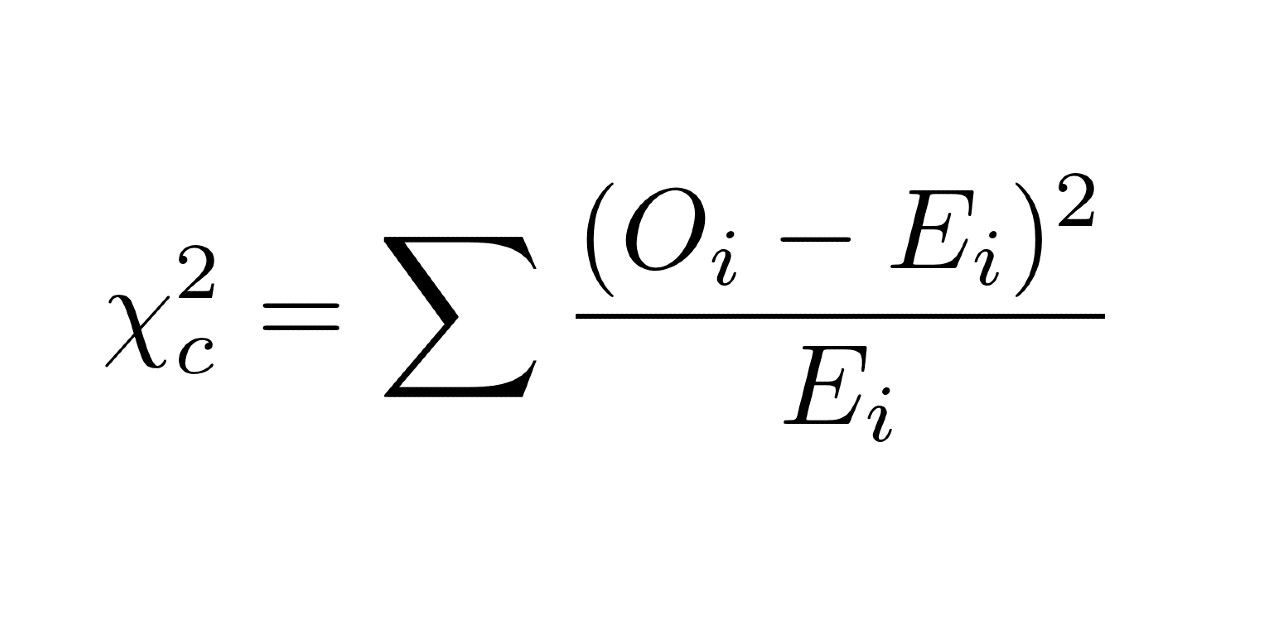
degrees of freedom
number of possible categories - 1 = df
Why are allele frequencies multiplied together in the HW equilibrium equation
because they are all independently passed from one generation to the next
If there are more than 2 alleles in the population at the same locus…
(p + q + w +z) x (p + q + w +z) = 1.0 is an example of 4
What did we think before HW
Dominant traits would COMPLETELY dominate recessvie
OR alleles would be 50/50
AND/OR the only wal alleles change frequency was through sexual reproduction
HW says…
p and q always the same
Assumptions of HW model
Random mating, No mutations
No migration
Infinite population size (sorta) and NO NATURAL SELECTION
What happens when assumptions are violented for HW
HW does not apply. If allelic frequency does not match from one gen to the next, you blame one of the assumptions being false
HW as a null
HW is a null as it is caused by randomness, standard. Usually use this as evidence that one of the assumptions is violated and causing a change in the population (evolution)
Cheetahs
very few genetic variation, violating HW, inbreeding as nonrandom mating
extinction vortex
point of no return for the population until extinction
HW works best in….
overly large populatuions (think of # of coin flips)
Bottlenecks:
gene pool is significantly reduced for some reason and decreases allele diversity
Cheetahs: 2 bottlenecks ice age and poaching causing them to violate 2 HW assump: nonrandom mating and small population sizes.
Genetic Drift
constant chancing allele frequencies due to randomness, not adaptive
Genetic drift is NOT violation of HW because
its within what randomness would predict is okay. HW only looking from generation to generation.
Gene flow:
movement of individuals their alleles from one pop to another. Makes pops look more alike genetically. can increase and decrease allele diversity
What causes allele diversity to increase
mutation and gene flow
Genetic drift really effects what groups?
bottlenecks and founder events
founder events
similar to bottleneck, relatively small group of individuals that have separated form the source population The source population still exists, but the small group kinda migrates away. the act of them going and the thing that caused them is called the founder event`
mutation
occurs from a DNA replication error and change in nucleotide sequence. increase genetic variation by creating new alleles, random w respect to fitness, but however most mutations lower fitness
junk DNA
where most mutations occur, differs from most everyoneee
Assortative mating
more likely to mate with someone w similar phenotype (beetle size) good: keep good genes
Disassortative mating
more likely to mate with someone with other phenotype (grey wolves mate w different colors) Good: diversity
inbreeding
mating w someone w close ancestor, increases homozygosity (dom and recessive) and decrease heterozygosity, does not cause evolution since allele frequ does not change. Different from assortative bc all loci are effected
Inbreeding Depression
loss of fitness,evolution dosent change bc allele freq stays the same, only genotypes change. “loss of fitness as homozygosity increase and heterozygosity.”
Why is homozygosity a problem
We need dominant alleles to function, rr is loss of function allele. however a lot of our disease resistance is better when were heterpzygous (in comparison to homo dom) SICKLE CELL and maleria
Inbreeding very common in plants but…
self fertilizing decreases fitness
peacocks competing selective pressures
want to be flashier for women, but are more susceptible to predators/cannot fly
male-male competition
not sorted by females— only males
sexual dimorphism
two sexes look different. Not always caused by sexual selection tho.
Taxnomic Hierarchy in order
Domain Kingdom Phylum Class Order Family Genus and Species
rule for binomial nomenclature
Genus species italics/underline
prefixes super and sub
superorder and subfamily
Kingdoms
Protista, Plantae, Fungi, Animalia, (Bacteria, Archea used/are domains, everything else is eukarya)
what is a species
evolutionarily independent group, meaning mutation, selection, and drift act on the group independently of what’s happening to others.
3 different criteria for designating species
Biological, morphological, and phylogenetic species
biological species concept
not interbreed/ no viable offspring
prezygotic isolation
before syngamy, include temporal (breeding at diff times) habitat, hehavioral, gamatic barrier (incompatible gamates, mechanical (genitalia incompatible)
postzygotic isolation
offspring die as embryo or do not reproduce
skip
skip
skip 1
skip 1
the biological species concept is not good for….
distinguishing species in the fossil record or whose populations do not overlap (they cannot interbreed_)
morphospecies concept:
species based on size, shape, behaviors. To be different, they have been seperated long enough. works better with fossilized/extinct species.
phylogenetic species concept
looks at variety of traits specific to the population to see relatedness between groups, and therefore distincion between them. Species can be determined by morphological, behavioral, or genetic differences.
hat is phylogenetics
reconstruiction of the evolutionaty history of populations
nodes
points in time when an ancestral group split into 2 ore more descendent groups. SPECIATION EVENT
terminal nodes
ends of branches to represent a group, living or extinct
Phenetics as analysis
grouping of species by similarty of traits, weighing them all the same (cows are more different than the lugnfish and goldfish)
cladists as analysis
grouping based on recently derived characteristics only (cows and lungfish are more related than the goldfish) more trustworthy lowk
monophyletic group
most recent common ancestor and alll its descendants
come from the same node
paraphyletic group
most common ancestor and not all of its descendents. clarify loss of traits or convergance.
cladists POV
independent evolution of a trait across multiple genetic lines is less likely than the trait evolving once, especially for the traits that have more recently evolved.
homology
traits due to same ancestry
homoplasy
traits similar due to other reasons other than common ancestry
convergent evolution
common cause of homoplasy: natural selection causes independent evolution of certain traits where the common ancestor does not have the trait
parsimony
the simplest explanation is probably the explanation
allopatric speciation
physical barrier, no gene flow, divergance due to genetic drift, accumulation of mutations, natural selection…
dispersal in allo[patric speciation
group emigrates away, isolated long enough to have allele changes to lead to a new species
skip333
skip 333
Sympatric Speciation
different preferences (philopatric apple vs hawthorne) they live in the same space and will not interbreed
what happens when newly formed species come back into contact
reinforcement: hybrids have less fitness (sterile) further speciation would occur.
hhybrid zones
new species: if new hybrid traits can be selected for, and genes passed onto the next geenration.
Why do chloroplasts with chlorophyll a b and β-carotene
for wider spectral sensitivity – in green
algae and all land plants – evolved for early competition for sunlight.
major characteristics for Kingdom plantae
diff chlorophyll, multiple membrane layers in chloroplasts, Thylakoid condition, cell wall, starch as energy storage product
cell wall
protection and structurall support
thylakoid condition
stacked and flattened vesicles without connection to the inner of two membranes enclosing the chloro, for more efficient extraction of radiant energy
evolution of photosynthesis
from early unicellular bacteria, pigment can absorb radiant energy and transform it into high energy chemical bonds
water absorbing radiant energy
mostly red, so it looks blue. natural selection favored plants who were able to get out of the water even just a little
evidence of early competition for energy sources in aquatic enviroment
elongated cells to reach sun/co2
increased fibers and streaming to distribute energy
using cellulose and others to strengthen cell membranes against predation
new niches
plants strengthening their cell membranes
due to competition: Cellulose, silicon and calcium carbonate were used by the photosynthetic protists to strengthen their cell membranes against predation, with cellulose becoming the
common constituent of the cell wall of all land plants. This physical protection could also
protect those protists pushed to the edge of the sea in the splash zone along ancient shores
challenges of life on land for plants
dehydration, structure, transport of water and root cells, reproduction, harmful ultraviolent/blue radiation (some pigments evolved to absorb blue wavelengths)
Nonvascular plants with cuticle
Aquatic, nearshore/freshwater, ?? Division (phylum) Chlorophyta (Green algae)?? Ex: charales, branched, multicellular, chlorophyll-using, stoneworts, NO specialized tarnsport tissue
Non-vascular plants with cuticle
part out of water has cuticle for dehydration resistance, lack of support structure (and vascular tissue) result in low sprawling growth, first to have stoma, water intake by diffusion, gametophyte (haploid) is dominant life cycle stage. 3 divisions.
3 divisions (phyla) of the NONvascular plants WITH cuticle
mosses, liverworts, and hornworts
largest phylum of NONvascular plants W cuticle
Bryophyta (mosses)
The NONvascular plants w cuticle are..
first land plants (mosses) but NOT anncestors of higher plants
sphagnum moss (NONvascular with cuticle)
during drought becomes dormant until water returns
Vascular Seedless plants
first plants with true vascular tissue, limited into moist enviroments bc of reliance on flagelllated sperm (ferns). The Sporophyte (diploid) is the dominant life cycle stage, as in all higher land plants.
4 major divisions of the vascular, SEEDLESS plants
club mosses, horestails, whisk ferns, ferns.
largest phylum of vascular SEEDLESS plants
pteridophyta (ferns) largest leaves, many epiphytes, oldest vascular plants, ancient 20m high tree ferns
vascular naked-seed plants (gymnosperms)
pollen, SEED, dehydration-resistant seeds for sexual reproduction on land, (no fruit inhibits some seed dispersal)
4 major divisions of vascular, naked-seed plants
cycads, ginkgos, gnetophytes, conifers
Largest Division of vascular, naked seed plants
coniferophyta (pines, spruces, firs)
what includes the largest (redwoods) and oldest (brisle cone pine) plants
vascular naked seed plants
seed as a major innovation
protects embryo from water loss, herbivores, permits domancy, and promotes dispersal
pollen as a major innovation
Cones of males (small) and females (large) usually in separate trees; scales partially protect
female megaspore (eggs). Needles of conifers reduce the photosynthetic surface, but this feature in combination
with pollen allow conifers to thrive in more arid habitats
Vascular plants w Fruit covered seeds (angiosperms, the flowering plants)
the largest number of species of all plants, flower, fruit, diversity, mostly annuals