1.2.3 Markets (supply and demand curves)
 Call Kai
 Learn
 Practice Test
 Spaced Repetition
 Match
 Flashcards
 Knowt Play
1/12

There's no tags or description
Looks like no tags are added yet.
13 Terms
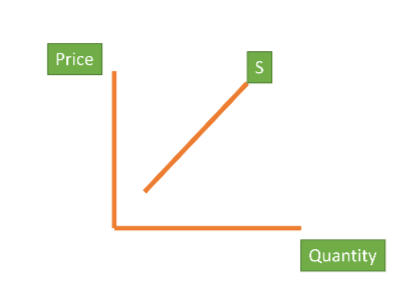
Supply curve
Represented by a straight positive line
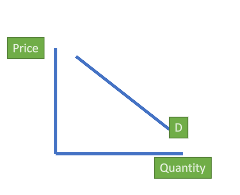
Demand curve
Represented by a negative straight line
Market clearing price
the interaction of buyers andsellers provide an equilibrium price in a market where demand and supply is equal. This is called the market clearing price
the point where the supply curve meets the demand curve is the equilibrium point
Surplus definition
where supply exceeds demand then there is a surplus
a surplus is an excess of production or supply
this may be due to the price being too high which has decreased the demand
Shortage definition
where demand exceeds supply there will be a shortage
this may be because the price being charged is too low which caused an increase in demand
it could also be due to other factors such as panic buying
Price increase affecting supply curve

Price decrease affecting supply curve

Non-price factors that affect & shift supply
cost of production
introduction of new technology
indirect taxes (e.g. VAT)
government subsidies
external shock

Non-price shift in supply curve (image is surplus)
(image is shortage)

Price increase affecting demand curve

price decrease affecting demand curve

Non-price factors that shift demand
price of substitutes
alternative brands
price of compliments
changes in consumer income
trends in fashion and tastes
advertising and branding
population structure / demographics
time of year
weather and climate
external shocks

Non-price shift in demand curve (increase of demand)
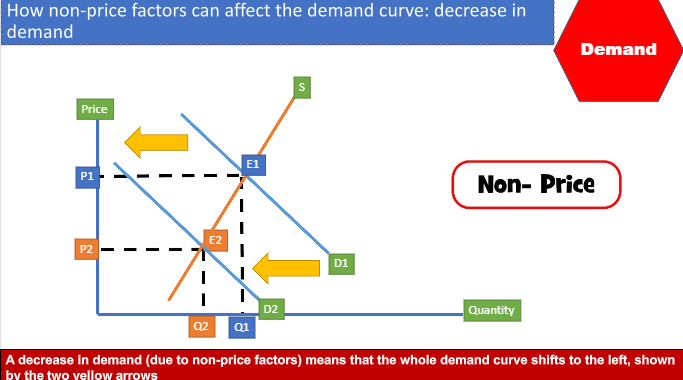
(decrease in demand)