BI210: FINAL
 Call Kai
 Learn
Learn Practice Test
 Spaced Repetition
 Match
Match Flashcards
 Knowt Play
1/1186

There's no tags or description
Looks like no tags are added yet.
Name | Mastery | Learn | Test | Matching | Spaced | Call with Kai | Chat |
|---|
No analytics yet
Send a link to your students to track their progress
1187 Terms
system of glands that secretes hormones that control many bodily activities
endocrine system
secreted signaling molecule that travels in the bloodstream
only cells with the proper receptor can respond to the hormone
hormone
long distance communication
similar to the nervous system, the endocrine system is a system of _____________________.
gland that secretes its hormones directly into the bloodstream
endocrine glands made of endocrine cells
endocrine gland
cells that express receptors for the hormone and respond to the hormone
target cells
things pulled from blood/interstitial fluid and are secreted to surfaces of the body
linked to epithelial surfaces
(sweat, mucus, tears)
exocrine secretions
NS innervates individual targets at the cellular level
endocrine system communicates with every cell that has a receptor for its hormone at the same time
hormones can stay intact in the bloodstream for hours to days at a time
compare and contrast the nervous and endocrine systems
hypothalamus
homeostasis center of the brain
extension of the hypothalamus
secretes hypothalamic hormones
posterior pituitary gland
separate gland from the hypothalamus and posterior pituitary gland
connected to the hypothalamus through a portal system
hypothalamus makes hormones and shuttles them to the anterior pituitary who will add its own hormones and then bring everything to the heart
anterior pituitary gland
the release of tropic hormones from the hypothalamus triggers/controls the release of hormones from the anterior pituitary
tropic control
GH
TSH
ACTH
LH
FSH
Prolactin
6 hormones of anterior pituitary
growth hormone -- stimulates muscles and skeleton to get bigger
GH
thyroid stimulating hormone
TSH
adrenocorticotropic hormone
ACTH
controls production of egg and sperm in testes and ovaries
function of FSH and LH
controls lactation
function of prolactin
oxytocin
ADH
hormones of posterior pituitary
controls urine production
function of ADH
controls contractions of uterus
manipulates ability to bond with other humans
oxytocin
anterior to trachea
where is the thyroid gland found?
follicular cells
parafollicular cells
2 cells making up thyroid gland
secretes thyroid hormone
thyroid hormone regulates metabolism (ATP) and increases rate of sodium potassium pump
function of follicular cells in thyroid gland
secretes calcitonin
calcitonin encourages deposition of calcium into bones (decreases blood calcium levels)
function of parathyroid cells
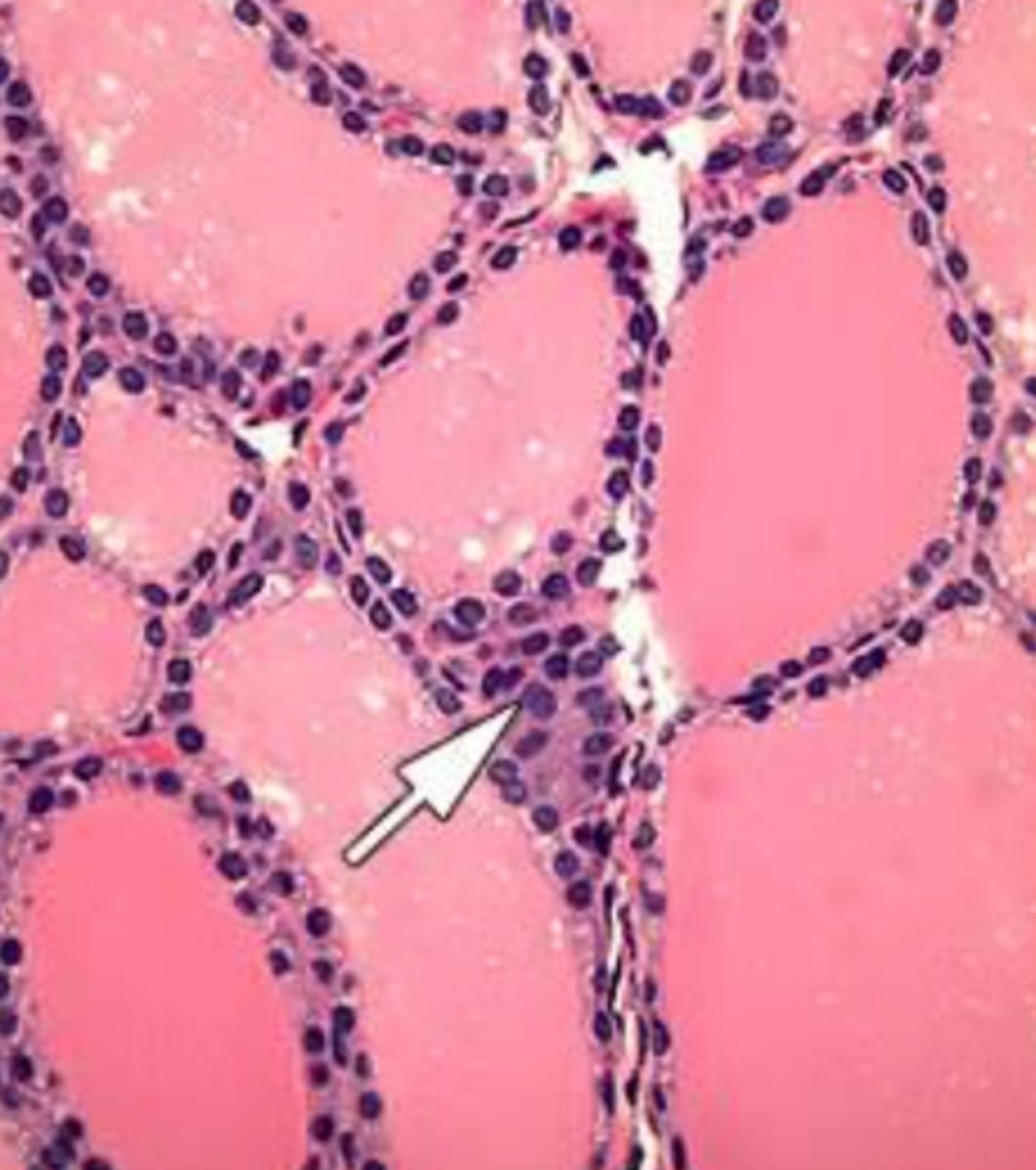
thyroid follicle
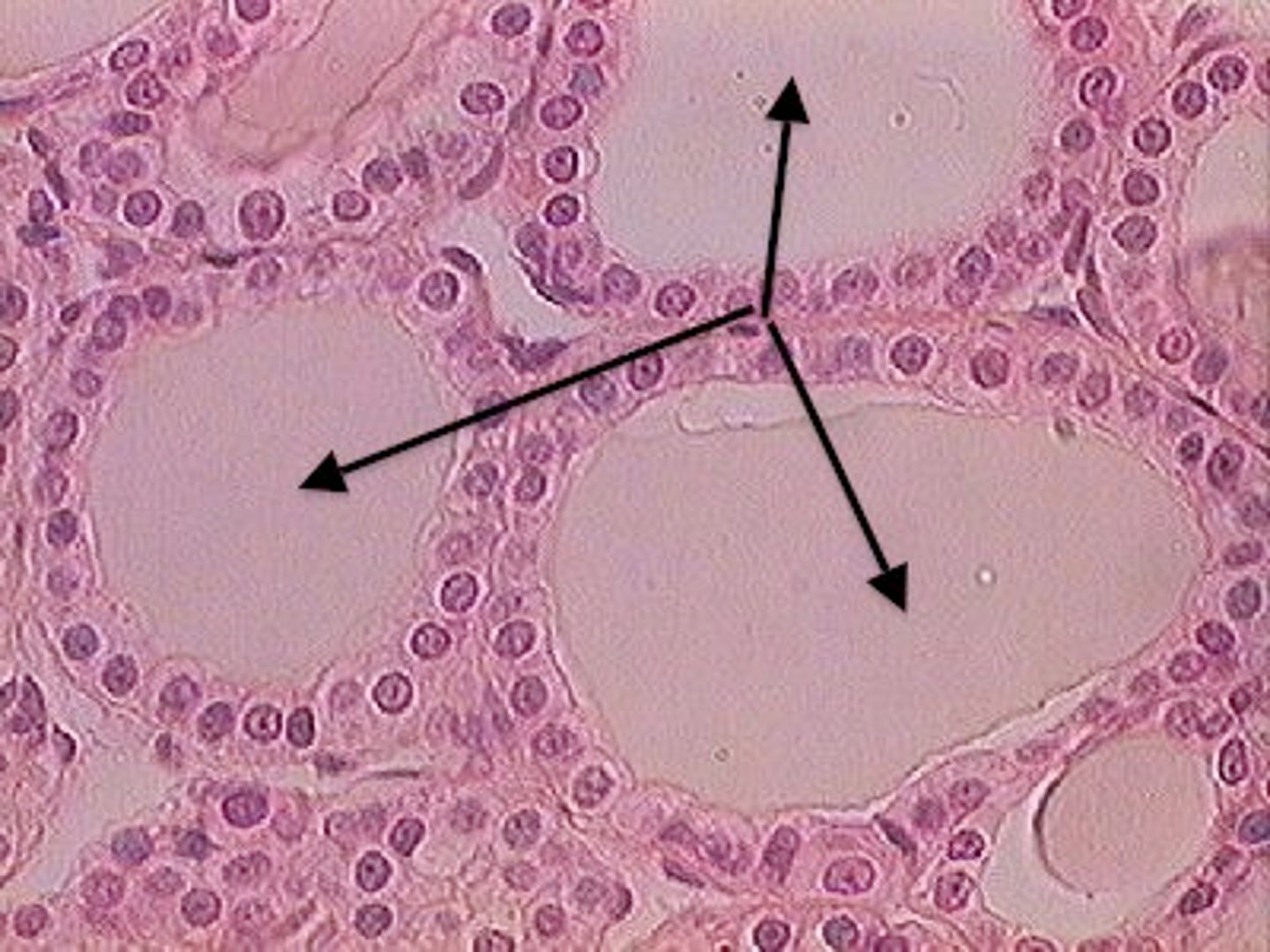
follicular cell
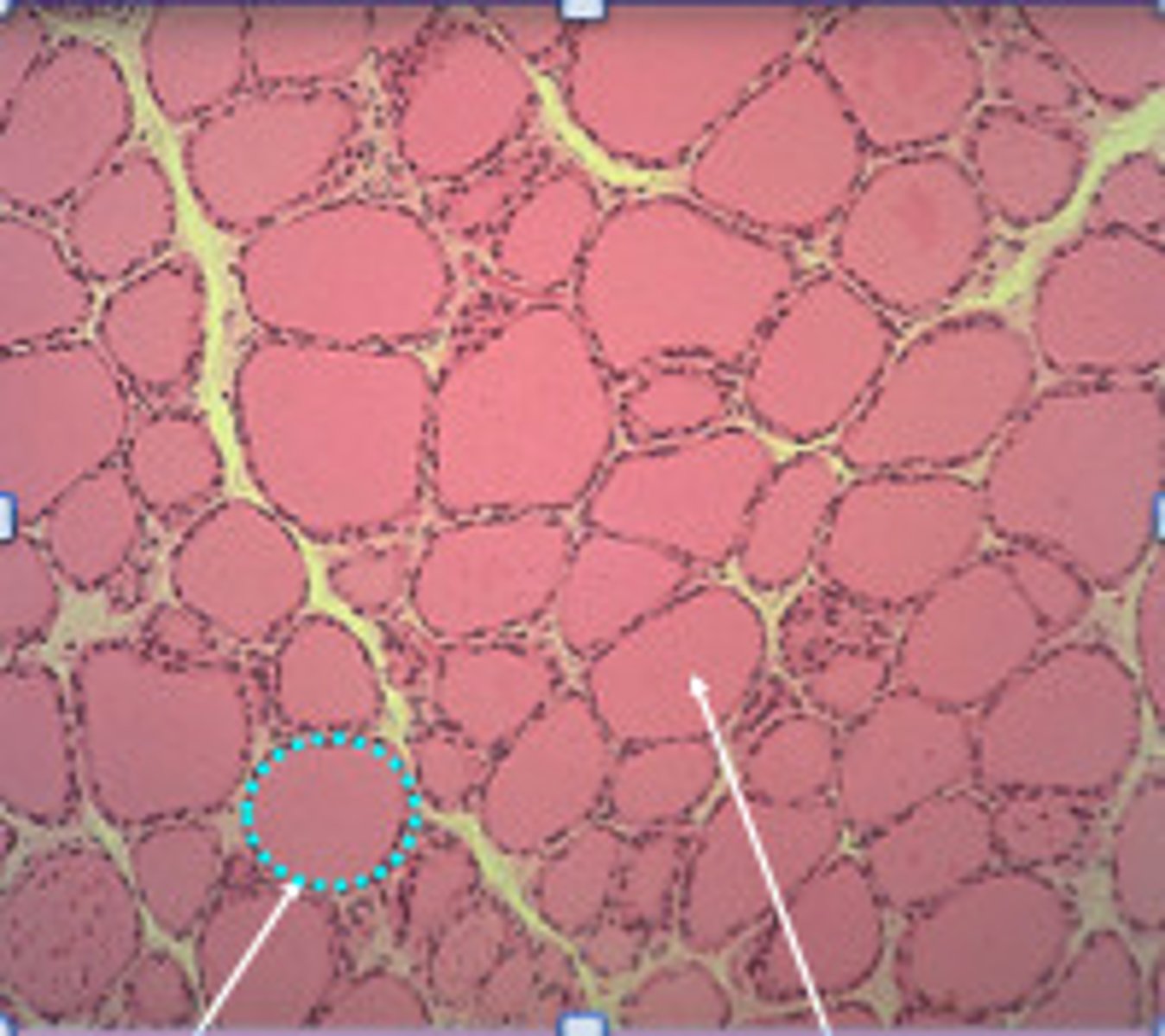
parafollicular cell
behind the thyroid gland
where is the parathyroid gland located?
secretes parathyroid hormone
PTH activates osteoclasts to leach calcium from bones and add it to blood
function of parathyroid gland
sits on top of kidneys
made of adrenal cortex and adrenal medulla
adrenal gland
secretes corticoids (hormones derived from cholesterol)
- glucocorticoids
- mineralocorticoids
- androgens
hormones of adrenal cortex
ACTH hormone
what controls the adrenal cortex?
sympathetic nervous system so that the body can automatically respond to danger/fear
fight or flight
what mechanism does the adrenal medulla use?
epinephrine
increases blood flow, sweat, pupil size, etc...
hormone of adrenal medulla
insulin
glucagon
hormones of pancreas
glucose storage
cells take up glucose from blood and store in muscles or liver as glycogen
function of insulin
releases and breaks down glycogen to release glucose to blood
function of glucagon
hollow, connected set of structures that food passes through
is continuous with the outside world
tract
solid organs that make digestive secretions
contributes to digestive system but food does not pass through them and organ is not hollow
accessory organs
break larger molecules into smaller molecules
function of digestive system
using enzymes and acids to break up food molecules
chemical digestion
physically breaking up food molecules
chewing, peristalsis, segmentation
mechanical digestion
rhythmic smooth muscle contractions that push food down the digestive tract
peristalsis
1) mouth chews food
2) food is swallowed -- goes to oropharynx and laryngopharynx
3) food goes through esophagus and then to stomach
4) duodenum receives food from stomach, then to jejunum and ileum
5) large intestine
6) rectum holds feces
7) anus excretes feces
process of food through the GI tract
1) mucosa -- epithelial and connective tissue
2) submucosa -- connective tissue/blood vessels
3) muscularis externa
-- divided into circular and longitudinal muscle
4) serosa -- outer layer of connective tissue
the 3 GI tract tunics
muscle fibers go in a circle
narrows the GI tube when it contracts
role of circularis muscle of muscularis externa
pushes food forward when muscles contract
role of longitudinal muscle of muscularis externa
parietal layer covers wall of abdominal cavity
visceral layer covers surface of abdominal organs
describe the serous membrane of the GI organs
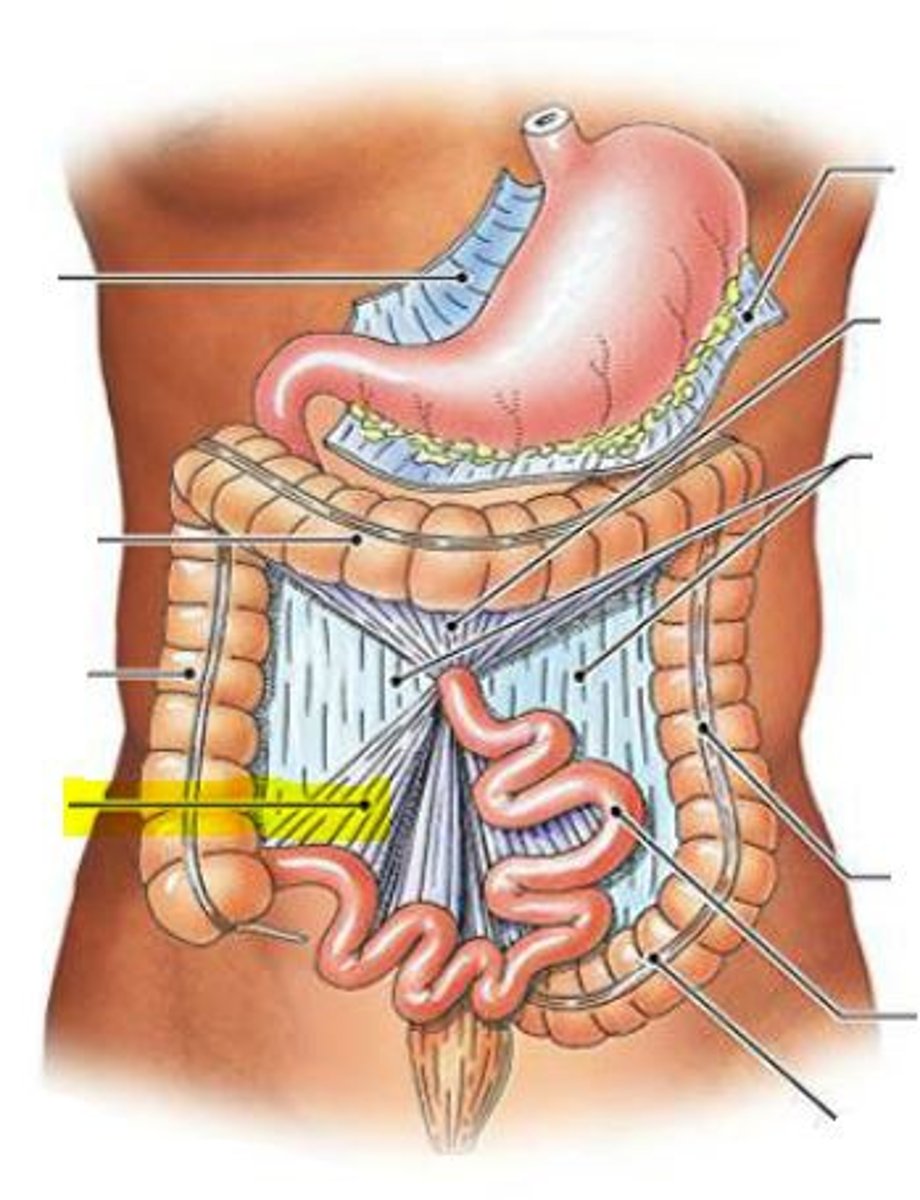
double layer of peritoneum anchoring the small intestine to the abdominal wall
mesentery
fold of free floating, visceral peritoneum hanging off of greater curvature of stomach that drapes over large and small intestine for cushioning and protection
greater omentum
contains immune cells
if inflammation in abdomen, omentum will move over site of inflammation to help it heal
immune function of the greater omentum
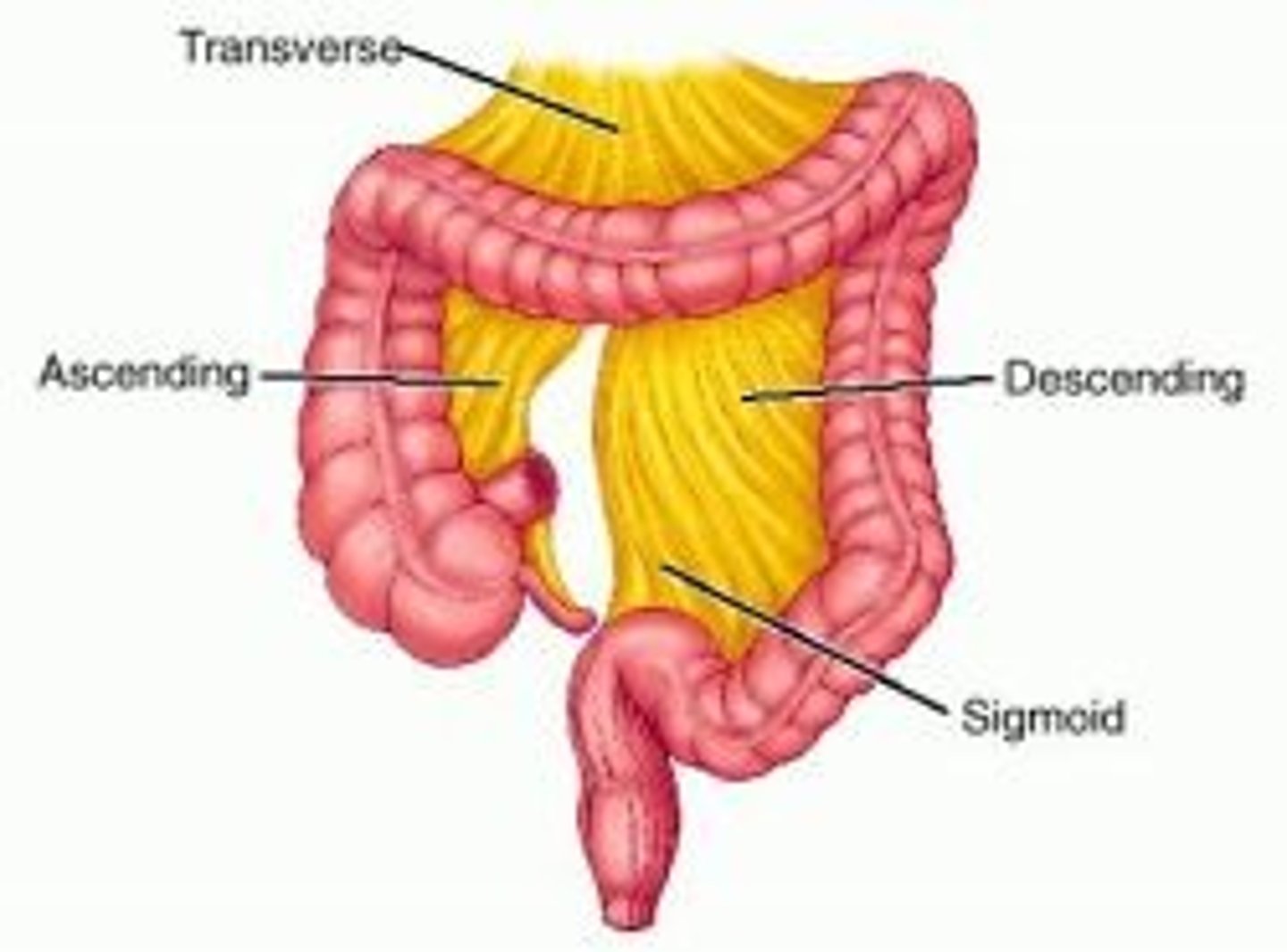
fold of peritoneum anchoring colon to posterior abdominal wall
mesocolon
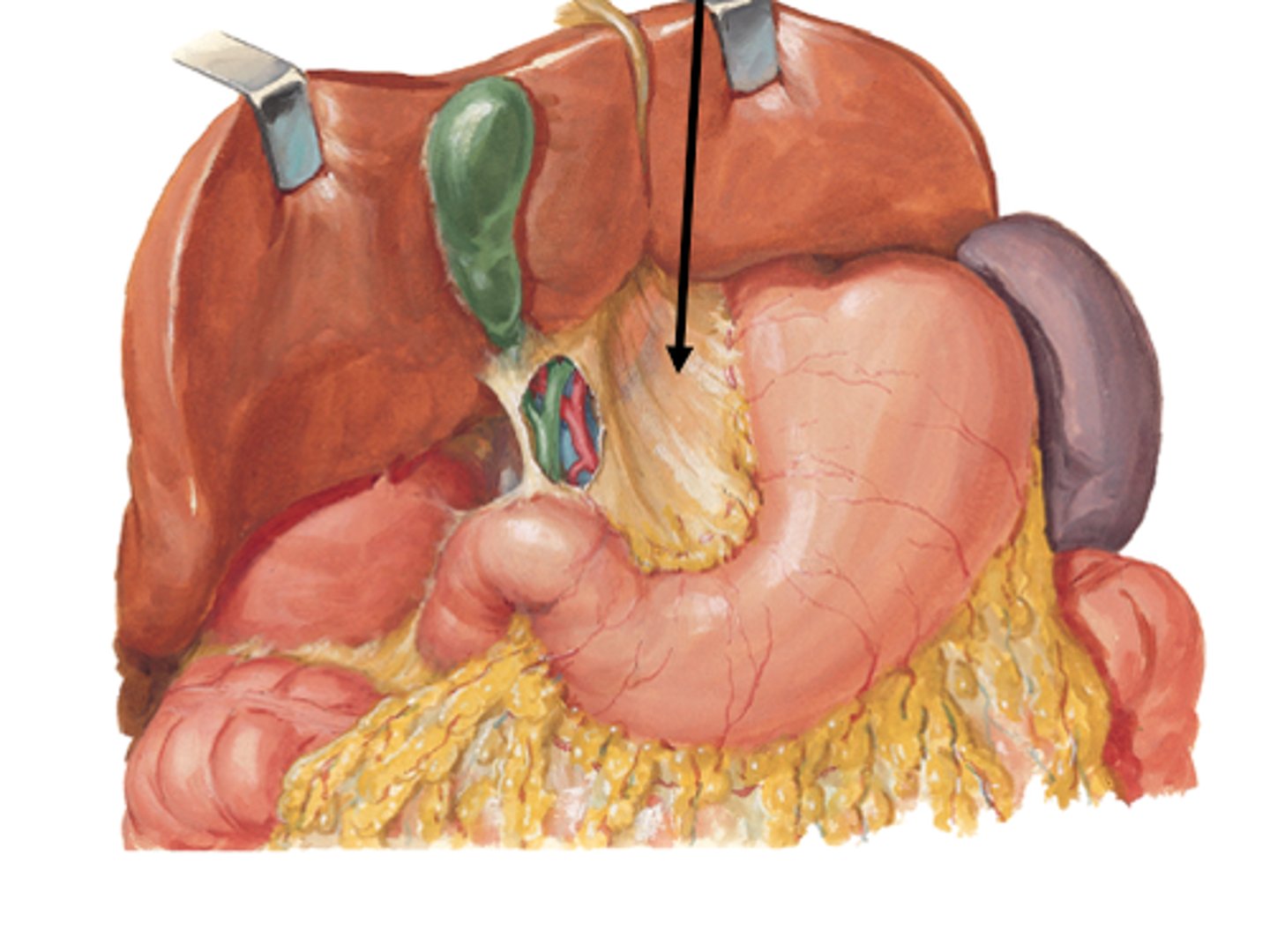
double layer of peritoneum hanging from lesser curvature of stomach
connects stomach and duodenum to liver
lesser omentum
greater omentum
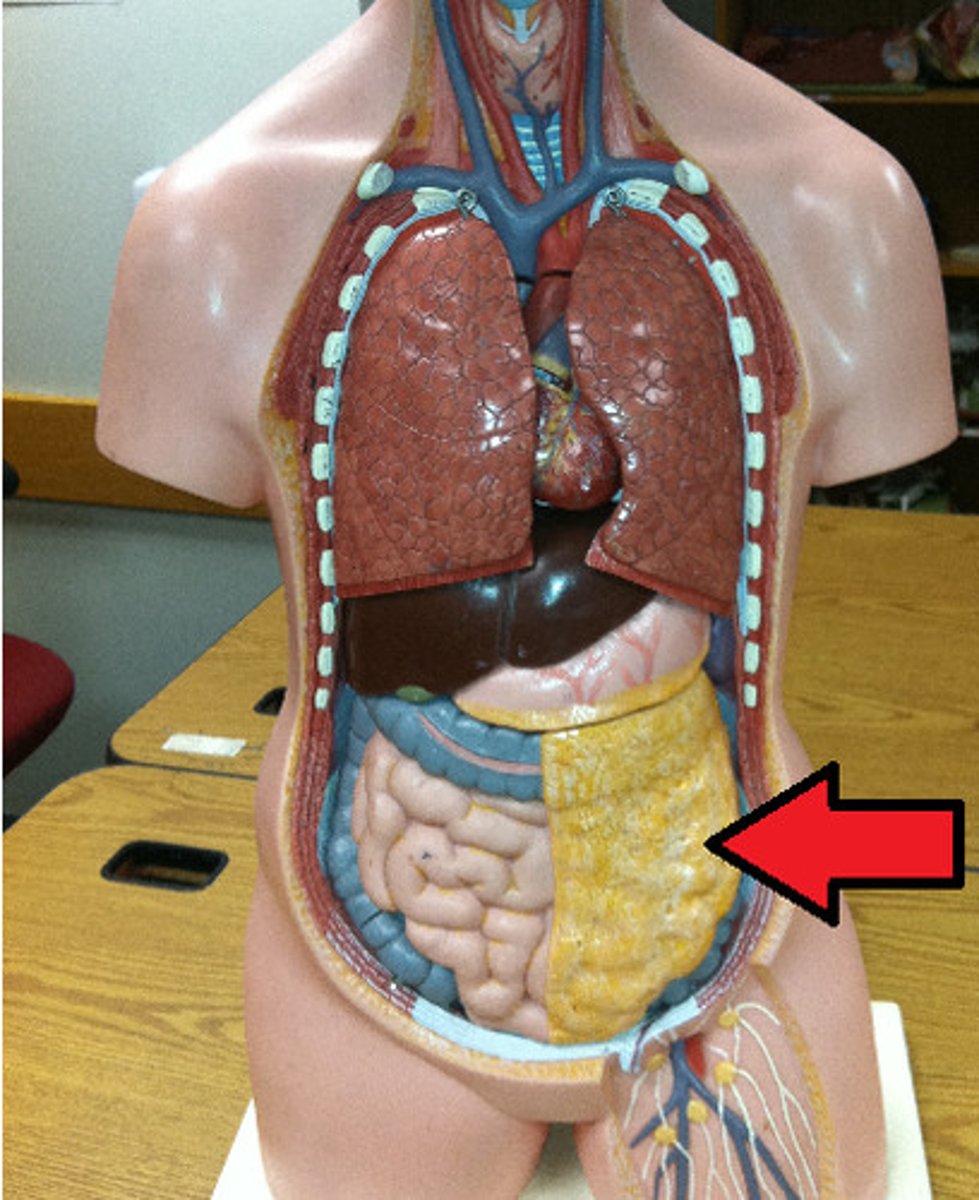
lesser omentum
mesocolon
mesentery
organs completely surrounded by visceral peritoneum and is connected by a mesentery
stomach, liver, jejunum, ileum, transverse colon, sigmoid colon, spleen
intraperitoneal
organs located behind the peritoneum and not suspended by a mesentery
kidneys, adrenal glands, esophagus, duodenum, ascending/descending colon
retroperitoneal
saliva solubilizes taste molecules so the fit into taste
role of saliva
parotid, submandibular, and sublingual salivary glands
put together, they make the components of saliva
salivary glands
histatin -- would healing, catalyzes collagen
lysozyme -- bacteria fighting molecule, antibacterial agent
bicarbonate -- neutralizes acidic compounds
molecules in saliva and their role
chewed food that goes down the esophagus via peristalsis
bolus
mucosa, submucosa, muscularis, serosa
highly stretchy and folded to allow bolus to pass through
structure of esophagus
transport bolus from pharynx to stomach
function of esophagus
hole in the diaphragm that the esophagus passes through
esophageal hiatus
prevents stomach acid from entering esophagus
function of lower esophageal sphincter
ring of smooth or skeletal muscle that can close completely to create a doorway into another body space
sphincter
stratified squamous epithelium
(deals with friction from food)
epithelium of esophagus
mucosa, submucosa, muscularis externa, serosa
muscularis externa has 3 layers
(oblique, circular, longitudinal muscle)
layers of stomach
stomach partially digests proteins using HCl and pepsin
HCl -- denatures proteins
pepsin -- breaks peptide bonds -- cleaves proteins into smaller strips
explain chemical digestion in the stomach
produces bicarbonate mucus to protect its epithelium
how does the stomach protect its epithelium from its harsh environment
stores up to 1L of food so we can digest slowly while doing other things
how does the stomach act as a holding tank?
sphincter between stomach and duodenum
controls release of stomach content to duodenum since small intestine cannot digest food quickly and must do it in segments
pyloric sphincter
secretes acid (HCl)
function of parietal cells
secretes pepsinogen
pepsinogen activated by HCl into pepsin
pepsin breaks peptide bonds of proteins
function of chief cells
secretes digestive hormones
regulates digestion
enteroendocrine cells
simple columnar epithelium with a layer of mucus covering it
epithelium of stomach
helps stomach expand
purpose of rugae of stomach
where the products of HCl and pepsin are generated
purpose of gastric pits of stomach
1) mechanical digestion
2) chemical digestion
3) holding tank
4) protection
4 functions of the stomach
1) cardia region
2) fundus
3) body
4) antrum
5) pylorus
5 regions of the stomach
antrum
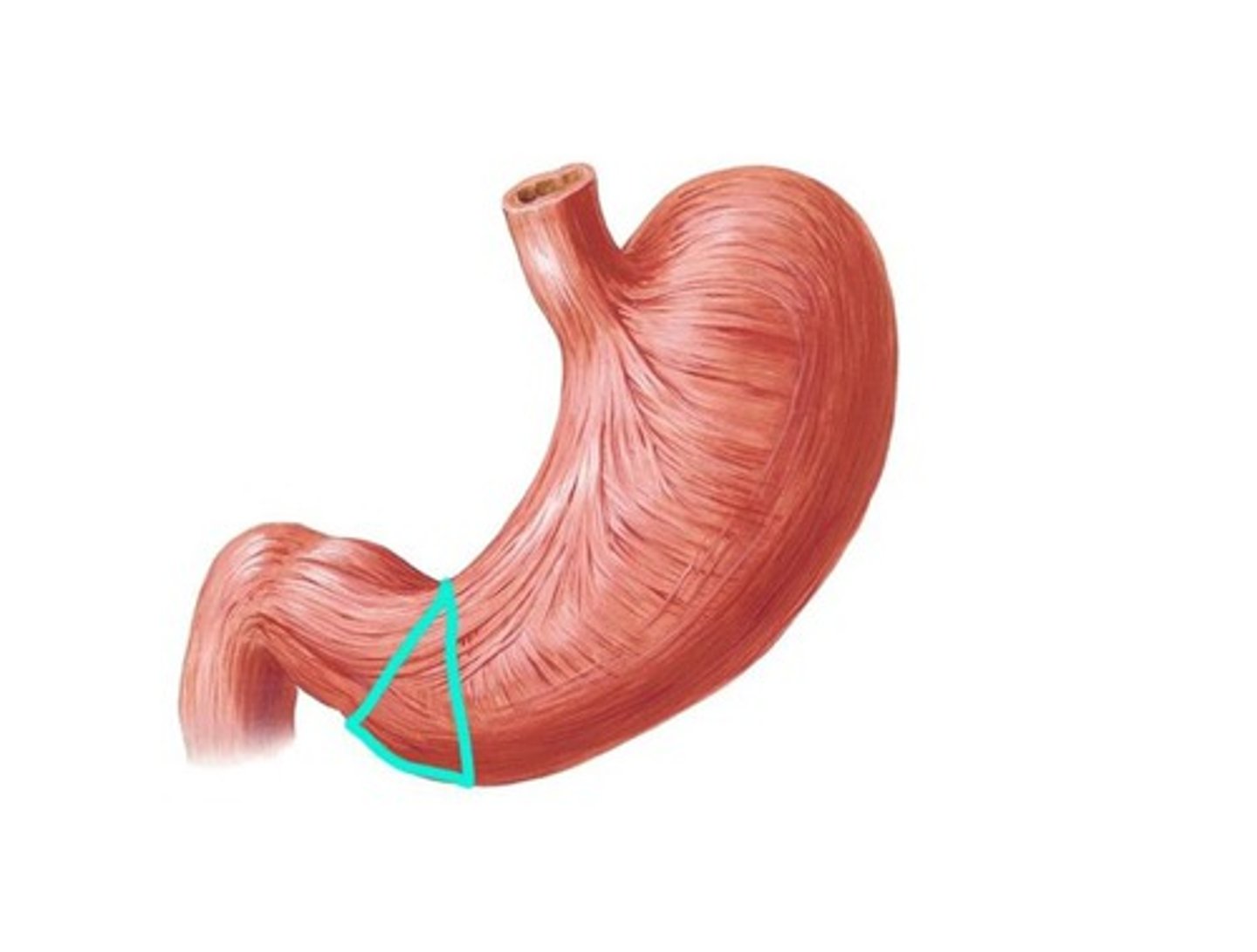
cardia
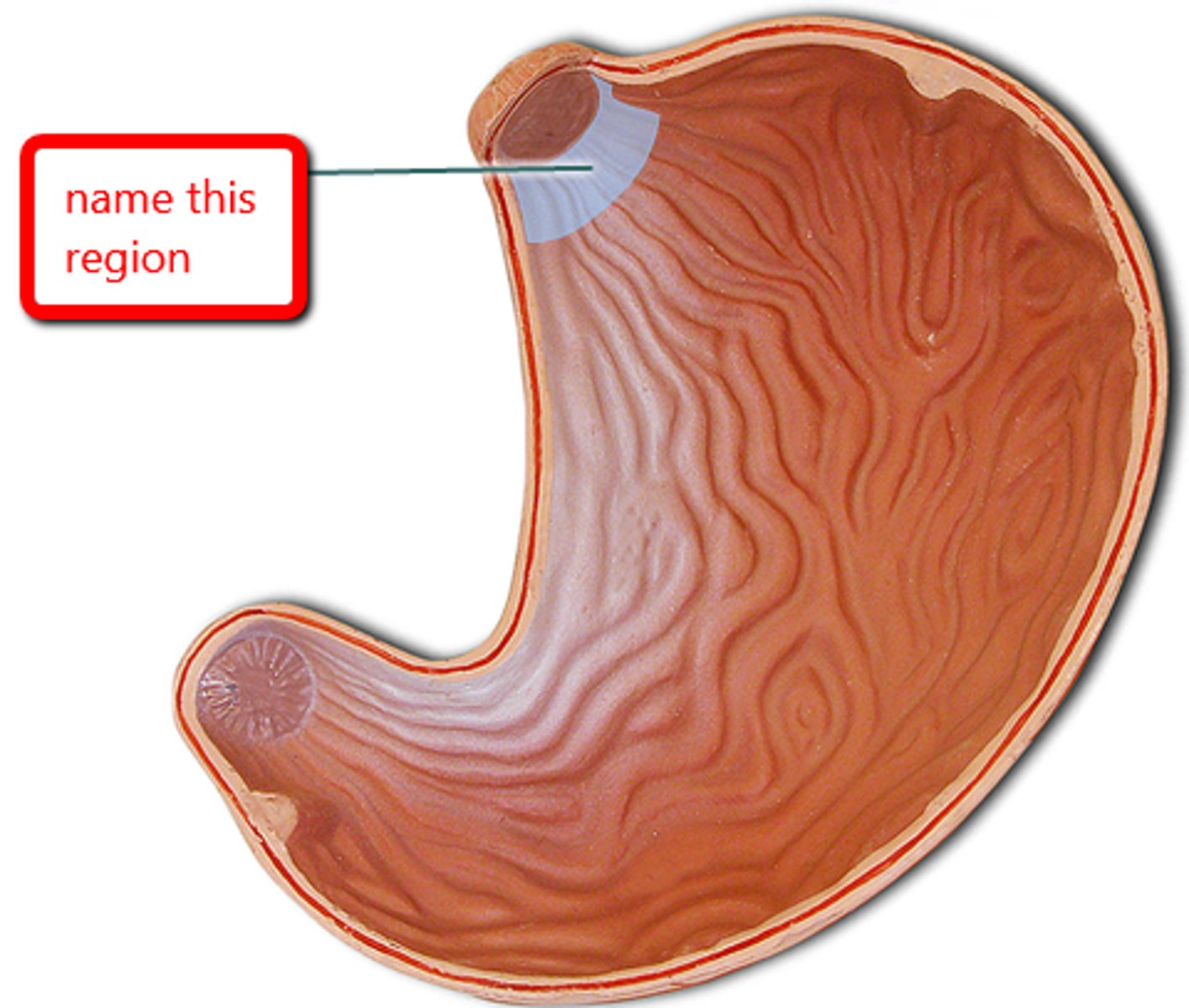
fundus
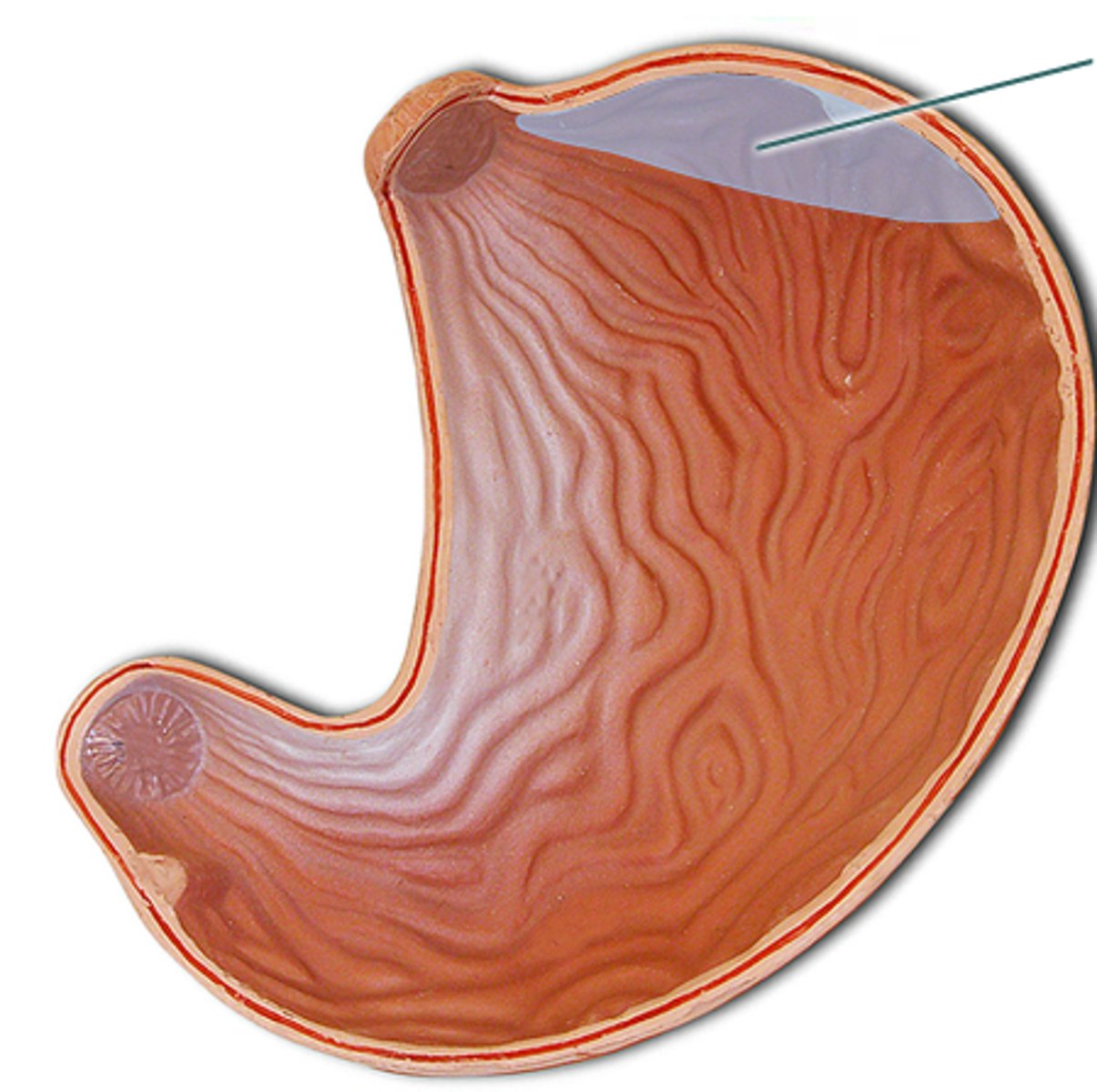
body
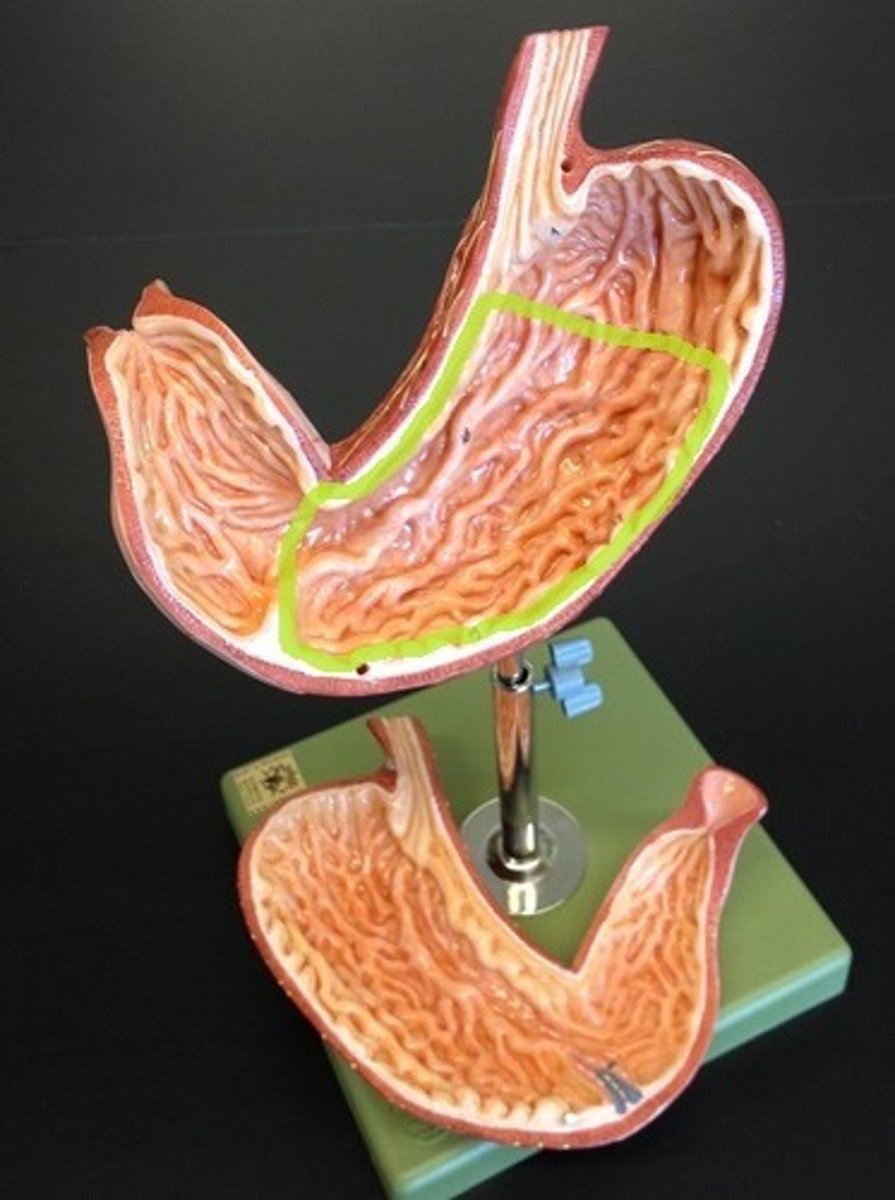
pylorus
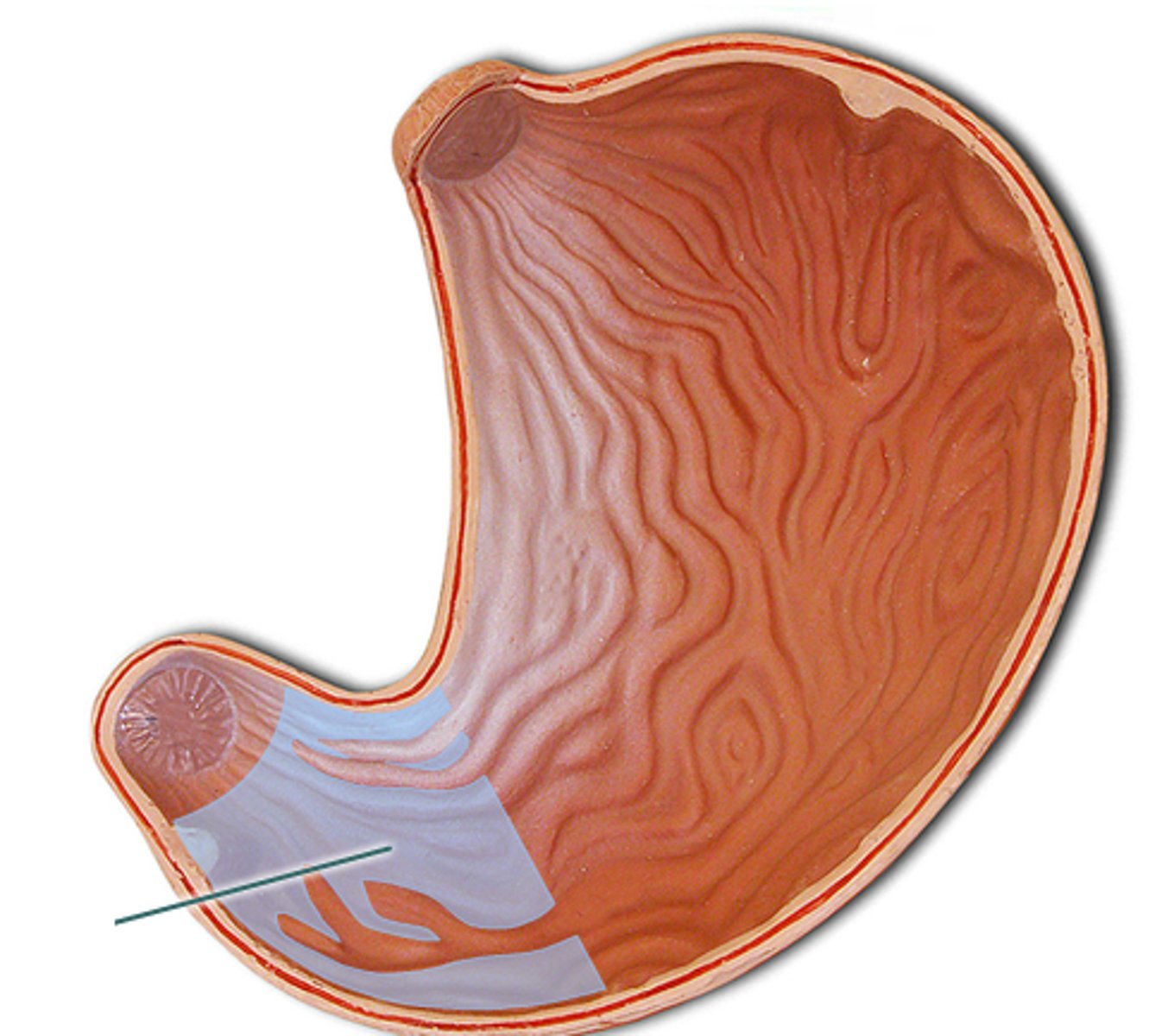
8-10 inches
shortest segment
length of duodenum
receives stomach contents
receives digestive enzymes from liver and pancreas
role of duodenum
produces enzymatic secretions helping digest carbs, fats, proteins
role of pancreatic secretions in digestion
14 feet each
length of jejunum and ileum
1) digestion
2) absorption!
almost all nutrient absorption occurs in jejunum and ileum
general functions of small intestine
small intestine has circular folds
each circular fold has villi
each villi/simple columnar cell has microvilli
how does the small intestine increase surface area?
absorbs materials such as pepsin, amino acids, etc
role of capillaries in small intestine villi
duodenal glands are unique to the duodenum only
secretes an alkaline mucus to protect the duodenum from acidic chyme
role of duodenal glands
found throughout small intestine
secretes digestive hormones and antimicrobial compounds
role of intestinal glands
junction between small and large intestine
ileocecal junction
extract liquid from remaining material and hold it as feces in the rectum
some digestion -- large intestine is a gut microbiome that can break down some undigested components
function of large intestine
digested food from large intestine stored in rectum as feces and goes through anus
how does the body excrete food waste?
seed population for the entire gut microbiome
appendix