Plant ID
 Call Kai
 Learn
 Practice Test
 Spaced Repetition
 Match
 Flashcards
 Knowt Play
1/19

There's no tags or description
Looks like no tags are added yet.
20 Terms
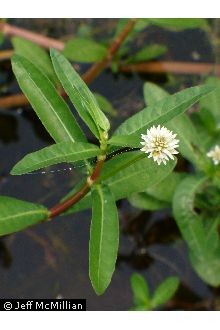
alligatorweed Alternanthera philoxeroides
Used as brood habitat, although other plant species offer greater value; needs repeated mechanical treatments to remove or control; forms dense mats, occurs in fresh water but will tolerate brackish, will grow in moist and dry soil conditions
bidens/beggar ticks Bidens spp.
excellent seed producers and are consumed by mallards; seeds are high in protein; are never considered an issue; common in moist-soil impoundments; best germination and seed production occurs following late spring or summer drawdowns

buttonbush Cephalanthus occidentalis
one of the most common seeds found in mallard diet; provide excellent cover for mallards, wood ducks, and other waterfowl; is not desirable in moist-soil environments, best control is keeping soil in a dry condition for one or more consecutive growing seasons before roots are well established; is a woody shrub with entire leaves that are opposite or whorled

broadleaf cattail Typha latifolia
cover value for nesting sites for diving ducks; litter is important to many marsh inverts; not desirable in moist-soil systems; indicates semi-permanent flooding; tolerant of saturated soils or shallow flooding; annual growth is from rhizomes; respond best to midsummer drawdowns

chufa/yellow nutsedge Cyperus esculentus
produce tubers; shallow disking in early growing season promotes it; develops early in the growing season and senesces in July; seeds are of no real use

cocklebur Xanthium strumarium
seeds are not valuable but is good for invert production, but not promoted; most effective control is prevention, units with history should use slow drawdowns; use stress flooding if established along with mechanical control; common nuisance in moist-soil impoundments

crabgrass Digitaria spp.
seeds are consumed by teal and pintail, they produce a lot; stimulated by late spring or summer drawndowns and grown in tandem with millet, mow taller vegetation prior to seed formation; most common on dryer moist-soil types

broadleaf arrowhead/duck potato Sagittaria latifolia
seeds and tubers are both consumed; germinates in early spring; reproduces by seeds or tubers

duckweed Lemna spp.
important food for wood duck ducklings, mallards, and gadwall; are not common in moist-soil units due to hydrologic regimes

giant foxtail Setaria magna
substantial seed producer, provides invert substrate after flooding; adapted to dry sites; germination is best following late spring or summer drawdowns, in dryer years better following early spring drawndowns

barnyard grass Echinocloa spp.
excellent seed producer, gradually decreases over years; slow drawdowns during midseason promote it, disturb soil after 3-4 years in late season (disking in late summer-early fall followed by shallow flooding for shorebird habitat)

fall panicgrass Panicum dichotomiflorum
seeds are consumed by mainly teals and pintail; high seed production in years directly following disturbance; occur in conjunction with millet and crabgrass due to late summer drawdowns

common ragweed Ambrosia artemisiifolia
dryer sites; best seed production follows late spring drawdowns; associated with pigweed and panic grasses; waterfowl eat seed and invert production; issue if it becomes overpopulated; maintaining soil moisture at elevated levels controls it

common reed Phragmites australis
rhizomes; wet to shallowly flooded soils for much of the growing season; grows in fresh and brackish but too much salt stunts growth; beneficial for cover, not so much as food; disking is more effective than plowing, do so in late summer

soft rush Juncus effusus
have hollow or solid round stems; provide very little seed food, invert production, and nesting cover for some species; disking

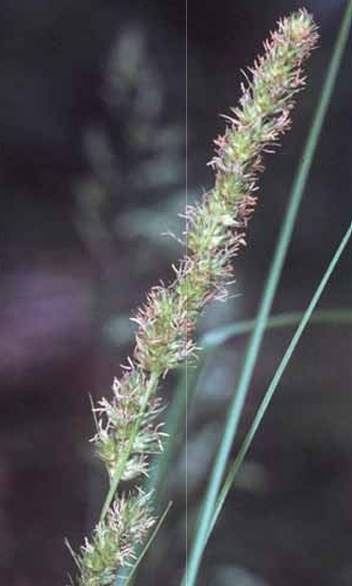
round sedges Carex spp.
later successional stages; annual or perennials; rail habitat, waterfowl eat the seeds; only a problem if it is over 65% of impoundment
bigpod sesbania Sesbania herbacea
legume; wet and highly disturbed habitats; late spring or summer drawdown promotes germination; value for waterfowl is poorly documented; favorable conditions for wanted species does not promote this species

bagpod sesbania Sesbania macrocarpa
legume; wet and highly disturbed habitats; late spring or summer drawdown promotes germination; value for waterfowl is poorly documented; favorable conditions for wanted species does not promote this species

Pennsylvania smartweed Polygonum pensylvanicum
good seed producers with wide distribution; early in the growing season drawdowns; highest seed production in year following disturbance or in areas drawn down after prolonged flooding;

dotted smartweed Polygonum