Bone quiz (fractures, inside the bone, types of bones)
 Call Kai
 Learn
Learn Practice Test
 Spaced Repetition
 Match
Match Flashcards
 Knowt Play
1/17

Earn XP
Description and Tags
Biomed II
Name | Mastery | Learn | Test | Matching | Spaced | Call with Kai | Chat |
|---|
No analytics yet
Send a link to your students to track their progress
18 Terms
Spongy Bone
A type of bone tissue that is characterized by a porous, honeycomb-like structure, providing strength and support while being lightweight. It is typically found at the ends of long bones, interior of bones, and makes up flat and irregular bones. (Made of tiny rods and plates called trabeculae)
Compact bone
A dense and strong type of bone tissue that forms the outer layer of bones, providing structure and protection. It contains fewer pores than spongy bone, making it thicker and more robust. It contains the central canal which holds blood vessels and nerves (Made of osteons)

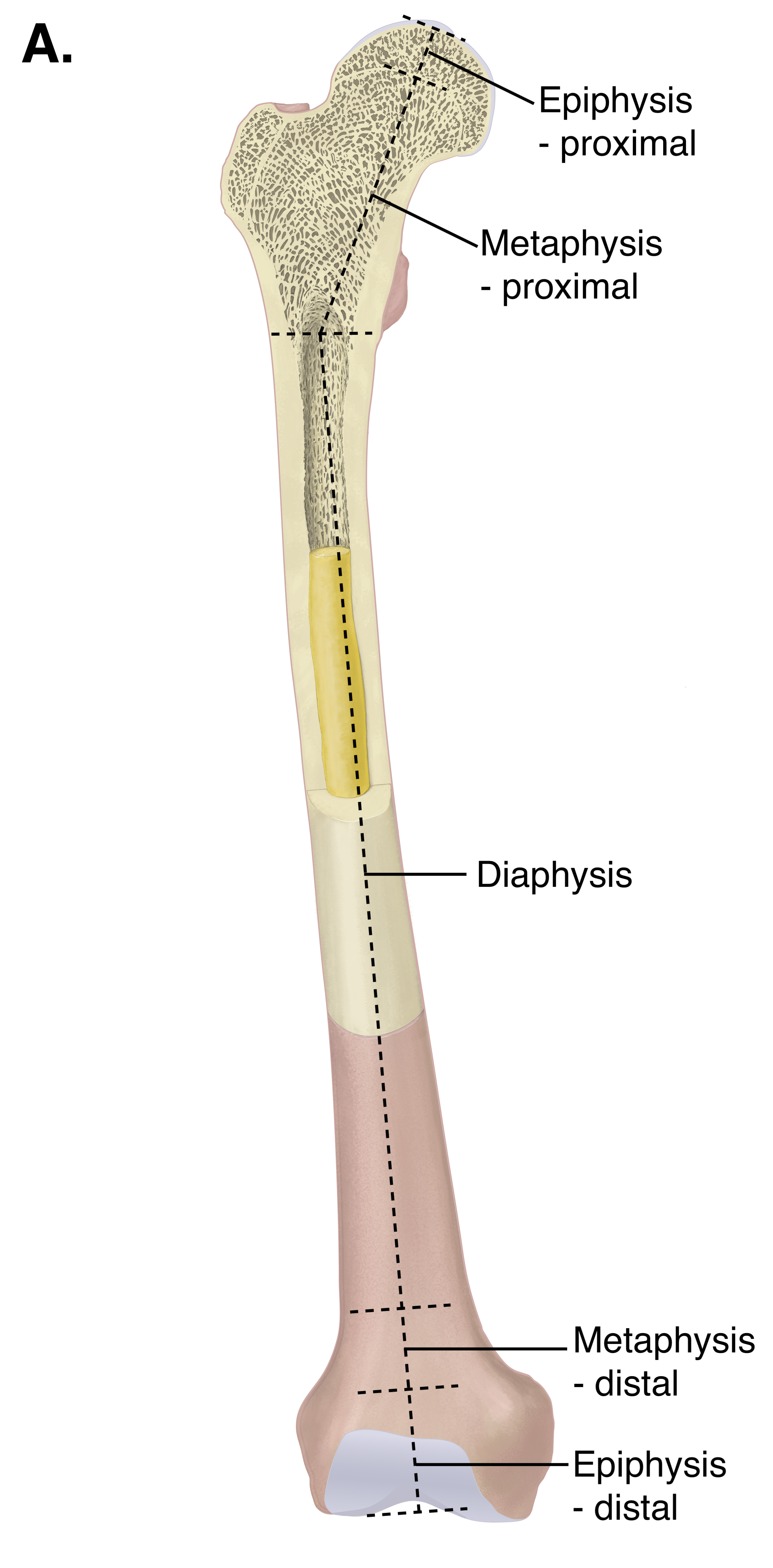
Label the long bone
Three types of bone fractures
Bending (Straight line across the bone), twisting (diagonal lines), Impact (crushed)

What is the anatomy of the femur

Osteoclasts
Large multi-nuclei cells that break down and dissolves bone tissue during bone remodeling, repair, and maintenance of blood calcium levels.
osteoblasts
Cells responsible for creating new bone tissue to reshape bones during growth and heal fractures.
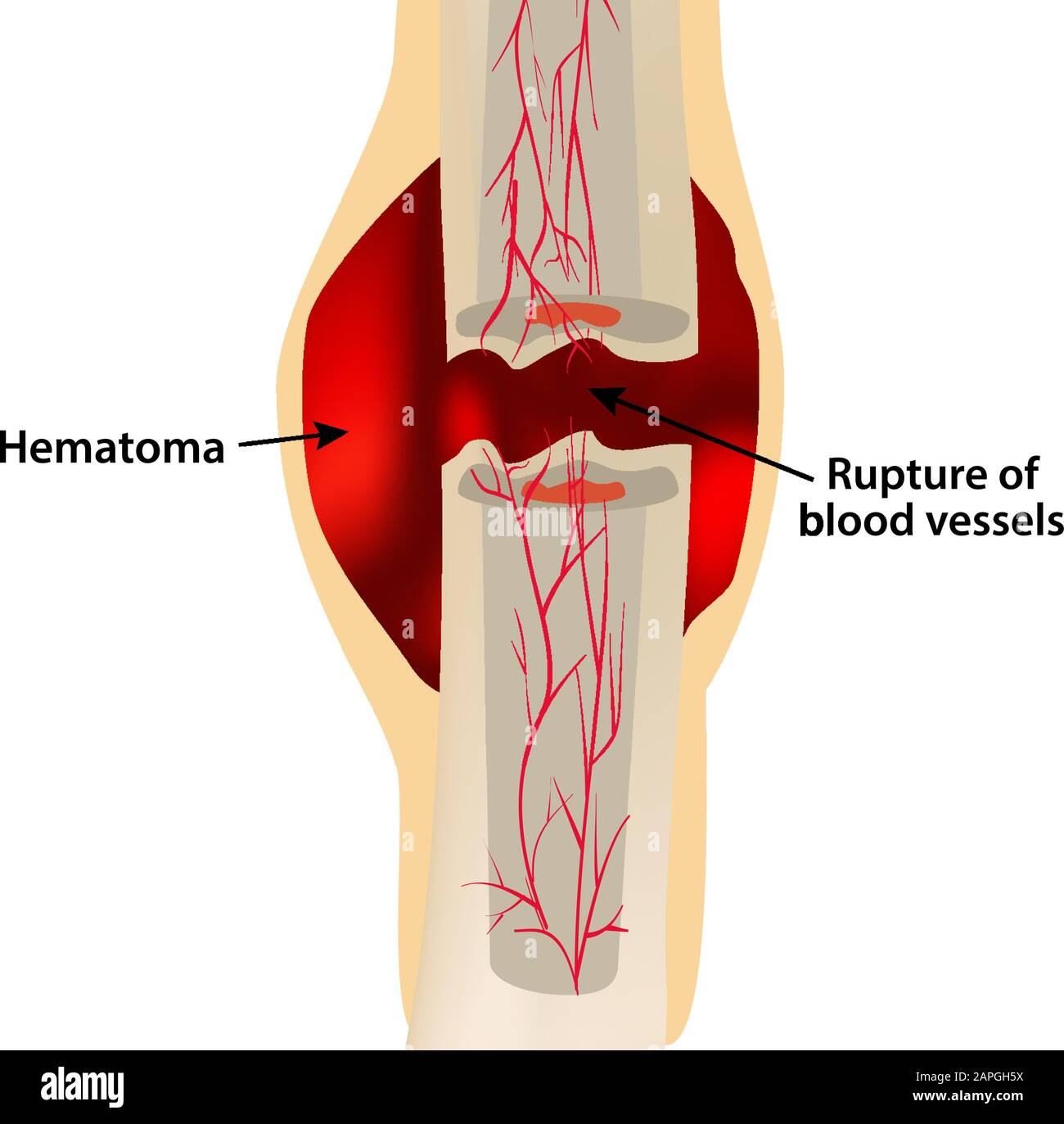
Hematoma formation
First stage of bone fracture repair where torn blood vessels bleed and form a mass of clotted blood at the fracture site
Stages of bone tissue formation
hematoma formation, fibrocartilage callus formation, bony callus formation, bone remodeling
Fibrocartilage callus formation
New capillaries form into the clotted blood, connective tissues form a mass of repair tissue called F. Callus which closes the gap between the broken bones
Bony callus formation
The F.Callus is gradually replaced by one made of spongy bone. Osteoclasts and osteoblasts multiply
Bone Remodeling
Over time, the callus is remodeled with osteoblasts and osteoclasts help. The shape returns to normal.
Tendons
Tough flexible cord of connective tissue that connects your muscles to your bones
Skeletal muscle
striated, voluntary, striped tissues attached to bones that your body uses to move
Smooth muscle
a type of involuntary, non-striped muscle tissue found in the walls of hollow internal organs that works automatically without conscious control
Cardiac muscle
the special, strong muscle that makes up the walls of your heart and pumps blood all over your body
What substance causes a contraction
ATP in distilled water
How to find percent contractions
(Original length - Final length)/Original length x 100