Ch. 5 The Human Tissues
 Call Kai
 Learn
 Practice Test
 Spaced Repetition
 Match
 Flashcards
 Knowt Play
1/64

There's no tags or description
Looks like no tags are added yet.
65 Terms
tissue categories
epithelial
connective
nervous
muscle
embryonic germ layers
ectoderm
mesoderm
endoderm
ectoderm
outer
forms epidermis (skin) and nervous system
endoderm
inner
forms digestive tract lining, respiratory tract lining, digestive glands
mesoderm
middle
forms mesenchyme, bone, cartilage, blood
epithelial tissue
avascular ( no blood cells )

basement membrane
separates epithelium from connective tissue
contains collagen and other proteins

types of cell surfaces
apical
basal
lateral
apical
top/ free surface
facing basement membrane

basal
attached to basement membrane
lateral
sides, between apical and basal
simple squamous
diffusion
transport
secretion

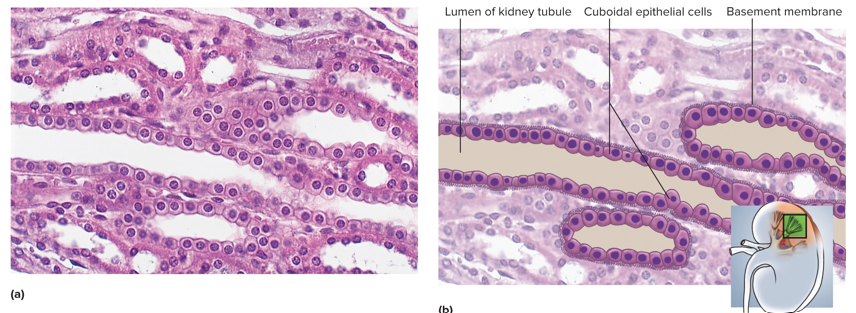
simple cuboidal
absorption
secretion
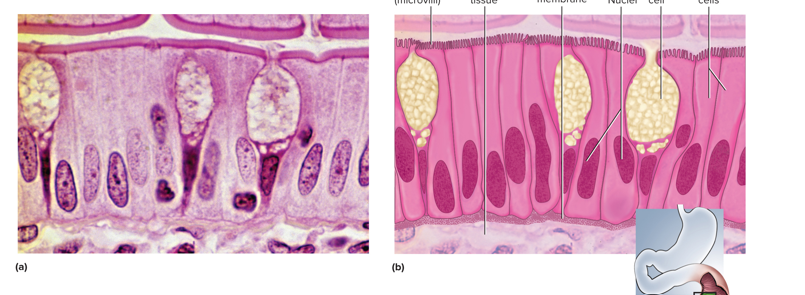
simple columnar
absorption
secretion
has microvilli
pseudostratified
looks multilayered but isnt

stratified epithelium
many layers
deepest layer touches basement membrane
Connective tissues
cells spread apart
large amounts of matrix between cells
fibroblasts
make fibers and ground substance

macrophages
big eaters
destroy pathogens and debris
break things down

plasma cells
produce antibodies
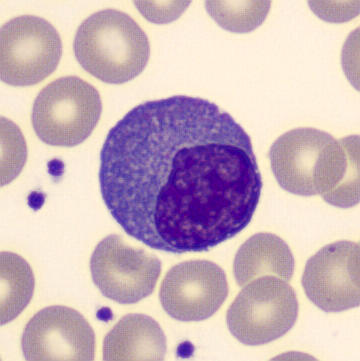
mast cells
release:
histamine
heparin

histamine
dilates blood vessels
heparin
prevents clotting
adipocytes
store fat

collagenous fibers
abundant/ strong
ligaments/ tendons
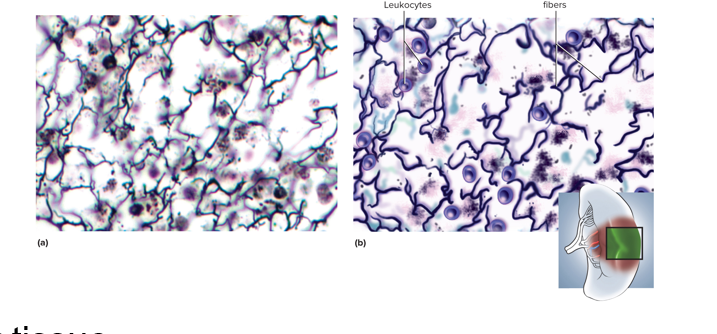
reticular fibers
thin fibers coated with glycoproteins
form framework of steel and lymph nodes
elastic fibers
thinner than collagenous fibers
made of protein elastin
stretch and recoil
areolar tissue (packing material)
loose organized fibers
abundant blood vessels

reticular tissue (supportive net)
forms supportive stroma (framework for lymphatic organs
found in lymph nodes, spleen , thymus, bone marrow
dense regular connective tissue (parallel ropes)
tendons attach muscles to bones and ligaments hold bones tg
hold bones tg
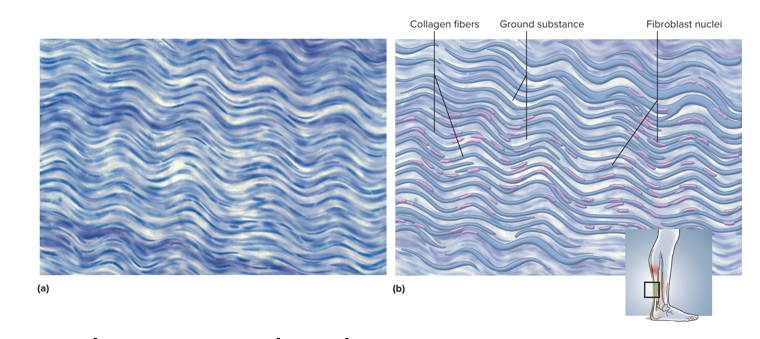
dense irregular connective tissue ( randomly woven net)
withstands unpredictable stresses
found in deeper layer of skin, capsules around organs

adipose tissue
fat, abundant adipocytes,
energy storage, insulation, cushioning
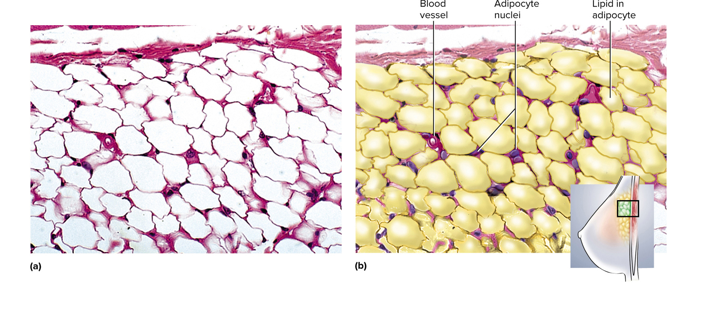
white fat
adults
cushion organs (eyeballs, kidneys)
contributes to body contours (breasts, hips)
brown fat
babies, kids
color from blood vessels and mitochondrial enzymes
produce heat
hyaline cartilage
smooth support
trachea, joints
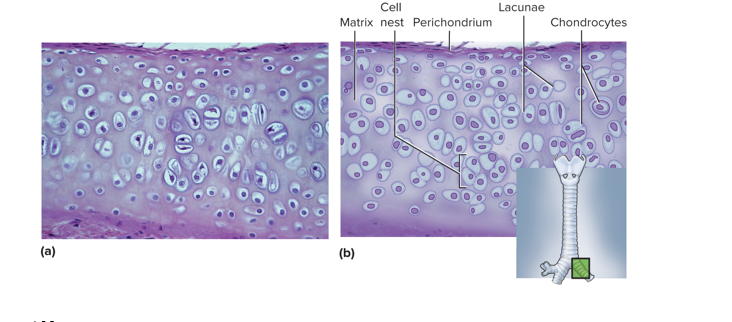
elastic cartilage
flexible
ear, epiglottis

fibrocartilage
shock absorption
discs, menisci

spongy bone
porous
trabeculae
in heads of long bones
middle of flat bones
compact bone
denser calcified, no visible spaces
more complex
arranged in cylinders that surround central canals
blood
connective tissue
plasma = matrix
erythrocytes
red blood cells
transport O2 and CO2
platelets
help blow clots
skeletal muscular tissue
multiple nuclei
striations
voluntary

cardiac muscle tissue
cardiomyocytes are short and branched
intercalated disks
striated
involuntary

smooth muscular tissue
fusiform cells
no striations
involuntary
visceral muscle

cell junctions
hold cells tg
communication
resist stress
passage
desmosome
keeps cells from pulling apart

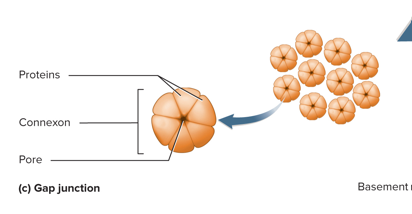
gap junction
ions and nutrients can pass
exocrine glands
products go onto surface or to body cavity
exit through ducts
endocrine glands
no ducts
secrete hormones on blood
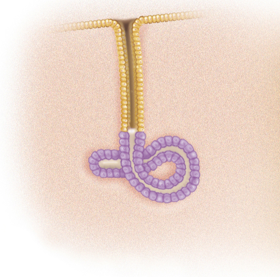
simple coiled tubular gland

compound acinar gland

compound tubuloacinar
serous glands
thin watery secretions
milk , tears
mucous glands
mucin
goblet cells
eccrine
released by exocytosis
apocrine
part of cell pinches oof
milk fat
holocrine secretion
cell ruptures
cell fragments x synthesized substances
hyperplasia
increase cell number
hypertrophy
increase cell size
neoplasia
tumor
metaplasia
changing from one type of mature tissue to another
totipotent
any type of fully differentiated human cell
pluripotent
any type of cell in the embryo but not placenta
fibrosis
replace with scar tissue