sacred spaces divine images midterm
 Call Kai
 Learn
Learn Practice Test
 Spaced Repetition
 Match
Match Flashcards
 Knowt Play
1/50

There's no tags or description
Looks like no tags are added yet.
Name | Mastery | Learn | Test | Matching | Spaced | Call with Kai | Chat |
|---|
No analytics yet
Send a link to your students to track their progress
51 Terms
henotheism
worship of one god without denying the existence of others
darshan
seeing and being seen by the deity
avatar
incarnation of a deity
proto-hindu
culture and religous systems that evolved into Hinduism
yaksha
male fertility spirit
yakshi
female fertility spirit

mithuna
couple in loving embrace

“golden age” of indian art. soft, smooth bodies, meditative eyes
gupta sculptural style 4-6th century CE
hierarchy of scale
important figures depicted larger
puranas
collection of Hindu scriptures, focus on central deities
plinth
heavy base supporting a structure
garba griha
“womb chamber” innermost sanctuary of a Hindu temple, site of the most important image

dvarapala- “door guard” guardian statue
gana
group serving a deity (shiva), ruled by ganesh

mandapa- pillared hall in Hindu temple

shikhara- gently curving tower

disc-like element above a shikhara temple
apotropaic
warding off evil
deva
“god” in sanskrit
vahana
animal vehicle or mount for a deity

brahma’s vahana, hamsa. swan goose/ can separate milk from water

shiva’s vahana, nandi. sacred white bull
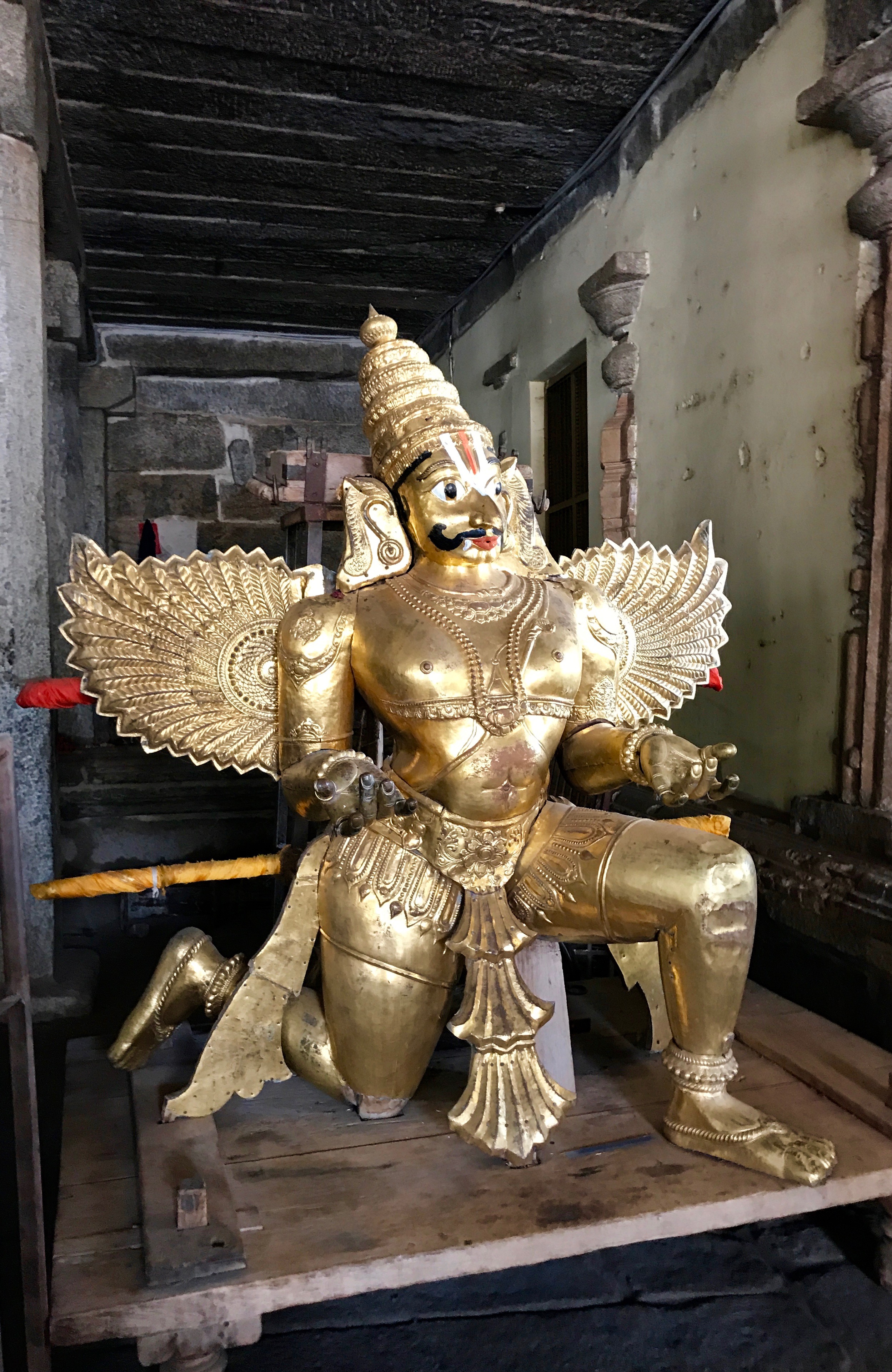
vishnu’s vahana, garuda. half man half bird

avatar of vishnu, krishna. fun, playful, multiplied himself to dance with milkmaids

avatar of vishnu, vamana (dwarf)

nonanthropomorphic depiction of shiva (pillar/ stone column, set inside a yoni), SHIVALINGA (1-2 century bce)
how indus/ aryan culture impacted hinduism
proto-hindu archaeological find in indus valley (proto-shiva yogic/ phallic seals, fertility statues). they introduced the vedas and sanskrit language
buddhist/ hidu deity parallels
overlapping deities like brahman/ indra. in Hinduism, buddha is an avatar of vishnu.
cave temples to quarries
in 5-8th centuries ce, subtractive cave sculpture to additive masonry construction. freestanding structural stone temples emerged during gupta period with monolithic rock cutting transported stone blocks/ bricks

Terracotta figurine 7000 bce

Steatite seal with image of a yogin 2000 bce

Column of Heliodorus 2nd century bce

Yakshi plaque 2nd century bce

Lakshmi relief from a Buddhist stupa 2nd century bce

Chaitya Hall, Karli, 1st century ce/ bce. votive stupa

Kushan coin depicting an early form of Shiva, 2nd century bce

“Canonical” Buddha 1st century bce

Varaha (boar avatar of Vishnu) relief, Cave 5, Udayagiri, 5th century ce

Vishnu (Dashavatara) Temple, 6th century ce (gupta period)

Cave Temple of Shiva, Elephanta Island, 6th century ce

Narasimha relief, Cave 3, Badami, 6th century ce

Mamallapuram, Arjuna’s Penance, 7th century ce
lakshmi
vishnu’s wife, goddess of good luck and fortune. in buddhism as well
shivalinga
phallic collumn depiction of shiva
ganesh
elephant son of shiva and parvati
shakti
female aspect of a god
narasimha
lion head
mahadeva
the great god
brahma
the creator
shiva
the destroye
vishnu
the preserver