How to Induce and Maintain Anesthesia
 Call Kai
 Learn
 Practice Test
 Spaced Repetition
 Match
 Flashcards
 Knowt Play
1/16

Earn XP
Description and Tags
DO WITH PP HAS REAL LIFE EXAMPLES
17 Terms
What are the three different routes of induction? What are they used for?
IM
Often Ketamine based
Used in cats / aggressive cats
IV
Most common
Inhalation
Used for some exotics, small animals (eg. rodents)
Cats, dogs, and foals occasionally
Sevoflurane less aversive, fast onset
What are 2 main factors that influence induction?
1) Speed of injection
Too fast?
WANT it to be fast, just not TOO fast
Can overshoot, giving the animal more than they actually needed
Too slow?
Drug can be eliminated by the body before it can reach the appropriate dose for induction
Ex: propofol has rapid onset, but rapid elimination
How does premed alter?
2) Hypoalbuminemia
Propofol is highly PPB; if a patient has less albumin in their blood, there will be more free drug in the blood (able to pass BBB and get to CNS much quicker)
Means in these patients, you might need LESS propofol to get your desired effect
What is co-induction? How is it useful?
Is the use of more than one agent do induce anesthesia
Minimizes doses of both drugs
Minimizes cardiovascular effects
What are 3 drugs you can give along with propofol to perform co-induction? What are their doses?
Give a small dose of propofol (or alfax) first, then:
Midazolam - 0.2-0.3 mg/kg
Beware of excitation
Fentanyl - 1-5 mcg/kg
Ketamine - 0.5 mg/kg
What are the two main methods of maintaining anesthesia?
1) Inhalation
Volatile agent (iso) delivered via anesthetic machine, breathing system
Most common
2) Injectable anesthetics
Top up IM (not ideal)
IV or top-up infusion
Can be expensive
Can depress ventilation
Can do a mix of these, doesn’t have to be both
Most common method overall is using an inhalation agent, then supplementing some anesthetics / analgesics IV so you can reduce the amount of iso used
What are 3 different drugs that are commonly used as supplemental analgesics / anesthetics during maintenance?
Fentanyl
1-5 mcg/kg bolus (loading dose)
2-10 mcg/kg/hour
Ketamine
0.25-0.5 mg/kg bolus
0.3-0.6 mg/kg/hr
Lidocaine
1 mg/kg bolus
1.5-3 mg/kg/hr
THESE ON THEIR OWN ARE NOT GOING TO BE MAINTAINING ANESTHESIA
What are the 3 main options for airway management during anesthesia?
1) Mask
Risk of leaking gases
Difficulty holding in place
Does not protect against patient aspirating
Useful in very small patients (exotics)
Supraglottic airway
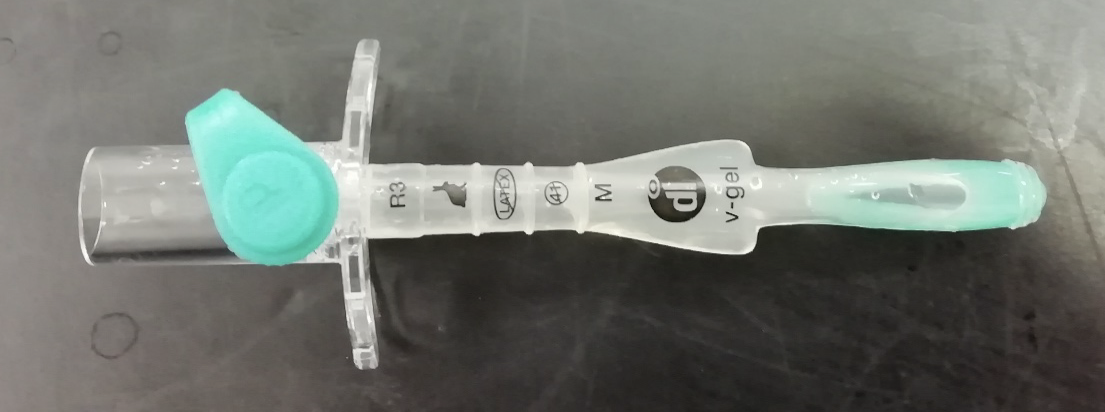
AKA laryngeal mask (see image)
Mix between mask and ET tube
Sits over larynx, does not enter trachea
Better seal but not perfect, can still leak
Easily dislodged
POPULAR IN RABBITS
Endotracheal intubation
Most common
ET tube comes cuffed or uncuffed; no risk of kinking
What are the 3 major benefits to tracheal intubation?
1) Allows for a patent airway
And relaxation of tissues
2) Allows anesthetist to support ventilation
3) Protects against aspiration of material
Regurgitation, hemorrhage, saliva, etc.

What are the different parts of the laryngoscope? (she was a stinker about this weirdly enough)
Handle
Blade
Light
Thats it lmao
Also don’t touch laryngoscope to epiglottis I thought that was self explanatory but she said it anyway
What are 3 tips to remember when intubating a dog?
1) “Bevel” up when inserting
2) DO NOT ROTATE CUFF ON VOCAL CORDS
3) Rotation AFTER passing through vocal cords may help w/ positioning
What’s one thing to remember when intubating cats?
LARYNGOSPASM
Desensitize using lidocaine spray
Minimal touch to cords
What are 5 different VIABLE ways you can confirm that the ET tube is in the trachea?
1) Visual confirmation
2) Condensation in tube
3) Breathing system bag movement
4) Palpation of tube - shouldn’t be able to palpate, if you can its in the esophagus
5) Capnograph
What are the different indications of whether or not you should intubate for each species? (horses, cats, dogs, pigs, rabbits, and ruminants)
Horses / cats
Maintain the airway well enough w/out tube
Evidence that anesthetic risk may INCREASE in cats that are intubated
For short procedures / if they’re healthy, no need to intubate
Dogs
Easy to intubate
Airway may be affected by anatomy
Regurgitation more likely in some dogs
So in general, better to intubate than not
Pigs / rabbits
Difficult to intubate and may cause physical trauma
Can maintain airway well enough just using a mask
Ruminants
HIGH REGURGITATION RISK
Intubation VERY important if GA
What are the landmarks for measuring an ET tube
From point of nose to point of shoulder
MAKE SURE NOT TO PASS POINT OF SHOULDER
Can enter just 1 bronchus
What are some risks and complications when intubating?
Laryngospasm
Trauma/swelling (post-op)
Endobronchial intubation
Kinking ETT
Obstruction with secretions etc
Obstruction of bevelled end
Tracheal stenosis (rare)
Tracheal rupture (rare)
What measures should you take to prevent regurgitation in an anesthetized patient? What should you do if they begin regurgitating?
To prevent:
Rapidly induce them and keep them in sternal recumbancy until they’re tubed and cuffed
If they begin regurgitating:
Put head DOWN (allow material to drain)
Have suction machine ready
What is Intermittent Positive Pressure Ventilation (IPPV)
Squeezing the bag to manually breathe for the patient. Happens when:
Ventilation becomes too depressed
Pathophysiology may require ventilation (diaphragmatic rupture)