food/feeding & reproduction
 Call Kai
 Learn
 Practice Test
 Spaced Repetition
 Match
 Flashcards
 Knowt Play
1/31

There's no tags or description
Looks like no tags are added yet.
32 Terms
function of carnassials

shearing of soft or tough food
function of molars in monivore
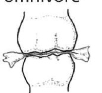
rolling and crushing of turgid or brittle food
function of cheek teeth in ungulate

shredding and grinding of tough, fibrous food

know muscles and functions
temporalis (T): holds jaws closed and aid in vertical chewing action (in carnivores); maintains horizontal movement of molars for grinding fibrous food (in herbivores)
masseter (M): stabilizes the articulation of jaw
digastric (D):
pterygoid (P): helps to position carnassials

name muscle
temporalis: holds jaw closed and aid in vertical chewing action in carnivores; maintains horizontal movement of molars for grinding fibrous food in herbivores

name muscle
masseter: stabilizes articulation of jaw

name muscle
digastric:

name muscle
pterygoids: helps to position carnassials
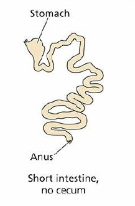
what type of eater does this belong to
insectivore - primitive condition of eutherians
short intestine
no cecum
alimentary canal short

what type of eater does this belong to
carnivore
short intestine and colon
small cecum
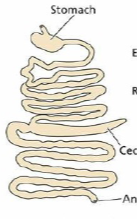
which eater does this belong to
nonruminant herbivore
simple stomach
large cecum

which eater does this belong to
ruminant herbivore
four-chambered stomach with large rumen
small and large intestine
carnivory
arboreal, terrestrial, marine
sharp cutting teeth, some with homodont dentition
sanguinivorous (blood-eating)
piscivorous (fish-eating)
herbivory types
browsers and grazers
hooved mammals
aquatic grazers
gnawing mammals
rodents and lagomorphs
coprophagy
herbivore dentition
selenodont in ruminant artiodactyls
canines reduced or absent
broad molars for crushing, shredding, grinding
foregut fermentation
also called rumination
four chambered process
rumen: first and largest
reticulum: second chamber; fermentation continues
regurgitation and chewing
omasum: third chamber; muscular walls knead food further
abomasum: fourth chamber; true stomach; digestion complete
digested materials move to small intestines' for absorption
hindgut fermentation
food masticated during eating, and digestion begins with salivary enzymes
digestion continues in a simple stomach
finely ground particles pass into cecum
colon acts as principal fermentation chamber for larger species
hindgut fermenter traits
efficiency of nutrient extraction not as high
microorganisms in cecum can’t be absorbed
toxins absorbed in blood, liver must detoxify
faster processing
can work with low quality but abundant food
2x volume needed than what ruminants eat
foregut fermenter traits
efficiency very high
microorganisms absorbed
microorganisms can detoxify alkaloids in rumen
benefit from high quality, limited food
doesn’t need as much volume of food
coprophagy
feeding on feces
in lagomorphs, rodents, shrews, and some marsupials
evolved to optimize update of essential vitamins and minerals and enhance assimilation of energy
specializations in herbivory
granivory: seed-eating
folivory: leaf-eating
frugivory: fruit-eating (bats; phalangerids; tupaiids; some primates)
nectarivory: nectar-eating (bats; marsupial honey possums)
gummivory: gum-eating
mycophagy: fungus-eating
ovaries
produce ova (female gamete) and estrogen/progesterone (female hormones)
gonadotropins
control the development of follicles
follicle-stimulating hormone (FSH)
luteinizing hormone (LH)
monotreme reproductive system
cloaca used for urinary, defecatory, and reproductive systems
only left ovary is functional
mammary glands but lack nipples
altricial newborns
marsupial reproductive system
cloaca for urinary and defecatory systems, but reproductive system has separate opening
choriovitelline placenta
brief gestation
altricial young
long period spent in pouch
two uteri; conception alters between two
placental reproductive system
no cloaca
true placenta
relatively precocial when born
metatherian placental traits
vascular yolk-sac chorion
yolk sac
relatively little attachment to developing fetus
eutherian placental traits
chorion
allantois
chorionic villi extend deeply into the endometrium and form a very tight connection between mother and fetuses
estrous
period of receptivity shortly before and after ovulation
spontaneous ovulation
happens without copulation; seen in majority of mammals (sometimes seasonal)
induced ovulation
happens with copulation; seen in several species of carnivores, rodents, lagomorphs, and insectivores
semelparity