Lung Volumes and Capacities
 Call Kai
 Learn
Learn Practice Test
 Spaced Repetition
 Match
Match Flashcards
 Knowt Play
1/53

There's no tags or description
Looks like no tags are added yet.
Name | Mastery | Learn | Test | Matching | Spaced | Call with Kai | Chat |
|---|
No analytics yet
Send a link to your students to track their progress
54 Terms
Not all air entering the nares is exchanged in the lungs, because of the _____ ______ _____ ( ) of the conducting zone
anatomical dead space (ADS)

Inspiratory Muscles
quiet
External intercostals, diaphragm

Inspiratory muscles
forced - SISSPE
Scalenes, Internal intercostals (cartilage, Parts), Sternocleidomastoid, Pectoralis minor, (serratus anterior), Erector spinae

scalenes
forced Inspiratory muscles

cartilage parts
internal intercostals
forced inspiratory muscles

Boyle’s law:
A pressure of a gas is ________ proportional to its ______
inversely, volume

When you inhale, the volume of your thoracic cavity ______, which _______ the pressure inside your lungs
increases, decreases
which pleura is on the lung surface?
Visceral pleura

which pleura is along inside of rib cage, at body wall?
Parietal pleura


Pleurae reduce _____, assist in lung ______, help prevent ______ from spreading through _______
friction, inflation, infection, mediastinum
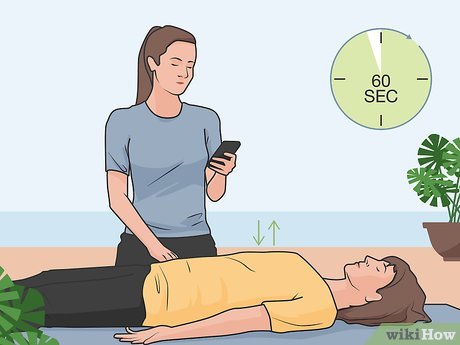
breaths per minute, bpm
Respiratory Rate
Minute Respiratory Rate (MRV) is ___ ______ breathed in 1 minute,
air volume
MRV (minute respiratory rate) = 📺 😮💨
MRV = TV × RR

Alveolar Ventilation Rate(AVR) is the ___ _____ arriving at ______.
ARV indicates your ability to release ____ and deliver ___ to tissues.
air volume, alveoli, CO2, O2

AVR (Alveolar Ventilation Rate) =
AVR = (TV − ADS) × RR

Normal AVR is approximately ______ mL
4200 mL

volume of air inhaled and exhaled in 1 cycle of breathing
Tidal volume

Normally resting value of Tidal Volume
500 mL

volume of air in excess of resting tidal volume that can be inhaled with maximum effort
Inspiratory reserve volume
average IRV (inspiratory reserve volume)
3,000 mL

volume of air in excess of resting tidal volume that can be exhaled with maximum effort
Expiratory reserve volume

average ERV (expiratory reserve volume)
1,200 mL
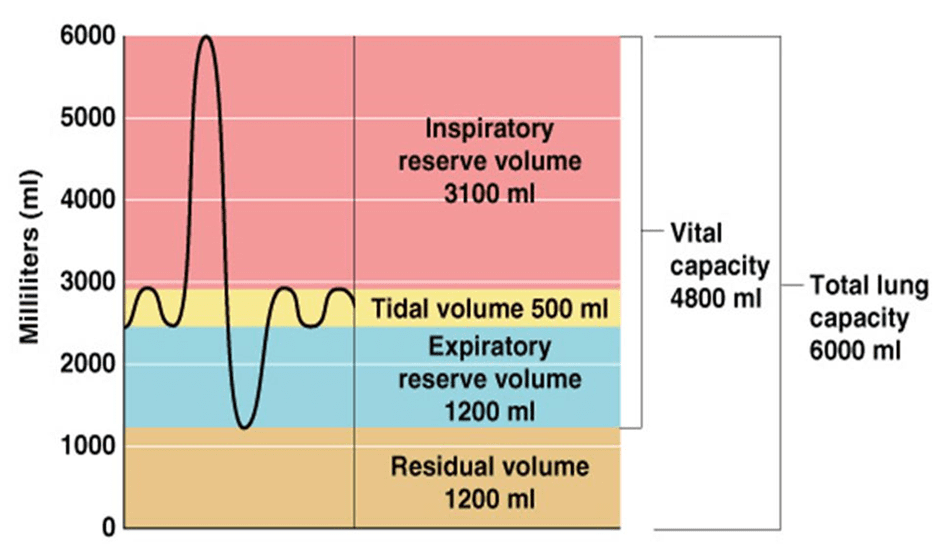
volume of air remaining in lungs after maximum expiration
Residual volume
IRV allows for ___ ______ air → blood before _____ ______ of fresh air arrive
gas exchange, next breath
average RV (residual volume)
1,200 mL
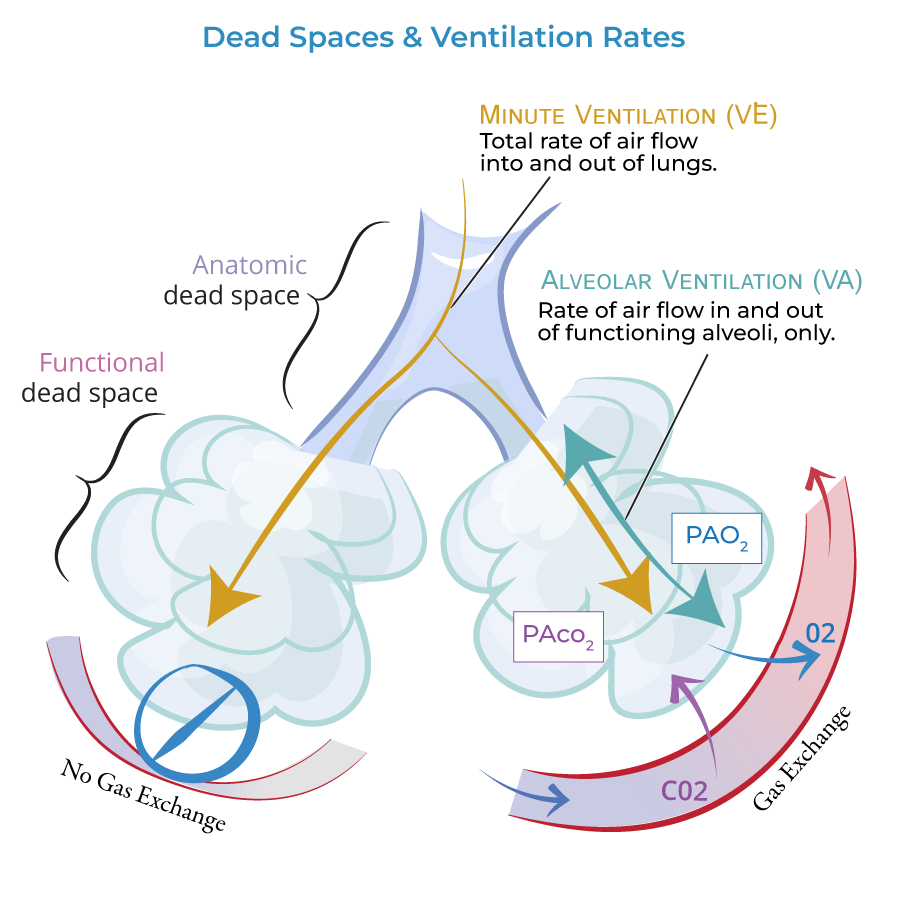
important measure of the lungs ability to clear CO2 from & deliver O2 to the tissues
Alveolar Ventilation Rate
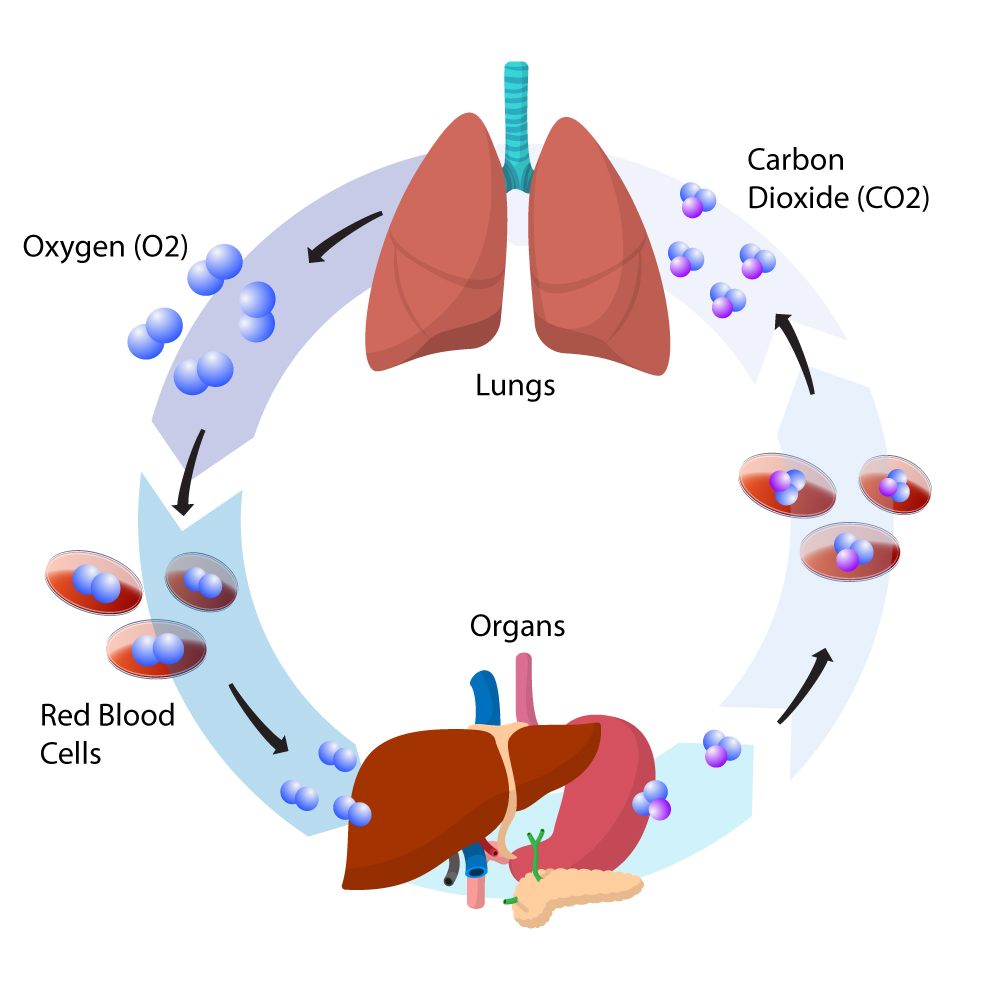
Alveolar Ventilation Rate -
important measure of the lungs ability to clear _____ from & deliver ____ to the tissues
CO2, O2

pH of cerebrospinal fluid reflects the _____ level in the blood
CO2

what makes acids as the carbonic acid equation ?
Metabolism
Metabolism makes _____ as the carbonic acid equation
acids

Low, acidic pH + High CO2 → Respiratory rate _______, fix by ______ CO2
increases, exhaling

High, alkaline pH + Low CO2 → Respiratory rate ______, fix by ______ CO2
decreases, retaining
High levels of CO2 increase H+ → pH of body fluids decreases or becomes more acidic → The carbonic acid equation shifts to . . .
right to use up excess CO2
High levels of CO2 _____- H+ → pH of body fluids _____ or becomes more _____ → The carbonic acid equation shifts to _____ to use up excess CO2
increase, decreases, acidic, right
Low levels of CO2 decrease H+ → so body fluid pH rises or becomes more alkaline → The carbonic acid equation . . .
shifts left to increase available CO2
Low levels of CO2 decrease ___ → so body fluid pH ____ or becomes more _____ → The carbonic acid equation shifts ____ to _____ available CO2
H+, rises, alkaline, left, increase
Pons and medulla integrate sensory and motor input from:
Cerebrum
Hypothalamus
Central chemoreceptors
Peripheral chemoreceptors
Proprioceptors
Stretch and irritant receptors in airway
Strongest stimulus to breathe comes from _____ _______ (pH of CSF)
central chemoreceptors
_____ ________ (aortic and carotid bodies); pH is strongest stimulus then C02, then 02
Peripheral chemoreceptors
Which pulmonary volume increases the most immediately after exercise?
tidal volume (TV)
What happens to inspiratory(IRV) and expiratory reserve volumes(ERV) after exercise?
both decrease
total amount of air that can be inhaled and then exhaled with maximum effort
Vital capacity
VC (Vital capacity) =
VC = ERV + IRV + TV
average vital capacity (VC)
4,700 mL
vital capacity is an important measure of
pulmonary health
maximum amount of air that can be inhaled after a normal tidal expiration
Inspiratory capacity
IC (Inspiratory Capacity) =
IC = TV + IRV

average IC
3,500 mL
amount of air remaining in lungs after a normal tidal expiration
Functional residual capacity
FRC (functional residual capacity) =
type of car + engine for that type of car - cars are functional
FRC = RV + ERV
Average FRC (functional residual capacity)
class of __’ is functional
2,500 mL
maximum amount of air lungs can contain
Total lung capacity
average TLC (total lung capacity)
6,000 mL
TLC (total lung capacity) =
TLC = RV + VC