ARTH Test #2
 Call Kai
 Learn
 Practice Test
 Spaced Repetition
 Match
 Flashcards
 Knowt Play
1/135

There's no tags or description
Looks like no tags are added yet.
136 Terms
order of ancient Egypt kingdoms
early dynastic
old kingdom
middle kingdom
new kingdom
Palette of Narmer

Ceremonial Egyptian tablet, depicts King Narmer conquering his enemies,
Conventions
customary rules for depicting people and the world, differs by culture
King Menkaure and Queen

showed gender expression in ancient Egypt
women were important and had roles
Nome goddess

wore specific hieroglyphic symbol of animals
Sphinx and Pyramid of Khafre in Giza

Seated King Khafre
sculpture in the round, freestanding fully 3D

Ka
spirit/soul of an individual
Monolithic
created all in 1 solid block of stone
Seated Scribe
important because its depicted the commoners and how they played a role in society, they could read and write which was important, other statues were made of butcherers, kneeling dough and brewing beer

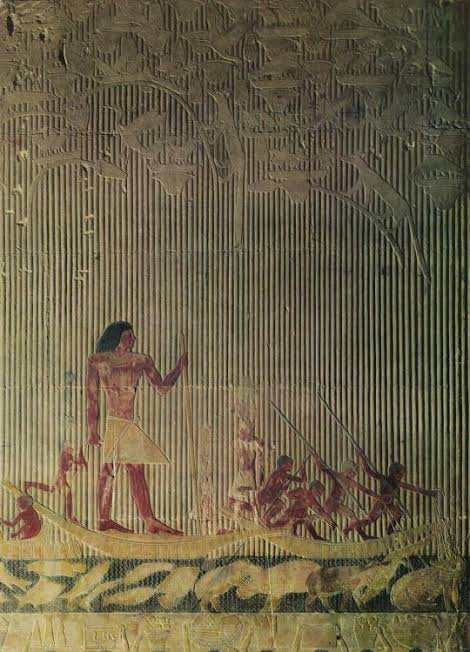
Ti watching hippo hunt
found in the tomb of Ti
featured hieratic scale
High vs low relief sculpture
AI Overview
High-relief sculptures project boldly from a flat background—often by more than half their volume—with parts sometimes detached "in the round" like free-standing figures. Low-relief (bas-relief) sculptures stay shallow and flat, projecting only slightly from the surface with soft shadows
Faience offering chalice
ritual vessel symbolizing Nile and rebirth

Book of the dead
an ancient Egyptian collection of magical spells, prayers, and instructions written on papyrus scrolls, tomb walls, and coffins of rules of funerary practices
King Akhenaten and his family
sunken relief carving showing family life in Egypt

UNESCO
United Nations Educational Scientific and Cultural organization
Aswen High Dam
caused massive human displacement, damaged the Nile ecosystem, and triggered intense Cold War political struggles
Great Temples of Rameses II

Small Temple of Hathor and Nefertiti

Ka Statue
serves as a home for the king’s soul (Ka) in the tomb
depicted the king in his prime
painted stone
Egyptian funerary process
king is mumified
Ka statue is made from diorite (to last)
difference between men and women artwork in Egypt
Elite Woman were lighter skinned because they didn’t go outside
men had darker skin because they worked in the sun
The sphinx represented
had king kafres face and was a protective being
Servants Roles in ancient Egypt
made into models and put in tombs of rulers for the afterlife
Funerary Temples
built into the side of the cliff
smaller scale than pyramids
long walkways for visitors
THE KING IS NOT BURIED THERE

Queen Hatshepsut (new kingdom)
female pharaoh but dressed male wore the false beard and kilt
Had a damaged Ka statue - soul is “gone”
the Ka Statue was damaged by stepson who wanted power
testified woman can rule

Akhenaten Statue (new kingdom)
childhood portrayed in relief carving
loving father (rare to see in artwork)
body is not as masculine
Akhenaten is notable mostly for:
he changed religion from poly to monotheistic (only sun god)
Taotie
monstrous face originated in Neolithic period china

1st Chinese dynasty
Shang Dynasty (Bronze Age)
Bi and Cong
Chinese ritual objects

Chinese oracle bone
used to connect with ancestors during the Shang dynasty

fang ding and da ke ding with taotie
Chinese ritual cooking vessel, used for ancestral offerings

Piece mold casting
process to mold piece by pouring metals into ceramic molds
Pit Tombs
deceased is placed in tomb in the ground along with their belongings such as cowry shells, pottery, etc

Queen Fu Hao’s tomb
only tomb from Shang dynasty that was not looted
thousands of artifacts made of jade, bronze, bone, and cowry shells
showed women had military power
Chinese vs Egyptian burial practices
C: weapons burried, no objects depicting dead person
E: mummified, Ka needs physical dwelling, more decorative
Mingqi
replaced human sacrifices as pottery models
needed spirit objects for the afterlife
Chinese new kingdom Qin dynasty
significance of Chinese ritual bronze in tombs
usable ornamental spiritual
continue rituals in the afterlife and honor ancestors
who unified china?
Qin
Qin Is known for
uniting china
building great wall
tomb of the emperor (army of ceramics)
Tomb of Emperor Qin
ceramic soldiers replaced human sacrifices
buried and hidden from looters and theifs
solider are spirit vessels
clay soldiers made from casts
Hans Dynasty tombs
now built with post and lintel
used tomb guardians
Tomb of Lady Di
had household objects, food (part of ritual), banner of painted silk*
Banner of Painted Silk in the tomb of Lady Di
had registers: heavenly realm, lady di and attendees, body of lady Di, underworld
remarkable bc the textile survived without wearing down
dragons symbolized
heavenly realm protection
Most important part of ancient Chinese culture
remembering ancestors, passing down generation to generation
Ancient Aegean 2 cultures:
Minoan and Mycenaean
Minoan location
crete (island)
Mycenaean location
main land greece
Ancient Minoans traded with?
the Egyptians
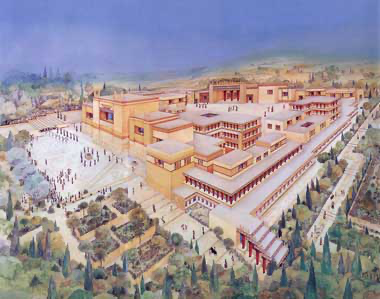
differences in Egyptian Funerary temple and Minoan Aegean Palace
E: one building, center focused, for the dead
A: sprawling building, NOT funerary
both: used columns
Palace of Knossos
not actually a palace, but a city
Minoan
community worked together and shared food
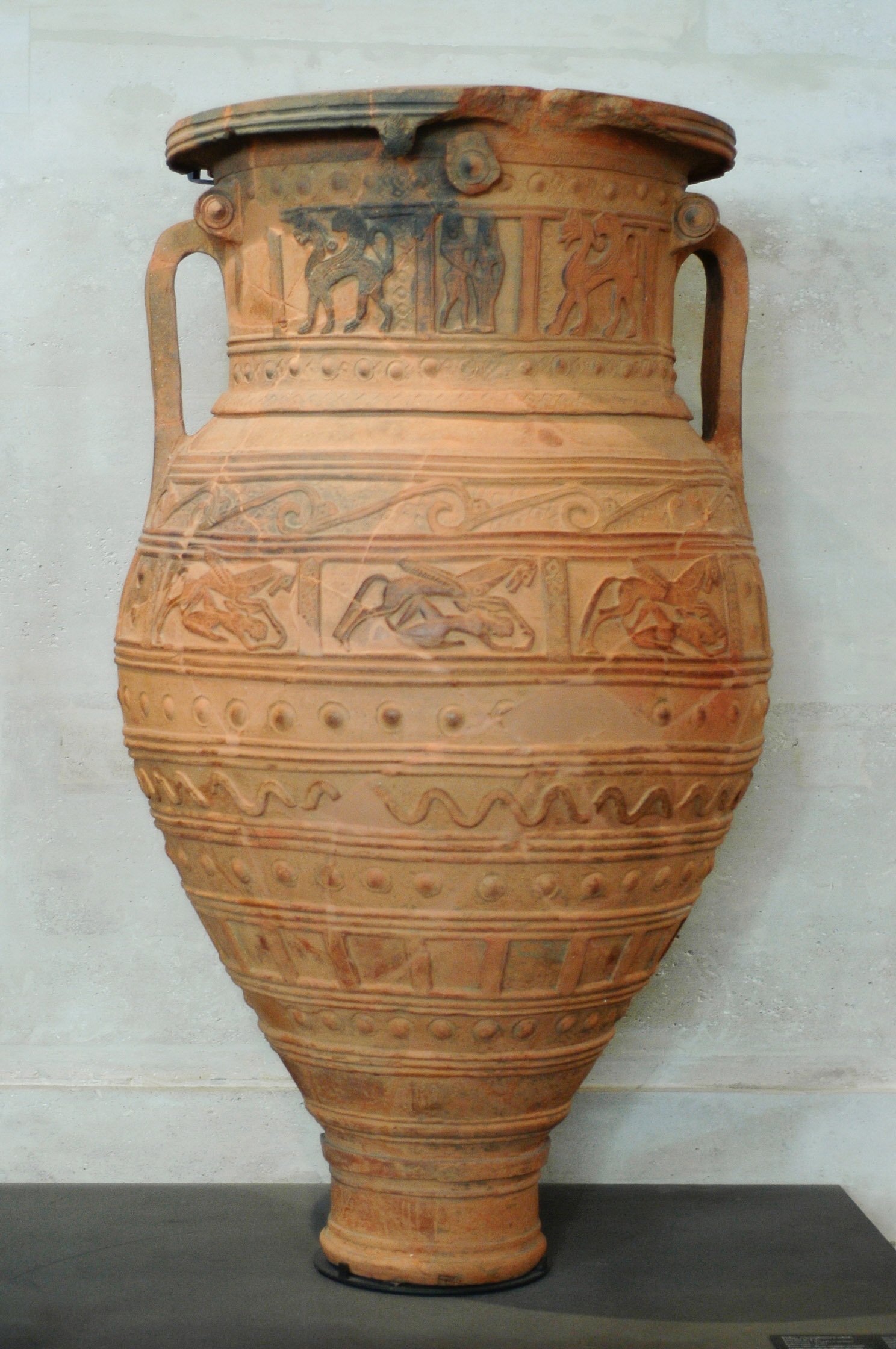
Pithoi
giant ceramic vessels to store food and liquid
themes in Minoan artworks
the sea and sea creatures
landscape paintings
bulls
Frescos
a mural painting technique where water-based pigments are applied directly onto freshly laid, wet lime plaster
Bull’s head Rhyton
Minoan piece

Gathering Saffron Painting
Minoan artwork, saffron was valuable to the culture, wasp waisted women depicted, gender is distinguished by skin tone

Harvester Vase
depicted people singing while they work, culture must have been laid back and joyful

Difference in Mycenaean artworks compared to Minoan
used more repetition an symmetry
change in mood
soldiers are depicted
Citadel at Mycenae
built on a hill and had a wall surrounding it for protection

Cyclopean Masonry
an ancient architectural style using massive, roughly cut limestone boulders stacked together with minimal clearance and no mortar

Corbeled Vaults
an architectural ceiling or roof structure created by extending the technique of a Corbel arch in three dimensions along opposing walls

Lions at Mycenae
heads were looted

Mycenaeans DID have tombs for people unlike Minoans

Beehive tomb
Mycenaean buried dead here
had a large dome, made from corbeling

Corbeled vault
a roofing technique in which each course of stone projects slightly beyond the previous layer until the uppermost corbels meet

megaron
Mycenaean throne room
8th century
century that started beginning of Greek world
Polis
Greek city state

776 bce
first Olympic Games between city states
Greek city states/Polis shared:
language and religion
polytheistic, their gods were human-like
sanctuary for Apollo at Delphi
had temple for Apollo, arena for games, theatre, and hospital, was built up high to be closer to the gods
Temple was Pan-Hellenic
Priestess was in the temple with the oracle
Archaic Greece’s most important invention
Greek temple architecture
Oracle
answers peoples questions when they made offerings to the gods
Greek orders:
Doric, Ionic, Corinthian
subjects that were featured on greek pediments:
gods, goddesses, warriors
Greeks did not use the heretic scale, instead they were:
Used Naturalistic/realism style
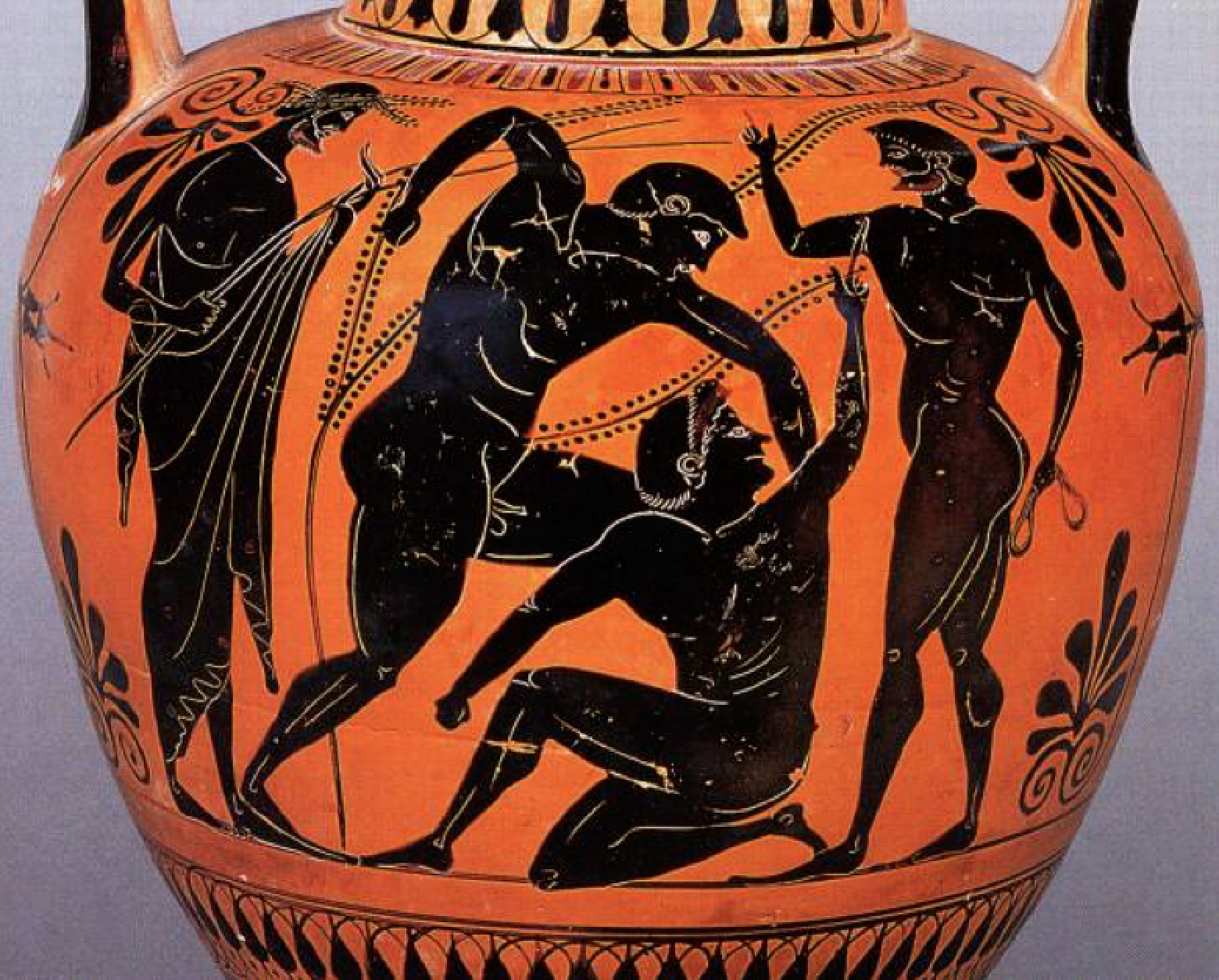
Early Archaic figure painting vases
were simplistic and stylized, used repetition and line

later archaic greek figure painting vases
more naturalistic, depicted more realistic humans

red figure painting technique
reverses black figure painting technique, painted the background first, created AFTER black figure archaic painting

black figure technique
black silhouetted humans on vases
Kouros
free standing archaic statue, unclothed males, made of marble

Kore
female free standing marble statue in archaic Greece, they were clothed

Main idea of Ancient Greek artwork
depicting human body in a naturalistic but idealized way
Classical
term for art forms that are traditional and exemplary
What led to the Greek style change fro archaic to classic
the greek-persian wars
Acropolis of Athens
ancient citadel in Athens had the Parthenon temple
the Parthenon temple
dedicated to athena
only temple built using more than 1 order
considered doric, but has Frieze
Frieze depicted ordinary people

contraposto
a stance where one leg is weight bearing and other is relaxed seen in CLASSIC greek
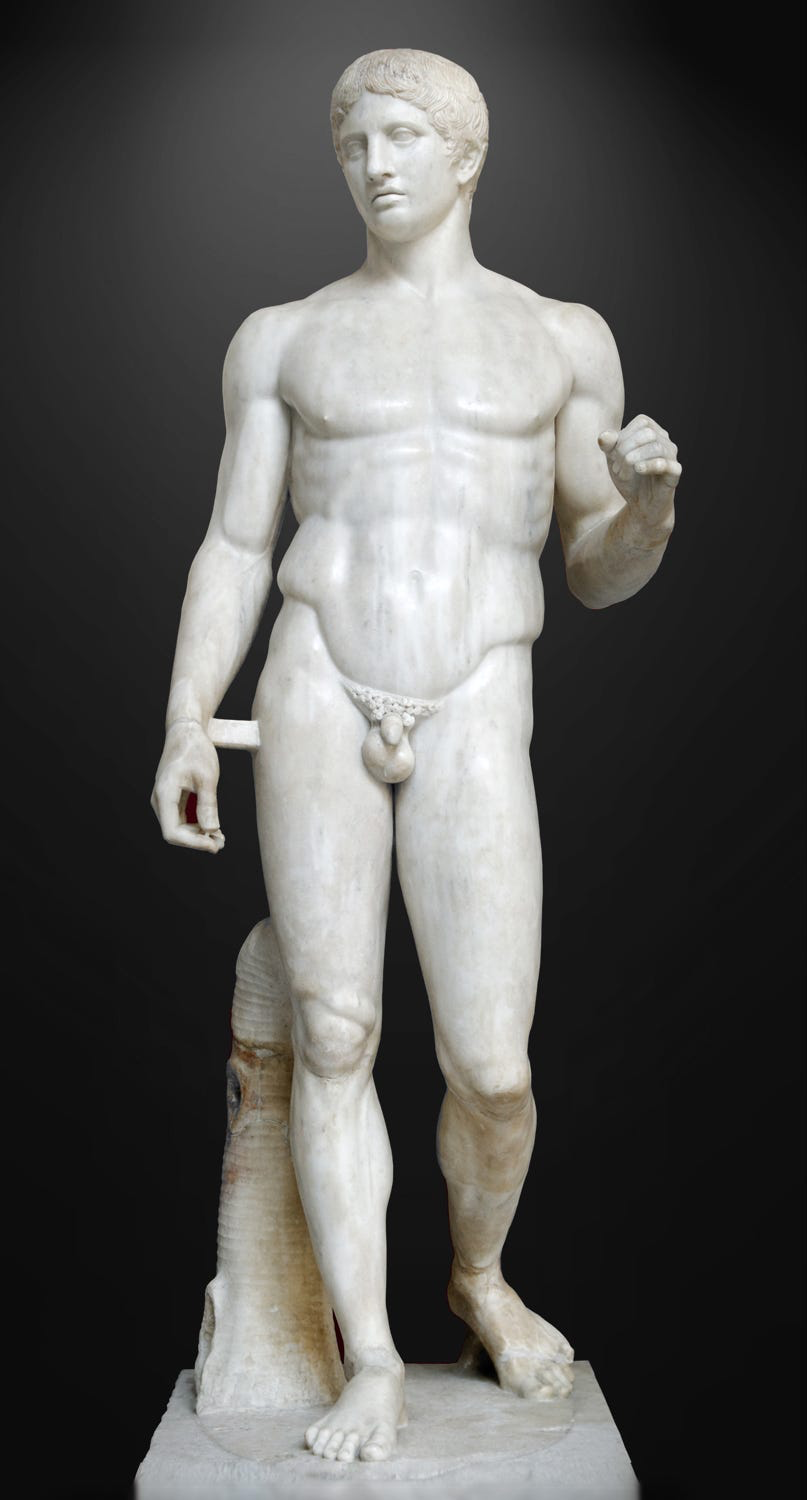
Bronze
material used in mid-late greek classic era
Naturalism definition
portraying a person, animal or object as you se it naturally in the physical world, correct proportions scale and anatomy
Canon
rule or law
THE canon
a book written by polykletios that states rules depicting idea human figure
the highest form of art in classical Greece- highly idealized
the unclothed male
romans copied greek works but also used what material?
bronze, they also made molds
Nike
winged female figures symbolizing victory
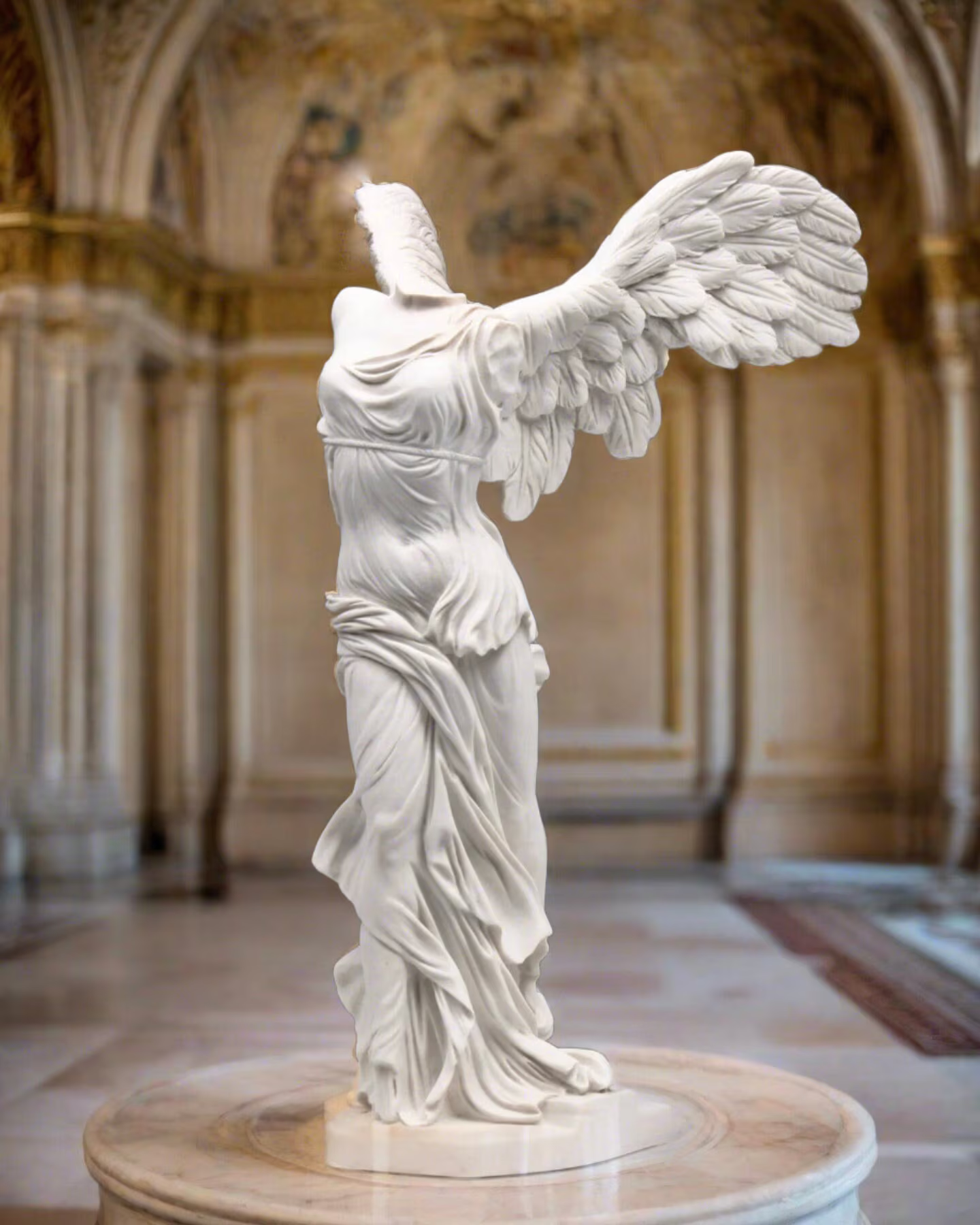
Ancient Rome art vs Greek art
fully clothed males, no hair on men sometimes, older men, ordinary people depicted, not idealized- realism
Verism
truth in appearances, hyper-realisim

Augustus of Primaporta
1st emperor of Roman Empire