Genetics Exam 1
 Call Kai
 Learn
Learn Practice Test
 Spaced Repetition
 Match
Match Flashcards
 Knowt Play
1/106

There's no tags or description
Looks like no tags are added yet.
Name | Mastery | Learn | Test | Matching | Spaced | Call with Kai | Chat |
|---|
No analytics yet
Send a link to your students to track their progress
107 Terms
true-breeding
used in parental generation because it allowed for results to be reproduced because parent plants in every experiment would always have the same genotype
blended inheritance theory
explain what physical traits are passed from parent to progeny
progeny should have intermediate phenotype (a mix) somewhere between that of both parents
example
a cross between a small dog and a large dog would yield all medium sized dogs
reciprocal cross
addressing that the male gamete or parent who creates male gamete, contributes to it more somehow to the phenotype of the progeny than the female parent does
this experiment suggests that each parent is equally contributing to the progeny and the phenotype the same amount
swap which parent is carrying which gene
monohybrid cross
h = always crossing 2 homozygous parents to get heterozygous offspring in F1 generation
m = looking at one trait
used to examine the inheritance of a single trait over a generation
3:1 ratio
dominant trait
dominant trait is displayed in F1 generation when starting with true breeding parents
recessive trait
displayed only in the F2 generation
small number of individuals in F2 generation
theory of particulate inheritance
traits are determined by discrete units that are inherited intact through generations
inherited from on generation to the next, in other words
each individual has 2 particles in genotype, but they pass only 1 particle on to progeny and that way you can produce progeny that also has two particles
every parent has 2 particles which give rise to a phenotype and each parent passes just one of those particles onto the progeny
principle of segregation
when a parent makes gametes, those 2 particles must segregate or separate from each other so that only one particle is present in the gamete
a gamete from each parent comes together to create the progeny
sum: the idea that these particles, these genes have to separate from each other and then we create 2 different gametes. gametes can form in equal frequency
every individual has 2 particles
must separate so each parent can create 1 particle or one copy of every gene
happening during anaphase 1 of meiosis
homologous chromosomes separating from each other during gamete formation
test cross
taking unknown individual (individual with dominant phenotype) and crossing it to a homozygous recessive individual
back cross
depends on genotype and type of parent and F1 generation but not always true
chromosome
physical structure that carries genes
double-stranded DNA molecule containing genetic information (genes) arranged in a linear sequence
in eukaryotes, contains DNA, RNA, and proteins
in dispersed state (called chromatin) throughout nucleus during most of cell cycle
coils up and condenses during MEIOSIS and MITOSIS
cells is getting ready to divide, DNA begins to condense and starts to form a linear structure
centromere
constricts region that happened somewhere a long to the length of chromosome
no genes in this region
contains highly repetitive DNA and it provides a binding site for the proteins that are going to be important when the chromosome has to move during mitosis or meiosis
telomere
at the ends, no genes in region → just highly repetitive DNA

metacentric
centromere in center of length of chromosomes
sub-metacentric
centromere is slightly toward one end of the chromosome

acrocentric
centromere is moving closer to the end of the chromosome
p arm
shorter arm
q arm
longer arm

telocentric
centromere is essentially all the way at one end

ploidy
number of sets of chromosomes
somatic cells
gametes have half as many chromosomes as __
homologous chromosomes
same length
same centromere placement
same genes
not necessarily same alleles
not identical
2 copies
same length centromere placement but will no be identical because they wont have the same alleles
form of gene
both will be the same chromosomes but they will not necessarily be identical
mitosis
parent cell (2n) → two daughter cells, each 2n
summary
1 division
1 cells → 2 cells
identical daughter bodies
creates somatic cells
meiosis
parent cell (2n) → four daughter cells, each n
summary
2 divisions
1 cells → 4 cells (non identical)
creates gametes
a single cell creates 4 non-identical gametes
cell cycle
G0: non-dividing phase
G1: 1st gap or growth phase
S: DNA synthesis
G2: 2nd gap or growth phase
M: mitosis phase
note
G1, S, G2 = INTERPHASe
DNA is diffuse through the whole cell
G0
non-dividing phase
cell is in stable state at constant size
G1 phase
1st gap or “growth” phase
proteins needed for cell divisions are made
making the proteins it needs so it can
S phase
DNA synthesis or being made
all chromosomes are duplicated
we are copying all the chromosomes in the cell
necessary because when the cell divides 2 daughter cells are created and each one has to have the same number of chromosomes
starting cell must DOUBLE the number of chromosomes before division happens, otherwise it would be impossible to create those 2 equal selves
cells MUST go through this phase (chromosomes are replicated) before mitosis
G2 phase
2nd gap or “growth” phase
the cell is rechecking all of the DNA that just got synthesized to make sure it’s okay and then preparing to go through and do division
M phase
mitosis phase
cell division
DNA is going to start to condense and form the linear chromosomes
interphase mitosis
DNA is diffuse during this phase (G1, S, G2) in nucleus

counting chromosomes
count number of centromeres
counting chromatids/DNA molecules
count the telomeres on one end
prophase mitosis
chromosomes condense
mitotic spindles form (outside of nucleus)
nuclear envelop breaks down
mitotic spindles are important for attaching to the chromosomes, holding the chromosomes in the center, and then ultimately for pulling chromatids apart from each other
4 chromosomes and 8 chromatids or DNA molecules

metaphase mitosis
microtubules from spindle pole attach to each chromosome at centromere
chromosomes are moved to metaphase plate in center of cell
= ORGANIZATIONAL PHASE
chromosomes are lining up at the center of the cell on the metaphase plate
they are held together by the microtubules that are extending from the spindle pulls on either side of the cell
they are lining up in one line down the middle
microtubules are extending and attaching to the centromeres
what is holding all the chromosomes together

anaphase
ACTION
sister chromatids are going to pull apart from each other
proteins holding sister chromatid centromeres together are degrades
sister chromatids separate (disjoin)
sister chromatids move to opposite spindle poles
problem that can occur
nondisjunction
for failure of the chromatids to separate from each other
chromosome number in cell has now DOUBLED, still one cell but more chromosomes present (more centeromeres)

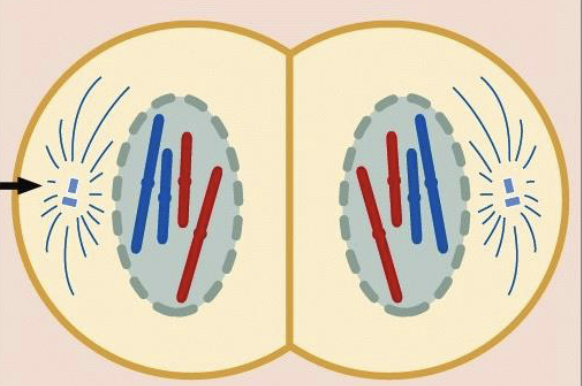
telophase
nuclear envelope reforms around each daughter nucleus
chromosomes uncoil or relax
spindle disappears
then cytokinesis (cytoplasm divides)
at the same time essentially
result = 2 GENETICALLY IDENTICAL CELLS
clones and identical to the original cell
meiosis
process that leads to gamete formation
4 haploid cells are produced from 1 diploid cell
4 unique cell that has 1 copy of every chromosome
2 divisions
remember: cell goes through S phase (chromosomes replicate) before meiosis
go through G1, S, G2 before we start dividing
every chromosome consists of 2 chromatids
mendels theory of particulate inhertiance
every parent has 2 particles and will pass one particle onto their progeny
progeny then has 2 particles
particles = chromosomes
every parent has 2 copies of each chromosome and will pass 1 copy of chromosome to their progeny
gametes are the cell that contain one copy of every particle
this is the process of creating those gametes
prophase 1
chromosomes condense
homologous chromosomes pair (synapse)
homologous find each other
crossing over may happen (recombination)
when homologous find each other and pair up, we can have crossing over or recombination
diploid

leptotene
“thin thread”
condensation begins of chromosomes
chromosomes begin to condense and become more tightly packed

zygotene
“paired thread”
synapsis begins
homologous find each other and line up
red copy find blue copy and will align

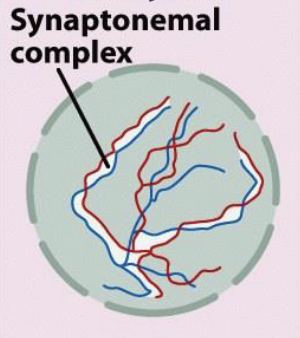
pachytene
“thick thread”
condensation continues
recombination = equal exchange of chromosomal material between two homologous
linear structure is appearing to be thicker as the chromosomes condense more and more DNA condenses more
has the synaptonemal complex
where recombination is going to happen
diplotene
“double thread”
synapsis breaks down
chiasmata keep homologs joined
contains the
chiasmata
places where crossing over happened
bivalent or tetrad
refers to the fact we have 2 homologs
if we have homologs pair lined up with each other, there are 4 sister chromatids
4 sister chromatids = 2 chromatids from one homolog and one from the other
summary
synapsis breaks down
homologous are coming apart from each other but they are going to be held together by protein complexes that are present along the length of the chromosome everywhere where recombination happens

diakinesis
“moving apart”
homologous pairs are held next to each other but there are places where there is crossing over
equal exchange of chromosomal material

homologous recombination
DNA synthesis happens during this
process of cutting, destroying some DNA and synthesizing more DNA has to happen during this whole event
crossing over between homologous chromosomes
one sister chromatid from each homolog participates in a single cross-over event
prophase 1
chromosomes condense
homologous chromosomes pair (synapse)
crossing over happens (or not)
happens along the length of every chromosome as the homologous piar
random event, will not always happen and will not always happen in the same place every time

metaphase 1
each pair of homologs takes up a position on metaphase plate
homologous pairs lining up
homologous pairs align here (not like in mitosis)
orientation of each pair of homologs with respect to all other is random (independent assortment)
aligns with mendels second law: the law of independent assortment

anaphase 1
members of homologous pairs disjoin and move to opposite poles
each member of the homologous pair is getting pulled to one side or the other side of the cell
sister chromatids are still attached but homologous pairs are disjoining
Mendel’s Principle of Segregation
separating of the particles, the genes on the chromosome and they are separating and segregating from each other so that we can create gametes that will only have one particle

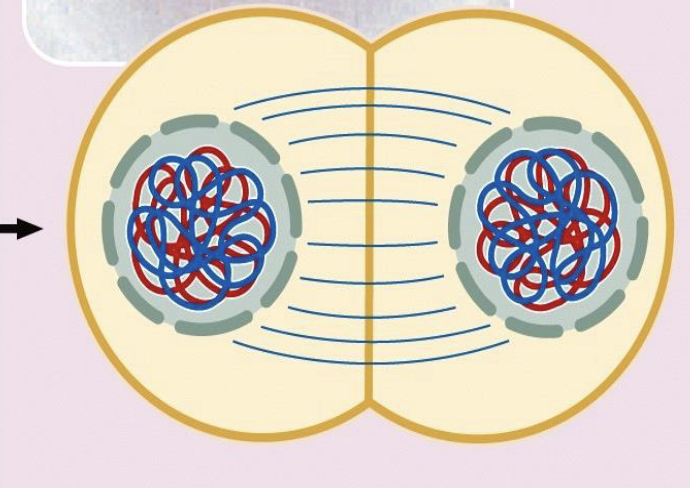
telophase 1
nuclear envelope reforms
interkinesis happens (cytokinesis between meiosis 1 and 2)
dividing up cytoplasm to create 2 separate cells
results in 2 haploid cells
each cell here has only one copy of every chromosome
the reduction division
reduced number of chromosomes in each cell by half
total number of chromosomes in each cell is half of starting number
prophase 2
chromosomes condense
spindle forms
nuclear envelope breaks down
similar to mitosis’s

metaphase 2
individual chromosomes position in equatorial plate
looks like mitosis except that each of these cells has half as many chromosomes

anaphase 2
ACTION = pulling part of sister chromatids
sister chromatids are pulled to opposite poles
chromosome number in cell has now doubled

telophase 2
nuclear envelop reforms
cytokinesis happens
2 cells → 4 cells

meiosis 2 products
results = 4 UNIQUE HAPLOID gametes
n = chromosomes
n = 2
unique because recombination has occured
everyone has one copy of each chromosome but its different because of recombination

principle of independent assortment
when pairs of homologous chromosomes line up on the metaphase plate during metaphase 1 of meiosis, the way one pair lines up has no impact on the way any other pair of chromosome lines up
when we form gametes, pairs of homologous chromosomes will align independently of one another at the metaphase plate
genes on different chromosomes move independently during meiosis during gamete formation
dihybrid cross
allows us to look at the inheritance of two traits over several generations
9:3:3:1
same results as the other one
demonstrates that inheritance of 2 traits are independent from each other
probability is used
what are the chances of pulling out an individual that has certain traits
what is the frequency of that particular trait within my group
what are the chances an event will occur?
event could be choosing an individual of some given trait
not asking for all the possibilities
addition rule
probability that either 1 of 2 MUTUALLY EXCLUSIVE events happens is the sum of their independent probabilities
ALWAYS make sure that the events are mutually exclusive in order to do this type of problem
P (this) OR P (that) → ADD
example
what is the probability of being a sophomore or a senior?
mutually exclusive
one of the events happens then the other event cannot happen
one event PREVENTS the other from happening
examples
turning left and turning right
eating a snack and taking a nap
multiplication rule
probability that 2 INDEPENDENT events happen simultaneously or in a particular order is the product of their independent probabilities
P (this) AND P (that) → multiply
if you can restate the question to be an AND statement, multiply
example
what is the probability of being a female senior
reworded: what is the probability of being a female and a senior
independent events
have no influence on each other so the outcome of one event is not going to impact any other event
binomial expansion
used to calculate P of several events when they can happen in any order
n = total number of events
s = total number of 1st type of event
t = total number of 2nd type of event
a = P (1st event)
b = P (2nd event)
to use this equation, you must be given multiple independent events that can happen in any order
chi-square test
compares observed values (experimental results) with expected values (calculated based on given information and current understanding of the system)
we determine p-value
p-value >0.05
do not reject H0
highly likely the difference is due by chance
p-value <0.05
reject H0 (if the p is low, reject that Ho!)
not likely that the difference from observed and expected values is due by chance, something else is at play
unlikely that is it due by chance
best guess
mode of inheritance where we make the fewest number of assumptions for individual genotypes as we are going through and analyzing
consanguinity
often a clue that trait is autosomal recessive
its mating between related persons

dominant trait in pedigree
1 parent always shows phenotype in every generation
recessive trait in pedigree
skips generations
autosomal trait in pedigree
will see equal numbers of both sexes
both sexes are affected equally
incomplete penetrance
individual has disease allele but does not show trait
can make a dominant trait appear to skip generations
variable expressivity
individuals with disease allele express trait differently
can make a dominant trait appear to skip generations
sex-influenced/sex-limited traits
expression of disease allele depends upon sex of carrier
can be passed on by an individual who does not express trait themsevles
genetic maternal effect
nuclear genotype of the maternal parent
the progeny gets genes for the trait in question from both parents, but the phenoptype that the progeny expresses is not determined by their own genotype but instead are determined by the genotype of their mom
moms genotype dictates phenotype of the progeny
often due to function of proteins very early in development (before the embryo starts synthesizing its own proteins, we are still using proteins from mom)
proteins
function soon after fertilization
stored in egg cytoplasm
made by mom, so based on her genotype
example
shell coiling in snails
cytoplasmic inheritance
cytoplasmic genes, which are usually inherited entirely from only one parent
not all genes in a cell reside in the nucleus
genes that are present in mitochondria, which are cytoplasmic organelles
chloroplasts and mitochondria are cytoplasmic organelles that contain genetic material
mitochondria
in humans, contains 37 genes
thousands mitochondria per cell
up to 10 copies of mtDNA in each
in humans, a trait that displays cytoplasmic inheritance is encoded by genes found in the mitochondria
during cell division, mitochondria randomly segregate into progeny cells
in 1 cell, different mitochondria could have distinct mutations that affect overall phenotype
different cells will have different numbers of mutant mitochondria
from mother to offspring because egg provides cytoplasm
traits are expressed in both males and females
traits show lots of variation
different number’s of mitochondria’s that have mutations
sperm: gives paternal set of chromosomes
egg: gives maternal set of chromosomes and mitochondrial DNA
characteristcs
present in males and females
usually inherited from one parent, usually the maternal parent
reciprocal crosses give different results (just like sex-linked traits)
exhibit extensive phenotypic variation, even within a single family
genomic imprinting
genes whose expression is affected by the sex of the transmitting parent
gene expression affected by whether gene comes from mom or dad
autosomal traits will show different results for reciprocal crosses even though they are autosomal traits
one example of epigenetics
phenotype results from genotype and chemical modifications on DNA that regulate gene expression
progeny gets genes from both mom and dad but the copy from one parent is turned off whereas the copy from the other parent is turned on
mistakes in this in humans:
unusually large at birth; enlarged tongue, liver, kidneys; increased susceptibility to certain cancers; non-mendelian inheritance
chimeric children can result if proper imprinting does not happen in a population of cells during development
if both copies of IGF-2 are silenced, Silver-Russel syndrome results (unusually small body)
example
Igf2 gene
encodes protein that promote growth (embryonic growth)
dad’s copy is expressed
mom’s copy is silenced
conditions that were true for Mendel’s experience
all traits being considered are unlinked
each gene assorts independently
one gene codes for one trait
every gene has 2 alleles
each allele specifies a unique phenotype
1 allele is completely dominant over the other
F1 generation would always look like one of their parents
not necessarily true for all traits
genotype determines phenotype
if an individual has a certain gene, that gene would always be expressed and you would see the resulting phenotypes
complete dominance
phenotype of heterozygote looks like phenotype of homozygote
in other words, the F1 generation resembled one parent (phenotype)
incomplete/partial dominance
phenotype of heterozygote is intermediate between phenotypes of different homozygotes
use R1 and R2 when you don’t know dominance
phenotypic ratio = genotypic ratio
1:2:1 PHENOTYPE ratio
1:2:1 GENOTYPE ratio
codominance
heterozygote has/shows phenotypes of both homozygotes
1 gene
codes for a sugar transferase enzyme (adds sugar molecule onto H antigen)
H antigen is on the surface of all red blood cells
IA codes for A transferase
IB codes for B transferase
i codes for nonfunctional transferase
no sugar at that position
type O blood
IA > i
IB > i
allelic series
any gene may exist in many forms within a population
each individual member of the population only carries two alleles
alleles may form a dominance series
dominance series
properties of an allele in relation to another allele
by looking at different phenotypes of various heterozygous individuals, its possible to sometimes come up with a dominance series which displays the relationship of different alleles with each other
lethal alleles
found in essential genes
can be dominant or recessive
first one studied were recessive
conclusion
first generation must be heterozygous
only way we can observe two different phenotype in progeny
__ must be dominant allele
know this because we see this phenotype in the heterozygote
to determine dominance
look for heterozygote individual and see what phenotype they display
2:1 ratio (deviation from Mendelian ratio)
pleiotropic
single gene influences multiple phenotypes
penetrance
proportion of individuals with a particular genotype that display the expected phenotype
incomplete penetrance
less than 100% of individuals with a given genotype show the expected phenotype
may give a trait the appearance of skipping generations
can allow lethal alleles to persist in a populations
mechanism: individual carrying the allele showing the lethality phenotype but have the potential to pass it on
due to carrying genetic backgrounds and environmental effects
genetic background
all genes within an individuals genome and rest of DNA that regulates expression of those genes
if 75% penetrance means is you looked at heterozygous flies, 75 of them would show lobe and 25 of them would have normal eyes even though all 100 of them are carrying the lobe allele
example
polydactyly
too many digits dominant allele incompletely penetrance
individual could have that allele (heterozygous) and have perfectly normals hands and feet
could pass allele to progeny and the progeny can show the trait
gives the appearance of skipping generations
variable expressivity
phenotype varies among organisms with identical genotypes
variation in the severity of a trait among individuals in population
due to varying genetic backgrounds and environmental effects
example
polydactyly
more fingers than normal but they look normal
others will show a more subtle phenotype e.g. just a little knob or bump rather than a whole extra digit
environmental modification
for many traits, genotype alone does no specify phenotype
environmental conditions can affect phenotype
example
temperature
affects fur color in Himalayan rabbits
oveall body temp is too high
no melanin
white fur
temp at extremities is lower
melanin made
black fur
light
stimulates growth in plants
tanning/freckling in humans
diet
especially important during development
can affect height, weight, brain development/function
gene interactions
genes at 2 or more loci influence the same trait
non-allelic
several genes functioning to influence the same trait → must be on different loci
can lead to
novel/unexpected phenotypes from crosses
often due to cellular function of gene products when they work in a single biochemical pathway
happens when you have several gene products that work together in one biochemical pathway
epistasis
allele(s) at one locus mask effect of genotype at 2nd locus
complementation
crossing two recessive mutants generates wild-type progeny
the examples we considered in class will deal with only two genes, so a deviation from 9:3:3:1 Mendelian ratio in F2 is an indictor (studying 2 genes in a dihybrid cross)
complementation
crossing two recessive mutants generates wild-type progeny
if this happens, the wild-type progeny is going to be shown
2 genes with this if complete
1 gene if this fails
wildtype phenotype displayed in progeny from cross of two recessive mutant parents
cross mutant with a mutant and see wild type in the next generation
test indicates we are dealing with RECESSIVE traits
preform:
cross a mutant with a mutant
if all progeny are the mutant phenotype, then mutations in a strain are in the same gene
get mutant result when crossing mutant x mutant means they are mutant in the same gene
mutant genes are allelic (at the same locus)
if all progeny are the wt phenotype, then mutations in the strain are on different genes
mutant genes are NOT allelic
when crossing mutant x mutant and saw all wt progeny, the mutations must be on different genes
we look at the F1 generation
a single trait is specified by more than one gene
example
we have 3 strains of a flower:
strain 500 is purple (wt color)
strain 501 is white (mutant strain in NJ)
strain 502 is white (mutant strain in HI)
in both strain 501 and 502, white color is recessive trait
confirm by crossing to a homozygous wt strain
look at this trait expressed in heterozygous progeny
how we figure out dominance
novel/unexpected phenotypes from crosses
part of gene interaction
often due to cellular function of gene products when they work in a single biochemical pathway
happens when you have several gene products that work together in one biochemical pathway
we look at the F2 generation
a single trait is specified by more than one gene
example
inheritance of comb shape in chickens
multiple genes affect a single trait
genes at both R and P loci influence comb shape
novel phenotypes observed
dominant alleles at both loci → walnut
recessive alleles at both loci → single (novel phenotype)
epistasis
allele(s) at one locus mask effect of genotype at 2nd locus
genotype at one locus masks gene expression at another locus
dominance and this
the effects of a gene at one locus masks the effects of a gene at a different locus
how do we recognize epistasis?
look for modification of the 9:3:3:1 ratio in the F2 generation, indicates that I am dealing with 2 genes and that we have gene interaction
example
two genes involved in eye color
p = purple; p+ = wt
purple is recessive to wt (red) color
s = suppressor; s+= wt (non-suppressing)
recessive s allele masks effects of genotype at p locus
if s+_, then p locus dictates phenotype
if ss, then p locus is suppressed and phenotype is red (wt)
sex chromosomes
heteromorphic
different shapes
different shapes
act homologous during meiosis
in a male during gamete formation, the X and Y chromosomes have to find each other and line up at the metaphase plate
have pseudoautosomal regions that allow chromosomes to pair during prophase
genetic recombination can occur between X and Y here
a region that will allow those 2 chromosomes to pair with each other
at the telomeres
sex determination in humans
XX/XY system
presence of Y chromosome confers maleness
SRY (sex determining region on the Y) gene
found close to the telomere on the short air of Y chromosome
females are homogametic (XX)
males are heterogametic (XY)

ZZ/ZW system
found in birds, butterflies, fish, some reptiles
males are homogametic (ZZ)
same gametes
males when they go through meiosis will create gametes that are the same
will have one copy of every autosome and one copy of a Z sex chromosome
females are heterogametic (ZW)
different
½ gametes have Z chromosomes and other ½ have W chromosome
sex determination in fruit flies
ratio of # X chromosomes: # sets of autosomes
1 → female
0.5 → male
sterile males
laking the Y chromosome, still develop phenotypically as a male
metafemale:
XXX; AA
1.5
XXXY; AA
1.5
XXXX; AAA
1.3
1.5, 1.3
metamale
XO; AAA
0.33
intersex
XX; AAA
0.67
Y chromosome is required for male fertility, but not for sex determination
nondisjunction
creates gametes that have an incorrect number of chromosomes
an incomplete set or more than one complete set
dosage compensation
corrects for potential imbalance in amount of X-linked gene products present in cells of males vs females
humans have mechanism for this compensation mechanism where expression off of the x-chromosome is dialed down in females
necessary because of unequal number of sex chromosomes in males and females
females have 2 copies of X-linked genes
can be homozygous or heterozygous for X-linked alleles
males have 1 copy of X-linked genes
hemizygous for x-linked alleles because they only have one copy of the x allele so there is not opportunity for masking any alleles
recessive alleles cannot be masked
display X-linked recessive traits more often than females
done in humans (and other mammals) by inactivating gene expression on one X chromosome
X-inactivation
is random
is the decision about which X-chromosome gets inactivated that the part that is random
roughly half of the cells are going to inactivate dads X chromosome and about half of the cells will inactivate moms
happens early in development
results in formation of Barr body (the inactivated X)
every one of those cells in our little ball, one of our X’s are inactivated, could be from mom or dad
leads to MOSAICISM in females, which is seen in fur patterns of tortoiseshell cats
roughly half of every females cells should have moms cell x-inactivated
random early on in life where one chromosome is going to become very, very, very tightly packed so that little to no gene expression happens off of that X-chromosome
after x-inactivation, the cells continue to divide and every time they divide and create 2 daughter cells, those daughter cells are going to have the same X-chromosome inactivated as their starting cell → something that gets passed on through a mosaicism event
example
fertilization event, sperm and egg meet, create one diploid cell that is a zygote and that cell divides and goes through mitosis to create 2 daughter cells, those cells go through mitosis and so on, that is the development of our embryo
mosaicism
~50% of cells in body should have each X chromosome inactivated
in heterozygote for X-linked recessive trait, enough cells expressing “normal” X in every tissue → normal phenotype
if X-inactivation is not random, mild phenotypes may be observed
larger % of cells in body that are expressing one X over the other, might observe X-linked recessive trait
sex-influenced traits
expressed in both males and females, but which allele is dominant is affected or influenced by the sex of the individual
traits which are more common in 1 sex
genes are autosomal NOT sex-linked
being male or female affects whether allele is dominant or recessive
environment of the male or female body that dictates whether an allele will be dominant or recessive
nomenclature is with numbers because we see a different dominance relationship in males vs females
sex-limited traits
expression is limited to one sex
not expressed at all in one sex
extreme examples of sex-influenced traits
genes are autosomal not sex-linked
allele has 0 penetrance in 1 sex
traits are often related to secondary sex characteristics
expression is limited to males, females allele is silenced, regardless to phenotype
if a female is carrying a trait that is limited to males, then it can look like that trait is skipping generation where in fact it is a female carrying the allele but not expressing it