Unit Test Four: senses, endocrine system, and cardiovascular system
 Call Kai
 Learn
 Practice Test
 Spaced Repetition
 Match
 Flashcards
 Knowt Play
1/149

There's no tags or description
Looks like no tags are added yet.
150 Terms
Function of senses
They allow us to detect the natural world
How do senses work
The electrical signals are sent to and interpreted by the brain
What are general senses
Sensory information from body surfaces (feel, temperature)
What are special senses
Sensory info about specific things inputted from special organs (eyes, tongue, nose)
Senses can detect:
Chemicals, Radiation, or Movement
What are proprioceptors?
They’re in the joints to give movement and balance input
General sense - measures movement

What are contact receptors?
In the skin for contact input.
General sense - measure movement
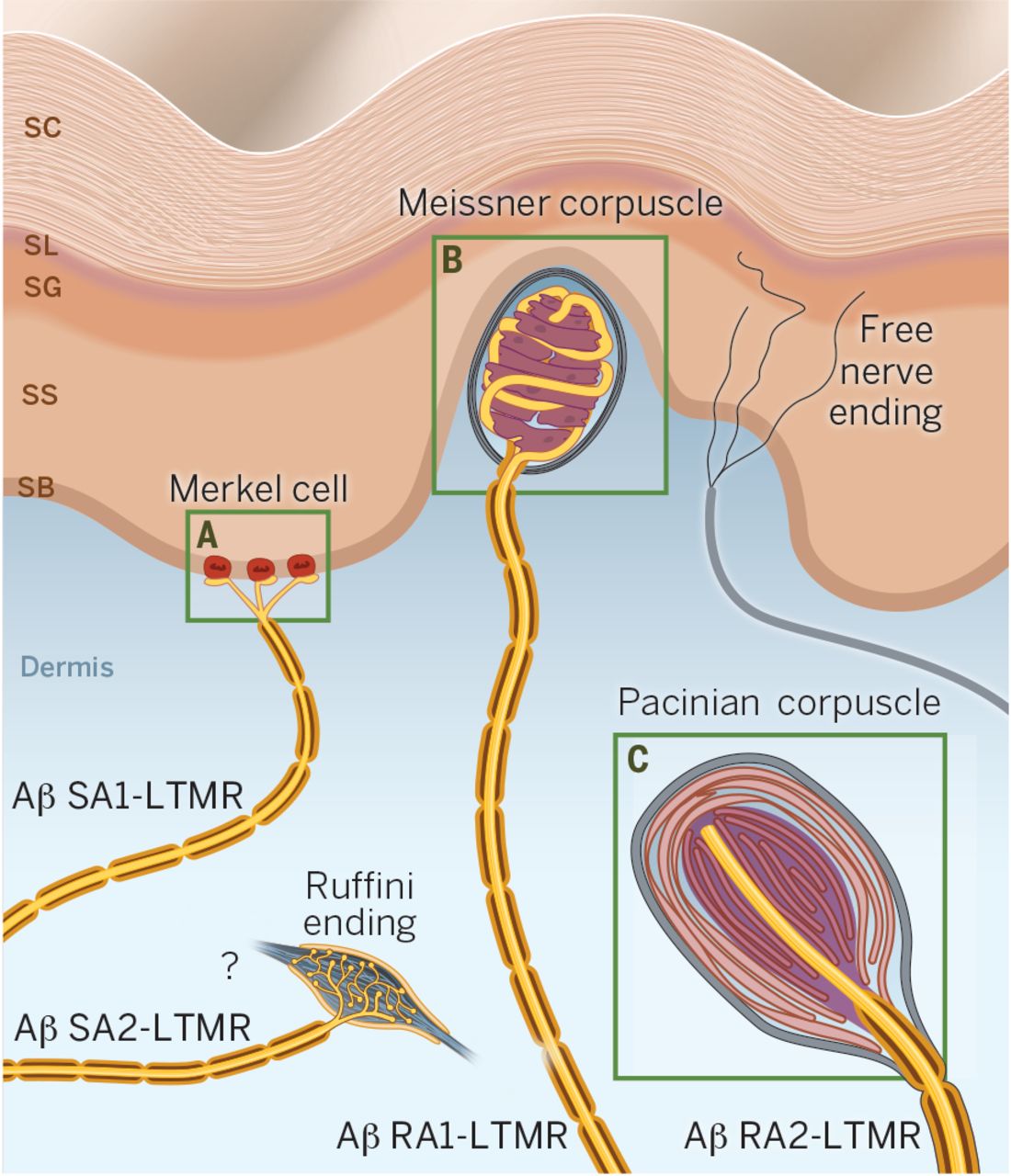
Hair shaft receptors
Near the hair to sense movement (hair root plexus in picture)
General sense - measure movement

Baro receptor
Sense pressure on body surfaces in organ walls (stomach, etc.)
General sense - measure movement

Thermoreceptors
In skin to sense temperature (there are more cold than heat). Specialized free nerve endings according to internet.
General sense - Detect radiation

Nociceptors
Specialized free nerve endings that detect pain and cell damage chemicals
General sense - Sense chemicals
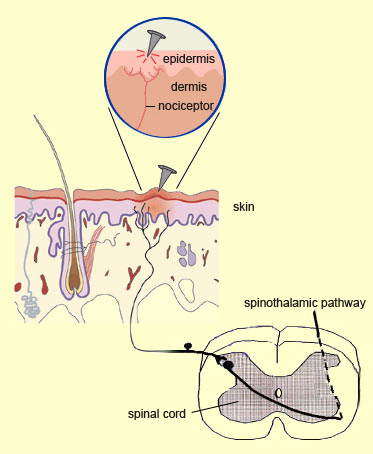
Chemoreceptor
In blood vessels to sense O2 and CO2 levels. In nervous system to sense CSF
General sense - Sense chemicals

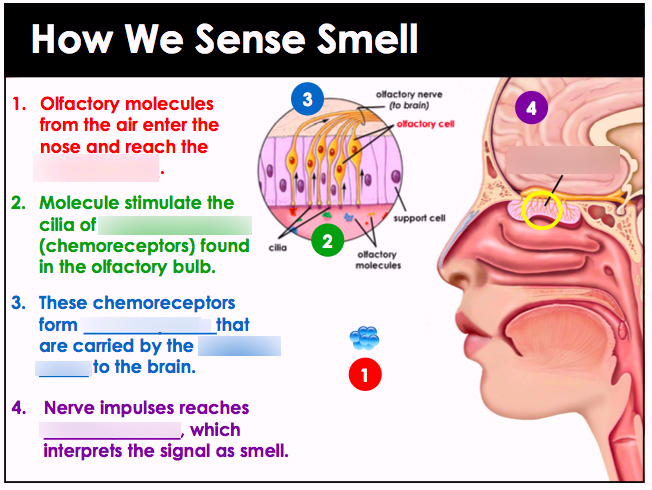
Olfaction
Smelling with the nose by detecting chemicals in the air

Olfactory epithelium
Where the nerves are/between nerves on nasal cavity side of cribriform plate

Cribriform plate
holes in the ethmoid bone where Olfactory nerve innervates

Olfactory bulb
Where Cranial nerve I (olf nerv) ends, above cribriform plate and below frontal lobe.

Olfactory cotex
where smell info is processed

Gustation
Detecting chemicals in the oral cavity with tongue (taste).

Olfactory Cilia
Branches off of epithelial cell area where the nerves attach to odor molecules

Where is the mucous layer in the olfactory sensing area
on the nasal cavity side of the epithelium where olfactory cilia are
how does olfaction work
A odor molecule/chemical enters the nose and eventually connects to an olfactory cilia with the protein with that specific shape to bind with on it. This is sensed and travels through the neural cells in the epithelium to the olfactory bulb on the other side of the cribriform plate. This goes to cranial nerve I and the olfactory cortex.
that’s all :)
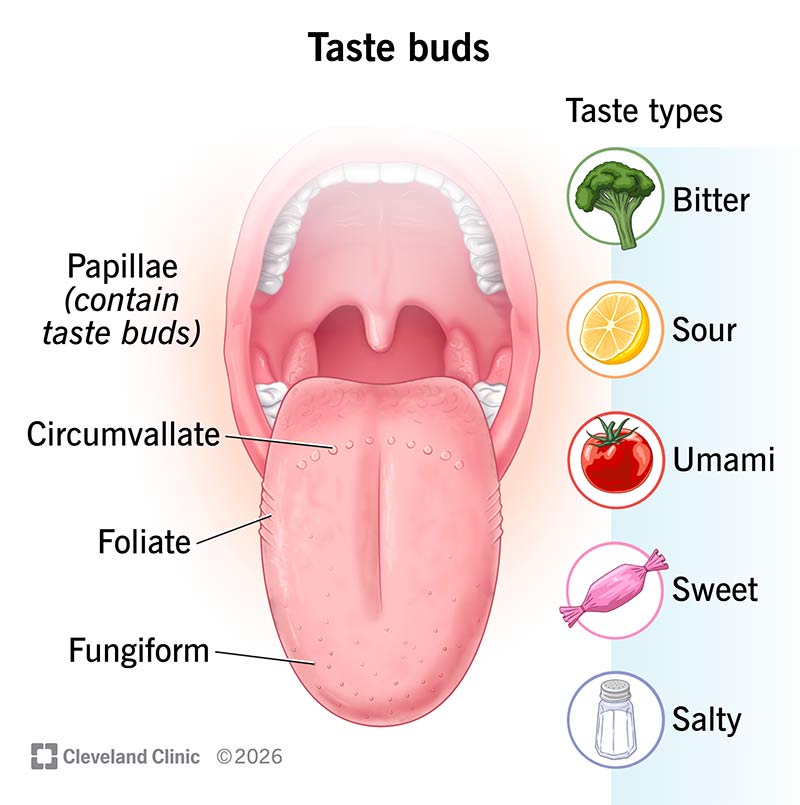
Tongue anatomy
Has papilla with trenches and taste buds with hairs in the trenches

Sweet taste
Carbohydrates

Salt taste
Electrolytes

Bitter taste
alkaline/basic, plant toxins

Sour taste
Acidic stuff

Water receptor
Detects water entering the body (in the pharynx)

Umami receptors (OoooooOOOooOOooo mammi!)
Detects animal proteins (at the base of the tongue)
What is capsaicin
Gives a hot/pain sensation when ingested or tough like eyes and stuff ts

Auditory system
For hearing with your ears, detect pressure waves as they travel through da aiiiirrrr

steps to hearing
auricle- cartilage funnel captures sound
Auditory canal - tunnel with ceruminum (earwax)
Tympanic membrane - solid film to vibrate and turn pressure from a gas to a solid
Auditory ossicles - bones that amplify the sound
Stapedius muscle
Inserts on the stapes base, contracts to prevent the muscles from vibrating too much to keep the ossicles and inner ear from significant damage (from big boom bang bang noise).

Tensor Tympani Muscle
Inserts on the malleus, contracts to prevent the muscles from vibrating too much to keep the ossicles and inner ear from significant damage (from big boom bang bang noise).

What do Vestibules and the Semi-circular canals do?
Give you a sense of balance - avery’s must not have been working before study hall today
Why there 3 semi-circular canals?
There are three of them, one for the y axis, one for the x axis, and one for the z axis

What do the semicurcular canalalalallaaals doooodooo???
Dey let the brain know its head orientation and movement through the movement of gel at the base of the tubes as hair cells sense movement

What is cupula
A gel area at the base of the tubes, has hair cells to sense movement/rotation

What is the vestibule for? How does it do it?
Gravity detection - has gel beds with hair cells and otolith crystals that depress gel
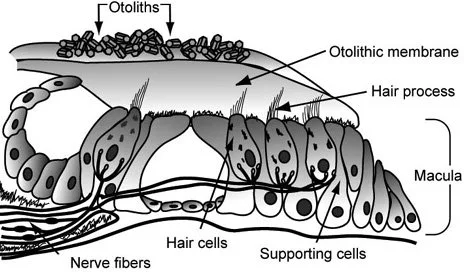
Oval window
Where the stapes attaches to the vestibular duct in the cochlea, where vibrations can dissipate,

What is vertigo
When you feel like spinning because otolith crystals pile up

Round window
Indentation in the start of the auditory tube, where vibrations can dissipate

do vestibule and tympanic duct have fluid
Si yes dey dooo doo

Organ of corti
in the cochlear duct, has hair cells that are activated by the vibrating fluid of the vestibular and tympanic ducts
Converts mechanical sound vibrations into electrical impulses for da brain

How does the cochlea change diameter
The spiral’s diameter changes to let us hear different frequencies, the fluid and diameter are optimized in these spots for these frequencies
Higher frequency = outer
Lower frequency = inner

how does cochlea change with age
You lose hearing from the outer cochlea to inner, lose higher frequency, can’t tell direction of sound
How do big boom boom noises hurt ya ears
They can cause your hair cells to vibrate so much they break off. Hair cells can also be damaged into the “on” state too. Mumps can damage the cochlea

What is vision?
Detecting radiation reflecting off of surfaces
What is the electromagnetic spectrum
Radiation from low to high energy with only a small part that is visible to us

What are your natural defenses for your eyes???
Ya:
eyebrowz
eye lashez
eye lidz
What do eyebrows do
Collect sweat from your forehead so that salt doesn’t scratch your cornea
What do eyelashes do
Clears nearby air of particles that would scratch when you blink
What do eyelids do
A physical barrier/cover that spreads tears across the eyes when you blink
What are your eye crusties
The material your lashes catch
What is the lacrimal system
Crying bruh

Where are tears produced?
the lacrimal gland in the Superior Lateral Area of Both eyes

What are the lacrimal gland ducts for?
They take tears to the eye

What happens to tears every time you blink
The tears move from lateral to medial to the medial canthus

What are the superior and inferior lacrimal punctum
in the medial canthus, holes drain tears into sup/inf canaliculi

Superior and Inferior canaliculi
Tubes that Connect the punctum to the lacrimal sac

Lacrimal sac
Where tears collect

Nasolacrimal duct
It’s in the name- connects the lacrimal sac to the nasal cavity so tears can empty there. It is in the lacrimal foramen in the lacrimal bone

How do we cry
When tears are overproduced, so they flow over the eyelid because the medial canthus can’t drain them fast enough

Why do we cry
Pain, emotional pain
Sunrise on the Reaping

T/F anything on the surface of the eye gets into the pharynx
Tru: some ppl even say they can taste their eyedrops on their eyes
What is an astigmatism
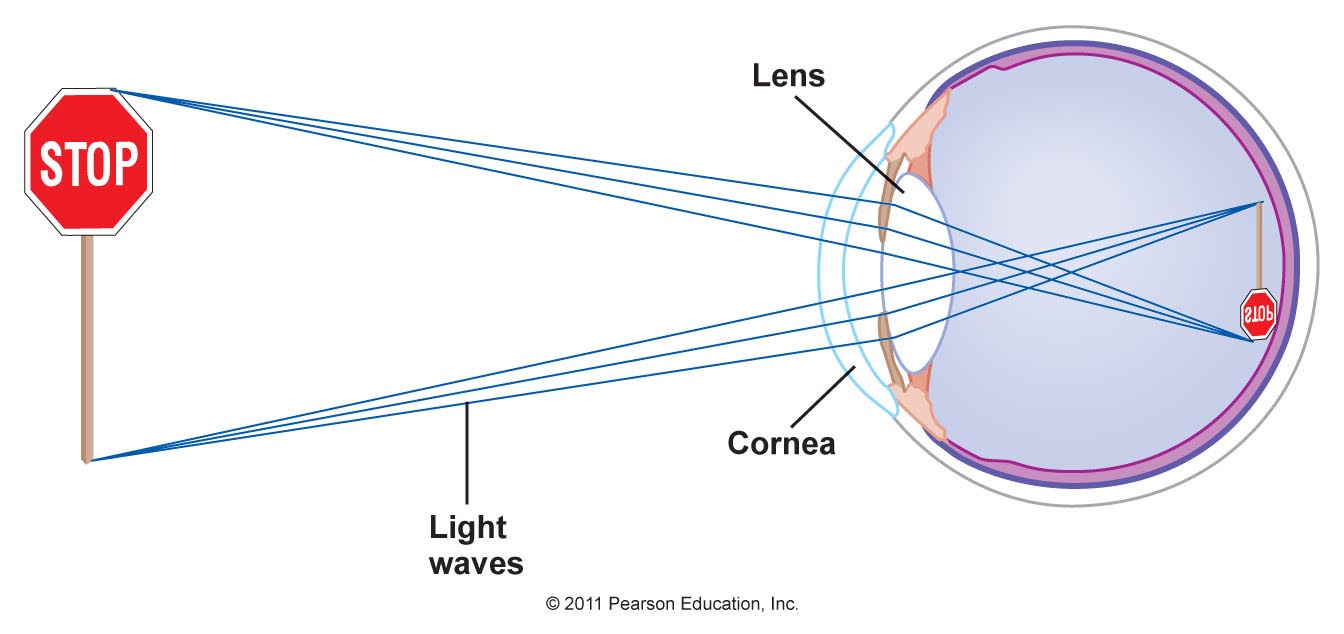
Your cornea is uneven so your cornea can’t focus light efficiently

Cornea
First thing light hits in your eyes, is curved to help focus light/bend it onto your pupil

Iris
Ring of muscle around d pupil, the colored part of the eye

Pupil
Hole in the iris into the eye, black

Pupillary constrictors
Muscles that constrict the pupil to be smaller

Pupillary dilators
Muscle that dilates the pupil to be bigger

What do pupils do in low light
They involuntarily dilate (get biggah), the constrictors relax and the dilators contract
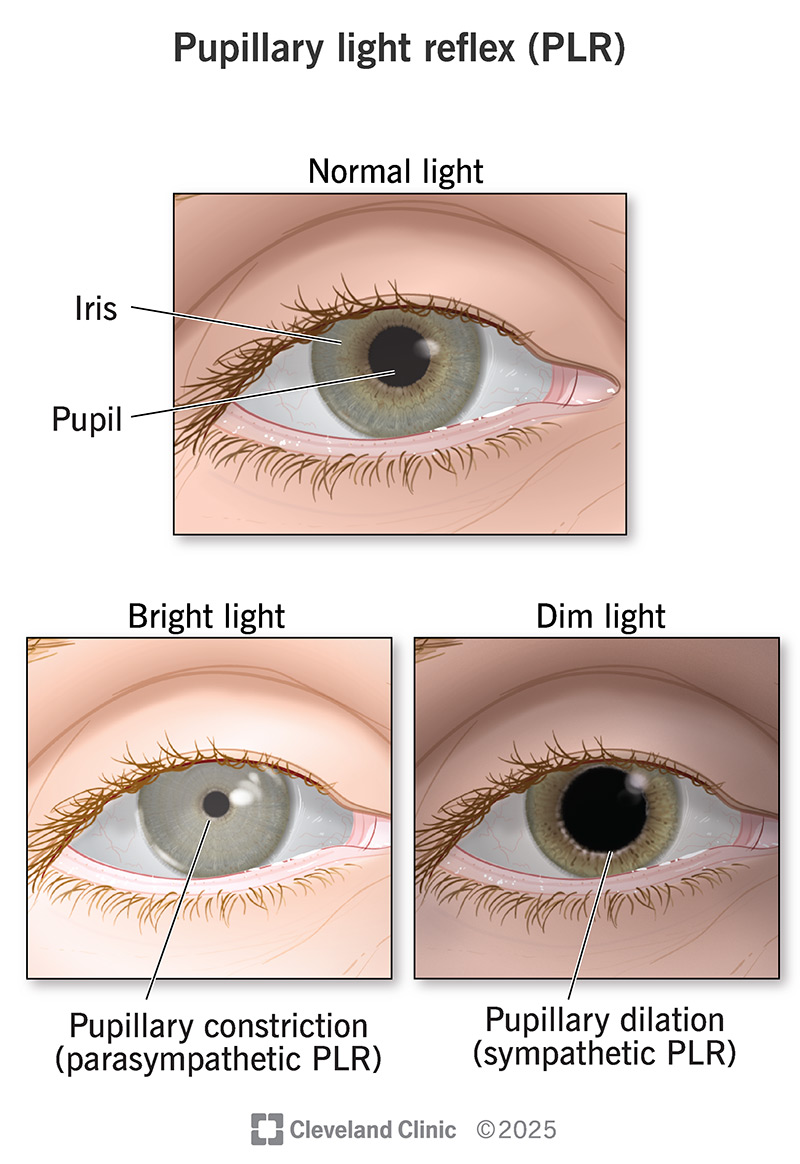
What do the pupils do in high light
They involuntarily constrict (smallah), constrictors contract and dilators relax

What makes up the anterior cavity?
The aqueous humor and lens

what is in the fluid aqueous humor
A thin fluid that circulates around and provides nutrients to the cornea. It is produced in the ciliary bodies, circulates around the lens, thru the pupil, thru the deep side of the cornea, and exits in the canal of SCHLEMM

What is the lens
a flexible, clear, colorless structure that distorts to focus light on the retina. It is behind the pupil

What is a myopia
An issue with the lens where you can focus on things up close, but not at distant things (near-sighted)
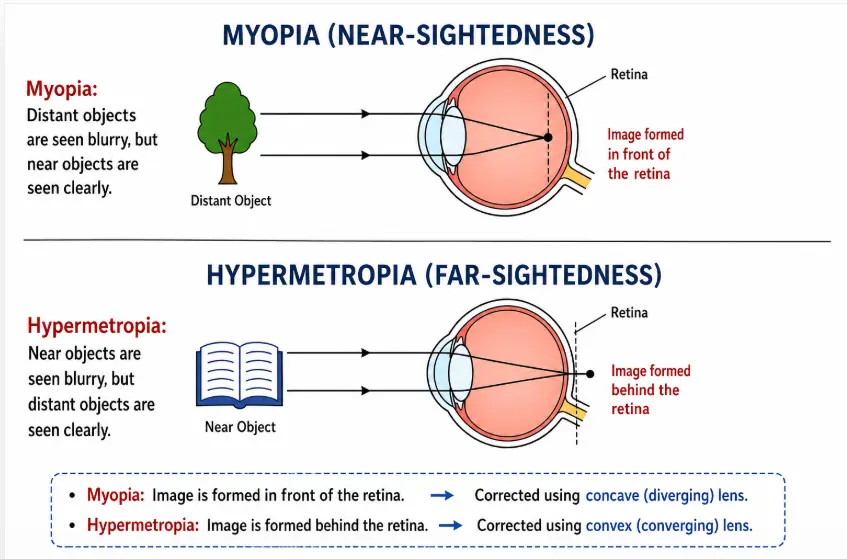
What is a hyperopia
An issue with the lens where you can focus on things distant to you, but not at close up things (far-sighted)

what is a presbyopia
A myopia (near-sighed) due to age

What is in the posterior eye cavity
the vitrous humor in the circle part of the eye (retina…)
What is in the vitrious humor
it is a clear, colorless, thick, jelly-like fluid in the posterior eye cavity. Helps the eye hold its shape.

What are floaters?
bits of tissue or waves in the vitrious humor that puts shadows onto your retina

What is the retina
It is on the inner portion of the posterior eye that detects light. it has light detecting cells: rods and cones

What are rods
They detect black, white, and grayscale. They only require low light levels to work (so lowkey nightvision). Give contrast to your vision.

Where r rods?
They’re everywhere except for the optic disc and fovea centralis
What are cones?
They detect colors. You NEeD bright light for this. The cones give vision the high definition and resolution. The types of cones are
Red cones
Green cones
Blue cones

Where r cones?
Everywhere except for the optic disc. They are most highly concentrated at the fovea centralis.

What is it when you r tetrachromatic
When someone (women) has a fourth cone type and they can see more colors than normal ppl
what is red/green colorblindness
When you have less red and green cones, so you can’t tell the difference between red and green colors.

Purple/blue colorblindness
Less blue cones? I think, im pretty sureee
but like this pic is a lil bit hard to see, i thinking it is a 9

What is the fovea centralis?
Where your vision is the most focused, because it has lots of cones and no rods. Your eyes try to focus light there the most

What is da optic disc
where ya optic nerve goes into ya eyeball

What is the function of the endocrine system?
Chemical communication in the body
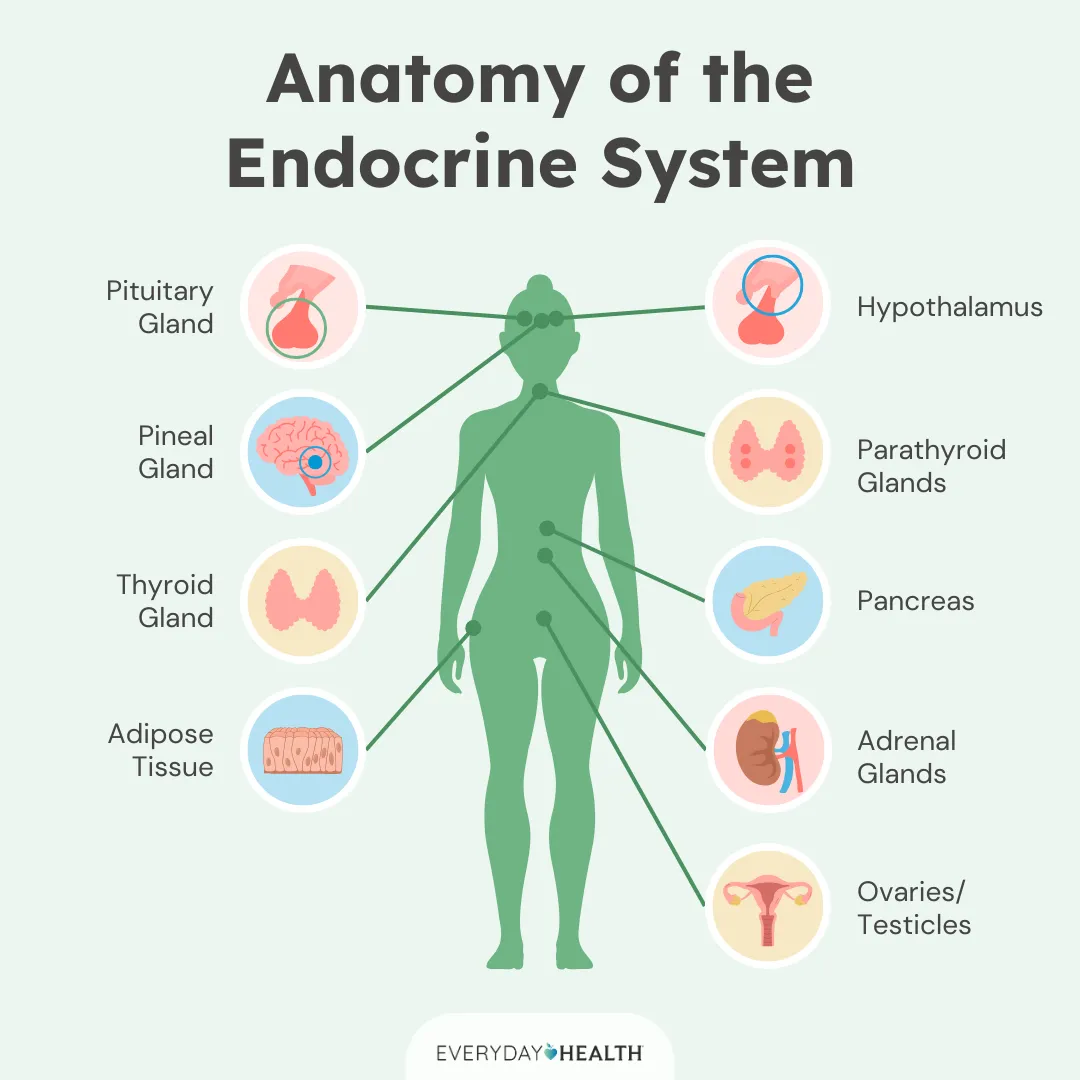
Where is the pituitary gland
It is attached to the hypothalamus via the infundibulum, and sits in the sella turcica in the sphenoid bone.

What does the pituitary gland do
it acts as a “translator” between the nervous system and the endocrine system
Pituitary hormones
Growth and other stimulating hormones:
Growth hormone (GH)
Thyroid Stimulating hormone (TSH)
ACTH
FSH
LH
PRL
MSH
ADH

Where is the pineal gland
Posterior to the thalamus in the brain
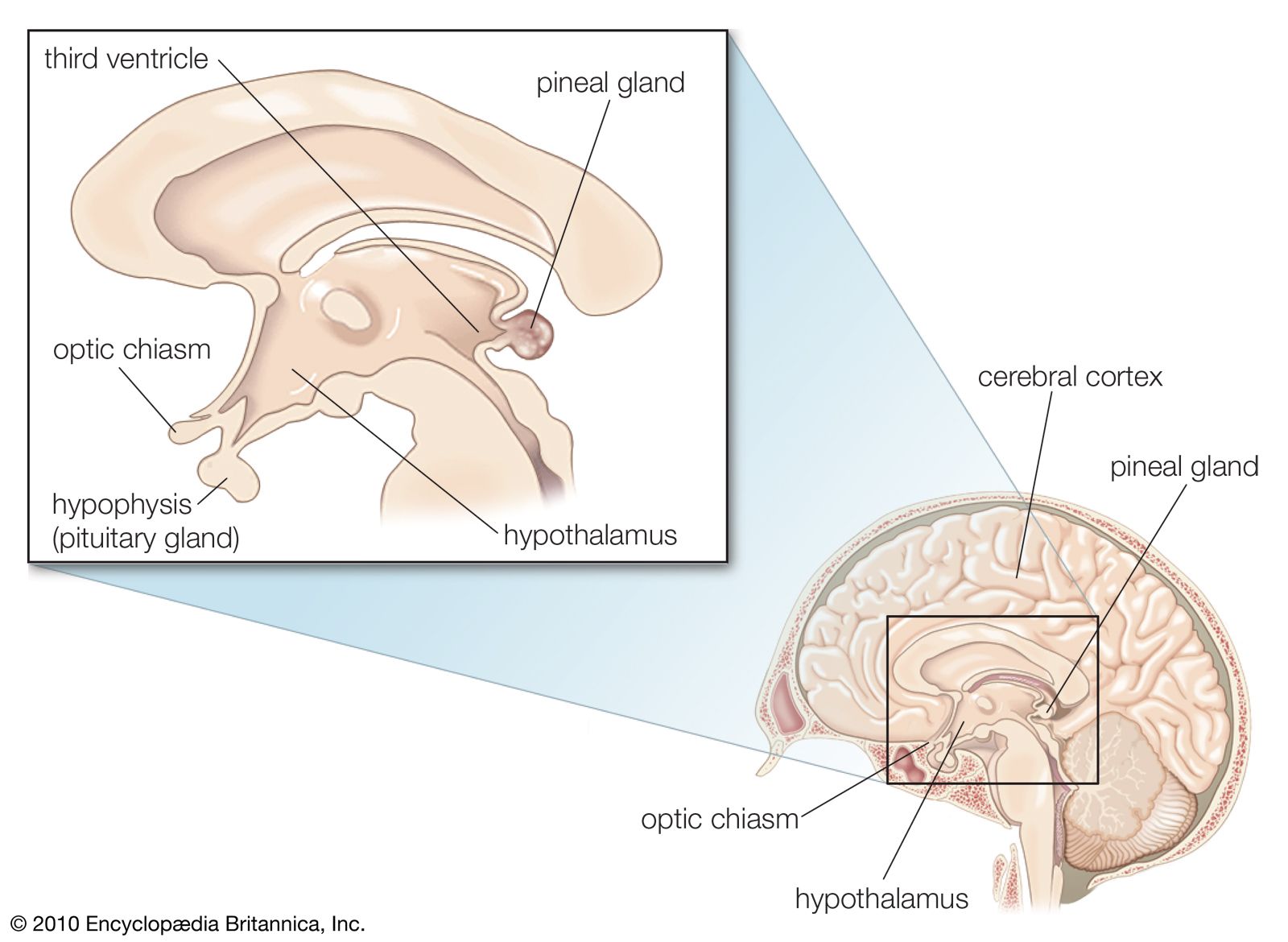
What is the pineal gland for
It is involved with the hormone melatonin
Melatonin
Controls sleeping/waking cycles, aka your circadian rhythm
You want to wake up and fall asleep at the same time every day
Jet lag
when the brain’s perception of sunrise and sunset is altered

Non-24 hour syndrome
You don’t have a 24 hour schedule (often blind ppl), need meds to fix this
