NSBV 1001 FALL 2026 Attention and working memory PART 2 for EXAM 3
 Call Kai
 Learn
 Practice Test
 Spaced Repetition
 Match
 Flashcards
 Knowt Play
1/50

There's no tags or description
Looks like no tags are added yet.
51 Terms
What is circadian Entrainment?
Periods of sleep and wakefulness become entrained (synchronized to light cues).
Nocturnal hamster is active at night.
Can flip cycle by having lights off during the day and on at night.
What is Attention? How does it differ from alertness?
Alertness - is our current level of sensitivity or responsiveness to environmental cues.
Attention - refers to how we actively process specific information present in our environment.

Norepinephrine Neurons play a Key Role in Alertness:
Norepinephrine neurons that originate in the locus coeruleus (LC) are important in alertness.
They send widespread projections which release norepinephrine from their axon terminals (blue arrowheads).
As a result, when arousing stimuli activate the LC, many brain areas are alerted at once.

Norepinephrine increase the response of neurons to environmental stimuli:
When the LC releases more norepinephrine the somatosensory neuron responds strongly to paw touch.
Increased norepinephrine levels increase the neuronal response as soon as the paw is touched and reduce background activity increasing the signal to noise and detection of stimulus.
Attention is..,
How we actively process specific information present in our environment.
What is inattentional blindness?
The failure to notice an unexpected, fully visible object or event because your attention is intently focused on something else.
Your brains selective attention acts like a spotlight and filters out unrelated details.
What is change blindness?
The failure to notice a substantial change between a previous state and current state in your environment.
Your brain fails to compare “before” and “after” images across working memory.

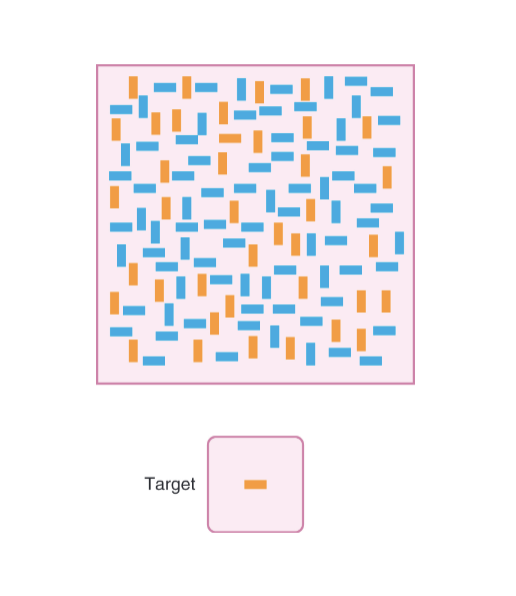
Salient stimuli draw our attention (pop out)!.
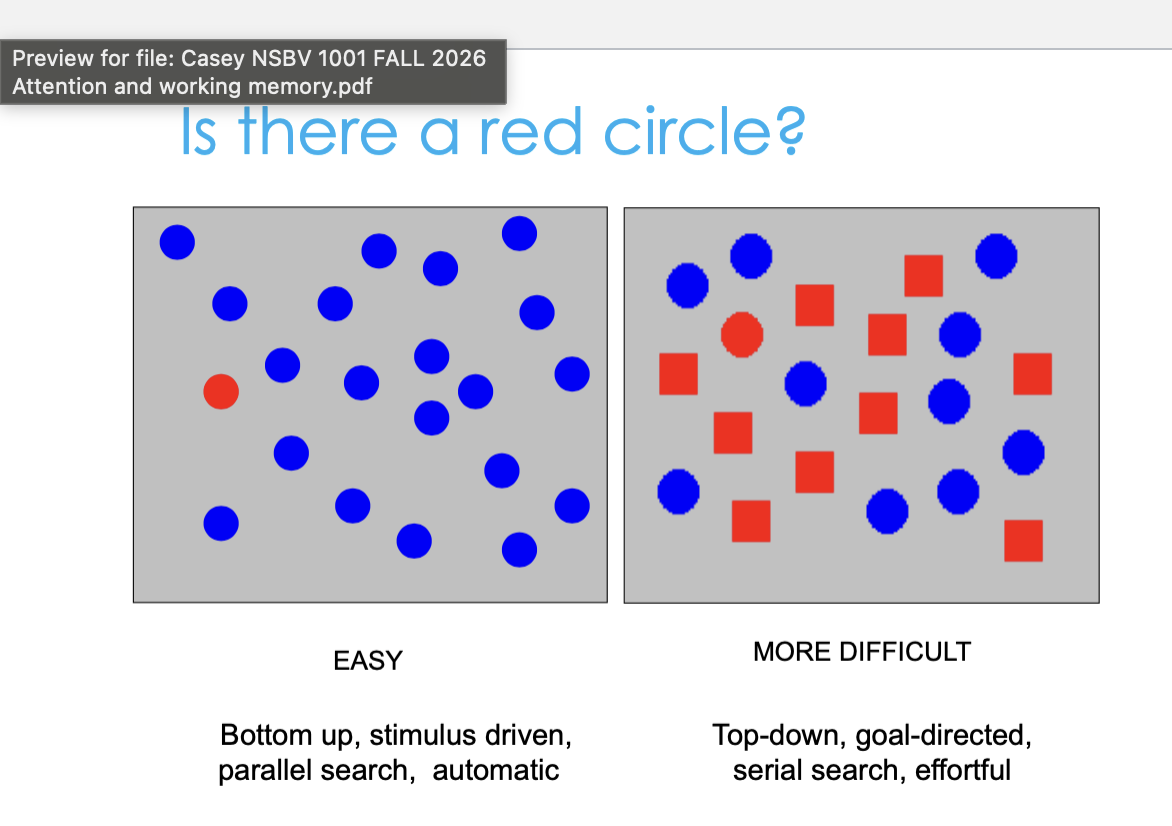
Stimuli that are physically salient engage an automatic and involuntary process known as stimulus-driven or bottom-up attention.
A salient stimulus is an item that pops out from other items in a display due to its distinctive color.


Goal-directed or top-down attention is serial and directed towards stimuli that are relevant to current goals.
Goal-directed attention searches item-by-item serially to find the goal object (target).
The target does not pop out from the background stimuli.
What is feature-integration theory?
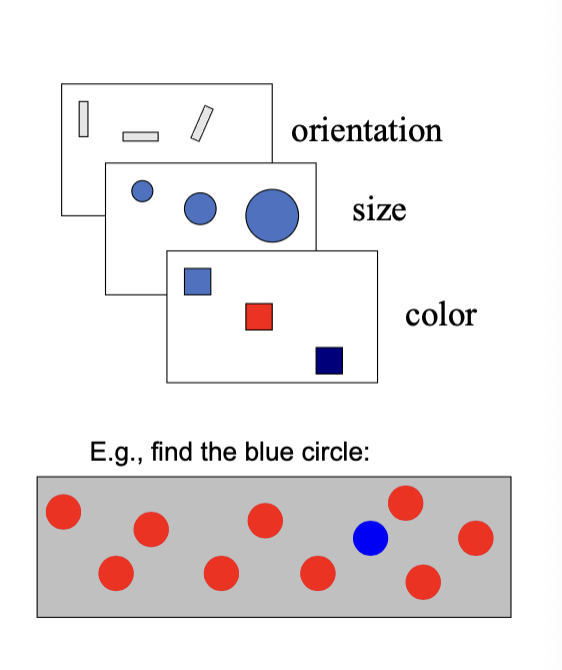
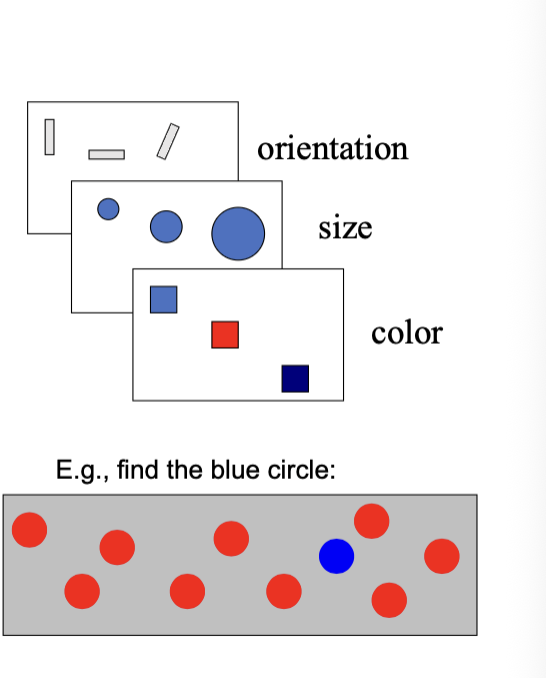
Visual search is easy (“pop out”) when it involves only a single feature - no attention is required.

What is conjunction search?
Visual search becomes more difficult when conjunctions of features are involved:
e.g., is there a red circle?
So when have to integrate across features represented in the brain (color, shape, orientation, size) requires directed top down attention.
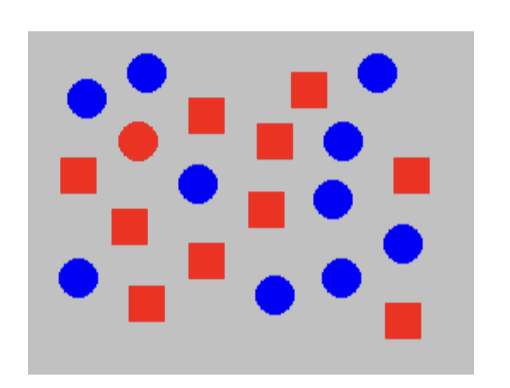
What is serial search?
Assumption that items are examined one at a time.
Search terminates when the target is found OR all items have been examined.


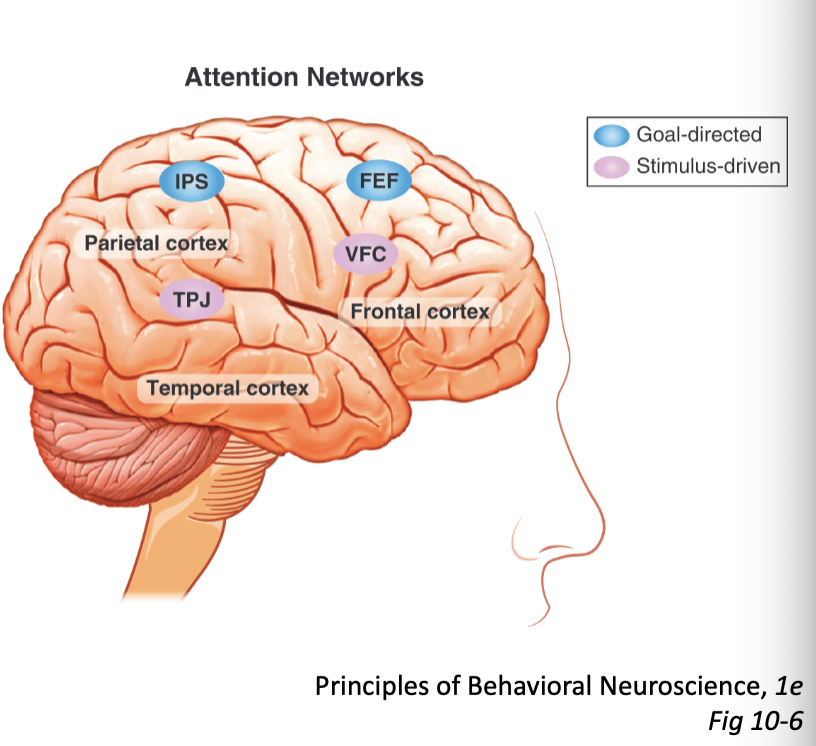
Distinct Brain Regions are activated during Goal-Directed and Stimulus-Driven Attention (INFO)

What does stimulus-driven visual attention activate?
Activates the temporoparietal junction (TPJ) and ventral frontal cortex (VFC).

What happens during goal-directed visual attention?
Visual information is processed by a network that includes dorsolateral prefrontal cortex (dIPFC), the intraparietal sulcus (IPS) and frontal eye fields (FEF).


Disorders of Visual Attention are (2 of them):
1) Neglect
2) Extinction
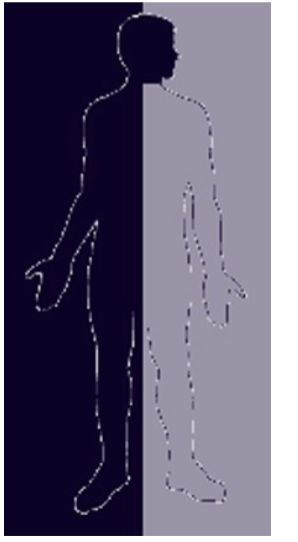
What is neglect in the context of disorders of visual attention?
Failure to acknowledge objects in the field contralateral to the lesion and may not shave, apply makeup, or dress left side of body.
What is extinction in the context of [milder cases] disorders of visual attention?
May detect a single stimulus presented to contralateral visual field, BUT fails to detect the same stimulus when another stimulus is simultaneously presented to ipsilateral visual field.

What do individuals with visuospatial neglect ignore?
Objects towards the side of space contralateral to their brain lesion.
The drawing of patients with damage to the right hemisphere often…
demonstrate a failure to attend to stimuli in the left visual field.


What is the neuroanatomy of Neglect?
Lesions in the posterior parietal cortex, particularly the inferior parietal lobe (IPL) or tempo-parietal junction (TPJ) and typically in the right hemisphere.
But damage to prefrontal and subcortical regions like the thalamus and basal ganglia, can contribute to neglect.r


What is Anosognosia which 10% of people with hemniglect have?
The denial of their deficit.
What is attentional control?
The ability to ignore less relevant stimuli while focusing on relevant ones.
What’s an example of attentional control?
The cocktail effect/phenomena.
What is the cocktail effect?
While chatting with someone in a noisy, crowded room your hear your name mentioned in another conversation and almost effortless redirect your attention to that conversation.
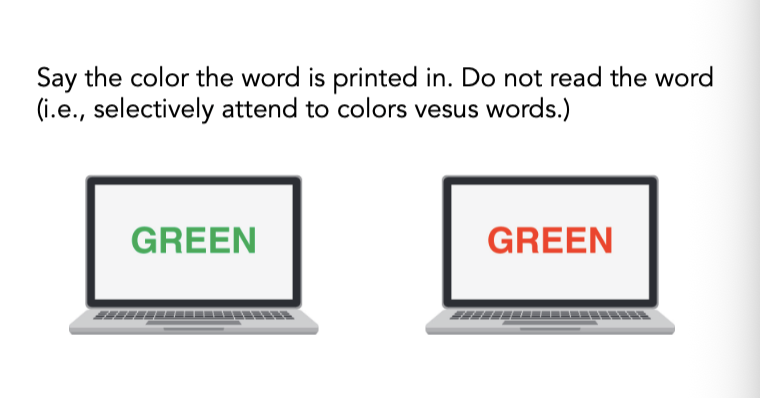
What does the troop task do?
Examines resistance to distraction.


What are the conditions of the Stroop Task?
In the compatible condition, the word corresponds to its ink color.
In the incompatible condition, the word is in conflicting (incompatible) ink color.


The anterior cingulate and dorsolateral prefrontal cortex are…
activated during attentional conflict between two competing sources of information and its resolution.

What is Attention Deficit (Hyperactivity Disorder (ADHD)?
a common, chronic neurodevelopmental condition that affects how the brain develops and functions.
What are symptoms of ADHD?
Motor hyperactivity
Inattention,
Impulsiveness

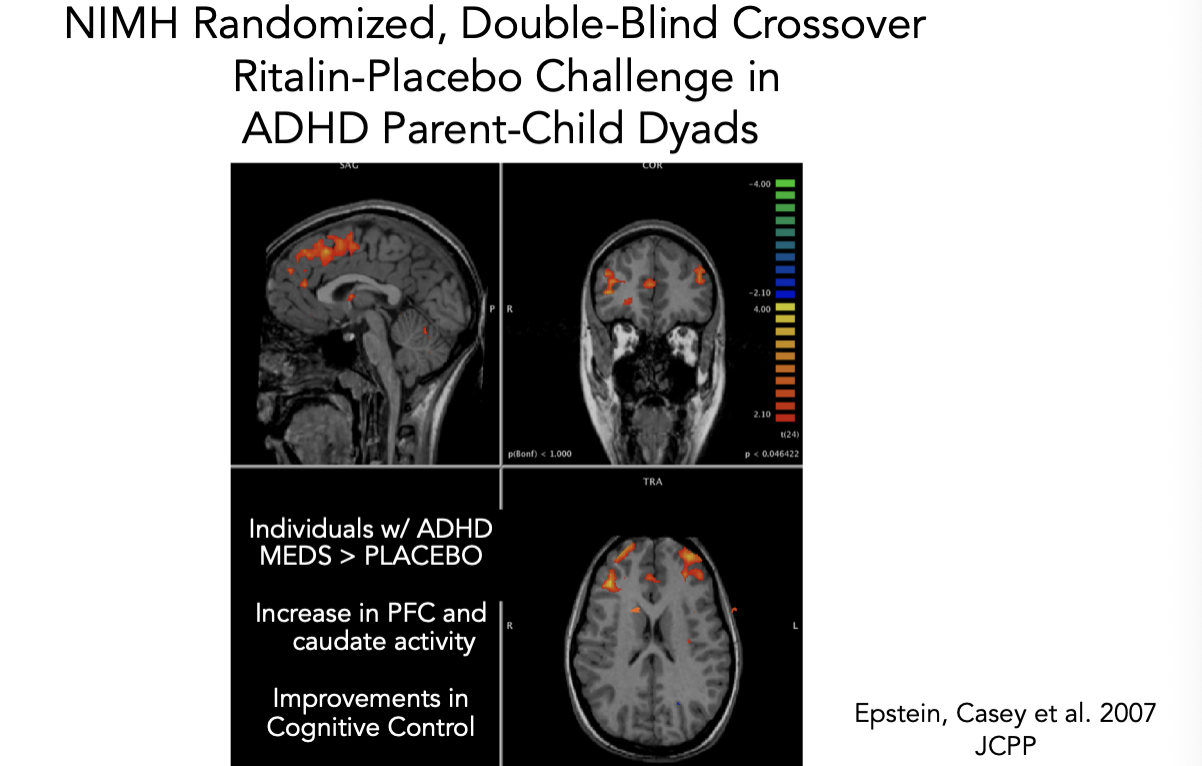
Stimulants inhibit reuptake of dopamine by blocking Dopamine Transporter (DAT)
Enhance the activity of neurotransmitter systems
Reduce symptoms of ADHD.
QUESTION/TOPIC: WHAT DO STIMULANTS DO TO AN ADHD BRAIN?


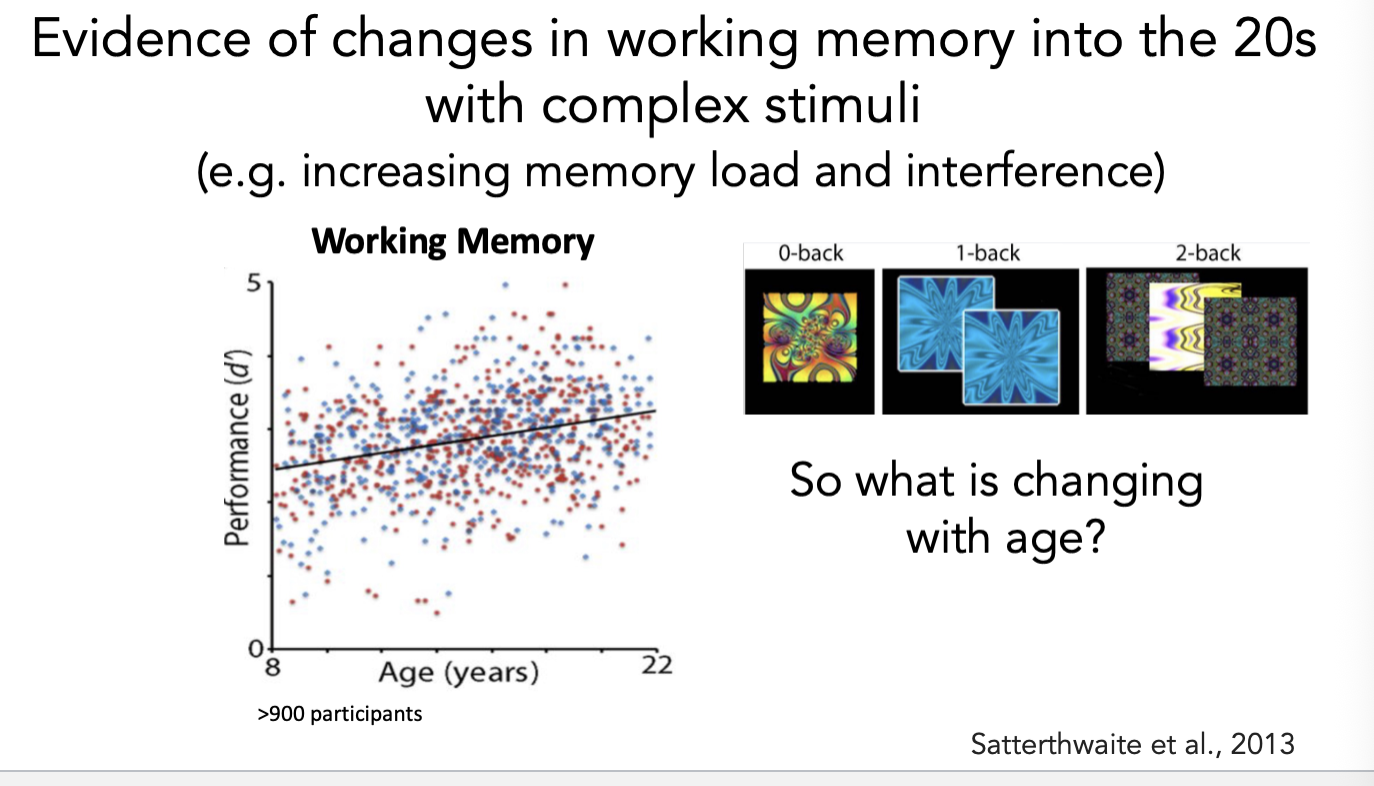
What is the working memory?
The ability to maintain and manipulate information over short periods of time.
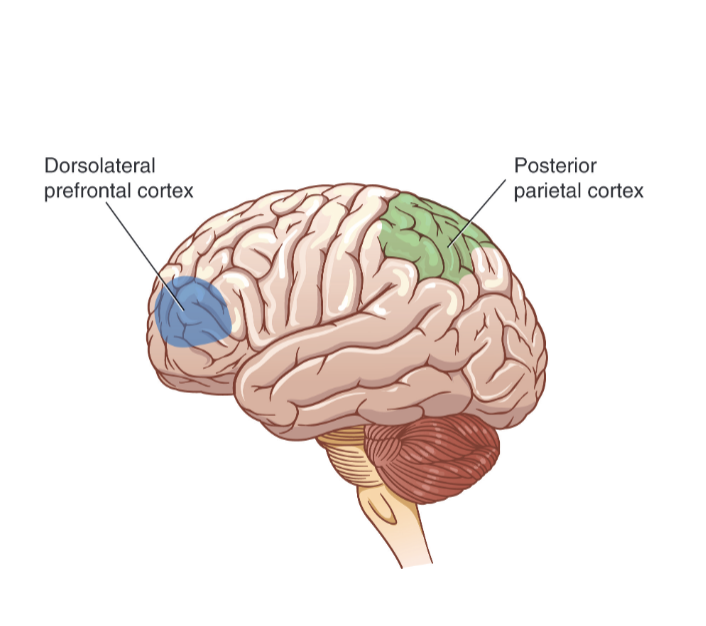
Neural Correlates of WM:
Neurons that are active during the working memory task are dorsolateral prefrontal cortex (DLPFC) and posterior parietal cortex (frontoparietal network).


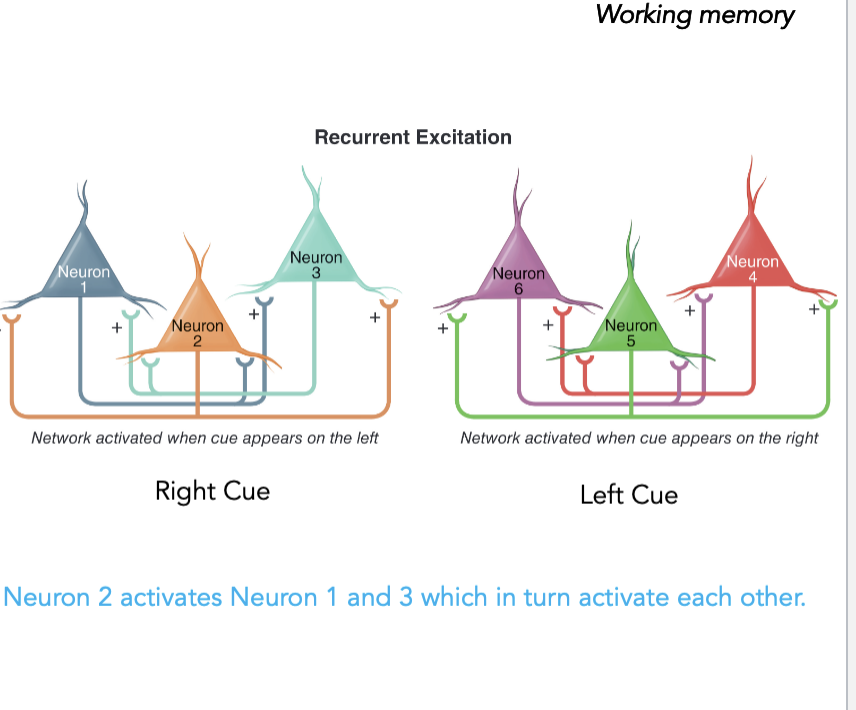
How do Neurons stay active during the delay period of a working memory task?
Networks of neurons are thought to excited one another (recurrent connections)
The excitatory neurotransmitter released by each neuron helps to maintain the activity of the other neurons in the network.
This allows neuronal activity to reverberate back and forth among the neurons in the network maintaining activity.

What are recurrent connections?
loops where neurons connect back to other neurons in the same local area or layer
Are the same brain areas active during both perception of and memory for an object?
When remembering an item, we activate the same brain regions as when we view that item.
When we switch attentional focus from memory of face to memory of place we activate the same prefrontal and parietal ares as when we shift and focus attention to external stimuli.

