cardiac: Heart failure
 Call Kai
 Learn
 Practice Test
 Spaced Repetition
 Match
 Flashcards
 Knowt Play
1/16

There's no tags or description
Looks like no tags are added yet.
17 Terms
Heart failure is a clinical syndrome characterized by ?
what kind of disease
classified by ?
fluid overload and decrease in tissue perfusion when the heart cannot generate adequate CO
heart does not meet body’s requirements of oxygen and nutrients
chronic and progressive disease
always staged 1-4
what are the 4 ways the body compensates for HF
sympathetic NS - HR increases in attempt to pump more blood out
Renin - angiotensin activation system
brain natriuretic peptide (chemical response to lower BP)
hypertrophy of the heart muscle from overworking
brain natriuretic peptide
indicative of
results from
results form the stretching of the left ventricle and fluid buildup
indicative of worsening HF, the higher the value the higher the stage
systolic dysfunction HF
EF?
impaired contraction from weakened heart muscle
reduced ejection fraction (less than 50%)
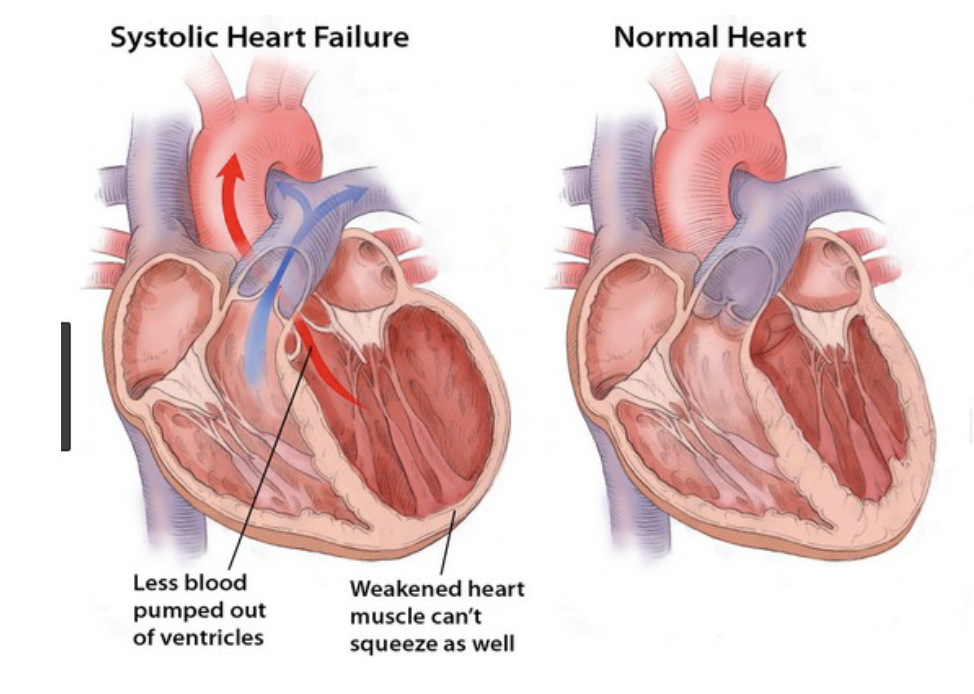
diastolic dysfunction HF
EF?
impaired filling
preserved ejection fraction (normal value )
can result from LV hypertrophy

Acute decompensated HF is ?
what do we see
when is it common
acute episodes of exacerbation
worsening symptoms
decreased CO and perfusion
common around holidays - people fall off their diet around family and celebrations (big increase in sodium )
who is at higher risk of HF
diabetics
CAD
valve disease
cardiomyopathies
1/3rd of patients with an MI also develop HF
L sided HF is when
when the left ventricle cannot pump enough blood out through the aorta
back flow of blood to the pulmonary vein - causes fluid backup in lungs
left - sided HF, L is for ?
symptoms 10 in total
resp? lung sounds ?
heart sounds?
sleeping ?
extremities ?
renal?
nuero?
pulmonary symptoms - L for lungs!
dyspnea
new cough
signs of hypoxia/ low o2 (cold extremities/ cyanosis)
paroxysmal nocturnal dyspnea (recliner chair sleeping)/ orthopnea
pink frothy sputum - pulmonary edema
crackles
S3 heart sound
oliguria (low UO) and nocturia
low activity tolerance
dizziness/ confusison
causes of L - sided HF
MI of the Left ventricle
R - sided HF
HTN
CAD
valve problems
R - sided HF is when
when the R ventricle can’t empty completely
fluid backs up into vena Cava → increased fluid in periphery + vascular system
causes of R -sided HF
L - sided HF
CAD
MI of the R ventricle
valve problems
pulmonary hypertension (Cor pulmonale)
s/s of R - sided HF
JVD
edema - worse in feet and ankles and pitting
edema worsens when sitting or standing - elevate feet to improve circulation
Hepatomegaly and splenoomagly
liver issues - jaundice, RUQ pain
ascites - pressure on stomach causes N/V, slowed GI and loss of appetite, pressure on diaphragm causes dyspnea,
weight gain at first from fluid buildup, but over time loss of appetite causes weight loss
S3 heart sound
generalized fatigue
Acute decompensated HF
is ? causes ?
how serious
s/s
if untreated ? pt may need ?
sudden onset, exacerbation of HF causing pulmonary edema
medical emergency
pink frothy sputum
Increased RR and accessory muscle use → Resp arrest if untreated , may need intubation
When it occurs quickly → Flash Pulmonary Edema
teaching pt with HF 9
restrict ?
promote
monitor daily ? parameter ?
teach ?
collab with
promote sodium restriction - no more than 2g/day
smoking & drinking cessation
exercise
teach to take daily weight (2.2 lb or 5lb in a week - call doctor)
monitor BP
teach med adherence
teach about home oxygen use
family participation
collab with nutrition for dietary restrictions
Cardiogenic shock is when ?
most commonly after
also aș a result of
When decreased CO leads to inadequate tissue perfusion leading to shock
Most commonly occurs following an acute MI
May occur as a result of end-stage HF, cardiac tamponade, PE, cardiomyopathy, dysrhythmias

s/s of cardiogenic shock
vitals
pulses ?
skin
cardiac 2
resp?
Decreased BP
Rapid , weak, thready pulse
Narrowed pulse pressure
Cool, pale, moist skin
S3 heart sound
Increased CVP - will see JVD
pulmonary edema