6. Innate Immunity 3: Pathogen recognition & induction of innate immunity
 Call Kai
 Learn
Learn Practice Test
 Spaced Repetition
 Match
Match Flashcards
 Knowt Play
1/22

There's no tags or description
Looks like no tags are added yet.
Name | Mastery | Learn | Test | Matching | Spaced | Call with Kai | Chat |
|---|
No analytics yet
Send a link to your students to track their progress
23 Terms
What are the main hypotheses of immune recognition?
Self vs. non-self hypothesis (Medawar)
Immune system distinguishes self from non-self (clonal selection).
Limit: Doesn’t explain pregnancy, autoimmunity, or cancer.
Pattern recognition hypothesis (Janeway)
Distinguishes infectious non-self (microbes) vs. non-infectious self.
Limit: Couldn’t fully explain sterile inflammation (e.g., tissue injury).
Danger hypothesis (Matzinger)
Immune system responds to danger signals, not just self vs. non-self.
Explains pregnancy, cancer, and viral infections better.
What do receptors of the immune system do?
Recognize signals from pathogens or tissue damage to initiate immune responses.
Main Idea
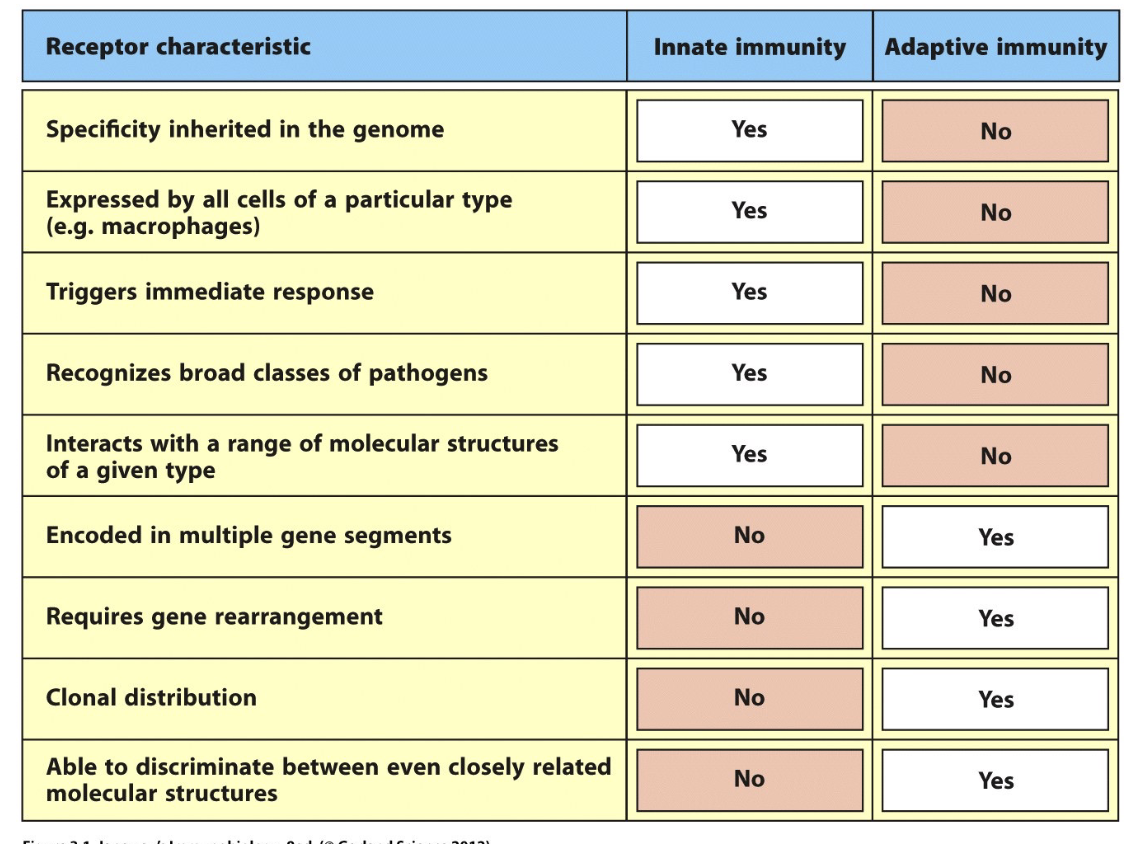
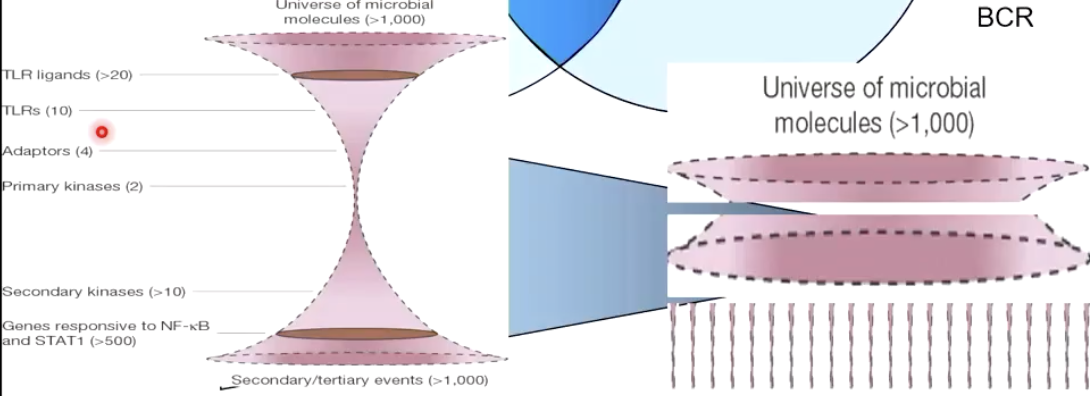
Innate: Receptors have very high degree of sensitivity, but low degree of specificity
Adaptive: Receptors have very high degree of specificity, but low degree of sensitivity
What types of danger signals does the innate immune system detect?
External dangers: PAMPs/DAMPs (Pathogen-Associated Molecular Patterns and Damage/Danger-Associated Molecular Patterns)
Internal dangers: DAMPs (Damage/Danger-Associated Molecular Patterns)
Anything out of normal = danger: Cell injury, misbehaved or tumour cells, DNA in wrong location, too much ATP outside cells
How does the innate immune system recognize thousands of microbial pathogens?
Through a limited number of Pattern Recognition Receptors (PRRs) that detect common PAMPs (Pathogen-Associated Molecule Patterns).
What are common features of PAMPs?
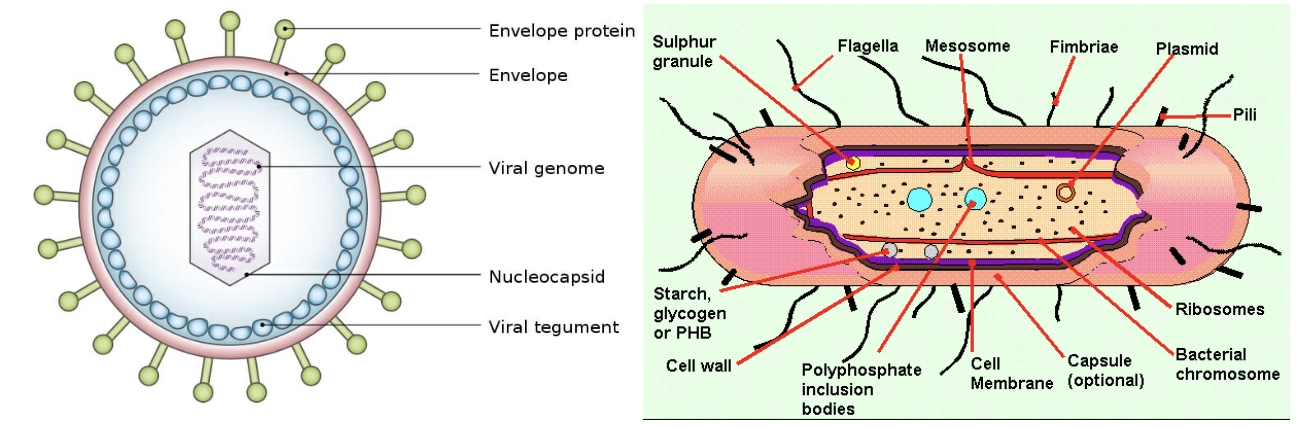
Produced only by microbial pathogens, but not their mammalian hosts (like bacterial cell wall, bacterial/viral DNA/RNA)
Essential for microbe survival or pathogenesis
Conserved/invariant structures shared across classes of pathogens (e.g., LPS in all Gram-negative bacteria but not in mammalian cells).
What are DAMPs and give examples?
Molecules released from stressed or injured cells that trigger inflammation (non-infectious source).
Ex: HSP (heat shock protein), HMGB (high-mobility group box), DNA, Purine Metabolites (ATP, adenosine, uric acid)
What are the main receptors of the innate immune system?
Phagocytic receptors: Does not lead to signalling
Mannose receptor
Scavenger receptors
Complement receptors
PRRs (Pattern Recognition Receptors); recognize PAMPs/DAMPs. Lead to signalling → contribute to induced innate immunity:
MBL (Mannose Binding Lectin)
TLRs (Toll-like Receptors)
NODs (Nucleotide-binding oligomerization domain)
NLRs (NOD like receptors)
How does Mannose Binding Lectin (MBL) recognize microbes?
Recognize Pattern:
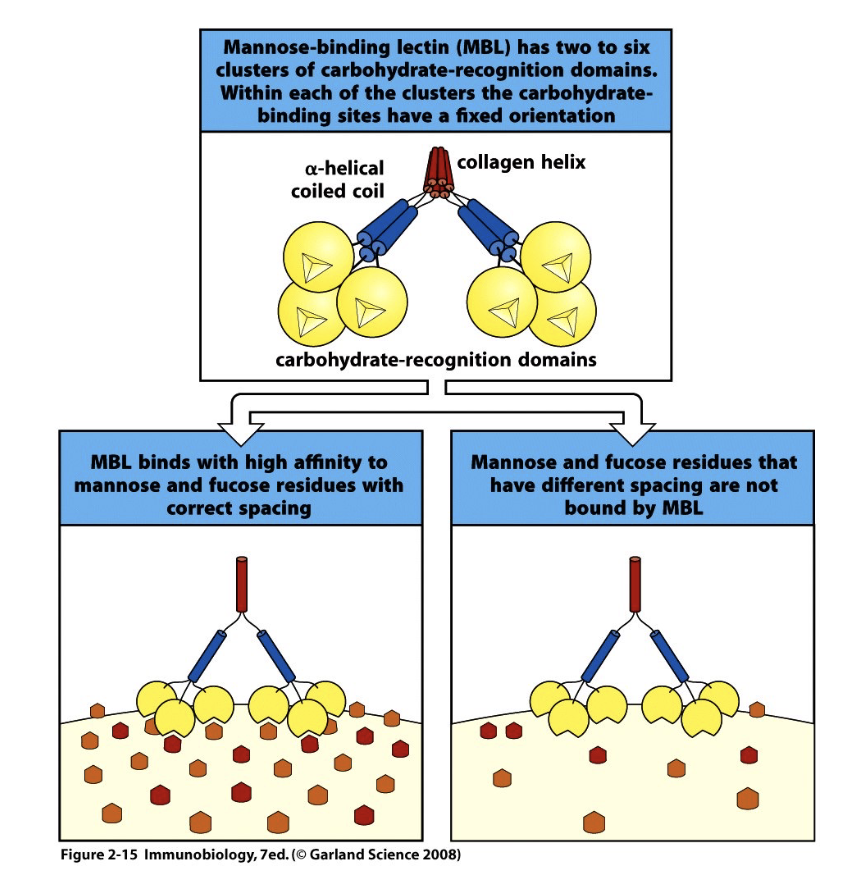
MBL has clusters of carbohydrate-recognition domains with fixed orientation.
Binds mannose & fucose residues with correct spacing (high affinity) = danger signal
Does not bind if spacing is incorrect = not dangerous
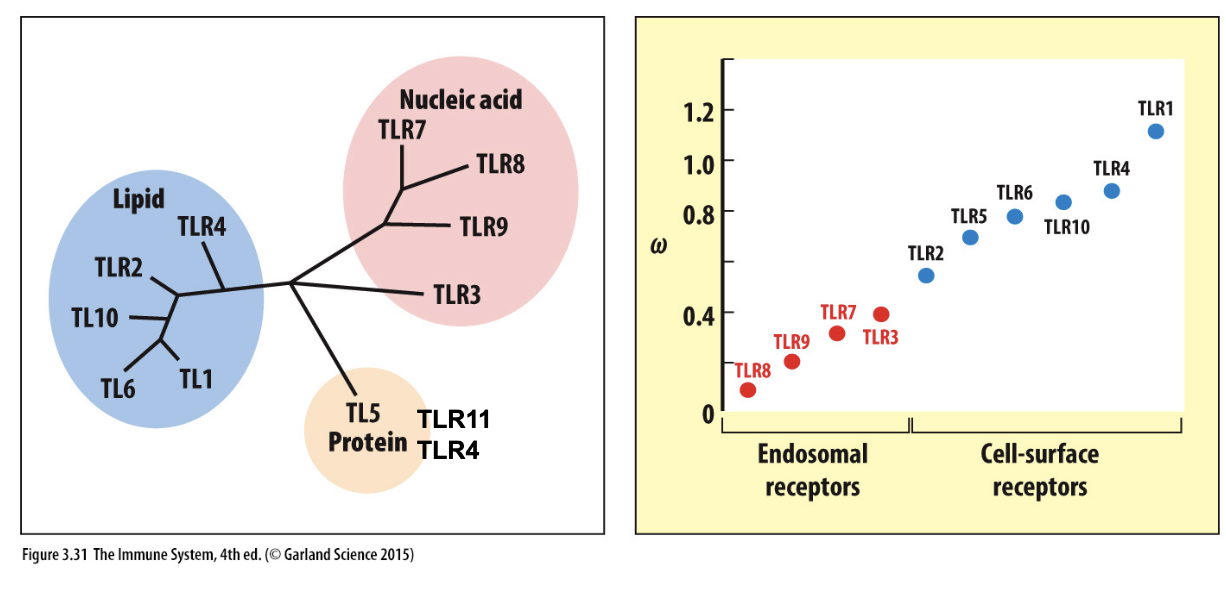
What are Toll-like Receptors (TLRs)?
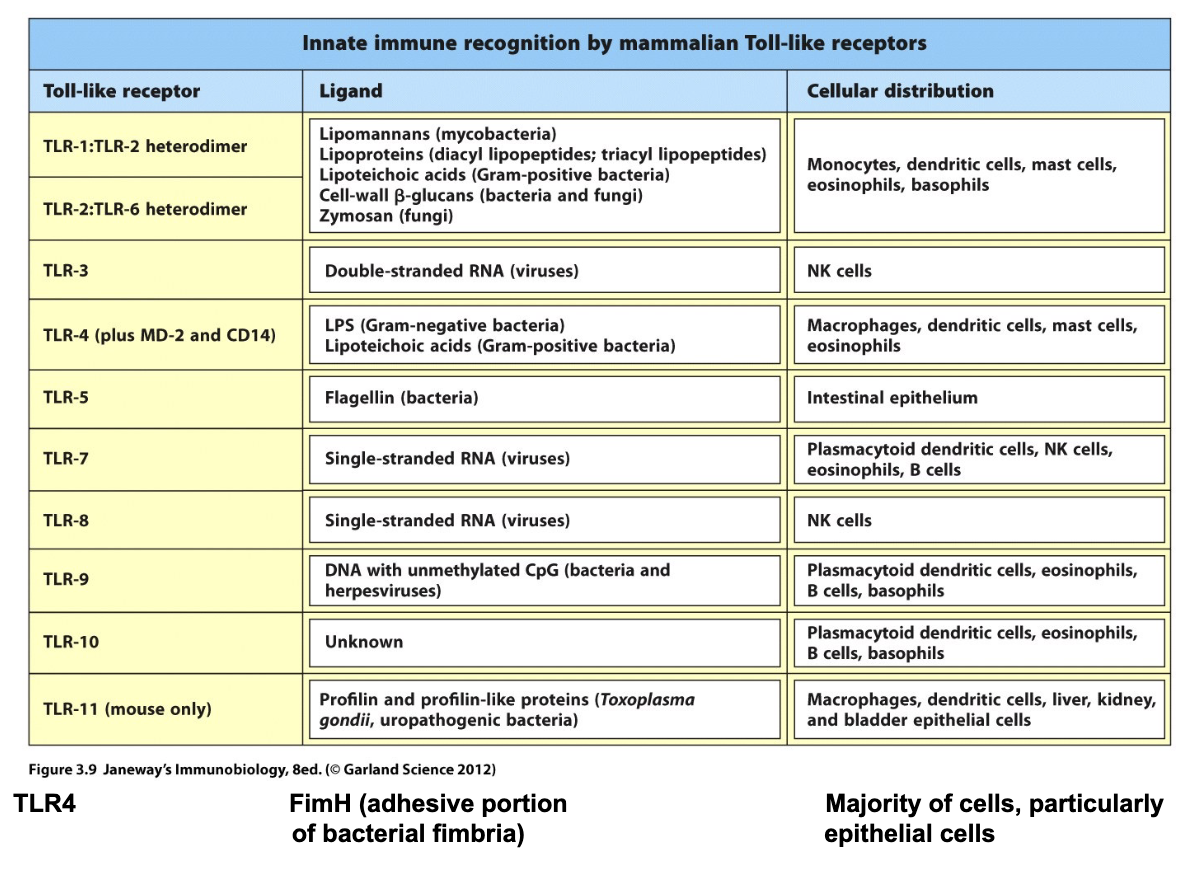
A family of Pattern Recognition Receptors (PRRs) in innate immunity.
Detect PAMPs (pathogen molecules) & DAMPs (damage signals).
Located on cell surface (proteins, lipoproteins) or endosomes (DNA, RNA).
Humans have 10 TLRs (TLR1–10); mice have TLR1–9, 11.
Activation triggers signaling → inflammatory cytokines & type I interferons.
Memorize chart…
Where are TLRs located in cells?
Cell surface: recognize microbial proteins, lipoproteins, glycoproteins, carbohydrates
Endosomal: recognize microbial/viral DNA and RNA
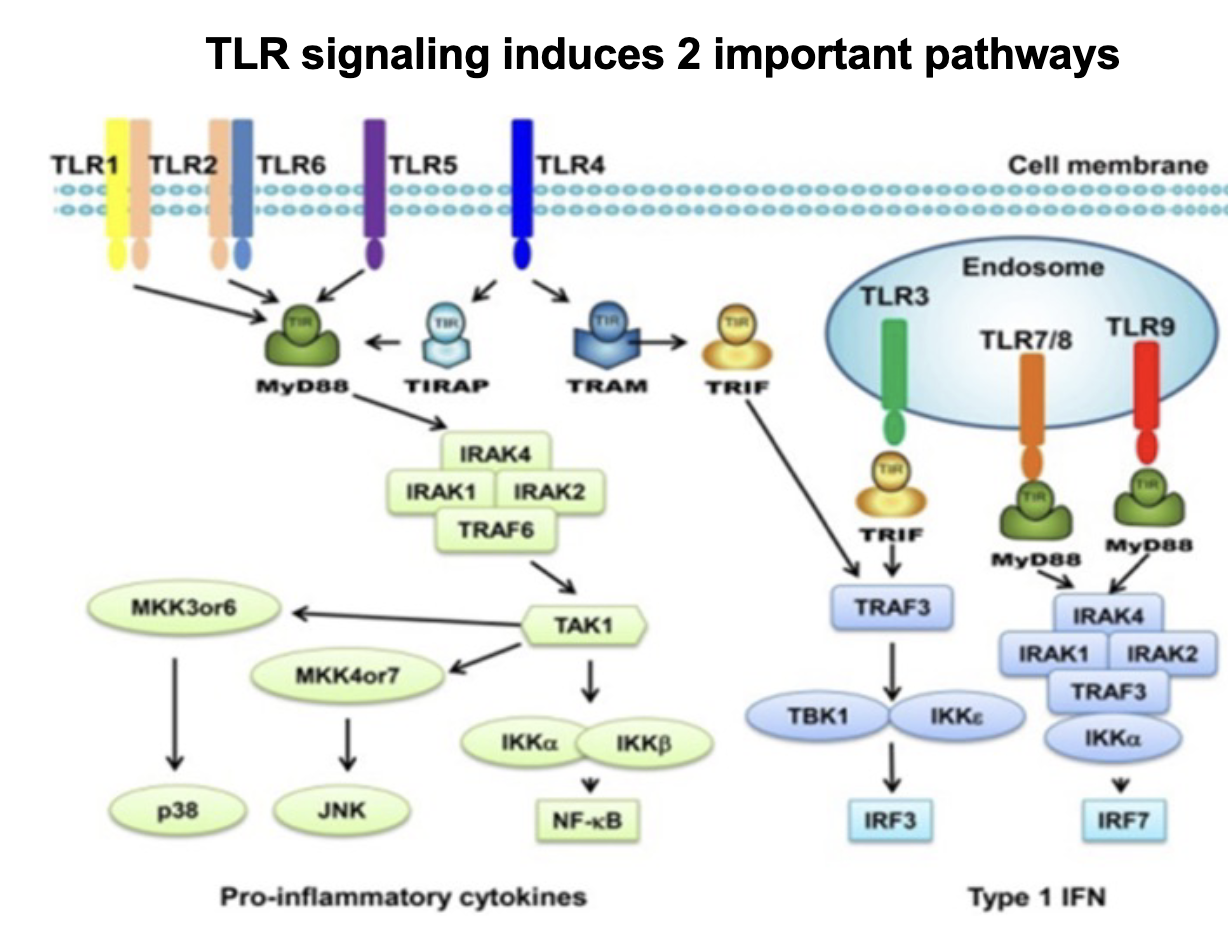
What does TLR signaling induce?
Infectious agent/material
Two main pathways leading to:
Cell-Surface: MyD88 pathway → Pro-inflammatory cytokine production (TNF-a, IL6)
Endosomal: IRF3 or TRIF pathway → Type 1 interferon production
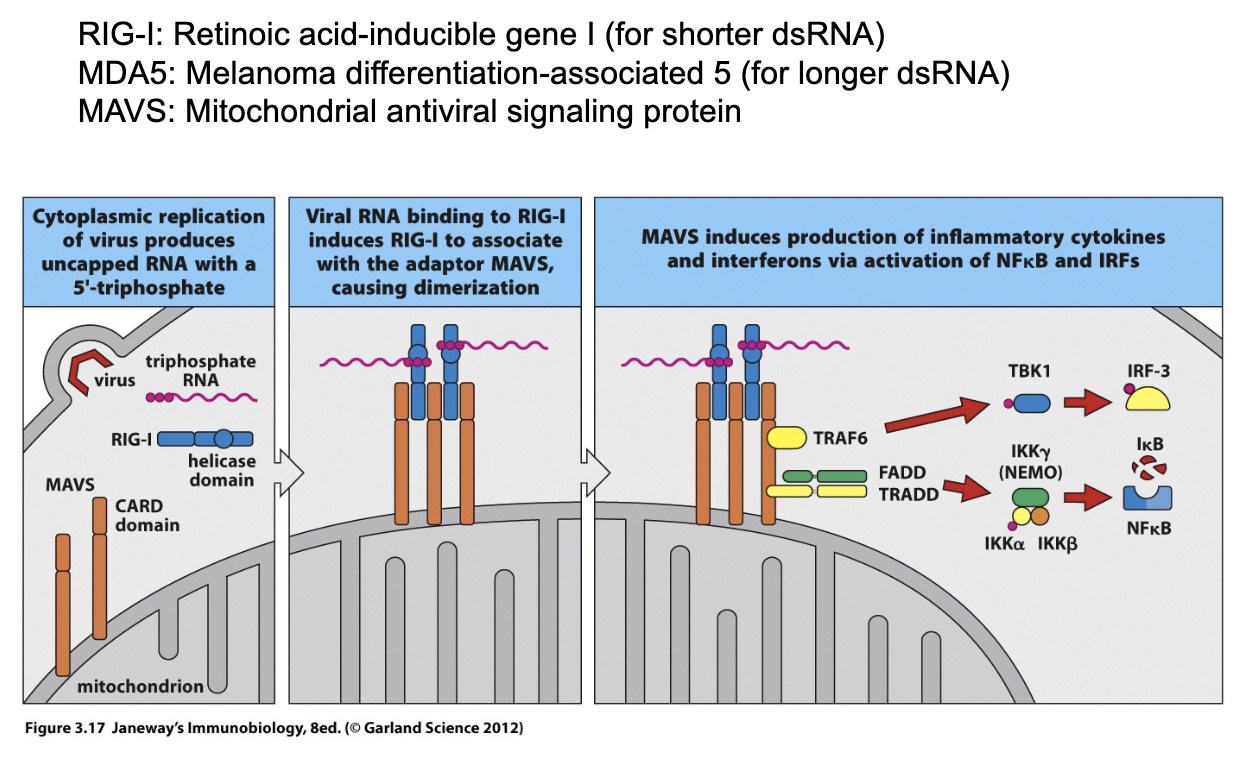
What do RIG-I, MDA5, and MAVS stand for?
RIG-I: Retinoic acid-inducible gene I (for shorter dsRNA)
MDA5: Melanoma differentiation-associated 5 (for longer dsRNA)
MAVS: Mitochondrial antiviral signaling protein
How do RIG-I and MDA5 detect viral RNA and trigger an immune response?
Infectious agent/material
RNA virus replicates in cytoplasm → makes uncapped RNA with 5’-triphosphate.
RIG-I detects short dsRNA; MDA5 detects long dsRNA.
Mammalian dsRNA doesn’t exist
Viral RNA binding → RIG-I/MDA5 interact with MAVS on mitochondria.
MAVS dimerizes → signaling cascade.
Activates NFkB & IRFs.
Produces inflammatory cytokines + type I interferons (IFN-α/β).
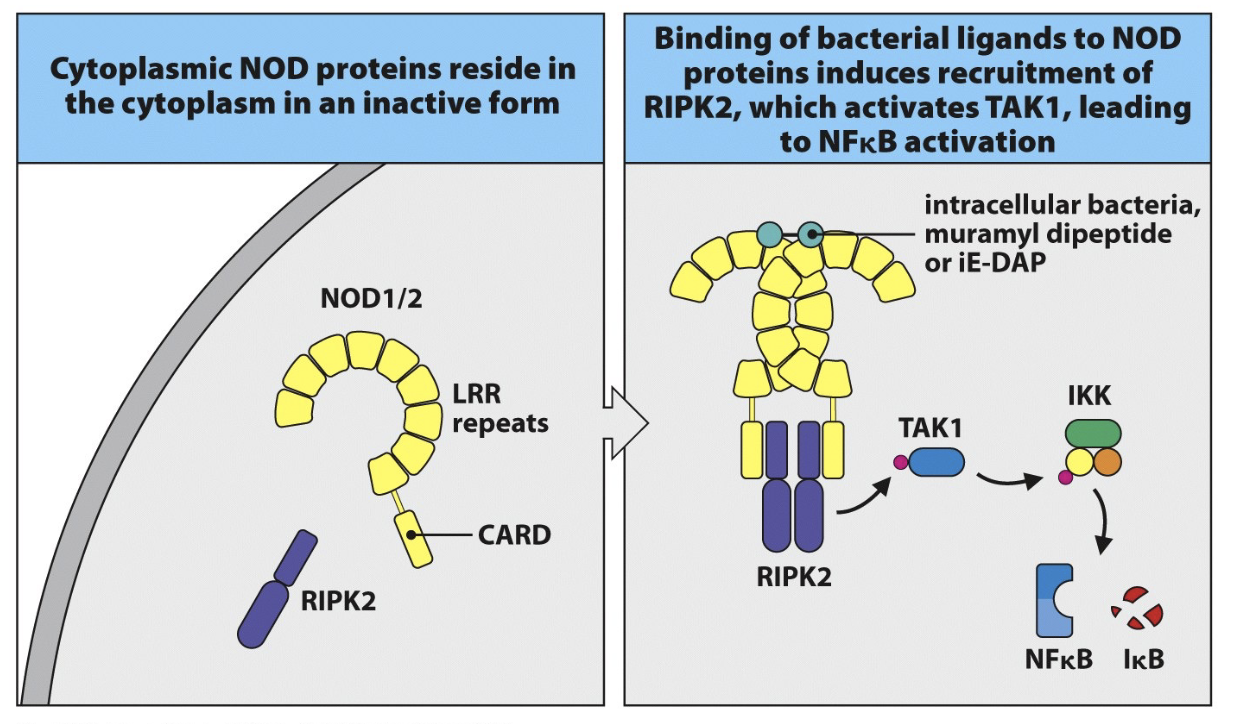
How do NOD receptors act as intracellular sensors of bacterial infections?
Infectious agent/material
NOD proteins sit inactive in the cytoplasm.
Bacterial ligands bind to NOD proteins.
Binding → recruitment of RIPK2.
RIPK2 activates TAK1.
TAK1 activates NFkB.
NFkB triggers inflammatory gene expression → cytokine production.
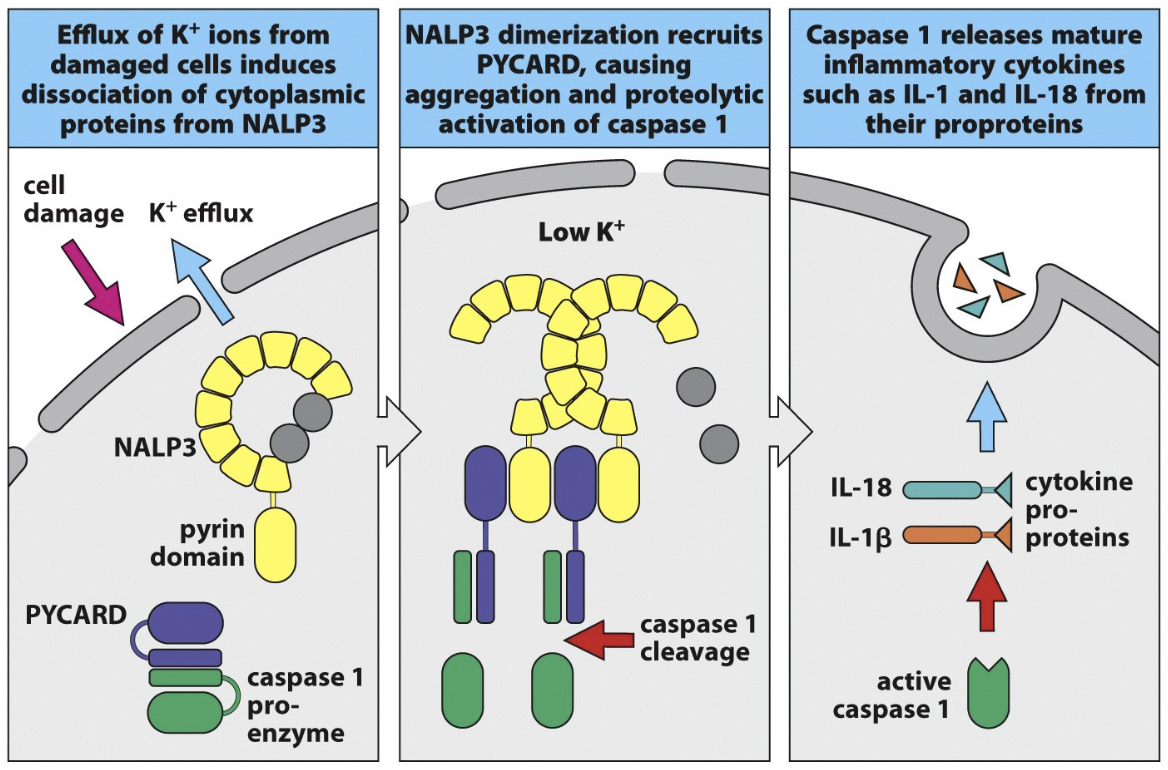
How do NLRs (NALP3) sense cellular damage and activate inflammation?
Recognizes internal DAMPs (alarms/damage that’s non-infectious)
Cell damage → K⁺ ions leak out.
K⁺ efflux causes cytoplasmic proteins to dissociate from NALP3.
NALP3 dimerizes (activates).
Activated NALP3 recruits PYCARD.
PYCARD aggregation → activates caspase-1 (proteolytic activation).
Caspase-1 cleaves pro-IL-1 & pro-IL-18 → releases mature IL-1 & IL-18.
→ Strong inflammatory response (furoptosis).
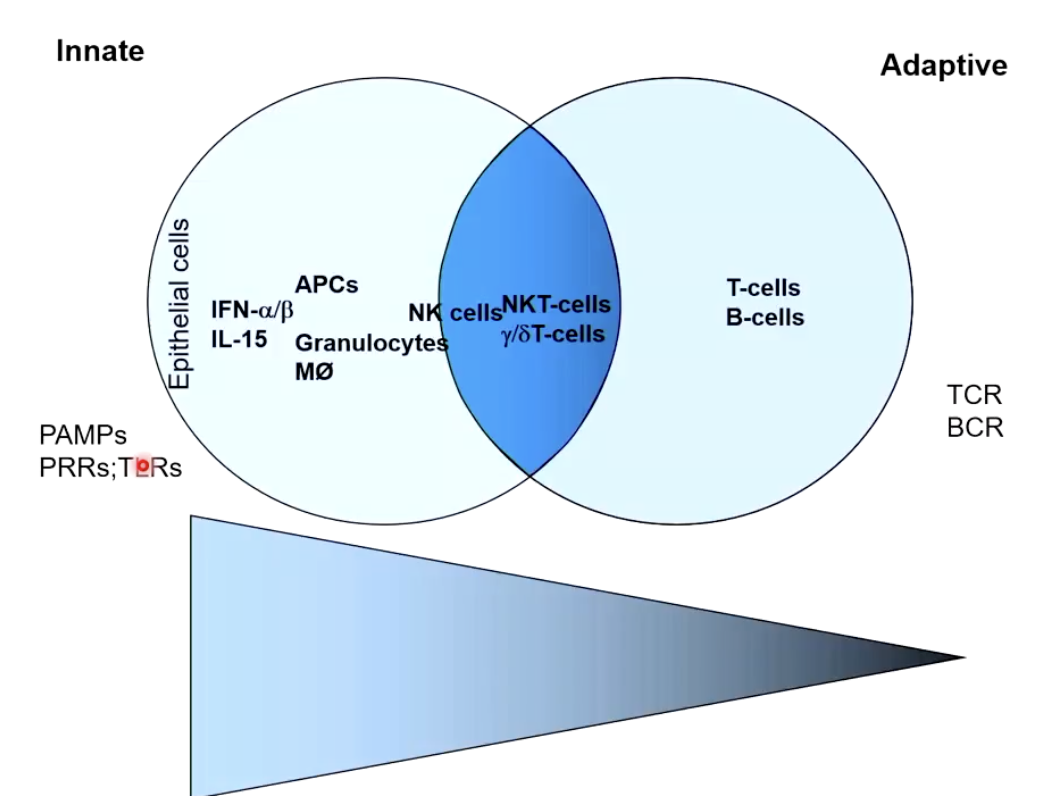
What is the main difference between innate and adaptive immunity?
Innate: rapid, sensitive, non-specific
Receptors: PAMPs, PRRs; TLRs
Very simple but very generous
Adaptive: slower, specific, memory
Receptors: TCR, BCR
Very effective, but unique and specific
What happens when PAMPs/DAMPs are recognized by APCs through TLRs and other PRRs?
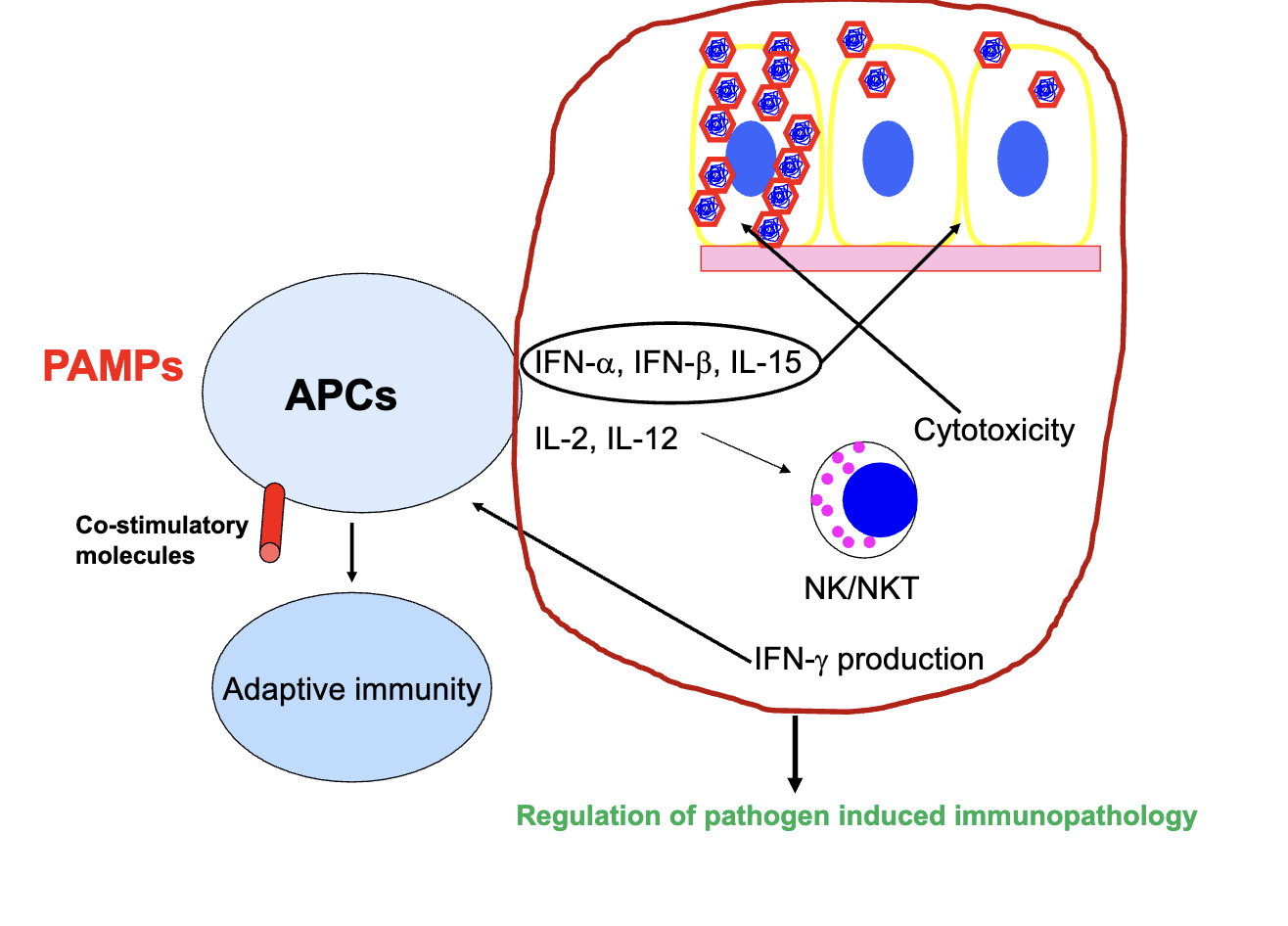
Recognition: APCs (esp. dendritic cells, macrophages) detect PAMPs/DAMPs via TLRs/PRRs.
Signaling → Cytokines: Activation triggers gene expression → cytokine release (IFN-α, IFN-β, IFN-λ, IL-2, IL-12, IL-15).
Innate Activation: Cytokines activate NK, NKT, γδ T cells → early antiviral/antibacterial defense.
Antiviral State: Cytokines protect nearby non-infected cells from viral spread.
APC Maturation: Cytokines + IFN-γ make APCs “professional” → upregulate co-stimulatory molecules for T cell priming (adaptive immunity).
Three Jobs of Innate Immunity:
Contain infection early.
Mature APCs to bridge to adaptive immunity.
Limit collateral tissue damage (esp. lung/brain).
Clinical Example: Vaccines (e.g., Shingrix) work better when paired with strong TLR ligands (adjuvants) to boost innate → adaptive response.
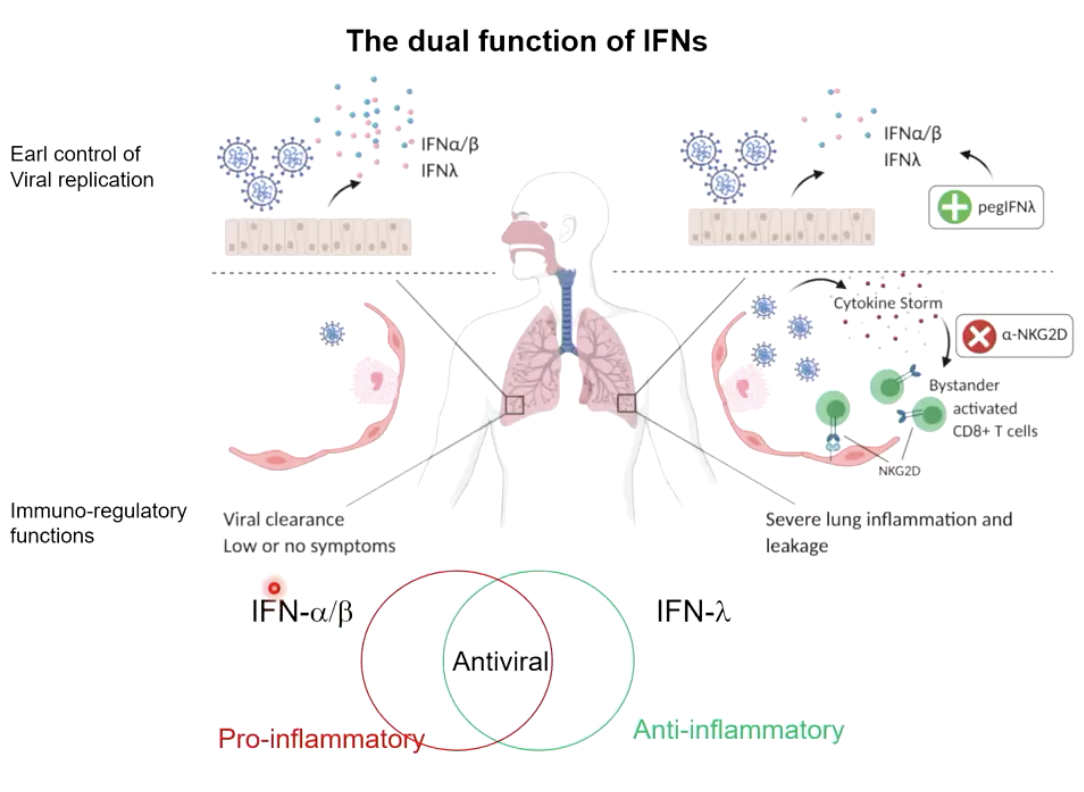
What are the key differences between type I and type III interferons in viral infection (e.g., COVID-19)?
Type I (IFN-α, IFN-β): Antiviral but pro-inflammatory → can worsen disease (e.g., harmful in COVID-19).
Type III (IFN-λ): Antiviral but anti-inflammatory → protective, shown effective in clinical trials for COVID-19.
Key Point: Not in textbooks yet — new evidence shows IFN-λ is safer and beneficial, unlike IFN-β.
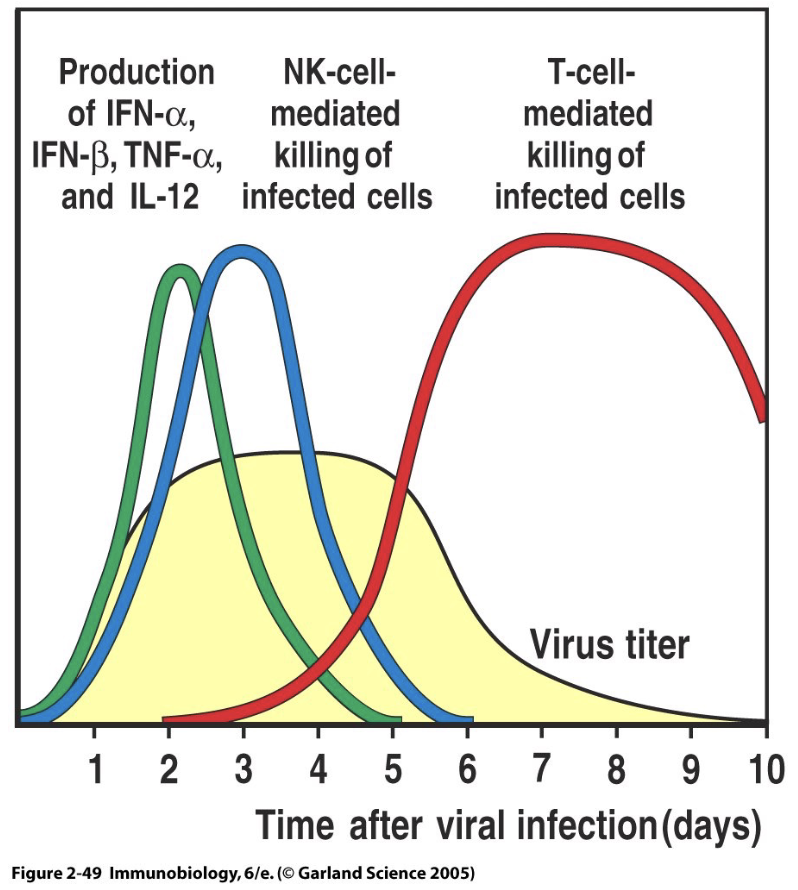
How does the immune response to viral infection progress over time?
Early phase: Virus starts replicating → high virus titer.
Innate cytokines rise: IFN-α, IFN-β, TNF-α, IL-12 are produced.
NK cells activated: Kill infected cells in the early phase (before T cells).
Adaptive phase: T cells arrive later → stronger, targeted killing of infected cells.
Result: Virus titer decreases as immune responses clear infection.
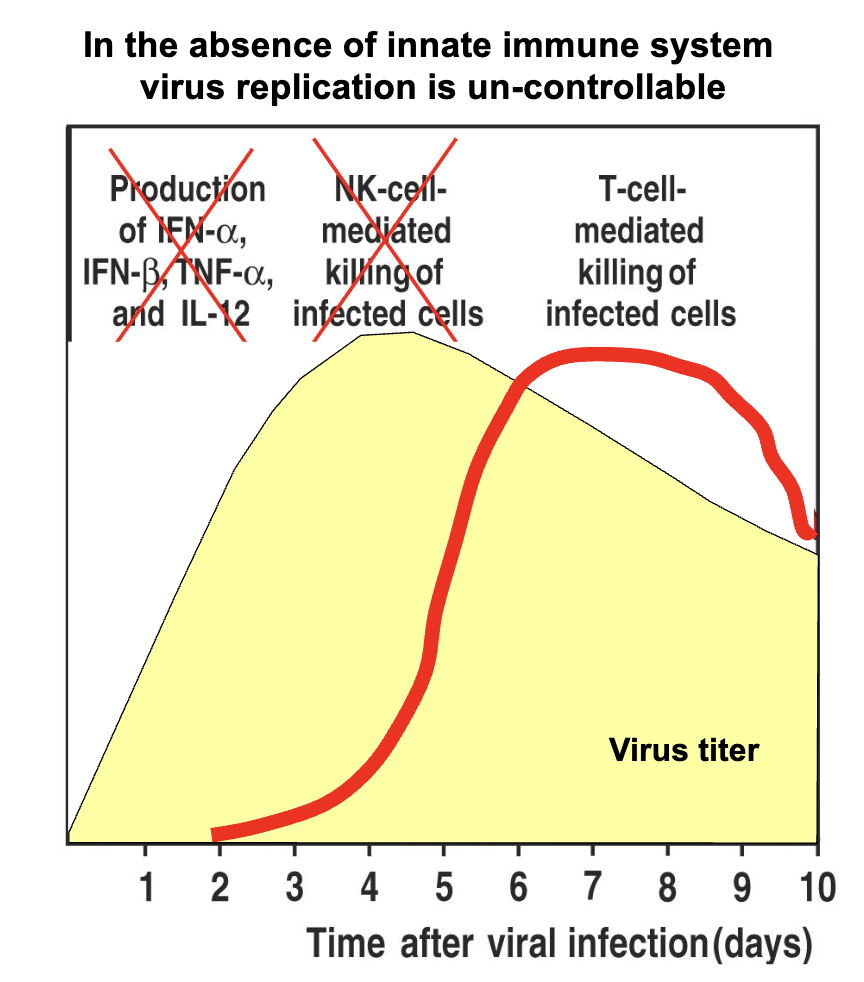
What happens during viral infection if the innate immune system is absent?
Virus replication → uncontrolled (no early defense).
No cytokines produced: IFN-α, IFN-β, TNF-α, IL-12.
No NK cell killing of infected cells.
T cells still activate, but response is delayed.
Outcome → Virus overwhelms before adaptive immunity can control it.
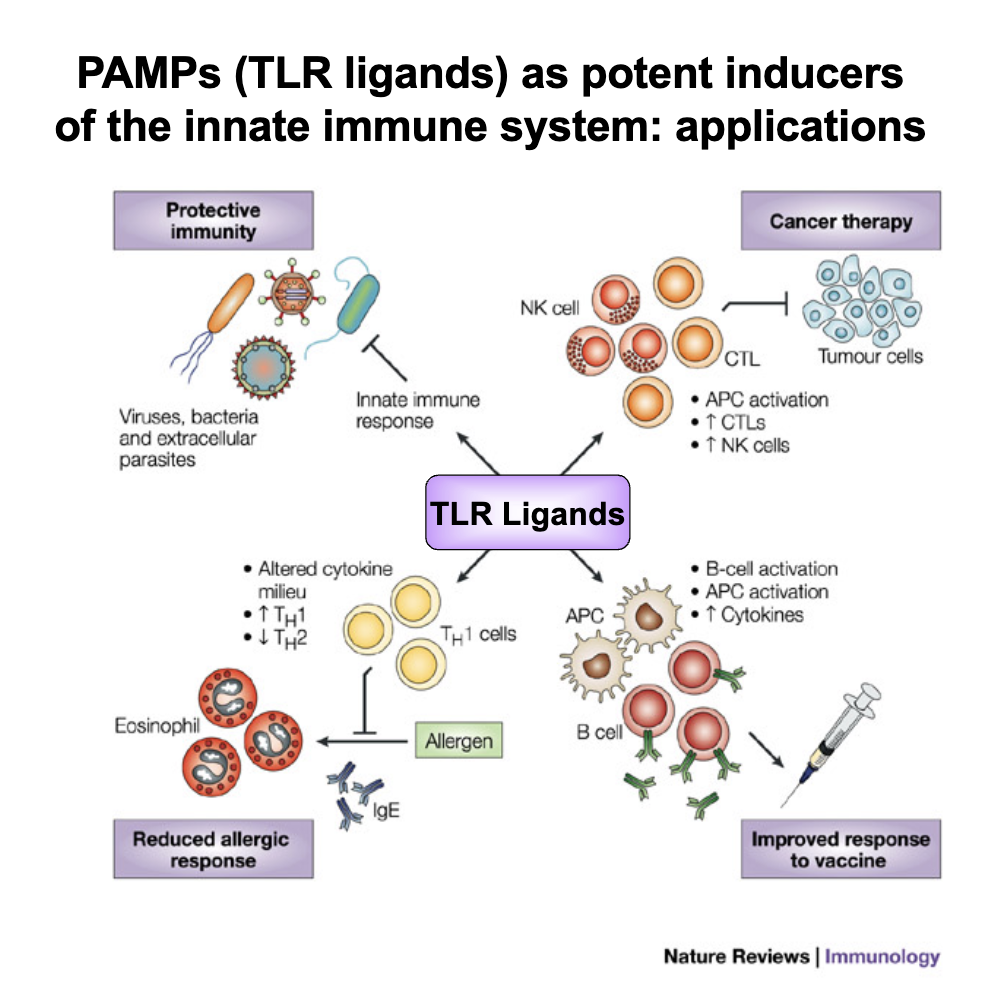
How are PAMPs (TLR ligands) used as potent inducers of the innate immune system?
Protective immunity → boost defense against viruses, bacteria, parasites.
Cancer therapy → activate APCs, increase CTLs & NK cells.
Reduce allergic responses → shift cytokines (↑ TH1, ↓ TH2), fewer eosinophils.
Improve vaccines → stronger B cell + APC activation, ↑ cytokines.
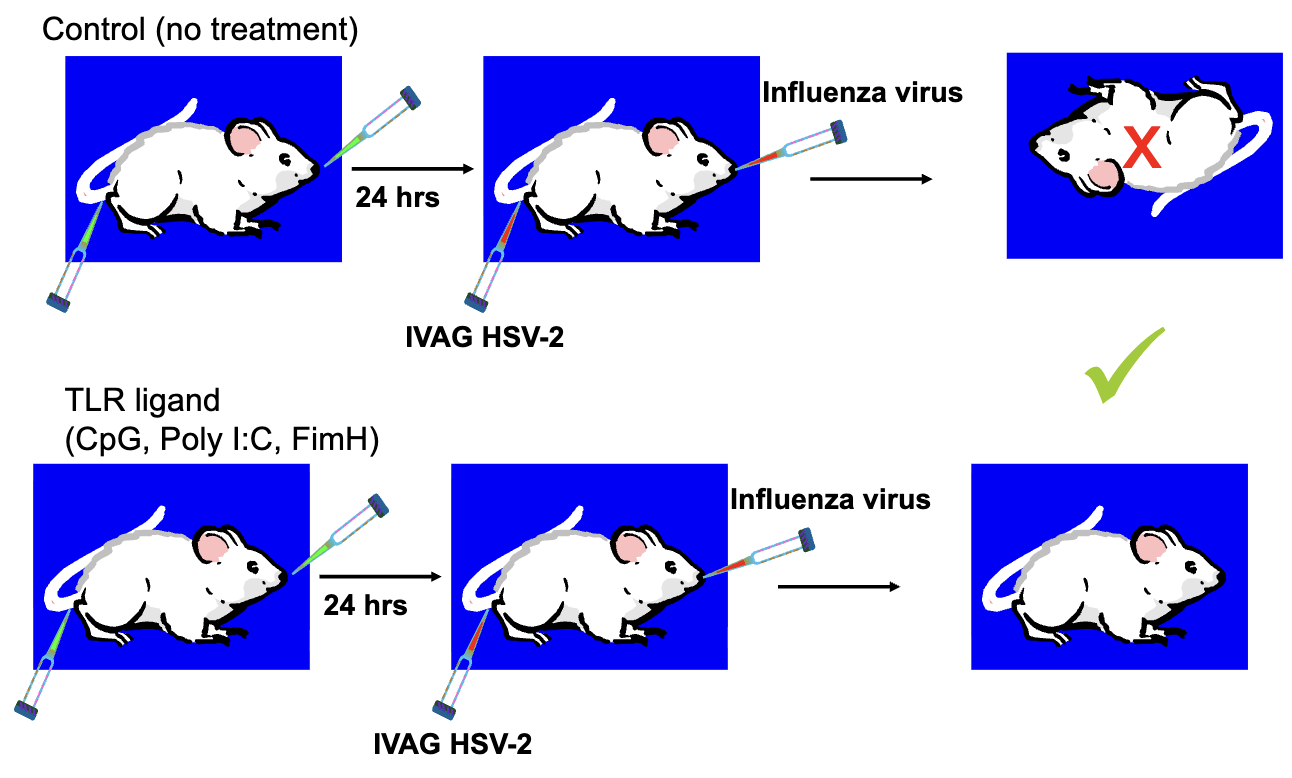
Can mucosal delivery of TLR ligands protect against viral challenge?
Control mice: no TLR ligand → 24 hrs later infected with HSV-2 & Influenza → virus kills mice.
TLR ligand-treated mice: CpG, Poly I:C, or FimH → 24 hrs later infected with HSV-2 & Influenza → mice survive.
Conclusion: Mucosal TLR ligands induce protective innate immunity against viral infection.
What are the key take-home messages about innate immune receptors?
Recognize danger: PAMPs (pathogen) & DAMPs (damage).
TLRs:
Surface → recognize microbial proteins/lipoproteins/glycoproteins
Endosomal (inside cell) → recognize microbial DNA/RNA
RIG-I & MDA5: sense cytoplasmic viral RNA
NLRs: sense DAMPs
Signaling outcomes:
Pro-inflammatory cytokines (TNF-α, IL-1β, IL-6) + Type 1 IFNs
↑ Antigen presentation by APCs