Physiology Wescott
 Call Kai
 Learn
 Practice Test
 Spaced Repetition
 Match
 Flashcards
 Knowt Play
1/39

There's no tags or description
Looks like no tags are added yet.
40 Terms
Gross Anatomy
The study of the larger structures of the body, those visible without the help of magnification.

Macroscopic anatomy
Another term for gross anatomy, focusing on structures visible to the naked eye.
Microscopic Anatomy
The study of structures that cannot be seen without magnification, focusing on cells and tissues.
Regional Anatomy
The study of the connections between 2 or more things of the structures in a specific body region, such as the abdomen.
Example: Studying regional anatomy helps us appreciate the interrelationships of body structures, such as how muscles, nerves, blood vessels, and other structures work together to serve a particular body region.

Systemic anatomy
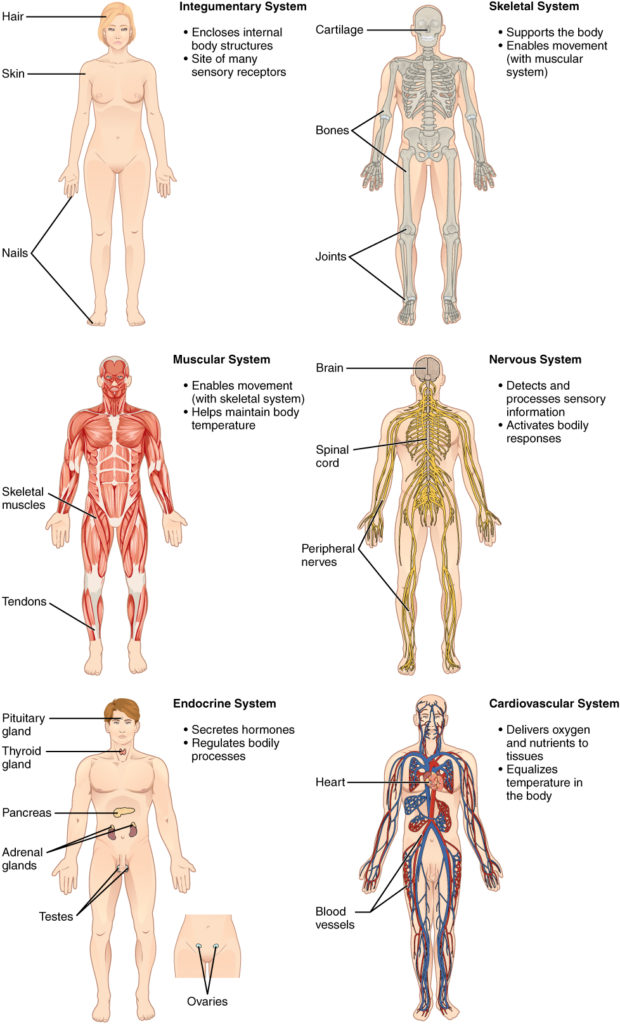
The study of the body's systems, such as the muscular, skeletal, and nervous systems, focusing on their structure and function.
Homeostasis
The state of a balanced internal condition being maintained by living things
Anatomy
Studying the structure of the human body; what it is made of.
Physiology
The function of the human body; what the body does. The study of how the body's systems work together to maintain life and health.
Subatomic Particles
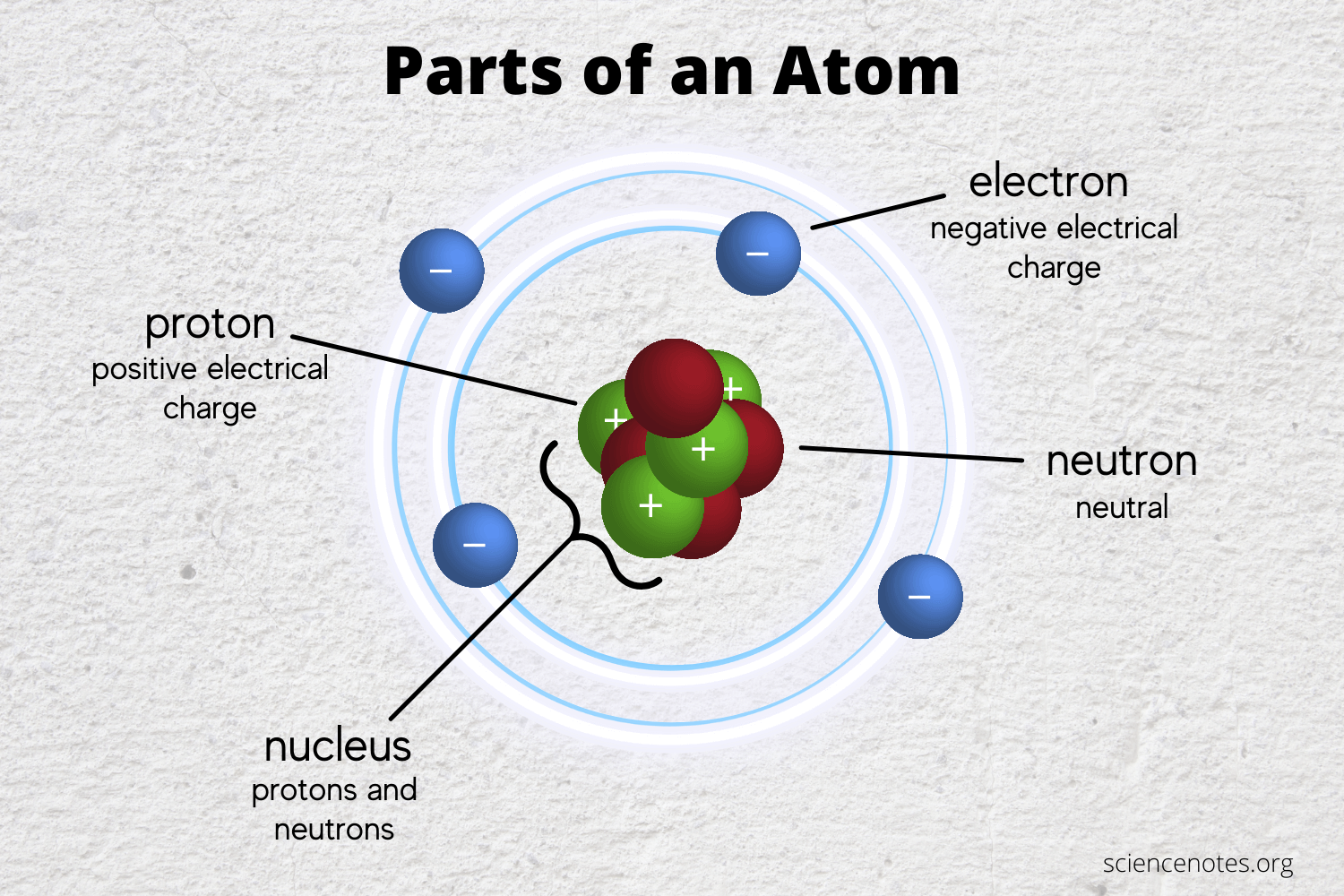
The smallest particles of matter, including protons, neutrons, and electrons, that make up atoms.
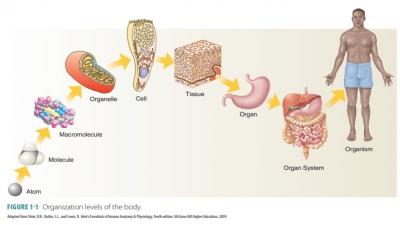
Atom
Atoms are made up of subatomic particles such as the proton, electron and neutron. Two or more atoms combine to form a molecule, such as the water molecules, proteins, and sugars found in living things.

Molecule
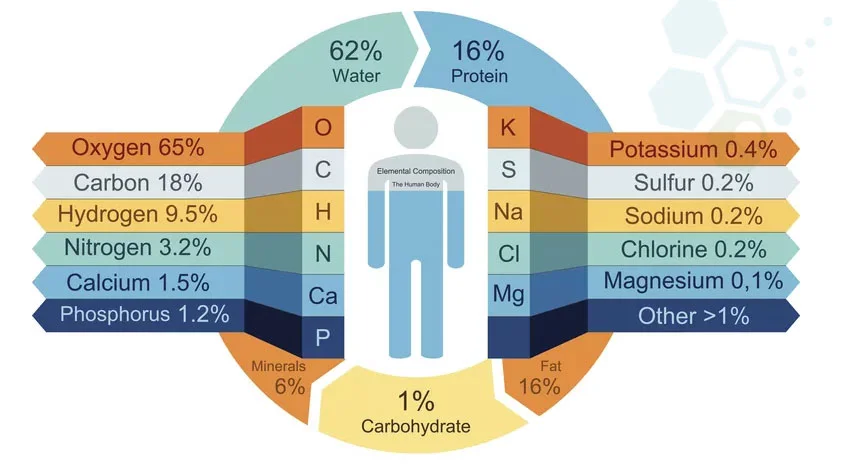
Are the chemical building blocks of all body structures.
Cell
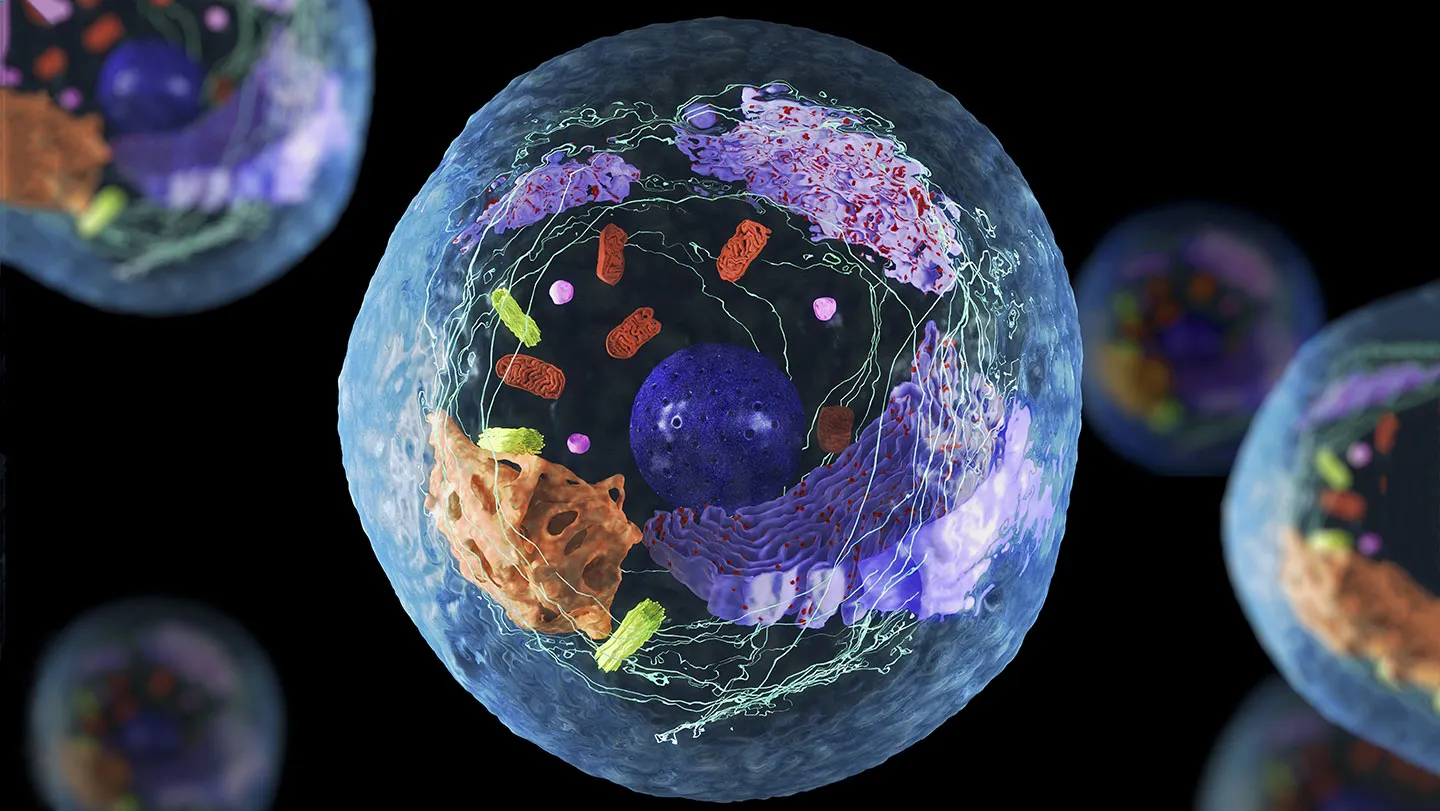
They are the smallest unit of life capable of replicating independently and providing structure, nutrients, and energy for the body

Eukaryotic Cells
Cells that contain a nucleus and membrane-bound organelles, making up complex organisms such as plants and animals.

Tissue
A group of similar cells that work together to perform a specific function in the body, such as muscle or nervous tissue.

Organelles
Specialized structures within a cell that perform distinct processes to maintain cellular function, including the nucleus, mitochondria, and endoplasmic reticulum.

Organ
A collection of tissues that work together to perform a specific function in an organism, such as the heart or liver.

Organ System
A group of organs that work together to perform functions necessary for life, such as the digestive or respiratory system.

Organism Level
An organism is a living being that has a specific structure and that can independently perform all physiologic functions necessary for life.
Example: In multicellular organisms, including humans, all cells, tissues, organs, and organ systems of the body work together to maintain the life and health of the organism.
Organization
The arrangement of cells, tissues, and organs in a living organism that allows for the performance of vital functions. It refers to how different biological structures interact to sustain life.
Metabolism
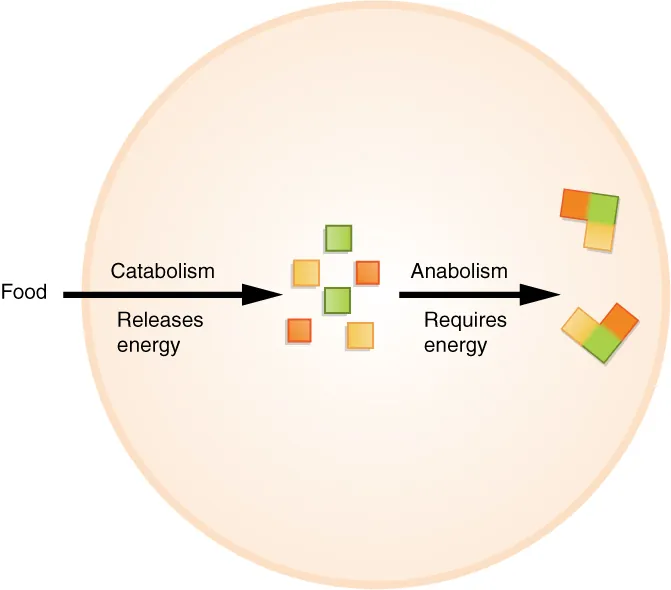
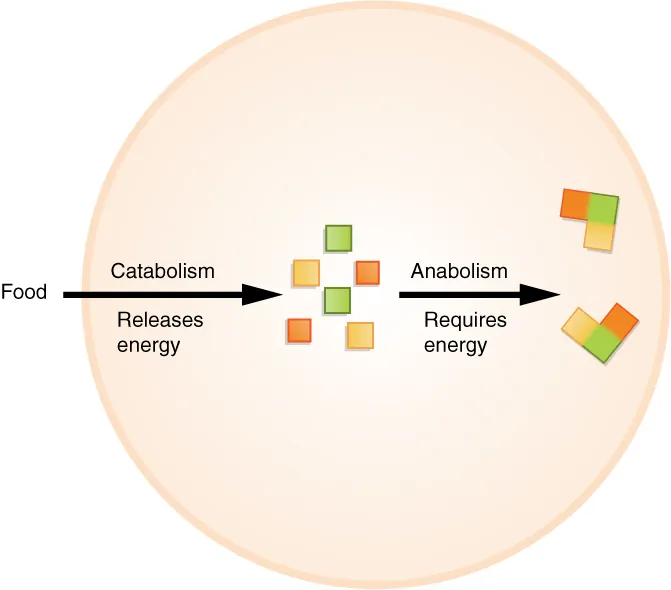
sum of all chemical reactions in an organism in the body. Both anabolism and catabolism occur simultaneously and continuously to keep you alive.
Anabolism
is a metabolic process that builds larger molecules from smaller ones, using energy.
Catabolism
is a metabolic process that breaks down larger molecules into smaller ones, releasing energy.
Responsiveness
is the ability of an organism to detect and respond to stimuli in its environment, an essential function for survival.
Movement
is the ability of an organism to change its position or location. It includes both voluntary and involuntary actions, essential for interaction with the environment.
Development
is the process by which organisms grow and mature, involving changes in size, shape, and function throughout their life. This process can include differentiation of cells and tissues, as well as reproduction and aging.
Differentiation
in which unspecialized cells become specialized in structure and function to perform certain tasks in the body.
Growth
is the increase in body size
Reproduction
is the formation of a new organism from parent organisms.
Oxygen
is a vital element that is essential for cellular respiration and energy production in living organisms. And Humans have the most urgent need for a continuous supply of oxygen
Nutrients
A nutrient is a substance in foods and beverages that is essential to human survival. The three basic classes of nutrients are water, the energy-yielding and body-building nutrients, and the micronutrients (vitamins and minerals).
Set point
the ideal value or narrow range that homeostasis strives to maintain
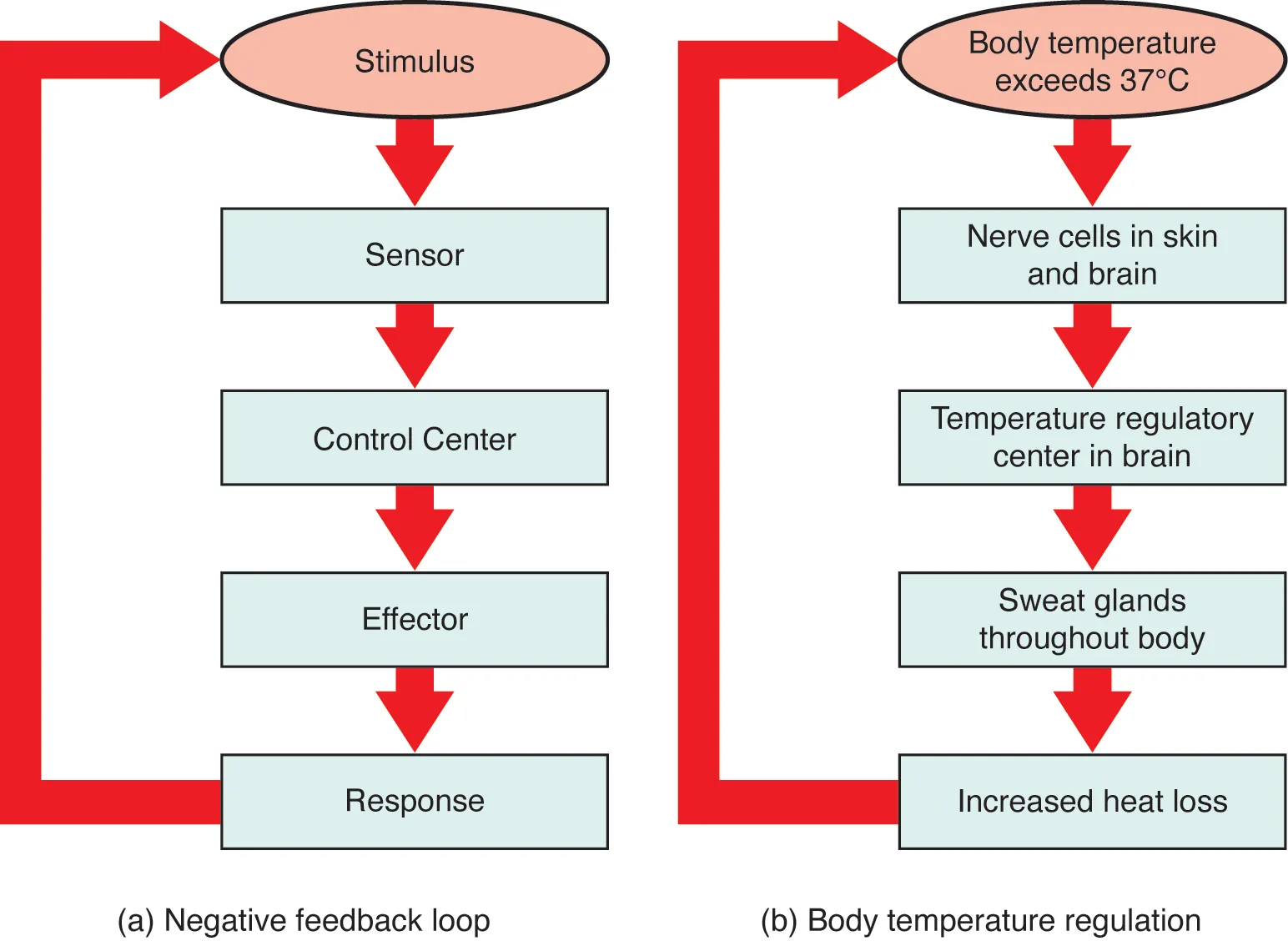
For example, the set point for normal human body temperature is approximately 37°C (98.6°F) Physiological parameters, such as body temperature and blood pressure, tend to fluctuate within a normal range a few degrees above and below that point.
Normal range
is the set of values that is optimally healthful and stable.
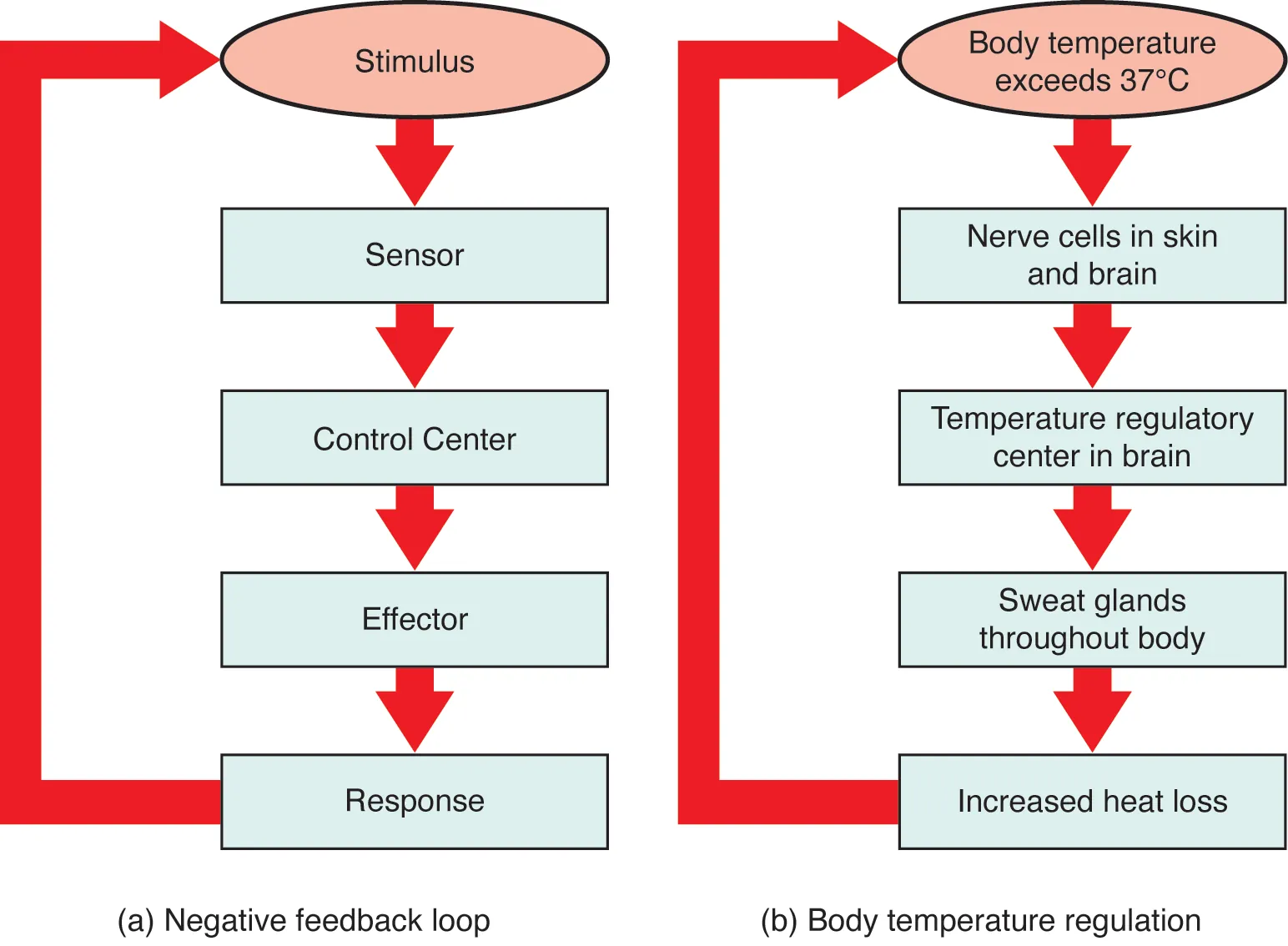
Negative Feedback
a self-regulating system that reverses a change to maintain stability or balance (homeostasis)

Sensor
is a component that detects changes in a physiological variable and relays that information to the control center for regulation.
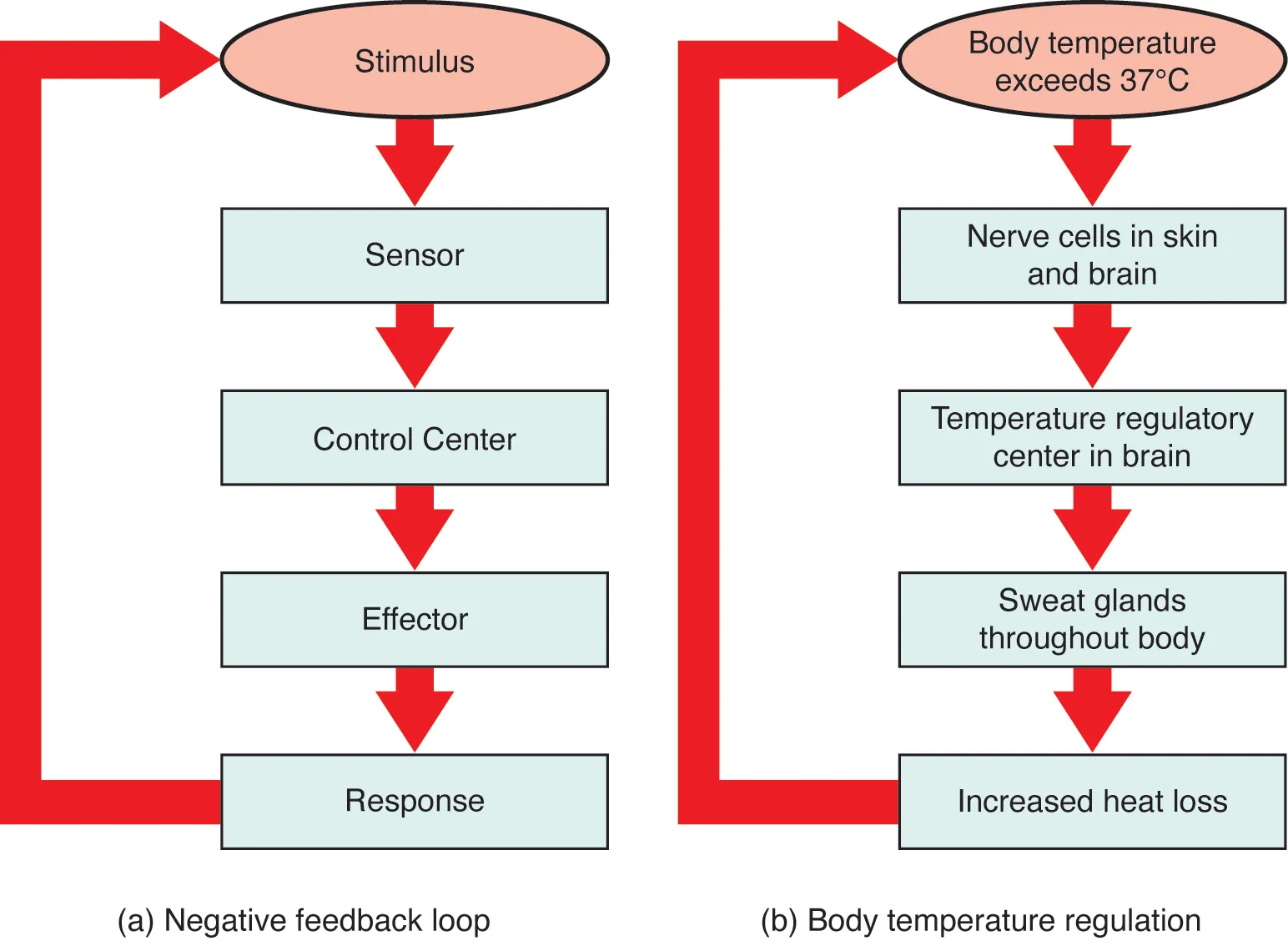
Control center
is the component in a feedback system that compares the value to the normal range.
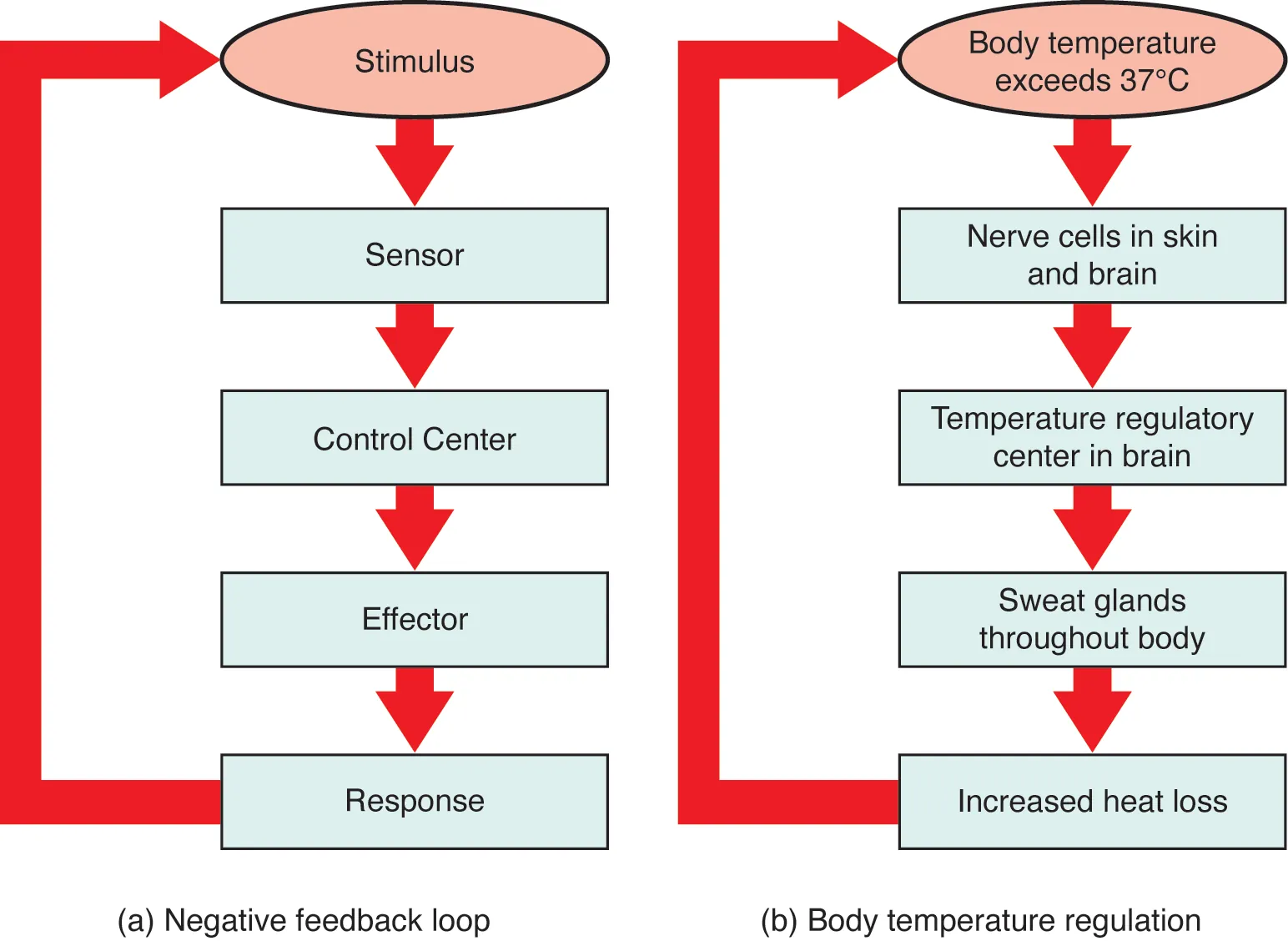
Effector
is the component in a feedback system that causes a change to reverse the situation and return the value to the normal range.
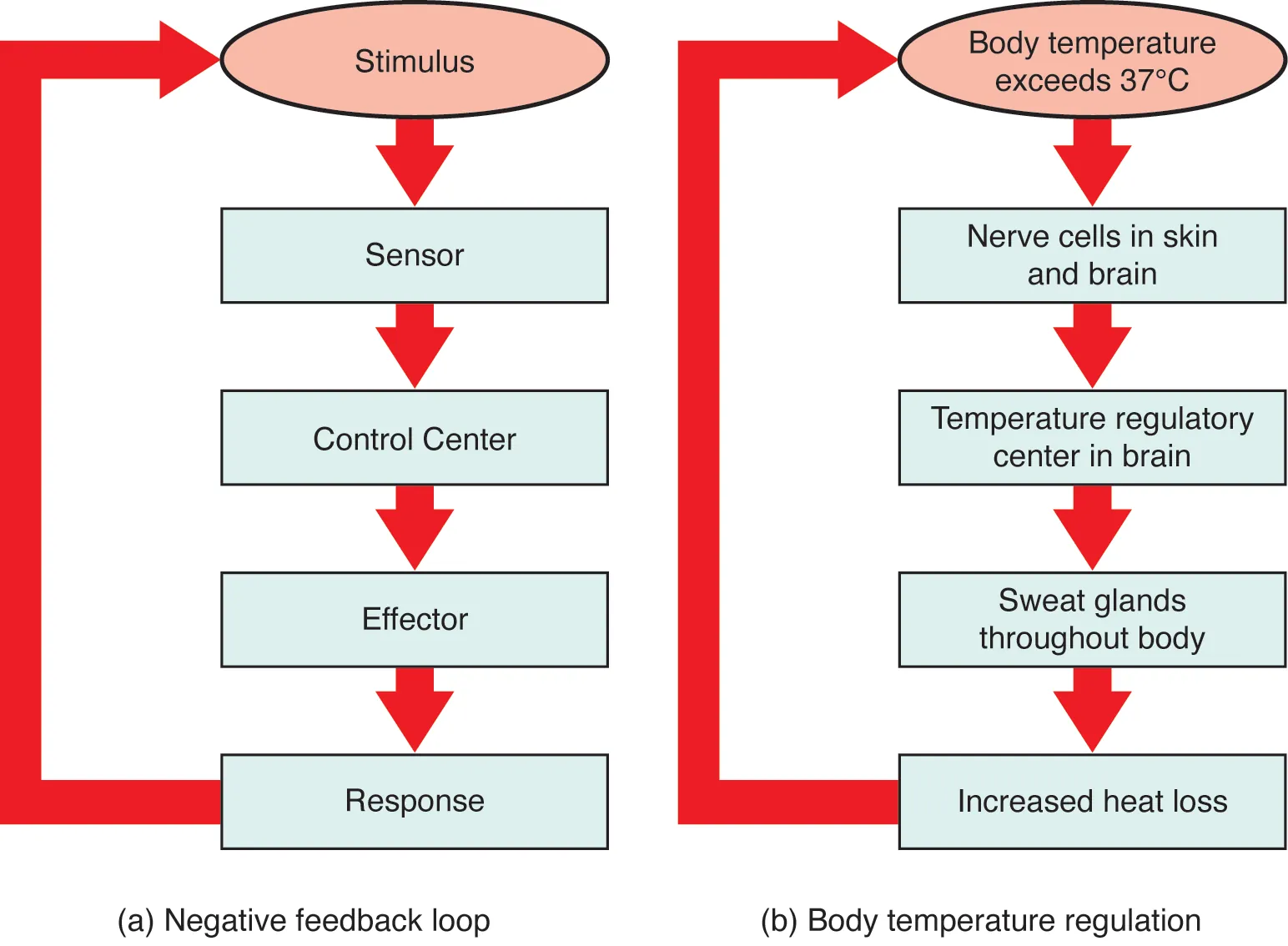
Positive Feedback
intensifies a change in the body’s physiological condition rather than reversing it.

Prone
Laying face down
Supine
Laying face up
Brachial
relating to the arm, specifically the upper arm region.
