MMG 2010 Learning Objectives Exam 2
 Call Kai
 Learn
Learn Practice Test
 Spaced Repetition
 Match
Match Flashcards
 Knowt Play
1/101

Earn XP
Description and Tags
Chapters 9-15
Name | Mastery | Learn | Test | Matching | Spaced | Call with Kai | Chat |
|---|
No analytics yet
Send a link to your students to track their progress
102 Terms
Define and describe metabolism
The sum of all chemical reactions in an organism to maintain life
Includes catabolism (exergonic pathways) and anabolism (endergonic pathways)
Compare and contrast autotrophs and heterotrophs
Autotrophs - organisms that convert inorganic CO2 into organic carbon compounds (ex. plants and cyanobacteria)
Heterotrophs - rely on more complex organic carbon compounds as nutrients, typically provided initially by autotrophs (ex. e.coli, humans)
Phototrophs, chemotrophs, organotrophs, lithotrophs
Phototrophs - obtain energy from light
Chemotrophs - obtain energy by breaking chemical bonds
organotrophs - obtain from organic compounds (human, fungi, etc.)
Lithotrophs - obtain from inorganic compounds
Importance of redox reactions in metabolism
Reactions that move electrons from one molecule to another
Oxidation = loses electrons (donor)
Reduction = gains electrons (acceptor)
Most of the energy stored in atoms and used to fuel cell functions is in form of high energy electrons. This transfer allows cell to transfer and use energy in small amounts at a time rather than all at once

Describe why ATP, FAD, NAD+, and NADP+ are important in a cell
These molecules are energy carriers that bind and shuttle high-energy electrons between compounds in pathways. Easily reduced or oxidized
NAD+ (oxidized form)/NADH (reduced form) - most common e- carrier in metabolism, used a lot in energy extraction from sugars during catabolism in chemotrophs
NADP+ (oxidized form)/NADPH (reduced form) - plays important role in anabolic reactions and photosynthesis
FAD (oxidized form) / FADH2 (reduced form) - used a lot in energy extraction from sugars during catabolism in chemotrophs
NADH/NADPH/FADH2 all have reducing power (willing to lose/donate electrons, can be a reducing agent)
Describe ATP, ADP, AMD and why it is a good energy source
ATP is the energy currency of a cell.
AMP is the most reduced form? (adenosine + ribose sugar + 1 phosphate group) → ADP (2 phosphate groups) → ATP (3 phosphate groups)
Adding a phosphate group requires energy, Pi groups negatively charged and repel each other when arranged like in ADP and ATP, making the molecules inherently unstable - high-energy phosphate bonds

Processes that generate ATP (3)
-Substrate level phosphorylation: direct transfer of phosphate from organic compound to ADP (image) → anaerobic, aerobic respiration, fermentation, phototrophy and chemolithotropy all use the ATP/ADP + Pi cycle in which ADP + Pi is phosphorylated to generate ATP. This ATP is used to do chemical work, mechanical work, or transport work.
-Oxidative phosphorylation: indirect, proton motive force (electrochemical gradient)
-Photophosphorylation: light used to form proton motive force

Describe key points of glycolysis (very simplified)
Catabolism of glucose, substrate level phosphorylation
Glucose + 2NAD+ 2ADP + 2 Pi → 2 pyruvate + 2 NADH + 2H+ + 2ATP +2H20
Electron donor: glucose
Electron acceptor: NAD+
Followed by Respiration or Fermentation
Includes EMP, ED, and PPP pathways (diferent organisms may use different routes)
Key points of fermentation
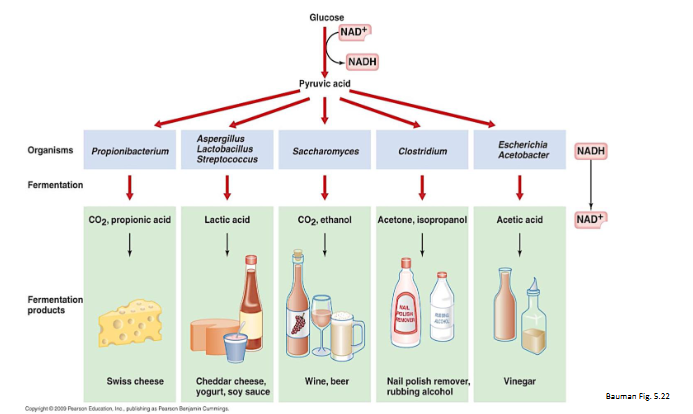
Fermentation = anaerobic catabolism (no O2 required), performed after glycolysis in the absence of O2
Conserves energy - produce energy containing high-energy bonds for ATP synthesis
Redox balance (oxidized NADH back to NAD+ so glycolysis can continue)
e- donor: organic compound, e- acceptor: organic compound
Common waste products of fermentation include: CO2, propionic acid, lactic acid, ethanol, acetone, isopropanol, acetic acid
Homolactic (LA only fermentation product) vs Heterolactic (Mixture of LA, ethanol/acetic acid, CO2 products)
Glycolysis followed by aerobic respiration: ETC/ Oxidative phosphorylation
Aerobic catabolism
e- donor: organic compound, Terminal e- acceptor: O2
ATP produced by: electron transport to generate prton motive force (ETC), oxidative phosphorylation
Glycolysis followed by anaerobic respiration
Follows the same general pathway as Aerobic respiration: 2 pyruvate in cytosol transported into mitochondria where citric acid cycle takes place, NADH and FADH2 zip over to the inner mitochondrial membrane where the ETC and chemiosmosis occurs in order to produce the majority of ATP. The only difference is that rather than O2 being consumed in complex 4 acting as a terminal electron acceptor, sulfur or nitrogen containing compounds take that role.
Electron carriers in respiration
NADH and FADH2
Produced in glycolysis and citric acid cycle and must be reoxidized for redox balance for glycolysis to occur
-In respiration, reoxidation occurs during electron transport in the cytoplasmic membrane, used to form electrochemical gradient that conserves energy through ATP synthesis
Identify the structure and structural components of an enzyme, difference between aponenzyme and holoenzyme
Enzymes are proteins, have active sites, lower activation energy
Apoenzyme - lacks necessary cofactor or coenzyme (inactive)
Holoenzyme - has necessary cofactor or coenzyme (active)
Describe the differences between competitive and noncompetitive enzyme inhibitors
Competitive - binds at active site and blocks substrate binding (ex. sulfa drugs)
Noncompetitive/Allosteric inhibitors - Bind at allosteric site, causes conformational change in enzyme that no longer allows substrate binding
Describe why glycolysis is not oxygen dependent
Because it doesn’t require oxygen; is an ancient universal metabolic process every living organism carries out some form of it
Define and describe the net yield of three-carbon molecules, ATP, and NADH from glycolysis
2 main stages:
-Energy investment phase (Glucose → 2 GAP): 2 ATP consumed → ADP +Pi
-Energy payoff phase (2 GAP → 2 pyruvate): NAD+ converted to NADH and 2 ADP + Pi phosphorylated into 2 ATP (per GAP molecule, so net of 4 ATP produced in 2nd stage, cancelling 2 of those out with the 2 consumed in the 1st stage)
Chemiosmosis, PMF, ATP Synthase
Chemiosmosis - flow of hydrogen ions across the membrane (diffusion down the gradient, energetically favorable)
PMF (proton motive force) - electrochemical gradient formed by the accumulation of H+ on one side of the membrane compared to the other (also caused pH change). ETCs pumping H+ across a membrane forms this energy source
ATP synthase - membrane-bound complex in which chemiosmosis occurs and uses to convert ADP + Pi → ATP
Compare and contrast the electron transport system location and function in a prokaryotic cell and a eukaryotic cell
Prokaryotic ETS - occurs in the inner part of the cell membrane
Eukaryotic ETS - specialized protein complexes in inner mitochondrial matrix
Describe the function and location of ATP synthase in a prokaryotic versus eukaryotic cell
ATP synthase - membrane-bound enzyme complex that uses the force of H+ diffusing down the proton gradient to convert ADP + Pi → ATP
Prokaryotes - located in the cell membrane
Eukaryotes - Located inner mitochondrial membrane. Also found in the thylakoid membranes of chloroplasts where it produces ATP during photosynthesis
Compare and contrast aerobic and anaerobic respiration
Aerobic respiration:
e- donor: inorganic compound
Terminal acceptor: O2
ATP produced by ETC and oxidative phosphorylation
Anaerobic Respiration:
e- donor: inorganic compound
Terminal e- acceptor: sulfur or nitrogen-containing compounds
ATP produced by ETC and oxidative phosphorylation
Define and describe the importance of microorganisms in the biogeochemical cycles of carbon, nitrogen, and sulfur
Carbon Cycle: Carbons exchanged between heterotrophs (produce CO2 as a result of respiration or fermentation and autotrophs (use CO2 for fixation). Eukaryotes participate in aerobic respiration, fermentation, and oxygenic photosynthesis.
Nitrogen Cycle: Prokaryotes play essential roles by transforming nitrogen between various forms from own needs, indirectly benefitting other organisms who cant incorporate it from the atmosphere.
Sulfur cycle: Part of AA Cys and Met, found in several vitamins, and necessary for synthesis of important biomolecules like coenzyme A. Many bacteria and plants can use sulfate as sulfur source, decomposition dead organisms by fungi and bacteria remove sulfur groups from AA producing H2SO4, returning inorganic sulfur to environment
Define bioremediation
Microbial bioremediation uses microbial metabolism to remove xenobiotics or other pollutants (bacteria, fungi, plants) to clean up environmental pollution by eating or catabolizing toxic chemicals
Describe binary fission
1 cell → 2 genetically similar daughter cells. Most bacteria reproduce by binary fission
Consequences: short generation time, progeny are genetically identical, exponential growth
Steps:
Cell elongates, DNA replicated
Plasma membrane begins to constrict, new wall made
Cross wall forms, completely separating 2 DNA copies
Cells separate
Define the generation time for growth based on binary fission
Time required for a population to double in size (bacteria do not all grow at the same rate)
Every generation doubles the population

Identify and describe the activities of microorganisms undergoing typical phases of binary fission (simple cell division) in a growth curve
Lag phase - intense activity prepping for pop. growth, but no actual growth yet
Log phase - exponential increase in population
Stationary phase - microbial deaths = production of new cells. No net growth
Death phase - population logarithmically declines due to lack of nutrients, secondary metabolites?, no space, quorum sensing

Describe examples of cell division not involving binary fission, such as budding or fragmentation
Binary fission most common in prokaryotes, but not only one
Budding/Asymmetrical division - formation of a long, narrow extension that swells and forms a smaller cell that eventually detaches from parent (most common in yeast)
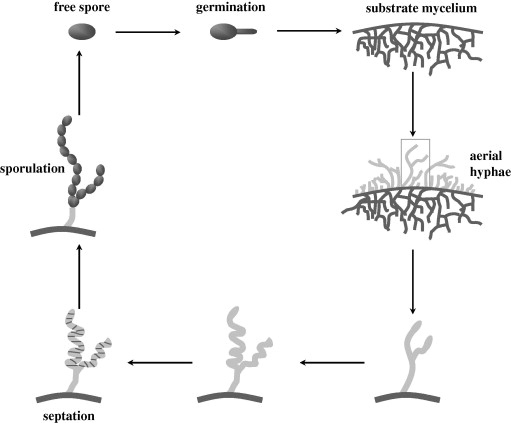
Fragmentation - Many nucleoids accumulate in an enlarged round cell or along the filament leading to many new cells at once, split from parent and float away (commonly obs in actinomyces)
Spore production in aerial filaments - aerial mycelia (bacteria) grow upward using filaments. Filamentous bacteria (ex. streptomyces) tip of aerial hyphae undergo synchronous cell division and septation to form chains of uninucleoid spores
Describe the formation and characteristics of biofilms
Biofilms are complex and dynamic ecosystems that form on many dif. environmental surfaces (usually attached to surface) and embedded in an extracellular matrix. Highly structured communities that provide a selective advantage to constituent microorganisms
Polymicrobial, Extracellular polymeric substances (EPS) secreted by organisms in biofilm, matrix interspersed with open water channels
Attachment - flagella/pili/surface molecules, reversible
Colonization - quorum-sensing
Growth and cell division
Maturation - EPS production and formation of water channels
Dispersal - Attachment of secondary colonizers and release planktonic cells to new sites
Biofilm matrix can: hold cells together, retain nutrients, maintain moisture, protect from environmental stress, limit penetration of some antimicrobials, help communicate
Identify health risks associated with biofilms and how they are addressed
Microbes growing in biofilm can behave differently from the same microbes growing as free-floating cells
Dental plaque → dental caries/periodontal disease
Catheters → healthcare-associated infections
Chronic wounds → persistent infection
Pseudomonas → chronic respiratory infections (main cause of cystic fibrosis)
Describe quorum sensing and its role in cell-to-cell communication and coordination of cellular activities
Quorum sensing is the ability to detect and respond to cell population density by gene regulation
Discovered 1970 with bacterial luminescent system in Vibrio fischeri (GN bacteria)
Bacterial cell produces and emits and autoinducer (AI), at low cell densities the AI will diffuse away
At high densities the AI enters bacterial cell, binds to specific DNA regions and activated gene transcription resulting in a positive-feedback loop
Can be intraspecies or interspecies communication - In bacteria they produce signaling molecules, release into environment, detect the concentration of those molecules, and respond when enough cells are present
Allows cells to coordinate biofilm formation, virulence factors, enzyme production, bioluminescence, and other population-level behaviors

Identify and describe different categories of microbes with requirements for growth with or without oxygen: obligate aerobe, obligate anaerobe, facultative anaerobe, aerotolerant anaerobe, microaerophile, and capnophile
Obligate (strict) aerobes - cannot growth without an abundant supply of O2
Obligate Anaerobes - killed by oxygen
Facultative anaerobe - Organisms that thrive in presence of oxygen but also grow in absence by relying on femerntation or anaerobic respiration
Aerotolerant anaerobes - indifferent to the presence of oxygen, dont use but not harmed by it
Microaerophiles - require goldilocks oxygen concentration, not too much and not too little. O2 must be just right for growth

Illustrate and briefly describe minimum, optimum, and maximum temperature requirements for growth
Minimum growth temp - lowest temperature at which organism can survive and replicate
Optimum growth temp - temperature at which growth rates are the highest
Maximum growth temp - highest temperature at which growth can occur
Define: psychrophile, mesophile, thermophile, alkaliphile, neutrophile,
acidophile, halophile, halotolerant
Psychrophile - Grow at extreme low temperatures (<0 C)
Psycrotrophs - Prefer cooler temperatures (~4 - 25 C)
Mesophile - Grow and reproduce at moderate temperatures (around human body temp); e. coli., salmonella
Thermophile - Grow at hotter temps (>50 C), do not multiply are room temps; Thermus aquaticus, Geobacillus
Hyperthermophile - Grow at extreme hot temperatures ( >80 C); Pyrobolus, pyrodictium
Acidophiles - grow optimally at pH < 5.5
Neutrophiles - Grow optimally at ± 1-2 from pH 7
Alkaliphiles - Grow optimally pH between pH 8-10.5
Halophile - require high salt concentrations for growth (often found in marine environments)
Halotolerant - do not need high concentrations of salt for growth, but will survive and divide in presence of high salt.
Define virulence and pathogenicity
Pathogenicity - ability of a microorganism to cause disease in a host (can cause or not)
Virulence - the degree/severity of disease caused by a pathogen: essentially how harmful a pathogen is
Differences between vertical and horizontal gene transfer in bacteria
Vertical gene transfer - transmission of genetic information from generation to generation (main mode)
Horizontal gene transfer (HGT) - in prokaryotes, introduction of genetic material from one organism to another organism within the same generation (even distantly related species to share genes and phenotypes)
Transformation, transduction, conjugation
Explain the two functions of the genome
DNA is the genetic material responsible for inheritance and passed from parents to offspring - accurate replication with full complementation and organization into genes arranged on chromosomes and plasmids
Direct and regulate the construction of proteins necessary for growth and reproduction in a particular cellular environment
Explain the meaning of the central dogma of molecular biology
Flow of genetic information: DNA → RNA → Protein
Replication → transcription → translation
Differentiate between genotype and phenotype and explain how environmental factors influence phenotype
Genotype - cell’s full collection of genes
Phenotypes - set of observable chracteristics that result from those genes. Product of the array of proteins being produced by cell at a given time which is a product of the cells genotype and the environment

Compare the processes of transformation, transduction, and conjugation including the source of transferred DNA and how DNA is transferred between bacterial cells.
Transformation - naked DNA is taken up from the environment typically the result of cells that lysed upon death and released their contents. Competent cell = actively bind to environmental DNA, take it into cytoplasm and make it single stranded. Natural transformation vs laboratory transformation.
Transformation can contribute to acquisition of AMR, new metabolic traits, and virulence associated traits
Transduction - Genes are transferred between cells in a virus. Bacteriophages move short pieces of chromosomal DNA from one bacteria to another.
Generalized transduction - Random bacterial DNA is packaged inside a phage and
transferred to a recipient cellSpecialized transduction - Specific bacterial genes are packaged inside a phage and transferred to a recipient cell
Conjugation - Genes transferred from one bacterium to another through cell-cell contact (sex pilus or mating bridge). Cells must be opposite mating types (Donor cells has conjugative plasmid = F plasmid, recipient lacks it)
F+ cells are donor cells, carry the F plasmid
F- cells do not have F plasmid
If conjugation successful, F- cell turns into F+ cell
If the F plasmid integrates into donor chromosomes = Hfr cell (High frequency of recombination)

Explain the role of plasmids and other mobile genetic elements in the acquisition and dissemination of bacterial traits, including antibiotic resistance.
Extrachromosomal elements are genetic elements that exist outside chromosomes, occurring in prokaryotic and eukaryotic organisms. Includes:
Plasmids - self-replicating circular pieces of DNA. Small, found primarily in bacteria and yeast, can carry AMR, toxins, metabolic enzymes, virulence factors, etc.
Mobile genetic elements (transposons) - move from one chromosome to another or from one cell to another. Allows disruption of genes, and acquisition/spread of new traits through HGT.
Explain how horizontal gene transfer can contribute to the acquisition of bacterial virulence traits
HGT allows even distantly related species to share genetic materials (transduction, transformation, conjugation). Allows bacteria to acquire genes that help produce toxins, adhere to host cells, evade immune system, invade host tissues
Describe the characteristics of pathogenicity islands and explain their role in bacterial pathogenicity
PAIs are pathogenic genes clustered in one are of chromosome (builds on idea of operons). Cluster of genes that provides capabilities associated with disease
Regions containing genes that contributed virulence, host invasion, adhesion, toxin production, secretion systems, avoiding host defense
PGIs may have been acquired through HGT
Acquisition of a PAI can produce new phenotype, new interaction with host, potentially increase in virulence
Explain how bacterial pathogens regulate the expression of virulence factors in response to environmental and host-associated signals
Virulence genes are not always on, a pathogen doesn’t express every virulence factor continuously. Can respond to temp, pH, nutrients, O2, cell density, host signals, stress, location in host.
Virulence genes are tightly regulated:
Genetic info → gene → expression → protein function/product → phenotype → interaction with host → disease
Compare the mechanisms by which bacteria, fungi, protozoa, helminths, and viruses acquire, regulate, or express genetic information
Fungi - eukaryotes, DNA in nucleus, multiple linear chromosomes. Genetic variation can influence antifungal resistance, virulence, host adaptation, environmental adaptation
Candida can undergo genetic and phenotypic changes that affect its ability to survive different host environments yeast infections
Protozoa - eukaryotes with complex life cycles. Genetic variation can influence host adaptation, antigenic variation, drug resistance
Protozoan genetics important for understanding why parasitic infections can be difficult to control
Plasmodium: genetic variation contributes to differences in drug susceptibility, surface antigens, parasite fitness
Helminths - multicellular eukaryotes with complex life cycles. Genetic variation can influence development, host specificity, reproduction, drug specificity, immune invasion
Schistosoma mansonoi - blood fluke. Genetically distinct populations can differ in worm reproduction/fertility, egg production, tissue egg burden, liver and spleen pathology
Virus - Acellular with DNA/RNA. Viral genomes can change through mutation, recombination, reassortment, other.
Viruses can acquire genetic changes that affect host range, tissue tropism, antigenicity, drug susceptibility, virulence
Influenza - segmented genome = genetic reassortment can occur when dif. influenze viruses infect same cell
Apply principles of microbial genetics to explain how genetic variation and gene regulation can influence microbial adaptation, antibiotic resistance, and disease
no.
Explain how asexual gene transfer results in prokaryotic genetic diversity
Through HGT (transformation, transduction, conjugation)
Explain the structure and consequences for bacterial genetic diversity of transposons
Transposons move within a bacterial chromosome or between a chromosome and a plasmid (allowing transfer through cells)
May carry additional genes (ex. antibiotic resistance) or disrupt a gene
Describe why regulation of operons is important
Operon regulation allows bacteria to turn on/off
Conserves energy and resources
Respond to envrionmental changes (temp, pH, stress, etc.)
Maintain metabolism
Identify tools of molecular genetics that are derived from microorganisms
Restriction enzymes - cuts DNA → recombinant DNA
DNA ligase - joins DNA → recombinant DNA
Plasmids - Carry cloned DNA → genetic engineering
Transformation - Introduce new DNA into cells
DNA polymerase - Sanger sequencing
Taq. Polymerase - PCR
CRISPR - Genome editing
Describe the methods used to create recombinant DNA molecules
Recombinant DNA technology - process by which DNA sequence is manipulated in vitro, recombinant DNA then introduced into host organism making host transgenic
RE’s and Ligases:
Restriction enzymes cut double-stranded DNA at recognition sites forming sticky ends
DNA from another source is cut with the same restriction enzyme
Join by base pairing, fragments form a linear or circular molecules
DNA ligase unites the fragments producing rDNA
Plasmid Vectors: small circular DNA inserted into bacteria through environmental natural uptake or bacteriophage transduction
Typically have a polylinker site/ multiple cloner site (MCS)
PCR: amplifies DNA sequence, primers added to amplify and join in vector, DNA fragments for recombinants DNA techniques

Describe methods used to introduce DNA into prokaryotic cells
Transformation in conjugate bacteria - take up free DNA from surroundings. Can induce this using heat shock or electroporation
Transduction - bacterial cells infected with bacteriophages to the recombinant phagemids can be introduced. May be integrated into bacterial genome (lysogeny) or exist as a plasmid in hosts cytoplasm. DNA fragments engineered into phagemids
Protoplast fusion - removing cell walls from 2 bacteria allow them to fuse; recombination may then occur between DNA derived from parent cells
Conjugation?? - F plasmids transferred between bacterial cells through pilus/mating bridge
Electroporation - brief electrical pulses to temporarily increase permeability of cell membrane, allowing DNA to enter.
Describe the methods used to introduce DNA into eukaryotic cells
Transfection - introduction of recombinant DNA molecules into eukaryotic hosts
Electroporation - brief electrical pulses temporarily decrease membrane permeability, allowing DNA to enter
Microinjection - DNA fragments can be directly injected into cytoplasm using a glass micropipette
Gene Guns (plants) - used because plants hack thicker cell wals. Gene gun used to shoot gold or tungsten particles coated with recombinant DNA molecules into plant protoplast at high speeds.
Shuttle vectors (plants) - plasmids that can move between bacterial and eukaryotic cells
Tumor-inducing plasmids (Ti)
Viral vectors - method often used in gene therapy to introduce healthy genes into human pts suffering from disease that result in genetic mutations.
Explain the principle of restriction fragment length polymorphism (RFLP) analysis and its uses
Compares DNA banding patterns of different DNA samples after restriction digestion
Used to track/identigy microorganisms implicated in food poioning outbreaks, determine inheritance patterns of chromosomes with variant genes (paternity/heritable diseases), DNA fingerprinting

Explain the principles and uses of microarray analysis
Technique that capitalized on hybridization between complementary nucleic acid sequences
Useful for comparison of gene expression patterns between different cell types. Study how gene expression is affected in organisms that are infected by bacteria or viruses or subjected to certain chemical treatments
Isolate nucleic acid samples
Label with fluorescent dyes
Hybridize them to immobilized probed on a chip
Scan with laser
Process digital data to measure gene expression or genetic variants

Explain the method and uses of polymerase chain reaction and DNA sequencing
Permits rapid amplification in the number of copies of specific DNA sequences
Uses: determine sequence of nucleotides in specific region of DNA, amplify target region of DNA for cloning a plasmid vector, identify source of DNA sample left at crime scene, paternity test, compare samples of ancient DNA with modern organisms, determine presence of difficult to culture microorganisms in humans or environmental samples
Denaturing - strands separate
Annealing - DNA Primers bind to template
Extension - synthesis of new strand by Taq. polymerase

Summarize the advantages of genetically engineered pharmaceutical products
Genetic engineering allows creation of new pharmaceutical products called recombinant DNA pharmaceuticals
Includes antibiotic drugs, vaccines, hormones, etc.
Has been important in developing therapeutic proteins like insulin, human growth hormone, interferons, etc.
Allows pharmaceutical products to be manufactured more efficiently, safely, and consistently while expanding the range of medicines available to treat human disease
Summarize the mechanisms, risks, and potential benefits of gene therapy
Gene therapy attempts to correct genetic abnormalities by introducing a nonmutated, functional gene into a patients genome.
Gene addition - introduce functional copy of a gene to replace/compensate for a faulty gene
Gene editing - Use tols like CRISPR-Cas9 to modify specific DNA sequences
Gene silencing - Turns off or reduces expression of a harmful gene
Gene replacement or modification - Alters genetic instructions to cells produce a functional protein or stop producing a harmful one
Benefits: treat genetic disorders, long-lasting effects, targets underlying cause (rather than treating symptoms), personalized medicine
Risks/Limitations: Immune reactions, off-target effects, unintended genetic changes, variable effectiveness, expensive, ethical concerns

Identify ethical issues involving gene therapy and the regulatory agencies that provide oversight for clinical trials
While current research is focused on gene therapy for genetic diseases, scientists might one day apply these methods to manipulate other genetic traits not perceived as desirable.
Which genetic traits worthy of being “corrected”
Should gene therapy be used for cosmetic reasons or to enhance human abilities
Should genetic manipulation be used to impart desirable traits to the unborn?
Is everyone entitled to gene therapy, or could the cost create new forms of social inequality
Who should be responsible for regulating and policing inappropriate use of gene therapies
Current oversights on the federal level: FDA office of human research protection (OHRP), and recombinant DNA advisory committee (RAC) at the NIH.
Compare somatic-cell and germ-line gene therapy.
Somatic cells - non-reproductive cells within the body. This is what current gene therapies typically target
Germ-line - sperm or egg, resulting traits could be passed on to offspring. Could be potentially used to combat heritable diseases, but also could lead to unintended consequences for future generations. Not currently funded by federal institutions
Explain how microbial enzymes became tools for manipulating DNA
Microbe useful biological mechanism → Identify mechanism → isolate or modify mechanism → becomes laboratory tool → tool enables new applications
Describe the role of restriction enzymes and DNA ligase in recombinant DNA technology
RE’s are endonucleases that cut DNA at specific sequences. Bacterial DNA is protected by methylation pattens, but incoming foreign DNA is cut and degraded by cell.
RE’s have a specific recognition sequence and cut at a specific place within that (ex. EcoRI). Can produce either sticky ends (ssDNA overhands) or blunt ends (no overhang)
DNA ligase - enzyme that joins breaks in DNA backbone by forming phosphodiester bond between adjacent nucleotides
Involved in DNA replication, DNA repair, recombination, DNA maintenance
Describe how CRISPR-Cas systems can be adapted for genome editing
CRISPR systems provide a form of adaptive defense against foreign nucleic acids (particularly bacteriophages)
Can recognize foreign genetic material, use stored sequence information, target matching nucleic acid
CRISPR-based editing can provide targeted recognition of a specific DNA sequence, making genome manipulation much more programmable
Cas9 & gRNA produced
Target search
Target DNA cut
Outcome (DNA destroyed in prokaryotes, DNA edited in adapted method)

Compare disinfectants, antiseptics, and sterilants
Sterilization (objects/equipment): Destorys/removes all microbial life, including endospores
Disinfection (nonliving surfaces): Eliminates many or all pathogens, but not necessaryily endospores
Antispetics (skin): Reduces/eliminates pathogens on living tissue
Sanitization (food/contact surfaces): Reduces microbial numbers to public health standards
Describe the principles of controlling the presence of microorganisms through sterilization and disinfection
Physical vs Chemical control methods. All of these methods have different uses in controlling microorganism.
Understand and compare various physical methods of controlling microbial growth with heating
Heat - consists of moist or dry heat
Moist heat methods: Boiling, steam, autoclave (steam and pressure), Pasteurization, High-temp hot shot (HTST). water transfers heat more efficients and is generally more effective than dry heat at the same temperature
Boiling does not sterilize, it kills many vegetative cells but doesn’t reliably destroy endospores
Autoclaving = sterilization, high temperature steam + pressure can destroy endospores
Pasteurization = controlled heating to reduce harmful microorganisms and reduce spoilage while preserving food quality. Does not sterilize
Kills by denaturing proteins, disrupting membranes, damaging nucleic acids
Dry heat methods: Flaming, incineration, Hot air sterilization
Requires higher temperatures, longer exposures. Kills by oxidizing cellular components and damaging proteins and membranes
Understand and compare various physical methods of controlling microbial growth through cold temperatures, desiccation, lyophilization, osmotic pressure
Decreased temperature has a bacteriostatic effect
Refrigeration slows growth
Freezing shows no significant growth
Lyophilization - Freeze drying, snap frozen and placed under vacuum. A method of desiccation.
Dessication - dehydration. controls microbial growth, but doesn’t kill all microbes or endospores.
Osmotic pressure - high concentrations of salts and sugars to create hypertonic environment → causes plasmolysis
Understand and compare various physical methods of controlling microbial growth through Radiation and Filtration
Radiation: Ionizing vs Non-ionizing
Ionizing radiation = sterilization. Includes x-rays, gamma grays, electron beams. Penetrates packaging. Causes lethal DNA damage (ds breaks).
Non-ionizing radiation = disinfection. Less energy than ionizing radiation, does not penetrate packaging. Introduces thymine dimers, leading to mutations
UV light causes DNA damage
Blue light produces 0 radicals, acne treatments
Filtration - Passage of liquids/gases through screenlike material. Different membrane filter sizes. HEPA filters use this. Useful for heat-sensitive materials
Understand and compare various chemicals used to control microbial growth, including their uses, advantages and disadvantages, chemical structure, and mode of action
Uses: Disinfection, antisepsis, sanitization, sometimes chemical sterilization
Inanimate objects: Detergents, alcohols, aldehydes, phenols, halogens, Peroxygens, ethylene oxide, Chlorine dioxide
Living tissue - Detergents, alcohols, phenols (diluted), halogens (diluted), Peroxygens (dilutes)
Alcohols ethanol, isopropanol, disrupt membranes and denature proteins. Skin antisepsis, surface disinfection. Not reliable sterilization agent, doesn’t effectively kill endospores
Aldehyde - formaldehyde, ethylene oxide. alkylating agents, disinfectant and sterilant at low temperatures.
Ethylene oxide highly penetrating, can sterilize items within plastic bags. Useful for heat-sensitive agents
Halogens Chloride, Iodine, damage cellular components through oxidation. Disinfection
Peroxygens Hydrogen peroxide, disinfectants or antiseptics. Strong oxidizing agent that produces free radicals that cause extensive cellular damage to proteins, DNA, membranes
Bisbiguanides chlorhexidine, antiseptic. Disrupts cell membranes (low), causes cell cytoplasmic contents to congeal. Bacteriostatic at low conc., bacteriocidel at high conc.
Surfactants - Lower surface tension of water, have polar and nonpolar parts allowing to bind to dirt and wash away
Preservatives - SO2 prevents wine spoilage. Organic acids inhibit metabolism. Nitrites and nitrates prevent endospore germination, primarily used in meat products
Compare and contrast the disk-diffusion, use-dilution, and in-use methods for testing the effectiveness of antiseptics, disinfectants, and sterilants.
Disk-diffusion - applying different chemicals to separate sterile filter paper disks, then placed on bacterial lawn and zone of inhibition is measured
Use-dilution - used to determine a chemicals disinfection effectiveness on an inanimate surface. Cultures of targeted microorganisms exposed at various concentrations of disinfectant for different amounts of time.
In-use - determines whether an actively used solution is contaminated. Used disinfectant sample + sterile broth with disinfectant inactivator → plated and allowed to grow
Explain why some microorganisms are more resistant to control methods than others
Different control methods work for different microbes.
General pattern: Endospores → mycobacteria → non-enveloped viruses → fungi → vegetative bacteria → enveloped viruses
Describe how endospore, virus, protozoan, and prion levels are each controlled
Endospores are dormant structures that survive drying, radiation, boiling, chemicals, and heat. Sterilization methods = autoclaving, hydrogen peroxide vapor, ethylene oxide, chlorine dioxide, sporocides.
Protozoa - different stages of a protozoans life cycle can resist certain control methods. Treatments = filtration, CO2, UV, ozone
Viral - Viruses can be resistant to some measures, lipids in envelope sensitive to heat, drying and detergents. naked viruses are usually inactivated by chlorine-based agents
Prions - infectious proteins, eliminated through a combination of chemical treatments and autoclaving
Describe the chemotherapeutic approaches of ancient societies
Humans used substances to treat infections long before modern antimicrobial drugs
Plant extracts and herbal preps.
Honey and other naturally antimicrobial substances
Moldy materials applied to wounds
Mercury and other chemicals
Salvarsan and other early chemical treatments
Describe the historically important individuals and events that led to the development of antimicrobial drugs
Golden age of antibiotics = 19402-1960s
Paul Ehrich (1910) = Developed Salvarsan to treat syphilis: Magic Bullet concept
Sahachiro Hata found compound 606 targeted Treponema pallidum
Alexander Fleming (1928) = Developed penicillin from Penicillium mold. First natural antibiotic
Chain and Florey (1940s) = Purified and mass-produced penicillin during WWII
Selman Waksman = Discovered streptomycin → first antibiotic effective against TB
Actinomycetes source of more than half of all natural antibiotics
Natural vs Semisynthetic vs synthetic antimicrobial drug
Natural - produced by microbes
Semisynthetic - chemically modified natural product. Modifications can improve stability, absorption, spectrum of activity, resistance to bacterial enzymes
Synthetic - completely manufactured (ex. sulfonamides)
Contrast bacteriostatic versus bactericidal antibacterial activities
Bacteriostatic: inhibits bacterial growth and reproduction, doesnt necessarily kill bacteria
Bacteria →
Growth→ Immune system removes bacteria
Bactericial: kills bacterial cells
Bacteria → cellular damage → bacteria cells die
Distinction is based on a drugs effect on bacteria, not whether patient gets better. Both types are effective
Contrast broad-spectrum drugs versus narrow-spectrum drugs
Broad-spectrum - Active against many types (ex. tetracyclines)
Narrow-spectrum - Active against a specific group (ex. Penicillin G)
Explain the significance of superinfections
Superinfection - a secondary infection in a patient having a preexisting infection. Develops when antibacterial intended for preexisting infection kills protective microbiota allowing another pathogen resistant to the antibacterial to proliferate and cause a secondary infection.
Ex. C. dif developed after taking antibiotics for a sinus infection

Discuss the significance of dosage and the route of administration of a drug
Dosage - amount of drug administered
Too little may not reach effective concentration, infection may persist, can contribute to selection of resistant microbes
Too much can cause increased risk of toxicity and side effects
Route - how drug enters body
Oral: must survive GI tract, convenient, absorption can vary
IV: directly into bloodstream, rapid and predictable
Topical: Directly to skin or mucous membrane, useful for localized infections
IM, inhaled, intrethecal
Identify factors and variables that can influence the side effects of a drug
Drug-related factors: Dose, route, duration of treatment, drug interactions
Pt-related factors: age, body size, kidney/liver function, genetics, pregnancy, other medical conditions
Microbiome: Drugs may affect beneficial microorganisms as well as pathogens
Describe the significance of positive and negative interactions between drugs
Synergistic - Drug A + Drug B = Greater effect than either drug alone
Antagonistic - Drug A + Drug B = Reduced effectiveness
Drug combinations must be selected carefully
Define antimicrobial drugs, empiric therapy, and prophylaxis
Antimicrobial drugs - therapeutic compounds that kill microbes or inhibit their growth
Empiric therapy - medical treatment begin on the basis of a clinical “educated guess” before specific causative agent is known (ex. kid with mneumonia start on antibiotics before lab results back)
Prophylaxis - process that prevents infection or disease in a person at risk (ex. antimalarials)
How are antibiotic dugs classified
By cellular targets: Cell wall, membranes, ribosomes, DNA synthesis, metabolic pathways
Major MOAs: Cell wall synthesis, protein synthesis, nucleic acid synthesis, plasma membrane integrity, metabolic pathways
For each antibiotic inhibitors of cell wall synthesis, identify: cellular target (mode of action) and whether they are bacteriostatic or bactericidal
Major classes are β-lactams, vancomycin, bacitracin (meh)
β-lactams include penicillins, cephalosporins, carbapenems. Bactericidal, cause cell lysis. They bind transpeptidase (PBP), blocking transpeptidation step in PG cross linking. Broad range spectrum
Vancomycin binds the terminal amino acid of pentapeptide (PG momomer D-Ala-D-ala), inhibiting the assembly of PG. Bactericidal, causes cell lysis. Exclusively gram positive. Used especially for MRSA
For each antibiotic inhibitors of bacterial protein synthesis, identify: cellular target (mode of action) and whether they are bacteriostatic or bactericidal
Bacteriostatic
Helpful because bacteria have different ribosomes than eukaryotes, allowing to specifically target bacterial ribosomes
Aminoglycosides bind the 30S subunit, cause misreading of mRNA
Streptomycin
Tetracylines bind the 30S subunit, block tRNA binding at A-site
Macrolides bind the 50S subunit, black ribosome translocation, no peptide bond formation
erythromycin
For each antibiotic inhibitors of nucleic acid synthesis, identify: cellular target (mode of action) and whether they are bacteriostatic or bactericidal
Bactericidal
Quinolones/Fluoroquinolones (Ciproflaxcin) target DNA synthesis by inhibiting bacterial DNA gyrase preventing DNA replication
Rifamycins (Rifampin) targets RNA synthesis by binding to RNA polymerase and blocking transcription
Metronidazole targets DNA, is activated under anaerobic conditions and damages DNA
For each antibiotic inhibitors of metabolic pathways, identify: cellular target (mode of action) and whether they are bacteriostatic or bactericidal
Broad-spectrum, bacteriostatic
Sulfonamides and Trimethoprim inhibit steps in folic acid synthesis. Humans obtain folate from diet (dont produce) → selective toxicity
Synergistic effect: Combination blocks sequential steps = greater efficacy
Blacks folate precursors, inhibition of folic acid synthesis inhibits bacterial cell growth, folic acid needed for RNA/DNA and protein synthesis
For each antibiotic disruptors of plasma membrane, identify: cellular target (mode of action) and whether they are bacteriostatic or bactericidal
Bactericidal
Human and microbial membranes are similar → selective toxicity
Polymyxins target cell membranes, interact with LPS in gram-negative bacteria and disrupt membrane. toxic to kidneys so mainly topical use
Daptomycin targets cell membranes, inserts into gram positive membranes and depolarizes the cell
Explain the differences between modes of action of drugs that target fungi, protozoa, helminths, and viruses
Antifungal agents - fungi are eukaryotic so fewer selective targets. Most antifungals target fungal cell walls, plasma membranes, nucleic acid synthesis, chitin biosynthesis, microtubules, and ergosterol synthesis
Predominant sterol in humans is cholesterol, whereas in fungi it is ergosterol, making it a good target for antifungal drug development
Antiviral drugs - treat infections but dont usually cure them. Target steps inteh viral replication pathway in order to limit tham rather than cure. Fewer options than antibiotics
Antiparasistic agents - effective ones are difficult to develop because pathogen/host are both eukaryotes and parasties have complex life cycles, so targeting one stage may not be effective during another.
Antimalarial drugs (Quinine/Chloroquine/Primaquine increases vacuole pH disrupts membrane stability), antihelminthic drugs (Biltricide/ Praziquantel alters membrane permeability in worms; Mebendazole inhibits microtubule function in helminths), antiprotozoan drugs (metronidazole: flagyl treats intestinal/vaginal protozoa)
Explain the concept of drug resistance
Drug resistance is the reduction or loss of a medications ability to perform its function because the target organism or cell has adapted to survive it.
It is acquired either intrinsically (natural) or acquired through mutations or HGT
Describe how microorganisms develop or acquire drug resistance
4 main mechanisms:
Efflux pumps - Microbe acquires gene product that pumps drug out of cell → drug spends little/no time in cell → resistance
Blocked penetration → microbe acquires a gene product that prevents cell uptake of drug → drug no longer enters cell → resistance
Inactivation by enzymes - microbe acquires an enzyme that inactivates drug → drug no longer effective → resistance
Target modification - Microbe acquires a gene product that produces a modified drug target → drug no longer binds to target → resistance

Mechanism of Drug resistance: Inactivation by enzymes
Gene: β-lactamases → β-lactam resistance (penicillin, cephalosporins, carbapenems)
Gene: acetyltransferases → chloramphenicol resistance (Aminoglycosides, macrolides, rifamycins)
Hydrolysis of β-lactam drugs (penicillin, cephalosporins, carbapenems) by β-lactamases
Acetylation of drugs by Chloramphenicol acetyltransferase (CAT)
Mechanism of drug resistance: minimize drug concentration in cell
Blocked penetration: Carbapenem resistance in Pseudomonas aeruginosa
Efflux pumps tend to remove diverse classes of drugs, contribute to multidrug resistance
Pseudomonas aeruginosa; azole resistance in Candida spp.

Mechanism of drug resistance: Target modification
Every antibiotic has a specific target in the bacterial cell: if the target is altered then the drug will no longer interact with target and it will have no effect.
β-lactam drugs target transpeptidases (PBP), in resistant bacterial cells, a resistance gene mecA encodes for a different version of PBP called PBP2a. Strains that express PBP2a are resistant to all β-lactam drugs → MRSA
Change the target with same functionality → drug dont work
Altered pentapeptide of PG: van genes encode an alternative version of pentapeptide that vancomycin does not recognize (D-Ala-D-Lac). Strains that express van genes are resistant to vancomycin
Vancomycin-resistant enterococcus (VRE) contains a terminal D-Lactate or D-serine rather than D-ala
Describe how the Kirby-Bauer disk diffusion test determines the susceptibility of a microbe to an antibacterial drug.
Kirby-Bauer disk diffusion test - zone of inhibition correlates with susceptibility
Cannot distinguish between bacteriostatic and bactericidal, differences in zone sizes cannot be used to compare drug potencies or efficacies. Only provides information on the antibacterial to which a bacterial pathogen is susceptible or resistant
Zone of inhibition determines susceptibility or resistance of the bacterial pathogen to the drug

Explain the significance of the minimal inhibitory concentration and the minimal bactericidal concentration relative to the effectiveness of an antimicrobial drug
MIC - minimum inhibitory concentration is the lowest concentration of antibiotic preventing visible growth
MBC - minimal bactericidal concentration - lowest drug concentration that kills >99.9% of the starting inoculum.
Quantitative, observe the turbidity of broth to determine.

Describe how broth dilution and Etest determine antimicrobial susceptibility
Both give quantitative values of MIC to determine antimicrobial susceptibility.
Broth dilutions observe the lowest dilution that inhibits turbidity, this dilution is the MIC (often done in ~96 well plates)
Etest is a combination of the Kirby-Bauer disk diffusion and dilution methods. A Etest strip shows a gradient of antibacterial on it, and is placed on bacterial lawn where antibiotic diffuses directly related to drug concentration (essentially adds a quantitative measure to it) and can determine MIC.
MBC cannot be determined with Etest method
Describe the methods and strategies used for discovery of new antimicrobial agents.
Not a lot of progress for developing new antimicrobial agents within the past decades (steady decline since the 80s)
iChip technology to test and grow microbes in soils, checking for anitmicrobial properties.
Bacteriophage therapy is also a new technique beign developed
Define intrinsic and acquired resistance
Intrinsic resistance is a natural resistance to antimicrobial drugs. Microbe lacks the structural target or are impermeable to the drug. Is generally not transferable
Mycoplasma pneumoniae - lacks cell wall; intrinsic resistance to drugs that target cell wall
C. diff - Forms endospores, dormant intrinsic protection
GN bacteria - outer membrane is impermeable to many compounds, intrinsically resistant to daptomycin and vancomycin
Acquired resistance is the acquisition of new/altered gene that makes microbe resistant to drug. form from spontaneous mutation or HGT (transduction, transformation, conjugation)
Describe β-lactams, β-lactamase, β-lactamase inhibitor
β-lactam is a type of antibiotic including penicillin, cephalosporin, and carbapenem. β-lactam drugs target transpeptidases (PBPs) that block the joining of PG layers, disrupting synthesis of the cell wall.
β-lactamases are enzymes that a bacteria produces that hydrolyzes β-lactam drugs, therefore making them harmless to the cell
β-lactamase inhibitors are drugs that inhibit the function of β-lactamases, so they cannot hydrolyze the β-lactam drugs, and allowing the β-lactam drugs to destroy the bacterial cell membrane.
Describe the role of PBP2A, CAT, porins and efflux pumps in the development of antibiotic resistance
PBP2A is a type of transpeptidase encoded by gene mecA that bacteria may produce that β-lactam drugs do not recognize, therefore do not bind and cannot break the PG layer. Strains that express PBP2a are resistant to all β-lactam drugs.
CAT is a bacterial enzyme that acetylates drugs, leading to chloramphenicol resistance (chloramphenicol are the RNA synthesis inhibitors: Aminoglycosides, macrolides, rifamycins)
Porins with different structures (mutated) wont allow the drug in the cell, so it cant serve its function
Efflux pumps quickly pump the drug right back out, again so it cant function in the cell.
Describe the mechanisms of antibiotic resistance that are seen in biofilms
Resistance at the biofilm surface - slow diffusion of the drug through the biofilm due to the ECM: exopolysaccharide, DNA, and protein
Resistance within biofilm microenvironments - diverse microenvironments relative to metabolic byproducts, waste nutrients and low O2 levels
Resistance of bacteria persister cells - Persisters exist in a dormant state and do not divide.
