Affera Module 3/4: Model Mode/NSR/Customer Experience & Biophysics of Ablation
 Call Kai
 Learn
 Practice Test
 Spaced Repetition
 Match
 Flashcards
 Knowt Play
1/53

There's no tags or description
Looks like no tags are added yet.
54 Terms
when both are programmed, which two triggers have to have a consistent relationship for affera to collect a point?
stim and V triggers
what aspects does orient to temperature adjust on the ablation tag?
shape, location, orientation
geomtry can be collected in treat mode T/F
False but editing tools still work and switching to model mode click F4 key
what visual cues are provided to inform the physician that the catheter is posterior?
posterior mask
p distance measurement
plan view
what items can you change retrospectively?
trigger
respiration
WOI
cycle length
WOI
cycle length
how is a trigger sensed?
absolute peak
what detection algorithm is used for point annotation
-dV/dT
what is the difference between remap and clone
remap keeps the geometry but not the electrograms, clone keeps both
how does RF create heat
when the current from the catheter passes through tissue, the resistance it faces results in heat generation, raising the tissue temp
how does RF create lesions
electrode-tissue interface must be at least 50 degrees C
resistive heating
direct thermal energy from the ablation electrode to the endocardial tissue
conductive heating
transfer of thermal energy from surface tissue to deeper tissue and this heating continues after RF energy delivery stops
what type of heating determines lesion width and depth
conductive heatin
downsides of irrigated catheter
higher risk of collateral damage and increase in fluid intake to the pt
in affera, where is the RF energy returned to
dispersive electrodes on pt’s torso

what does the affera system control to make it temp controlled and current limited
the current being delivered

what is the indication of a current limited system
the X between temp and current
current density
flow of current over cross section
current density x electrode-tissue contact relationship
tissue contact increases current density and lesion size
current p is proportional to the square of the distance from the ablation electrode
current density x electrode size relationship
larger electrodes disperse power across a larger area, resulting in lower current density
current density equation

how does sphere 9 avoid steam pop and maintain a large current
large surface area of sphere 9 allows for greater amount of current to be pushed through the cath while maintaining a low current p and a lower risk of steam pop
impedance in RF/PFA
measured between lattice tip and the return electrode
flow rate in RF
2 seconds of pre cooling at 30ml/min and flow rate persists until 5s after therapy completion
temp in RF

temp growth in RF
consistent increase in temp throughout ablation
what affect current density
electrode size
electrode tissue contact
resistance
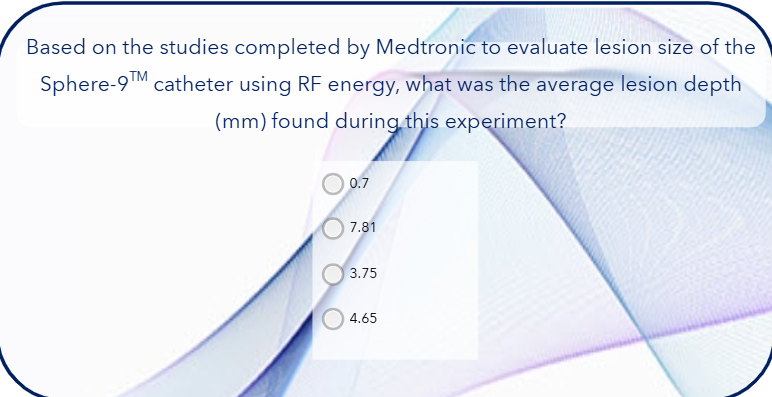
4.65mm

F

1,2,5
flow rate in PFA
1s of pre cooling at 30ml/min and lowers to 15ml/min once therapy starts and remains there until temp reads below 40 C
temp in PFA
hottest temp measured from the 9 thermocouples
T/F PFA can be biphasic and monophasic
True
what is the PULSE3 preset
4s; 95% current limit; no temp target, 15ml/min flow rate
role of calcium in PFA
the pores generate change in calcium concentration between membrane, inhibiting the cell’s response to pacing. if the pores heal, the cell can respond to pacing and continue with arrythmia
tissue proximity study findings
they found that even at 4mm tissue proximity, the cardiac tissue still had a lesion
although, the most effective lesion is 0mm tissue proximity
phrenic nerve injury study results
PF did not result in acute phrenic paralysis
RF did result in phrenic nerve paralysis
although after RF and PFA, histology saw intact phrenic nerve bundle structures with both
rec RF ant and MI ablation settings

optimal PFA ablation
slight rise in temp and consistent current

what do spikes in temp indicate for RF ablation
intermittent tip tissue contact
flutter ablation with RF exception to temp and current relationship
on the valvular end of the CTI, there may be a sawtooth pattern to temp across the cath lattice but overall an inverse relationship
decrease in temp in PFA
catheter movement

spike in temp from PFA
intermittent tissue tip contact
what happens at septal regions of the LA during PFA
area of high blood flow so temp feedback is not reliable → Fluro, local impedance monitoring, and ICE should be used to asses cath position and stability
train of four
quantifiable method of measuring the degree of neuromuscular blockade using a peripheral nerve stimulator
done by counting the number of twitches elicited through electrodes placed on nerve pathway
hot spots for TOF
facial nerve, ulnar nerve, posterior tibial nerve
what do the number of twitches indicate for a TOF monitoring session?
pt’s level of paralysis
4 twitches =
70-75% receptors blocked
1 twitch =
95% receptors blocked
main differences between general anesthesia and sedation
level of consciousness
required equipment to support ventilation
adverse effects
spont ventilation
ability for pt to breathe independently


determine amount of paralytics/twitches expected
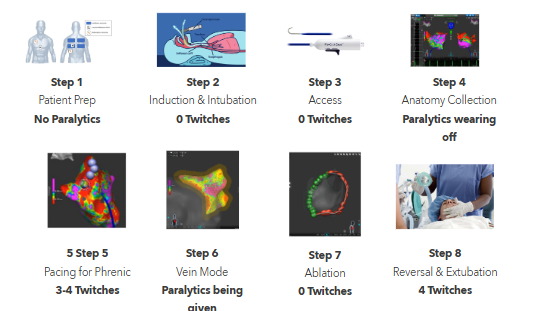
prior to pacing for phrenic nerve capture, if TOF stimulation testing was undertaken, how many twitches would u see?
3-4 to allow the diaphfragm to innervate