Reproduction & Thermoregulation NEWBORN CARE
 Call Kai
 Learn
 Practice Test
 Spaced Repetition
 Match
 Flashcards
 Knowt Play
1/85

There's no tags or description
Looks like no tags are added yet.
86 Terms
Intrauterine to Extrauterine Life
Major transition from intra to extra first 6 to 8 hours of life
Mediated by the sympathetic nervous system: Changes in heart rate, respiration, temperature and GI function
Neonatal period extends through day 28 of life
Period of Physiological & Behavioral Adjustment
Neonatal Stages: First period of reactivity
Up to 30 minutes after birth
Heart Rate increases to 160-180 beats/min in first period--will fall to a baseline of 100-120 beats/min
Respirations are irregular; rate of 60-80 breaths/min
Audible grunting, nasal flaring and retractions may be present
Meconium may be present
Neonatal Stages: Period of decrease responsiveness
After first 30min & lasts 60-100 minutes
During this time the infant is pink
Respirations are rapid, shallow but unlabored
Neonatal Stages: Second period of reactivity
Between 2 & 8 hours after birth; last 10 min to several hrs
Brief period of tachycardia and tachypnea occur
Increase in muscle tone
Change in skin color
Mucous production
Meconium usually passed
Most healthy newborns experience this transition
Successful Transition at Delivery Outcome
when the umbilical cord is clamped neonate must rapidly make physiologic changes in cardiopulmonary function.
Alveolar fluid clearance, Surfactant secretion & Lung expansion
Increase Pulmonary perfusion & Systemic Pressure Fetal Circulatory changes
Intrauterine Fetal breathing movement
Practice – starts at 11 weeks
Development of chest wall muscles and diaphragm
Intrauterine Fetal lung development
20-24 weeks, alveolar ducts begin to develop
Surfactant production – peaks at 35 weeks
How does intrauterine oxygentation occur
Oxygenation occurs through transplacental gas exchange
In utero fetal blood is shunted away from the lungs therefore: at birth the pulmonary vasculature must be fully perfused
Respiratory Adaptations: Extrauterine Oxygenation
1st breath initiates the opening of the alveoli
Air must be substituted for this fluid
Reduced production of fetal lung fluid
Vaginal delivery
Catecholamine surge
Initiation of Breathing
Alveolar fluid reabsorption
Stimuli: Chemical, Mechanical, Thermal and Sensory
Initiation of Breathing: Chemical Stimuli
What happens at birth: After the cord is clamped, CO₂ rises, O₂ falls, and pH decreases
Effect on the newborn: These chemical changes stimulate the respiratory center in the brain, triggering the newborn's first breaths.
Initiation of Breathing: Mechanical Stimuli
What happens at birth: During vaginal birth, the chest is compressed as the baby moves through the birth canal. After delivery, the chest recoils.
Effect on the newborn: Chest recoil helps draw air into the lungs. Lung expansion also supports movement of fetal lung fluid from the alveoli into the interstitial tissue, lymphatics, and circulation.
Initiation of Breathing: Thermal Stimuli
What happens at birth: The newborn moves from the warm uterus into a much cooler environment.
Effect on the newborn: The sudden temperature decrease stimulates skin receptors and the respiratory center, encouraging the newborn to take a breath.
Initiation of Breathing: Sensory Stimuli
What happens at birth: The newborn experiences new stimuli—touch, light, sound, movement, drying, and handling
Effect on the newborn: These sensory inputs stimulate the nervous system and help initiate and maintain respiratory effort.
Initiation of Breathing
Lined with protein surfactant – manufactured in type II cells of the lungs
Lowers surface tension
Reducing pressure required to keep alveoli open with inspiration
With no surfactant more pressure is needed for inspiration
Prevents total alveolar collapse on exhalation
Lung expansion dependent upon chest wall contraction & adequate secretion of surfactant
Respiratory Assessment: Breathing Sounds
Normal: Clear
Abnormal: Rales, Rhonchi
Respiratory Assessment: Breathing Pattern
Normal: Shallow & Irregular
Abnormal: Nasal Flaring, Intercostal or Subcostal Retractions, Grunts, Seesaw
Respiratory Assessment: Respiratory Rate
Normal: 30-60 breaths/min with pauses lasting up to 20 seconds (periodic breathing)
Abnormal: <30 or >60 breaths/min and Apnea >20 seconds
Common Respiratory Complications
Respiratory Distress Syndrome (RDS): Tachypnea can be an indication. Result from inadequate clearance of lung fluid
Pulmonary Hypertension
Meconium Aspiration
Pneumonia
Accompanying Complications: Hypoglycemia, Sepsis, Body Temperature/Hypothermia
Cardiovascular HR rates
Normal HR 120-160 beat/min
Persistent Tachycardia: >160 beats/min can be associated with anemia, hypovolemia, hyperthermia, sepsis
Persistent Bradycardia: <100 beats/min can be associated with a congenital heart block or hypoxemia
Cardiovascular System-PDA
Patent Ductus Arteriosus should close within first couple days. If not closed- will hear a heart murmur.
½ murmurs disappear first few days to 6 months of life
Investigate murmurs w/accompanying complications ie. poor feeding, cyanosis, pallor
Cardiovascular System Patent Foramen Ovale (PFO)
Small, flap-like opening between the upper chambers of the heart (the right atrium and left atrium) that fails to seal properly after birth
Congenital Heart Screening-CCHD
Done on Preductal (right hand) and Postductal (left or right foot)
Done after 24 hrs of birth
Detect 7 Critical Congenital Heart Defects/malformities
Hematopoietic System: RBC
Fetal circulation higher RBC’s for the exchange/transport of oxygen in utero
Results in higher levels of hemoglobin and hematocrit at birth; infant’s blood contains an average of 70% fetal hemoglobin
Iron stores generally are sufficient to sustain normal RBC production for 4-5 months in the term infant; Transient physiologic anemia can occur
Hematopoietic System: WBC
Leukocytosis is normal in the newborn as WBC’s increases during the first day after birth
Serious infection is not well-tolerated as neutrophils limited in ability to recognize and fight infection; Sepsis can occur without a significant elevation in WBC’s
Events other than bacterial infection can cause neutrophilia: These events include prolonged crying; maternal hypertension; asymptomatic hypoglycemia etc.
Thermogenic System
Thermoregulation is the maintenance of balance between heat loss and heat production
Newborns are at high risk:
Thin layer of subcutaneous fat
Blood vessels are closer to the skin
Larger body surface-to-body weight mass ratios
Thermogenesis
Increased metabolic rate and muscular activity
Cold infants appear restless first-- than flexion
Decrease loss of internal heat with constricting peripheral blood vessels
Increase in oxygen and glucose consumption
Brown fat is in superficial deposits in the interscapular region and axillae
Has a richer vascular and nerve supply than ordinary fat
Reserves are rapidly depleted with cold stress
Nonshivering thermogenesis
Metabolism of brown fat stores
Increased metabolic activity in the brain, heart, & liver
Evaporation
loss of heat when a liquid is converted to a vapor

Convection
flow of heat from the body surface to cooler ambient air

Radiation
loss of heat from the body to a cooler solid surface not in direct contact but in relative proximity

Conduction
loss of heat from the body surface to cooler surfaces in direct contact

Best Way to Maintain Temperature at Birth
Skin to Skin
Regulates body temperature
Regulates vital signs
Bonding
Hyperthermia
Body temperature greater than 37.5°C
Associated with sepsis: Vessels constricted, color pale, extremities are cool
Associated with decrease in heat loss: Dilated vessels; appear flushed with extended posture
Sweat glands are not fully functioning
Can cause neurological injury, seizure, stroke or death
Renal System
Kidneys occupy a large portion of the posterior abdominal wall
Full term infants have limited capacity to concentrate urine
Urine can appear cloudy – due to mucous content
Can also appear “brick dust”– due to an abundance of uric acid crystals. *After 1st week can be a sign of dehydration
Void 2-6 x/day first 48 than 6 -8x/day
Fluid & Electrolyte
75% of the neonate body weight is water
At birth 40% of the body weight is held within the extracellular fluid compartment
Daily fluid requirement for full-term infants
60-80 ml/kg in the first 2 days
100-150 ml/kg/day from days 3-7
120-180 ml/kg/day from days 8 - 30
GI System
Term infant capable of:
Swallowing
Digesting
Metabolizing
Absorbing proteins
Well-coordinated sucking motions are influenced by several factors including neurological stimulation
Normal colonic bacteria are established within the first week of life and help synthesize:
Vitamin K
Folate
Biotin
Stools – meconium
Almost all infants pass within 48 hours
GI Complications and Variances
Failure to pass meconium
Fullness of the abdomen
Abdominal Distention
Scaphoid (sunken) Abdomen and signs of Respiratory Distress
Hepatic System
Liver occupies approximately 40% of the abdominal cavity & important role in..
Iron storage: last 4-6 months
Carbohydrate metabolism for energy: drop glucose, Signs & symptoms, interventions, re-evaluate
Coagulation- Vitamin K
Conjugation of bilirubin: Jaundice
Jaundice
The visible yellowish color of the skin & sclera, due to elevated serum bilirubin
Liver is responsible for the conjugation of bilirubin so may be excreted (result of the breakdown of RBC’s)
Why is feeding vital in Bilirubin & Excretion
Reduces serum bilirubin levels
diminishes the amount of reabsorption of unconjugated bilirubin
introduced bacteria to aid in the reduction of bilirubin
Colostrum is a natural laxative
Physiologic Jaundice
Nonpathologic unconjugated hyperbilirubinemia
Occurs after 24 hours and peaks at 3-5 days with levels as high as 10-12 mg/dl
Occurs in 60% of term & 80% of preterm neonates
Varies by race/ethnicity
Usually resolves without treatment
Pathologic Jaundice
Unconjugated bilirubin can accumulate to hazardous levels & lead to a pathologic condition.
It appears within 24 hours of birth
TSB levels increase by more than 5 mg/dl in 24 hours
Cause by excess production of bilirubin through hemolysis
Most common cause of pathologic hyperbilirubinemia is newborn ABO blood group incompatibility
Other factors excessive hemolysis d/t cephalhematoma, excessive bruising, delay meconium passage, genetics
Left untreated can lead to acute bilirubin encephalopathy, Kernicterus
Early Breastfeeding Jaundice
Early Breastfeeding Jaundice begins at 2 - 5 days of age
Caused by the lack of effective breastfeeding
Supplementation with extreme TSB elevations
Late Breastfeeding Jaundice
Late Breastmilk Jaundice begin at age 5-10 days
Rising levels peak during the 2nd week & gradually diminish
Infants are feeding well
Etiology uncertain
Assessment of Jaundice
When levels of unconjugated bilirubin exceed the liver’s ability to conjugate plasma levels increase and jaundice appears.
Noticed first on the head
Progression occurs to thorax, abdomen and extremities
Transcutaneous Bilirubin Meter (TCB)
Preferred method to asses jaundice benefit of the newborn
Serum Bilirubin (TSB)
When levels of unconjugated bilirubin exceed the liver’s ability to conjugate plasma levels increase and jaundice appears
Treatment of Jaundice
The best therapy is Prevention
Early feeding stimulating the early passage of meconium
Phototherapy
Reduces the shape and structure of unconjugated bilirubin
Infants' eyes must be protected by an opaque mask and diaper on
Closely monitoring of the infant’s body temperature
Bilirubin beds/belts/blankets – use LED lights
Immunoglobulin G (IgG)-antimicrobial protection
Bacteria & virus immunity transported across the placenta; protection for 3 months
IgM-immunity to blood-borne infections
low levels are present at birth and at 2 years of age IgM reaches adult levels
IgA protective membrane immunity
Missing from the respiratory, urinary & GI tract unless the newborn is breastfed
Found to decrease the risk of allergy and food intolerance
Vernix
a white, waxy, or cheesy-looking biofilm that coats the skin of a newborn baby

Desquamation
shedding, flaking, or peeling of the outermost layer of the skin

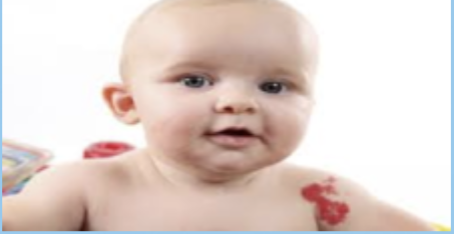
Infantile Hemangioma
a common, non-cancerous (benign) blood vessel tumor that appears as a red, blue, or purple birthmark during a baby's first few weeks of life

Milia
tiny, harmless, dome-shaped white or yellow cysts that form just under the skin

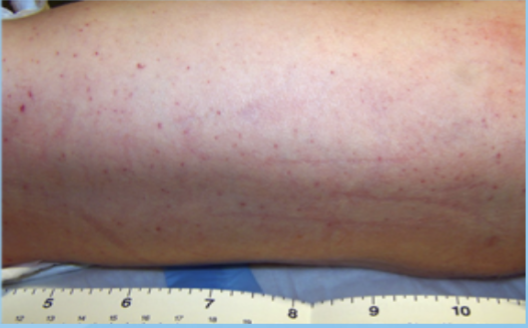
Petechia
Tiny, pinpoint-sized red, purple, or brown spots on the skin or mucous membranes caused by minor bleeding from broken capillaries
Erythema Toxicum
very common, harmless, and self-limiting skin rash

Nevi “stork bites”
Common, harmless birthmark caused by dilated (stretched) blood vessels just beneath the skin
Female Reproductive System
An increase in estrogen during pregnancy & a decrease after birth results in a mucoid vaginal discharge & some slight bloody spotting ‘Psuedomenstruation’
In term infants the labia majora and minora cover the vestibule
Male Reproductive System
Foreskin completely covers the glans
Urethra should be at the tip of the penis
Hypospadias – urethral opening is located in an abnormal position
The scrotum is more deeply pigmented
A bluish discoloration suggests testicular torsion – this is an emergency
Molding
shaping of the fetal head by overlapping of cranial bones
facilitate the movement of the fetal head through the birth canal
Caput succedaneum
identifiable edematous area of the scalp
Cephalohematoma
collection of blood between a skull bone and its periosteum
does not cross suture line
Subgaleal Hemorrhage
bleeding into the subgaleal compartment
early detection & assessment
Signs of developmental dysplasia of hip
Asymmetry of the gluteal and thigh folds
Limited hip abduction
Apparent shortening of the femur
Neuromuscular
Almost completely developed at birth
Brain requires glucose as a source of energy and a relatively large supply of oxygen for adequate metabolism
Posture, Muscle Tone, Strength, and Newborn Reflexes
Moro Reflex
Sudden extension then flexion of arms
disappears by 4-6 months
Rooting Reflex
Turns head towards cheek stimulation
disappears by 4 months
Sucking Reflex
Rhythmic sucking on stimulation
Disappears by 4 months
Plantar Grasp Reflex
toes curl when side is touched
disappears by 9-12 months
Stepping Reflex
Alternating stepping movements
disappears by 2 months
Palmar Grasp Reflex
Fingers flex when palm is touched
Disappears by 3-4 months
Tonic Neck Reflex (fencing)
Extension of limbs on face side
disappears by 4-6 months
Babinski Reflex
Extension of big toe on sole stimulation
Normal up to 1 year
Behavioral Adjustments from to Extrauterine
Regulated behavioral tempo independent of the mother
Gestational age affects
Self-regulation & social interactions
Establishing a response to external stimuli/relationship with caregivers & environment
Temperament, Irritability, Habituation, Consolable, Cuddliness
Airway Maintenance
In a healthy newborn most secretions are moved by gravity and the cough reflex
Bulb Syringe: Mouth and Nose
Deep Suction: Passage of a catheter (8F or 10F) that is hooked to wall suction from the nasopharynx or posterior oropharynx
APGAR Score
Appearance, Pulse, Grimace, Activity, Respirations
Permits a rapid assessment of the newborn’s transition to extrauterine life
Evaluations occur at 1 and 5 minutes, If APGAR score is below 7 the assessment is repeated at 10 and 15 minutes
Erythromycin Ophthalmic- Eye Prophylaxis Ointment
Mandatory in the US
Precautionary against ophthalmia neonatorum – caused by gonorrheal or chlamydial infection
Vitamin K (0.5 – 1 mg IM)
Gut/intestinal tract sterile need bacteria to synthesized
Prevention of hemorrhagic disease in the newborn
Hepatitis B (0.5 mL IM)
Vaccine induces protective anti-hepatic B antibodies
Requires consent in most institutions
Blood Glucose
Assess for symptoms: jitteriness, lethargy, apnea, feeding problems
Glucose level completed based on risk factors for hypoglycemia:
Maternal diabetes
LGA-(>90th percentile)
SGA- (<10th percentile
Immediate Goal >40 mg/dl
Normal 50-60mg/dl
Newborn Screening
SCID: severe combined immune deficiency
PKU: elevated phenylalanine
Congenital Hypothyroidism
Galactosemia: elevated galactose
Congenital adrenal hyperplasia: elevated 24-hydroxyprogesterone; abnormal electrolytes
Sickle cell/hemoglobin SC
Biotinidase Deficiency: deficient or absent activity of biotinidase on colorimetric assay
Blood Spot Test (Heel Prick)
A small sample of blood from the baby's heel tests for over 40 to 80 rare disorders (varying by region), categorized into main groups:
Amino Acid Disorders: Such as Phenylketonuria (PKU) and Maple syrup urine disease.
Endocrine Disorders: Such as Congenital hypothyroidism and Congenital adrenal hyperplasia
Fatty Acid Oxidation Disorders: Such as Medium-chain acyl-CoA dehydrogenase (MCAD) deficiency.
Hemoglobin Disorders: Such as Sickle cell disease.
Other Conditions: Such as Cystic fibrosis, Galactosemia, Biotinidase deficiency, and Severe combined immunodeficiency (SCID)
Circumcision
Removal of all or part of the foreskin
Parent Choice: hygiene, religious conviction, tradition, culture, social norm
Benefits: Reduce infections, penile cancer
Pain management: anesthetic
Bleeding assessments post procedure: apply pressure if bleeding occurs and use Petroleum Jelly/Gauze
Parent post care education