UCONN Environmental Science Midterm Study Guide
 Note
 Call Kai
 Learn
 Practice Test
 Spaced Repetition
 Match
 Flashcards
 Knowt Play
1/31

There's no tags or description
Looks like no tags are added yet.
32 Terms
Environmental Science
the study of the connections between the natural world and humans
Importance of Environmental Science
allows us to understand the way humans impact the natural world
Biome
The plants and animals that are found in a particular region of the world.
Longitude
Up and Down
Latitute
Left and Right
Deforestation
The purposeful removal of forests
Human contribution to deforestation
remove forests for agricultural expansion, wood extraction, and infrastructure expansion
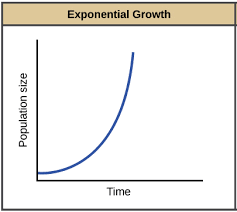
j-shaped curve
A population grows exponentially without limit
s-shaped curve
A population grows exponentially, eventually evening out at the carrying capacity
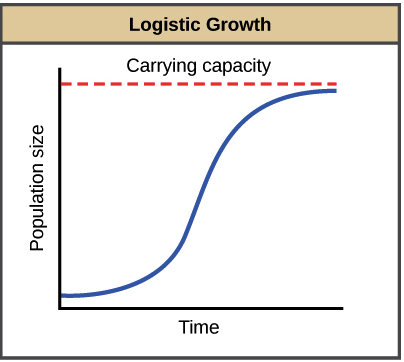
carrying capacity
The maximum number of a species that can live together at one time.
Expanding Population (Age structure)
Large base and smaller top (common in developing countries)
Stable Population (Age structure)
Roughly equal size across most age groups (seen in developed countries).
Declining Population
Narrow base with a larger proportion of older individuals
Invasive species
species that spreads rapidly across large areas and causes harm
Invasive species arrival
brought to new environments via changing conditions or humans bringing them from other places.
Invasive species impact
obliterate ecosystems by changing the availability of energy within the ecosystem, affects carrying capacity of local species
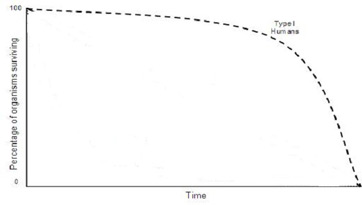
Type I survivorship curve
High percentage of young people, exponential decrease later in time
(Humans, mammals, reproductive)
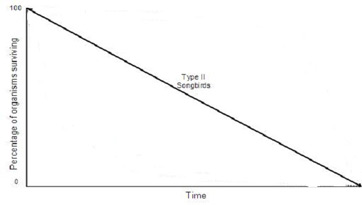
Type 2 survivorship curve
linear decline in population over time
(Butterflies, Birds, pre-reproducted)
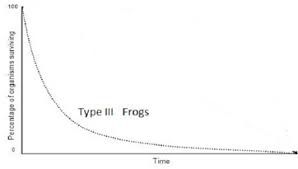
Type 3 survivorship curve
Exponential decrease in population early in life, very few live long lives. (fish, sea turtles, post-reproductive).
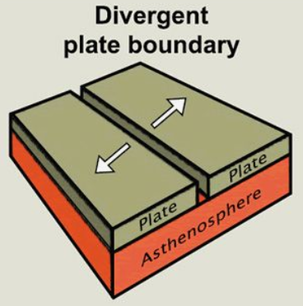
Divergent tectonic boundaries
Two plates move away from each other, creating fissure volcanoes, valleys, and underwater volcanoes.
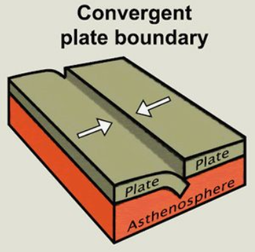
Convergent tectonic boundaries
Two plates move towards each other, resulting in one plate sliding beneath the other, creating mountains, volcanoes, and deep ocean trenches.
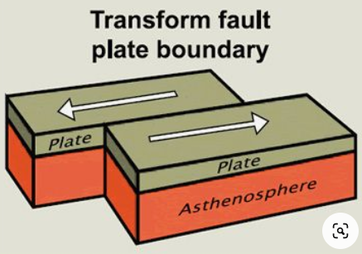
Transform tectonic boundaries
Two plates grinding past one another, resulting in intense earthquakes, thin linear valleys, and split river beds.
Subduction zone
The area where earthquakes occur following a tectonic plate transformation
Determinant of soil texture
Proportion of sand, silt and clay sized particles that make up the mineral fraction of the soil
Soil type with largest particles
Sand, sandy soils
ph measures in soil
0 - acidic
7 - neutral
14 - basic
ph measures acids and bases in soil
Best drainage soil
Sand
Best water holding soil
Clay
Organisms beneficial to soil aeration
Earthworms, moles, chipmunks
Carbon footprint
The total amount of greenhouse gases (including carbon dioxide and methane) that are generated by our action
Importance of carbon footprint
enables identification to reduce Greenhouse gas emissions, publish environmental performance statistics, raise awareness of environmental costs
Actions that impact carbon footprint
Group transportation
Turning off the lights
Eating meat