Key Terms Intro to Ecology
 Call Kai
 Learn
 Practice Test
 Spaced Repetition
 Match
 Flashcards
 Knowt Play
1/117

There's no tags or description
Looks like no tags are added yet.
118 Terms
Wadden Sea
Large tidal mudflat along coasts of Netherlands, Germany, & Denmark, highly productive intertidal zone

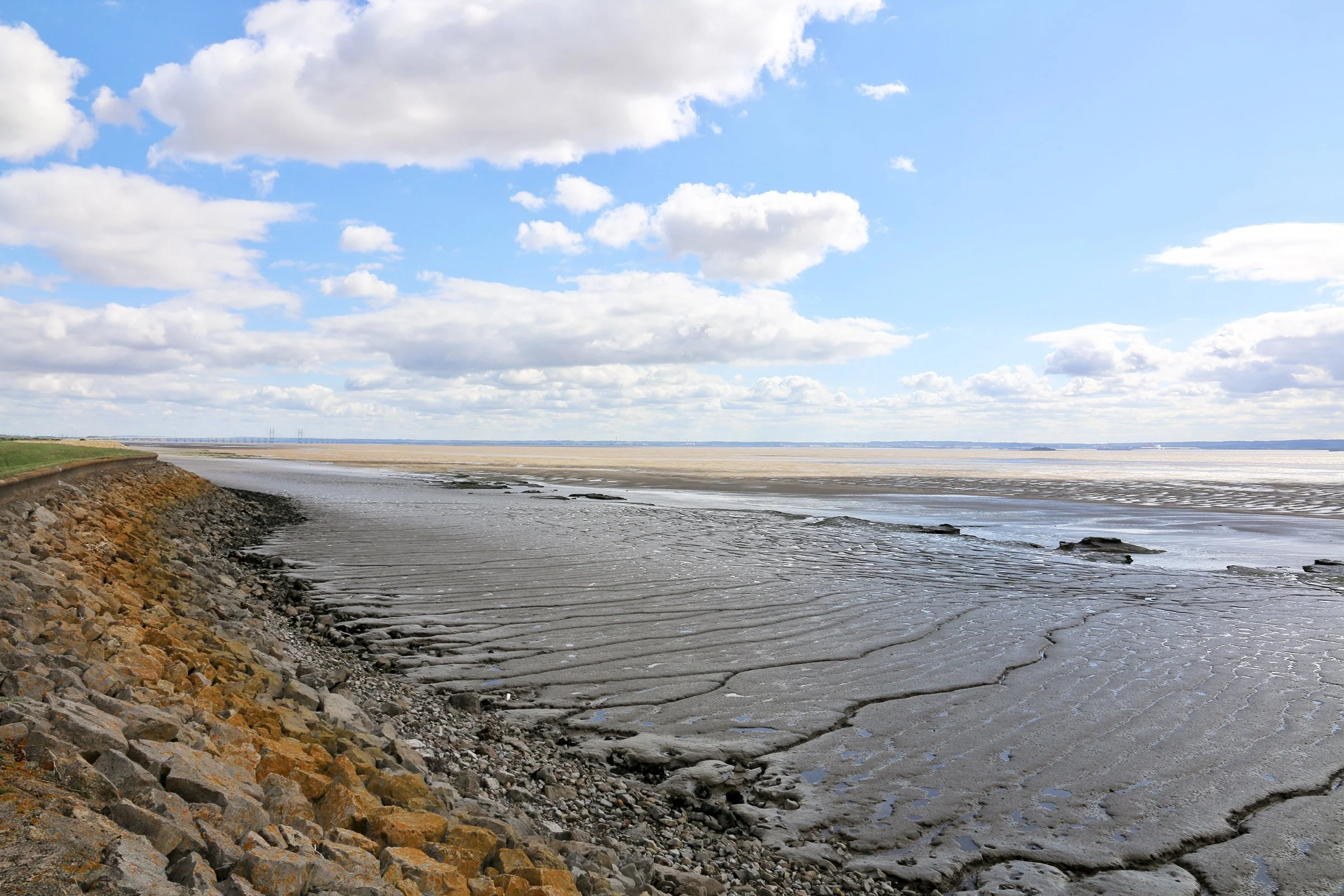
Mudflat
Coastal wetlands in intertidal areas, mud is fine-grained particles & water often deposited by rivers, unvegetated & sheltered w/ low wave action
Sandy Beach
Loose deposits of sand (of varying grain size) along the shore

Dunes
Dynamic but fragile buffer zones of sand & vegetation between shore and land, form from onshore winds causing sand to pile up

Rocky Shore
Hard substrates in the intertidal zone, exposed to tide, stable substrate for benthic communities

Seagrass Bed
Seagrass habitat on the bottom, carbon rich sediments & sinks, biodiverse, endangered by eutrophication & coastal development

Coral Reef
Complex of live corals & coral skeletons which attract high levels of biodiversity & niche partitioning, threatened by climate change (coral bleaching)

Mangroves
Tropical plants in the intertidal zone, grow with roots partly or fully submerged in seawater, holding mud & sediment together & producing large carbon sinks

Cliff
Steep slope of rock, structural (fault displacement) or erosional in origin
Bay
Recessed, coastal body of water connecting directly to a larger main body, may also be known as a gulf, sea, sound, or bight

Peninsula
A land mass surrounded by water on 3 sides, connected to mainland via an “isthmus”

Coastal Erosion
Natural forces wearing down & carrying away rocks, soil, & sand from shorelines, may also have chemical input (carbonation via acid rain)

Sedimentation
Accumulation of insoluble materials, often by an obstacle such as plant roots or existing sediment along a flowing water path
Light Attenuation
Reduction of light intensity with depth in the ocean, red light absorbed first, blue light reaches deepest depths

Eutrophication
Increase in concentration of plant nutrients (P or N) in an aquatic ecosystem, can be natural or anthropogenic, causes dead zones & anoxic zones from decomposition of blooming phytoplankton

Nitrification
Biological oxidation of ammona or ammonium into nitrite, which is then oxidated into nitrate (part of the nitrogen cycle), only performed by some nitrifying bacteria & archaea

Acidification
The reduction in pH of aquatic ecosystems, often caused by uptake of CO2 from the atmosphere, makes carbonate less available to calcifying organisms
Buoyancy
Upward force that water exerts on objects, if density of something is lower than water, it floats, and if density is higher, it sinks
Neutral buoyancy - when density is approximately even with water, organisms may use gas bladders, fats & lipids, or body structures (cartilage vs. bone, etc.) to achieve this

Settlement
When a larval stage attaches to a hard substrate, triggers metamorphosis where mobile larvae change into sessile adults
Recruitment
Process of young organisms successfully joining adult populations, in fisheries it refers to point at which an organism is usable by that fishery
Algal Bloom, Red Tide
A rapid increase in phytoplankton, red tide refers to blooms of often toxic species which discolor the water

Turbidity
Measure of relative clarity of a liquid, often increased by disturbed or suspended sediment (making light less available at shallower depths), measured by Secchi Disk or nephelometer

Salinity
Total concentration of dissolved inorganic salts & minerals, measured in parts per thousand (ppt), g/L, or practical salinity units (psu) - seawater is usually ~35 ppt
Acidity
The pH or concentration of H+ ions in a solution, ocean is typically about 8.1 (>7 is a base, <7 is an acid, 7 is neutral)
Compensation Depth
Depth at which net primary productivity is 0 (respiration is equal to photosynthesis)

Carbonate Compensation Depth
The depth at which the dissolution of CaCO3 equals the precipitation of it (when CaCO3 is no longer functionally available to organisms)
Thermal Stratification
Separation of a water body into horizontal layers by temperature, strong cases prevent mixing of water (especially in tropics & during summer in temperate waters)

Thermocline
The depth at which temperature rapidly drops (usually the bottom of the mixed layer)
Biological Oxygen Demand (BOD)
The amount of oxygen needed by microbes to degrade organic substances, measured in mg/L of oxygen
Chemical Oxygen Demand (COD)
Amount of oxygen needed for chemical breakdown of substances
Euphotic Zone
The layer of the ocean in which sufficient light to perform net photosynthesis
Aphotic Zone
The depths of the ocean at which no sunlight reaches
Dysphotic Zone
The area in the ocean where some sunlight reaches, but not enough to perform net photosynthesis
Ocean Currents
Driven by winds, water density, tides, gravity, and Earth’s rotation, surface currents often more wind-driven & deep-ocean currents often more density-driven
Ocean Topography
Study of forms & features of seafloor & sea surface (also called bathymetry)
North Atlantic Oscillation
An atmospheric mass alternation, subtropical high pressure in Azores vs. low subpolar pressure in Iceland, winds get stronger when positive (resulting in warmer temperatures)

Southern Oscillation
Air pressure differences change in East & West Pacific, resulting in a warm front in the East Pacific during El Niño or a cold front during La Niña

Ocean Engineering
Specialized branch of engineering focusing on human interaction with ocean, includes coastal structures, vessels, offshore platforms, underwater life-support, wave energy conversion systems, & offshore infrastructure (wind farms & rigs)
Littoral Zone
Intertidal zone, area between high & low tides, high dissolved oxygen, sunlight, & nutrients, also high wave energy & motion stress w/ alternating submergence & exposure

Pelagic Zone
Water column of open ocean from coasts & above seafloor, divided vertically into epipelagic, mesopelagic, bathypelagic, abyssopelagic, & hadal

Benthic Zone
Lowest level of a water body - the seafloor, organisms living here are known as benthos

Profundal Zone
Deep water habitat in lakes (where sunlight does not reach, found between limnetic & benthic zones)

Abyssal Zone
2000 - 6000 m deep, consistently 2-4 degrees C, no sunlight, high pressure, and very uniform in environmental conditions

Continental Shelf
The shallow submarine edge of continental crust, forming the edge of a continental landmass

Epilimnion
Upper layer of a standing body of water, warm water with most photosynthesis, shallow & oxygenated by mixing

Metalimnion
The transitional layer between epilimnion and hypolimnion in lakes, often the location of the thermocline, typically only seen during summer in the temperate regions

Hypolimnion
The densest, deepest, & typically coolest layer of a stratified lake, may not support photosynthesis if sunlight is absent, often lacking in oxygen

Plankton
Phytoplankton - microscopic photosynthetic organisms that use sunlight to produce their own food
Zooplankton - small aquatic organisms which drift in water & feed on other plankton
Defining trait: organisms which are not capable of actively moving against ocean currents
Nekton
Aquatic organisms which are capable of swimming freely independent of water movement & wind (can swim against currents)
Neuston
Organisms living at the interface between water and air
Epineuston - on the surface
Hyponeuston - below the surface
Can be microscopic or macroscopic, often rely on surface tension (bacteria, algae, small invertebrates, or protozoans)
Pleuston
Organisms which float the surface, both partially inside & outside of the water and typically floating passively
Benthos
Organisms living on the bottom, including those buried in sediment, found between sediment (infauna), or on top of the bottom (epifauna)
Carnivore
A heterotrophic organism which consumes other heterotrophic organisms for energy
Detritivore
An organism which consumes detritus for energy (eats dead things & waste)
Ichthyofauna
Fish species within a specific region or environment
Halophytes
Salt-tolerant plants, often survive via mechanisms like salt exclusion, excretion, or accumulation
Invertebrate Larval Forms
Various younger stages of aquatic invertebrates

Planula
A cnidarian larva

Trochophore
Larval stage of molluscs, annelids, nemerteans, & sipunculids, ciliated for weak swimming

Marine Snow
Aggregations of organic matter sinking in the ocean, enriched by dead or dying plankton, fecal matter, and inorganic dust, provides nutrients in the deepsea & sequesters carbon & other elements

Cohort
Group of individuals of the same population born at the same defined time interval
Loop Current & Eddies
Loop current found in Caribbean, reaches up into the Gulf of Mexico to form an eddy
Eddies - a swirling and chaotic current branching off a major current
Tides
Long ocean waves driven by the gravity of the moon - high tide faces towards & away from the moon (2 waves a day in any given location)

Laminar Flow
Streamlined flow, layers of water flowing over one another at different speeds without mixing
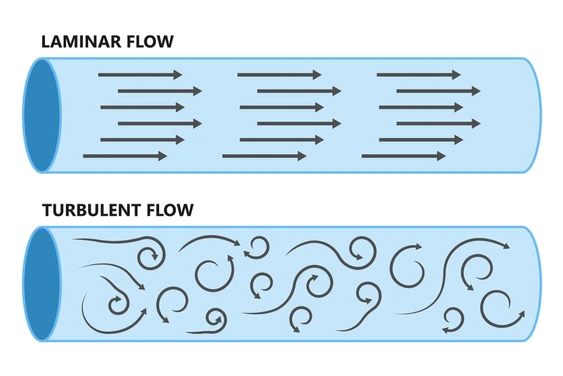
Turbulent Flow
Irregular movement of water, resulting in mixing of layers & particles

Upwelling
Surface windsw push water away from shore, bringing cold nutrient rich waters to the surface from the depths, stimulates primary productivity (found along eastern boundary currents)

Downwelling
Wind converges with the coast, pushing surface waters into the deep, low nutrients & low productivity, found along western boundary currents

Convection Cells
Circular motion of water (heat rises, cold falls), salinity also plays a role in water density to form discrete layers

Waves
Created by energy passing through water, causing it to move in a circular motion (disturbances include earthquakes, the moon’s gravity, and wind friction)
Seiche
Standing wave - an epicenter is the shortest oscillation while the tallest are at the edges of the enclosed water body (the wave from throwing a rock into a lake)

Freak Wave
An unusually large wave not associated with a storm system or tsunami, also known as a rogue wave or monster wave, sudden & difficult to predict
Caused by different wave speeds piling up to highly energetic singular wave maintaining speed, direction, & energy
Langmuir Circulation
Counter-rotating vortices at the surface aligned with the wind, convergence zone forms windrows (builds up Sargassum & material), divergence zone is upwelled

Tsunami
Series of large waves with enormous wavelengths caused by massive displacement of water (earthquakes, volcanoes, underwater landslides, & meteorites), very fast & highly destructive
Evaporation
Solar energy turns surface water into a gas, often leaving behind salt and making the leftover water mass saltier
Precipitation
The condensed fresh water in the atmosphere falling back to the surface, results in fresher water conditions for smaller or more enclosed bodies
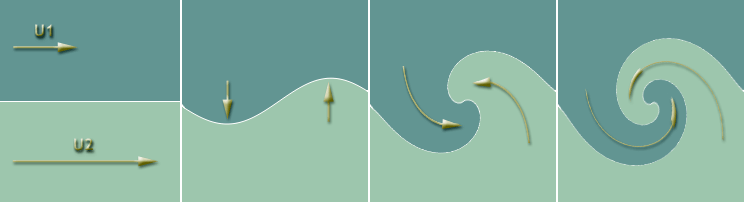
Kelvin-Helmholtz Instability (KHI)
Two layers of fluid or gas move past each other at different velocities, creating wave-like disturbances & turbulent mixing
Limnology
The study of freshwater lakes
Graben Lake
Horst (upfaulted block) surrounds graben (downfaulted block) at a fault line, creates a valley which fills with water

Caldera Lake
Steep bowl-shaped depression after a volcano eruption & magma chamber collapse - filled with water by precipitation

Maar Lake
A lake forming in a crater from a meteor or meteorite impact
Solution Lake
Soluble rocks (like limestone, gypsum, or salt) are dissolved by runoff or groundwater and filled with water

Cave Lake
Weathering opens space underground, which fills with water

Glacial Lake
Glaciers move, leaving depressions and morains (soil & rock buildup) which become lakes, melt water from glaciers fills basin, low in nutrients, temperature, & biodiversity, high in UV radiation

Coastal Lake (Lagoon)
Shallow water separated from ocean by natural barriers (coral reefs, sand bars, and islands)

Dune Lake
Often mix of freshwater & seawater, formed in openings between dunes
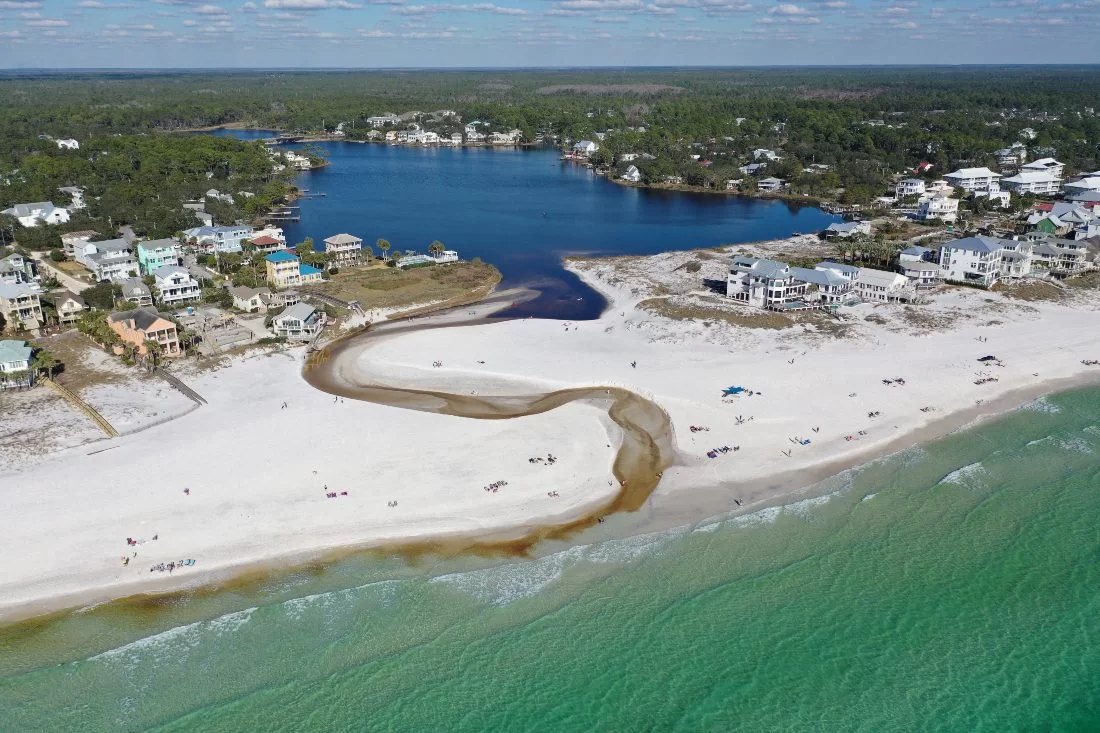
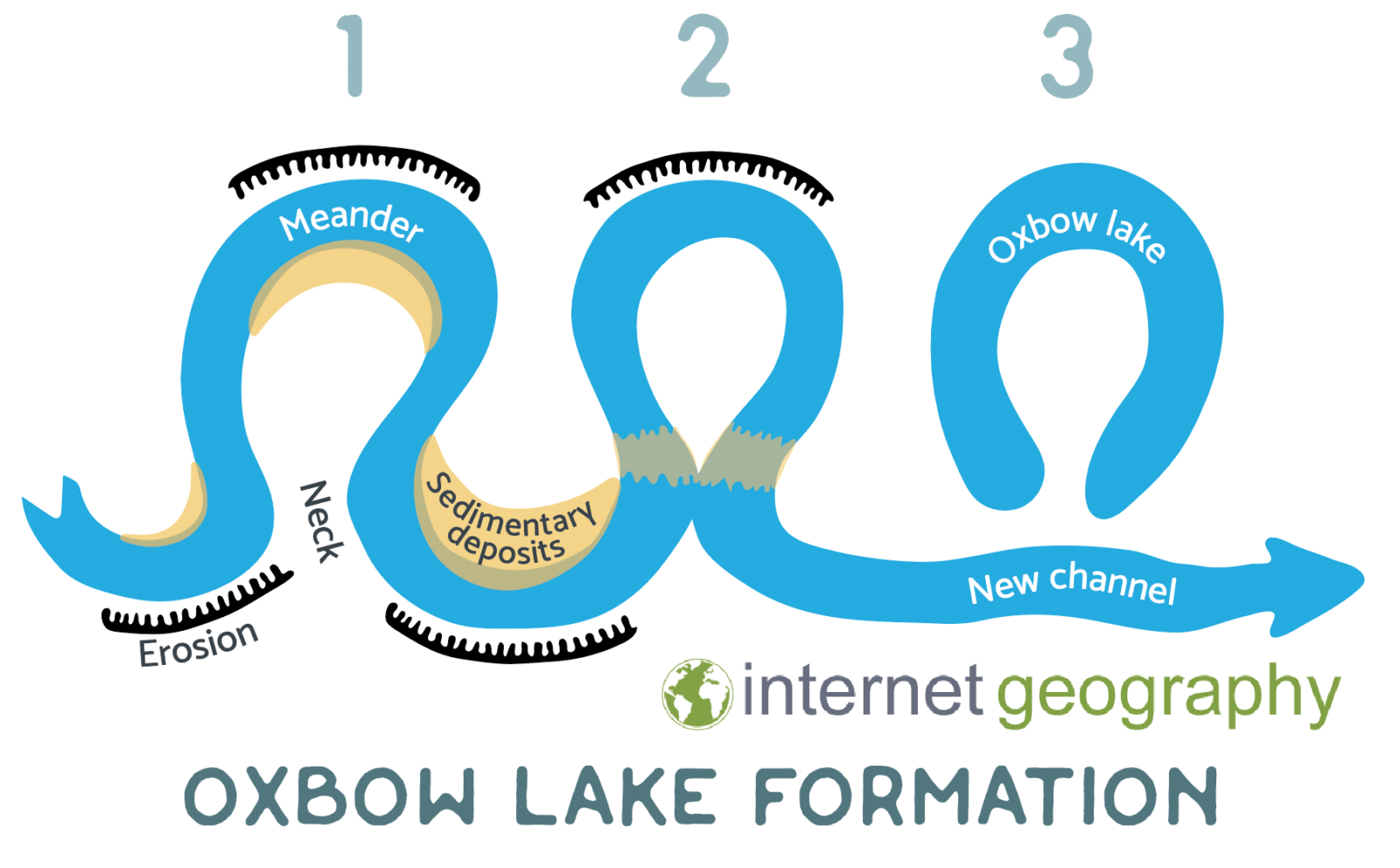
Oxbow Lake
U-shaped lake formed from a river (water finds a shortcut and sedimentation cuts a U-shaped loop off from the river, leaving a stagnant bog or swamp)
Storage Lake
An artificial lake designed to controll streams or dams & store water, often around hydroelectric dams

Ephemeral Lake
A lake only filled with water for <1/3 of the year, highly stressful & requires high specialization to survive dry periods (or consistent re-recruitment)

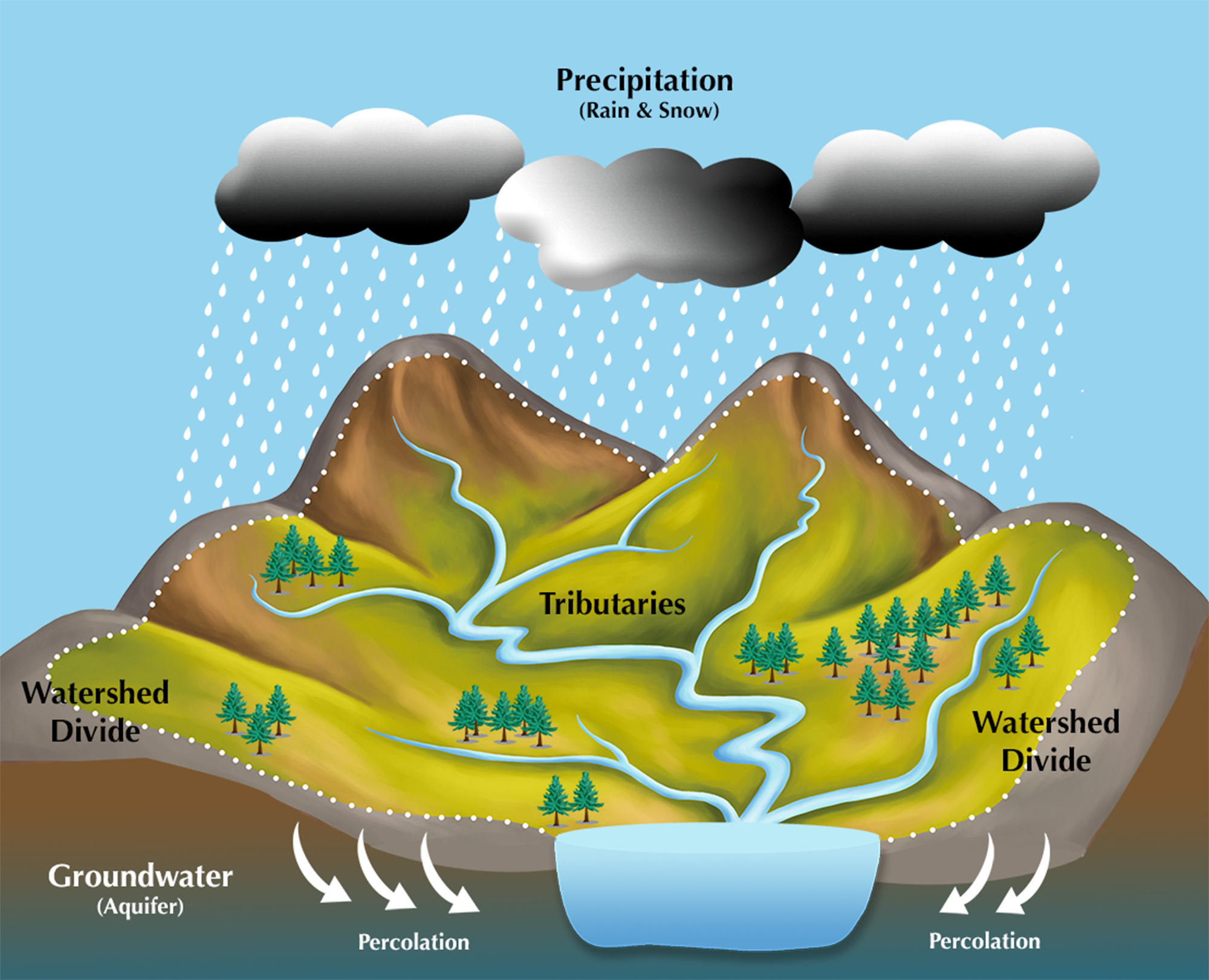
Watershed
Land area that channels rainfall & snowmelt to streams, rivers, and eventually to outflow points (bays, lakes, or oceans), also known as drainage basin or catchment
Spring
An aquifer (standing groundwater) overflows to the surface, bringing fresh groundwater up

Artesian Well
An artificial well which brings groundwater to the surface using natural pressure from an aquifer

Hot Springs
Spring of hot water from geothermal activity in mantle (geysers superheat water & erupt, black smokers & hydrothermal vents release superheated water in deep sea)

Running Waters
Flowing water ecosystems - rivers, streams, brooks, & creeks

Estuary
Partially enclosed body of water where the river meets the ocean, brackish water (mix of fresh & saltwater), very productive ecosystems & good nursery grounds
Artificial Reservoirs
Man-made basins of water used for storage, energy, or flood control

Groundwater
Fresh water underground (crazy right?), in soil pore spaces, recharged by rain & snow melt, discharged via springs & seeps
Wetlands
Land that is permanently wet, full of aquatic vegetation, must be on land and not on the shore
Alkaline Lake
Lakes with heavy dissolved salts and a pH > 9, typically in arid regions where evaporation is high & weathering of rocks is occurring
Irrigation Fields
Use of artificial canals to water crops & agricultural land, often redirects natural water flows

Sewage Water Construction
Usually in the form of waste treatment, purifies wastewater from household sewage (often changing microbial & qualities of treated water)