5.1 Security Policies
 Call Kai
 Learn
 Practice Test
 Spaced Repetition
 Match
 Flashcards
 Knowt Play
1/12

There's no tags or description
Looks like no tags are added yet.
13 Terms
Security Policy Guidelines
Are essential for maintaining Confidentiality, Integrity, and Availability (CIA).
Establish rules that ensure consistent and secure behavior across an organization.
May outline broad goals, like data storage or incident response procedures, while others are more specific—such as rules for Wi-Fi usage or remote access requirements.
Define what actions should be taken and why
Information Security Policies
Outline the rules for protecting uptime, availability, and security.
Serve as a guide for responding to various situations—like virus infections, VPN access requests, or detected vulnerabilities
The answers to all of these security related questions should be found inside of this
Should include detailed responses to such incidents and clearly define security roles and responsibilities.
Effectiveness depends on proper enforcement by the organization.
Acceptable Use Policies (AUP)
Define what users are allowed to do with the organization's technology resources, including computers, phones, and mobile devices.
Serve both as guidelines for proper use and as legal protection.
Provides clear documentation to justify disciplinary actions, including dismissal.
Business Continuity
Ensures that an organization can continue essential operations during unexpected disruption.
Since we rely heavily on technology, it’s important to have alternative plans in place in case systems fail.
For example, if a retail network used for credit card processing goes down this may plan for manually processing transactions by phone.
Must be created and tested in advance to ensure they’re effective when needed.
Disaster Recovery Plan
Focuses on restoring systems after a major event.
Outlines how to return to normal operations, including how quickly (RTO) and how much data loss is acceptable (RPO).
Can be natural (like floods or hurricanes), technical (like server failures), or human-made.
Should include alternate recovery sites, data recovery methods, application restoration steps, and a strategy for relocating staff to recovery locations if needed.
Security Incidents
Should have clear policies for responding to these incidents.
Incidents could include malware infections from malicious email attachments, DDoS or botnet attacks that disrupt availability, or data breaches where sensitive information is exposed.
Each type of incident should have a defined response plan that outlines immediate actions, reporting procedures, and recovery steps to minimize damage and restore security.
Incident Response Roles
Responding to incidents requires a well-defined team with specific roles.
The incident response team is a trained group ready to act
IT security management provides resources and oversees the response effort.
Compliance officers ensure all actions meet regulatory requirements
The technical staff handles the hands-on work of mitigating and resolving the incident
User community can offer valuable firsthand information about what occurred.
NIST SP800-61
The process that an organization might follow when these security incidents occur
Preparation
Detection And analysis
Containment, Eradication, and Recovery
Post-Incident Activities
Software Development Lifecycle (SDLC)
The process used by developers to create applications from concept to deployment.
Typically includes gathering requirements, collaborating with end users, developing the software, testing it, and finally deploying it on time and within budget.
No single best method for implementing, following a structured process helps keep the development organized and goal-oriented.
Popular SDLCs
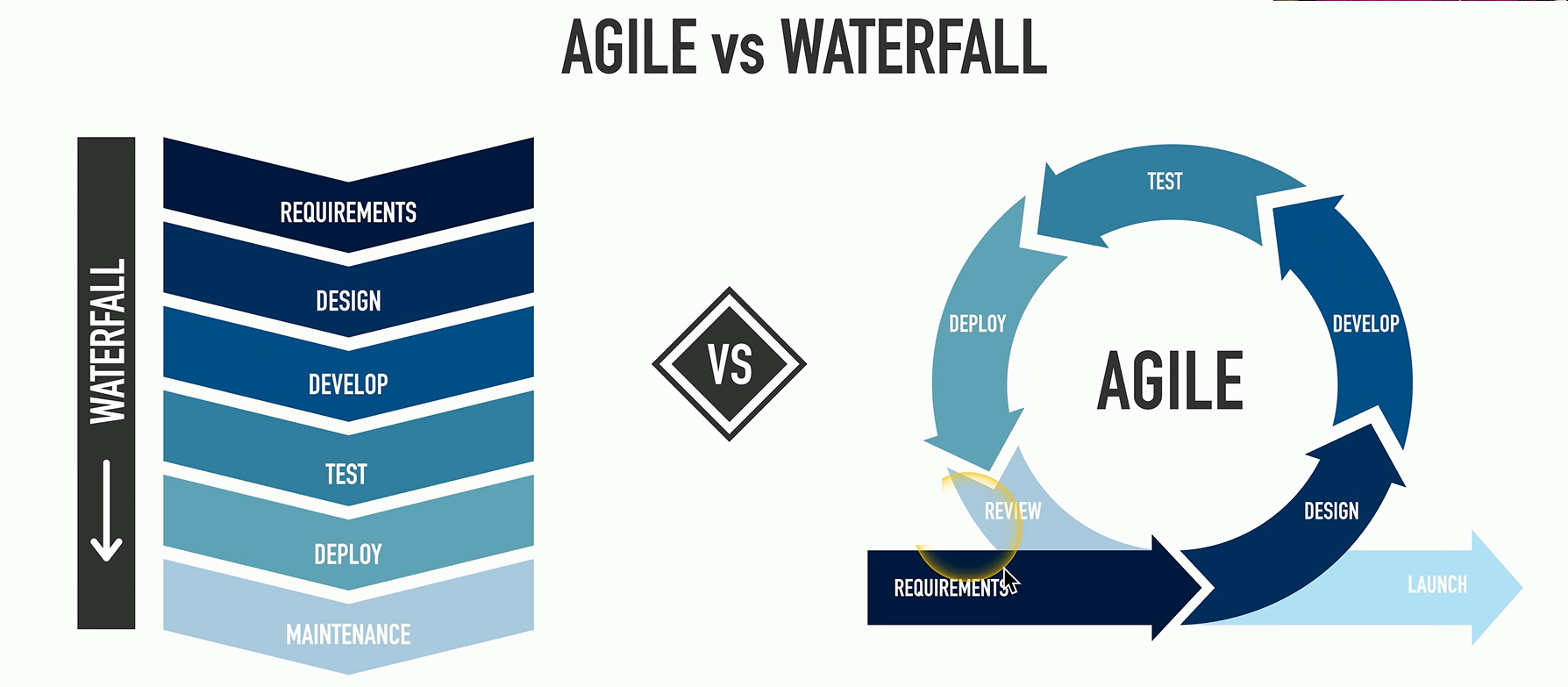
Two of the most common application development lifecycles are Agile and Waterfall.
The Waterfall lifecycle is a linear cycle that starts with the requirements, follows through the development process, the testing, the deployment, and finally, the ongoing maintenance of an application.
The Agile lifecycle is designed to be a much faster way to create applications, and those are usually done by designing, developing, testing, deploying, and reviewing constantly throughout the entire process
Change Management
Ensures that any modifications—like updating applications, adjusting firewall settings, or reconfiguring network devices—follow a structured process.
Involves planning, documenting, and reviewing proposed changes, including how often they occur, how long they take, how they’ll be implemented, and what fallback procedures exist if something goes wrong.
Without a formal process, organizations risk unintended consequences that can impact operations
Recovery Time Objective (RTO)
The maximum acceptable downtime for a system or application
If a company's e-commerce website has this of 4 hours, it means they aim to have the website fully operational again within 4 hours of a disruption.
Recovery Point Objective (RPO)
The maximum acceptable data loss
If a company has an this of 24 hours, it means they can tolerate losing up to 24 hours of data in the event of a disaster