WEEK 1: Tools & Devices Commonly Used in PT
 Call Kai
 Learn
Learn Practice Test
 Spaced Repetition
 Match
Match Flashcards
 Knowt Play
1/51

Earn XP
Description and Tags
overview of assistive devices covered in PTAP-110 lab/lecture wk 1
Name | Mastery | Learn | Test | Matching | Spaced | Call with Kai | Chat |
|---|
No analytics yet
Send a link to your students to track their progress
52 Terms
What are 4 primary goals of using assistive devices (AD) in PT?
Improving mobility
Maintaining/improving balance
Reduce weight bearing (WB) on lower extremities (LE)
Increasing independence
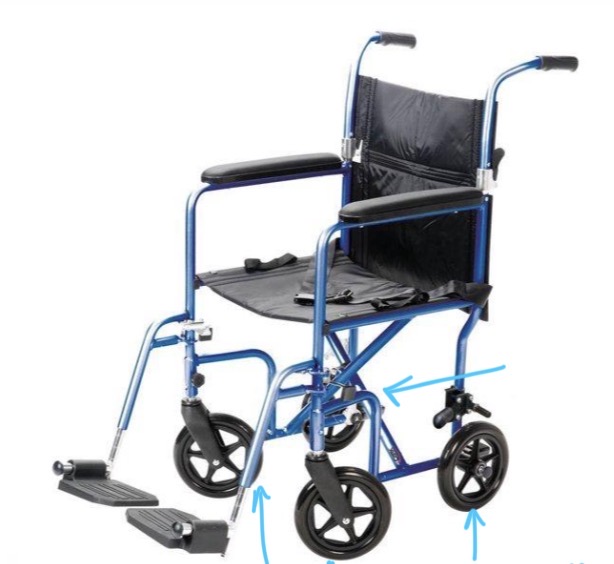
Which type of wheelchair is specifically designed for short sitting times, portability, & needs a second person to push?
Transport wheelchair

Which patient population is the primary candidate for an electric (power) wheelchair?
Patients who cannot independently propel themselves in a manual wheelchair
Aside from a joystick, name two specialized methods used to control power wheelchairs
Chin motions
User’s breath
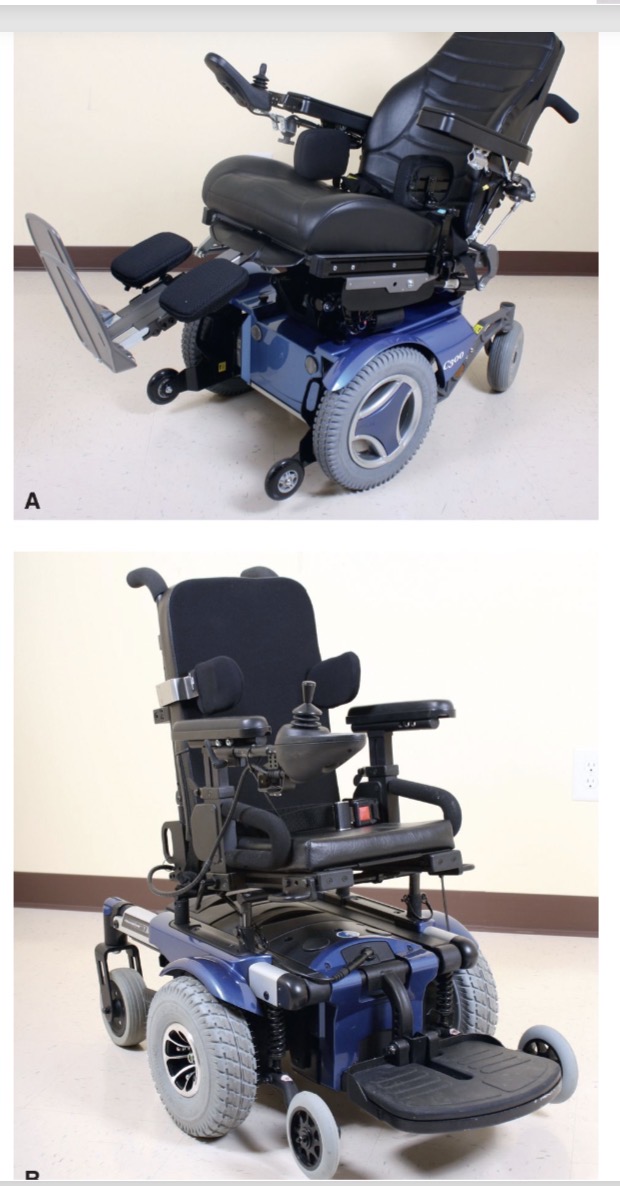
What is a significant functional benefit of a power wheelchair in a home environment like a bathroom?
It has a much smaller turning radius than standard wheelchairs
What is the purpose of a desk-length armrest on a wheelchair?
Allows a patient to move closer to a desk or table without being blocked by the armrests

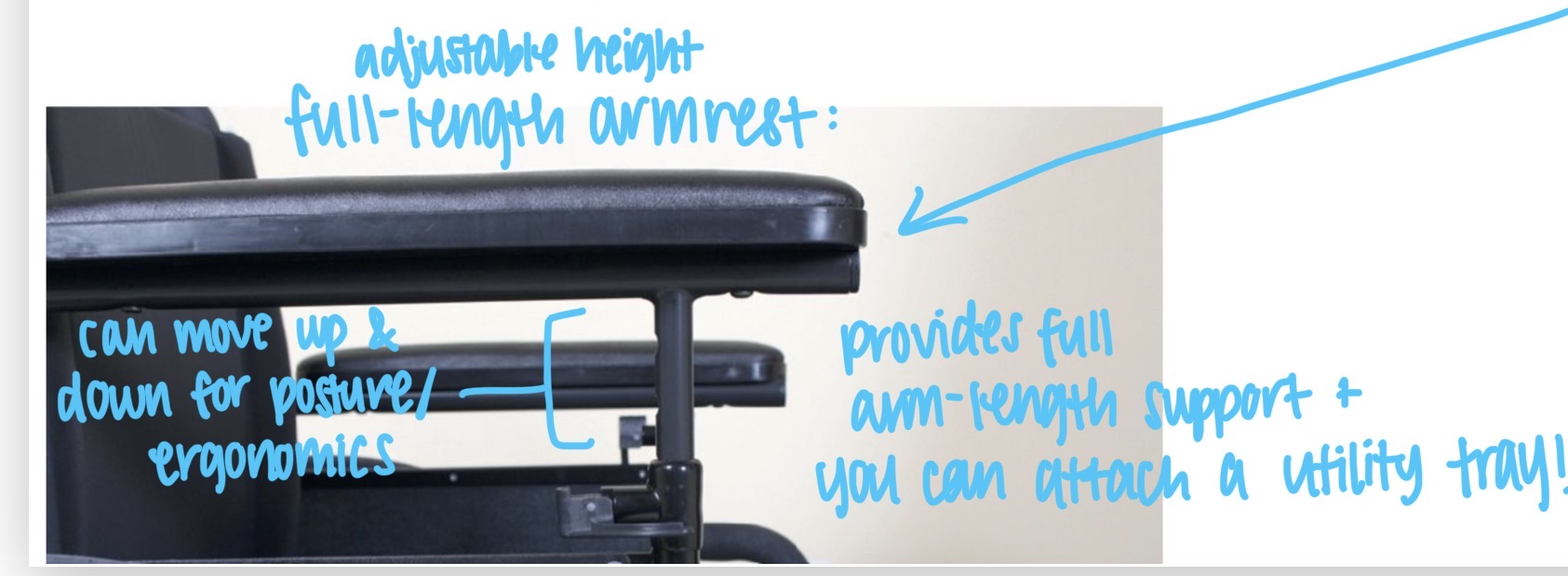
What are the 3 benefits of using an adjustable-height full-length armrest on a wheelchair?
Provides full arm-length support
Improves ergonomics
Allows for the attachment of a utility tray
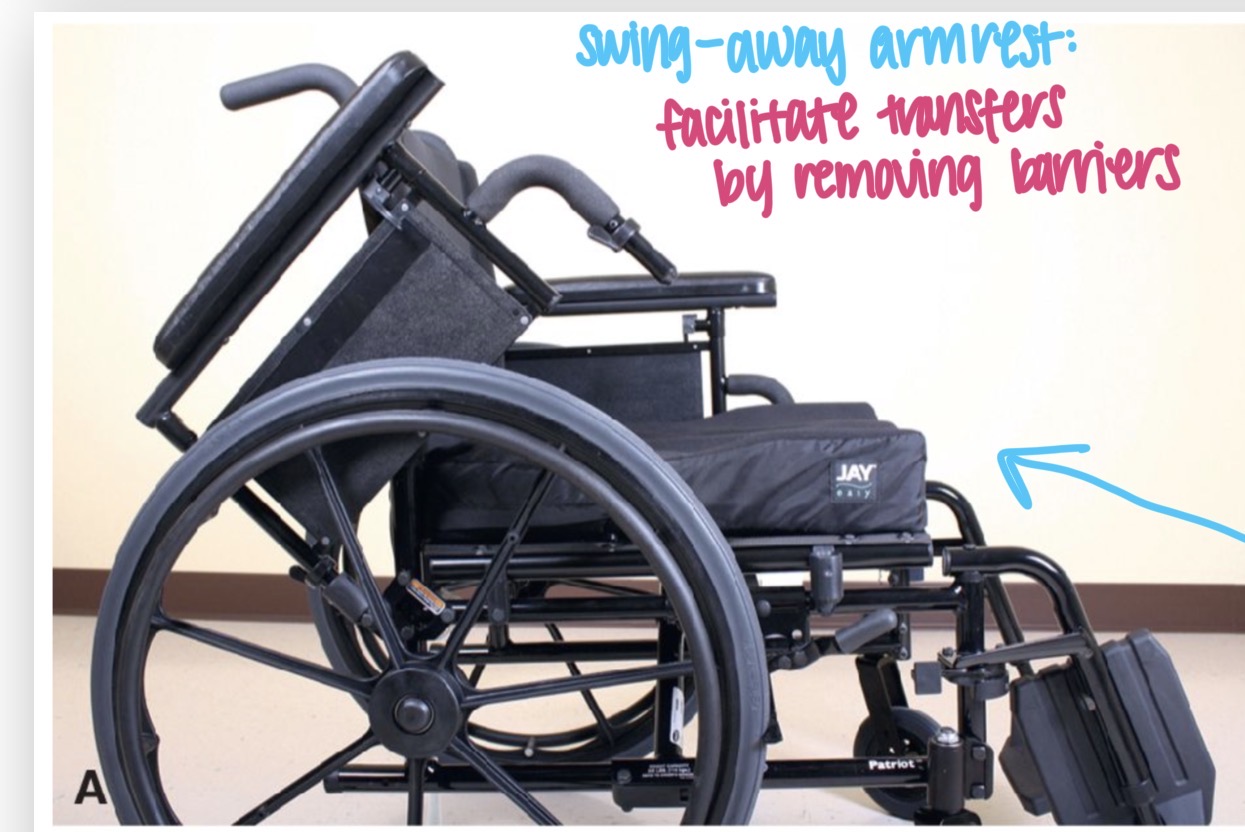
Why might a clinician rotate a swing-away armrest to the back of a wheelchair?
To allow for easier patient movement or transfers toward that specific side
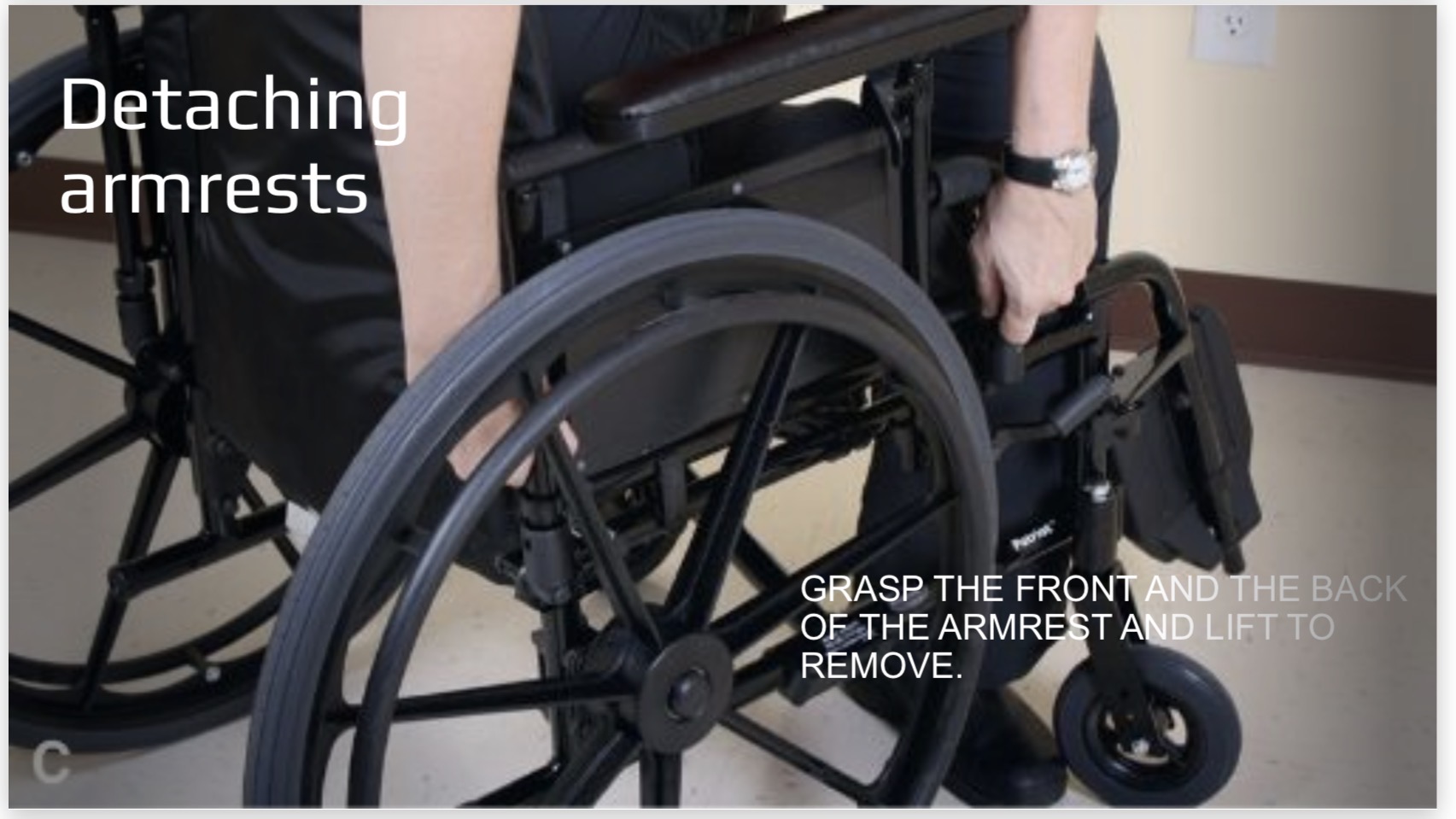
What is the correct procedure for detaching a wheelchair armrest?
Grasp the front & back of the armrest simultaneously & lift straight up
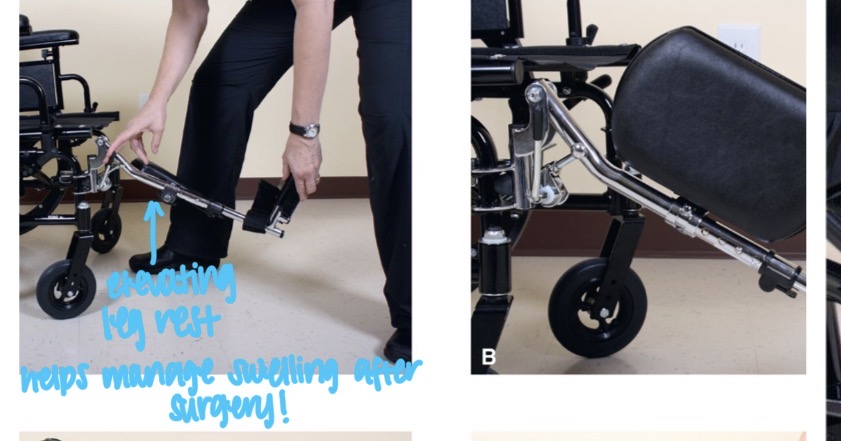
Why would a PTA recommend elevating leg rests for a patient following orthopedic surgery?
To help manage & reduce swelling (edema) in the lower extremities
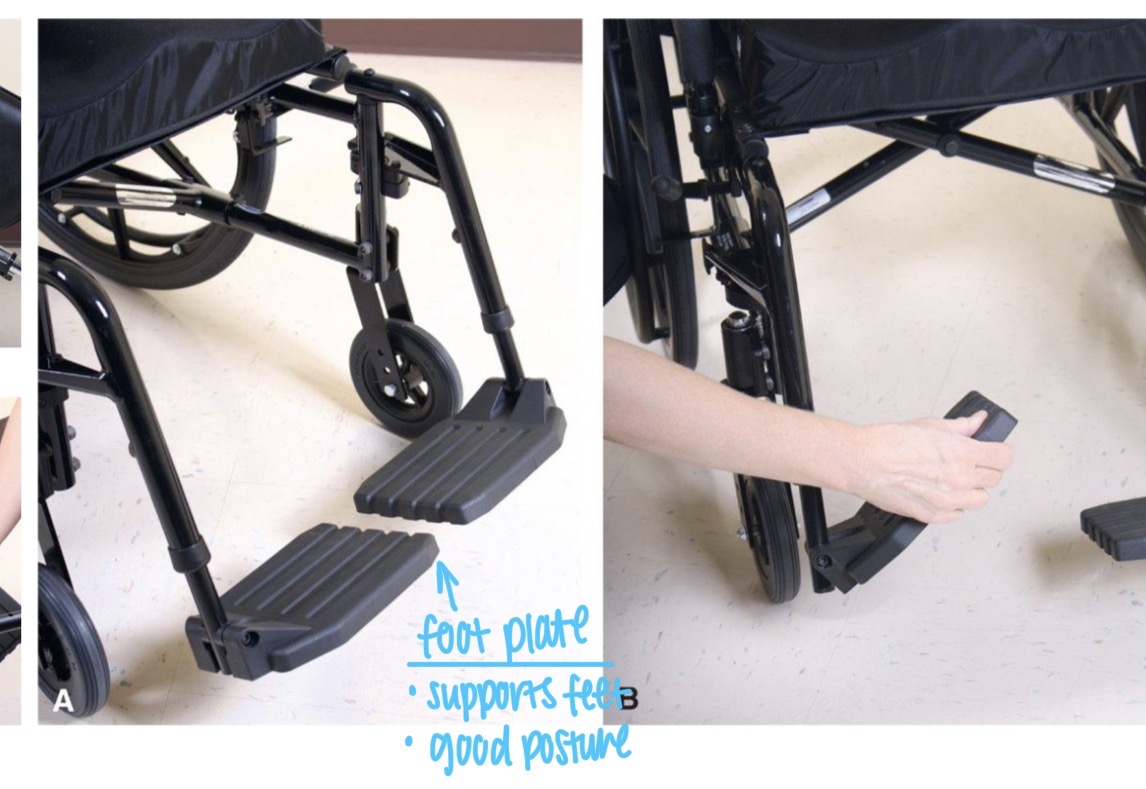
What are the 2 primary functions of wheelchair footplates?
Supporting the feet
Promoting good posture
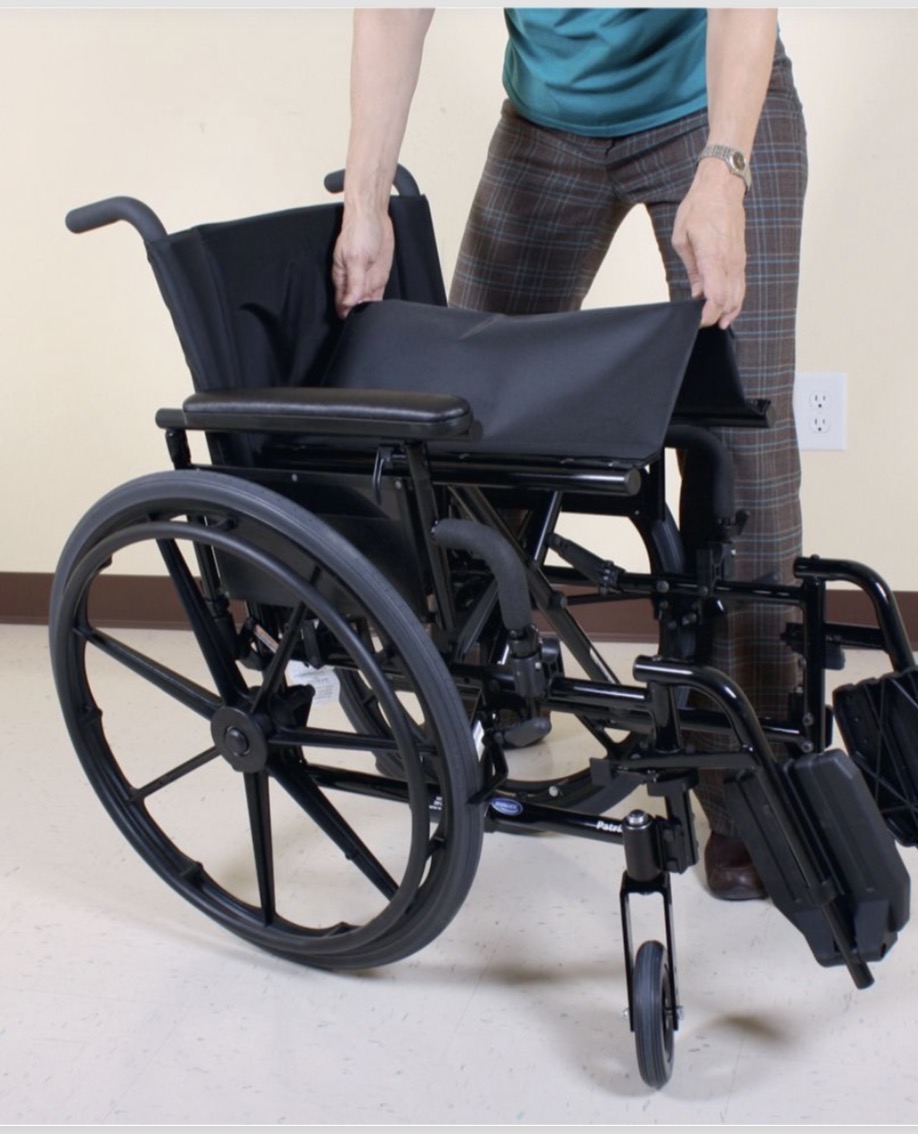
What is the standard method for folding a wheelchair for transport?
Pulling up on the center of the seat cushion
Which assistive device provides the most stability but requires the most balance to lift & move with each step?
Standard walker

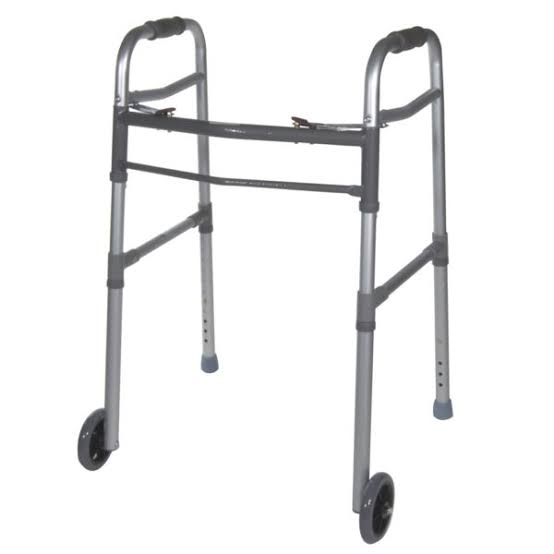
Under what condition is a rolling walker preferred over a standard walker?
When a patient needs supportive mobility but has enough control to manage the momentum of wheels
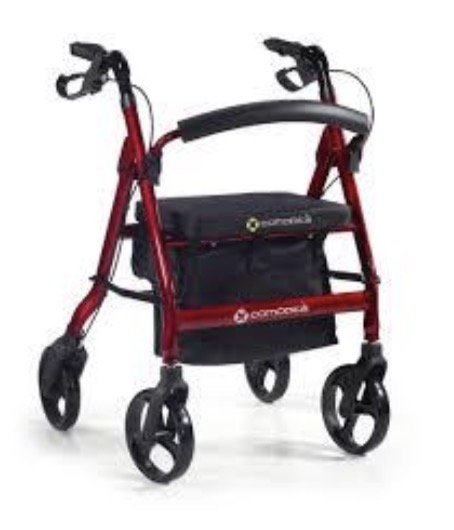
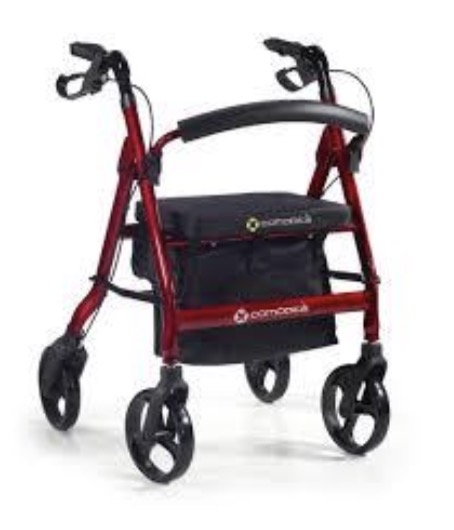
What is a rollator?
A rolling walker that includes a braking system & a fold-down seat, but is difficult to transport in a vehicle as it doesn’t fold
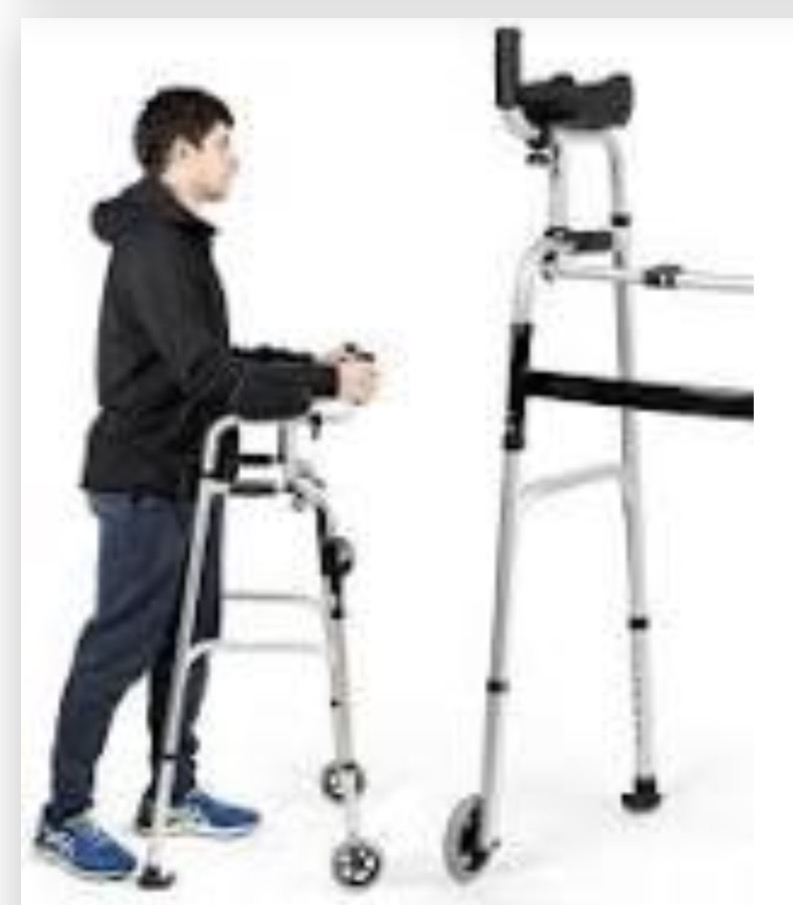
What modification allows a patient to use a walker without placing weight through their wrists or hands?
Platform attachments
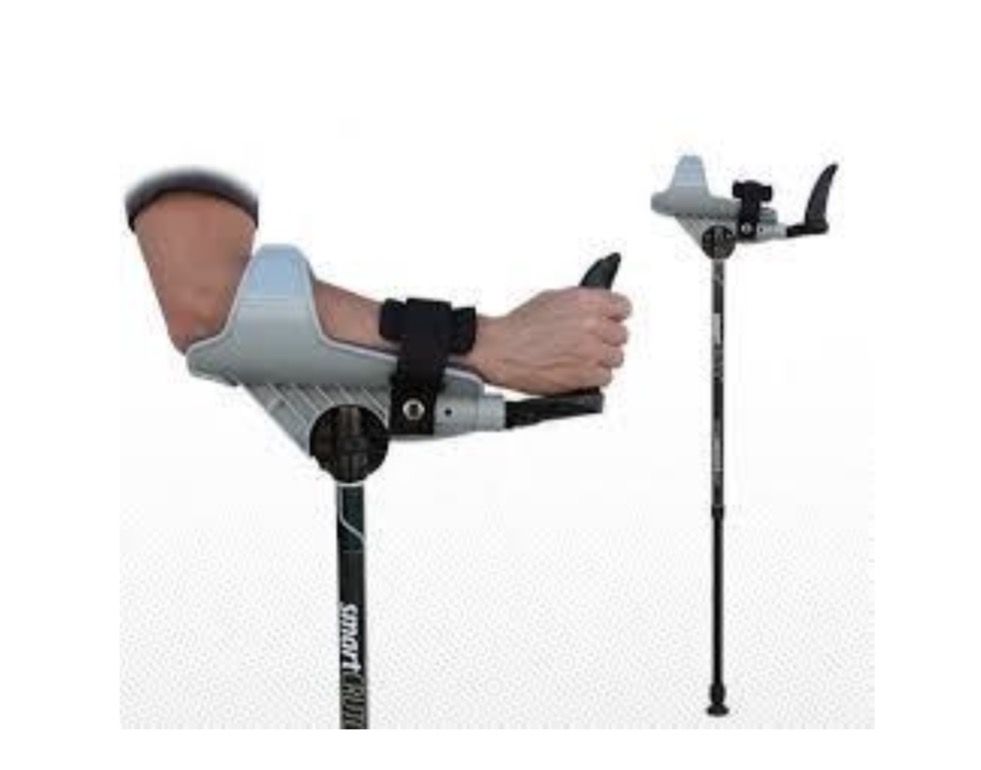
What are the 2 types of crutches commonly used in PT?
Axillary crutches
Lofstrand crutches

Which cane type is intended for patients who cannot place any weight through their hand or wrist?
Platform cane

Parallel bars are typically the step used immediately before a patient progresses to a…
Walker
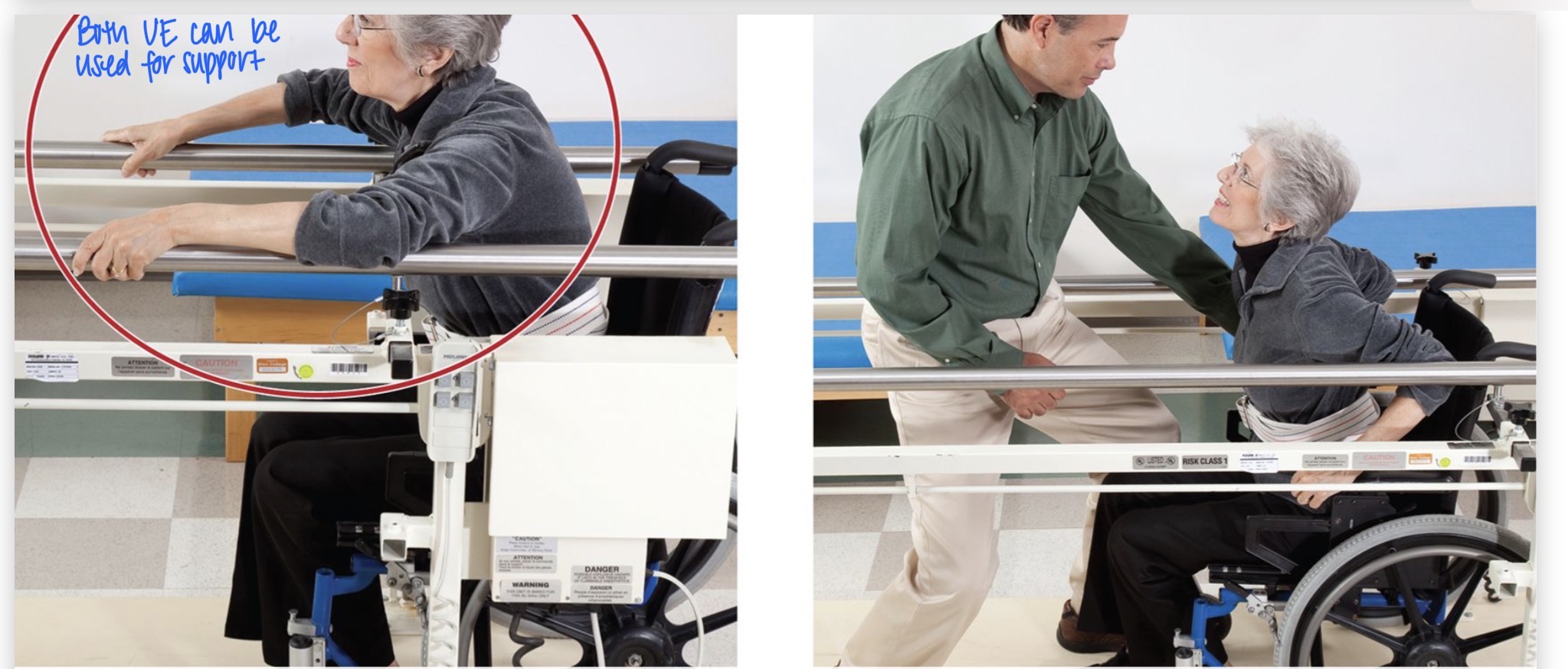
Which patient population (3) is best suited for gait training in parallel bars?
Patients with:
significant balance deficits
neurological impairments
those recovering from prolonged immobilization
What is the primary purpose of a gait belt?
To provide safety & extra support if a patient begins to lose their balance
CANNOT PREVENT A FALL

T/F: A gait belt should be used to lift a patient from seated to a standing position.
False; a gait belt should never be used to lift a patient
Rather, a gait belt is intended to make the patient feel more steady


What is a transfer board (sliding board)?
A device used as a bridge between 2 surfaces for patients who cannot perform a standing transfer

What attributes are usually required for a patient to safely use the transfer board?
Strong upper extremity & core strength
Cognitive ability to follow instructions
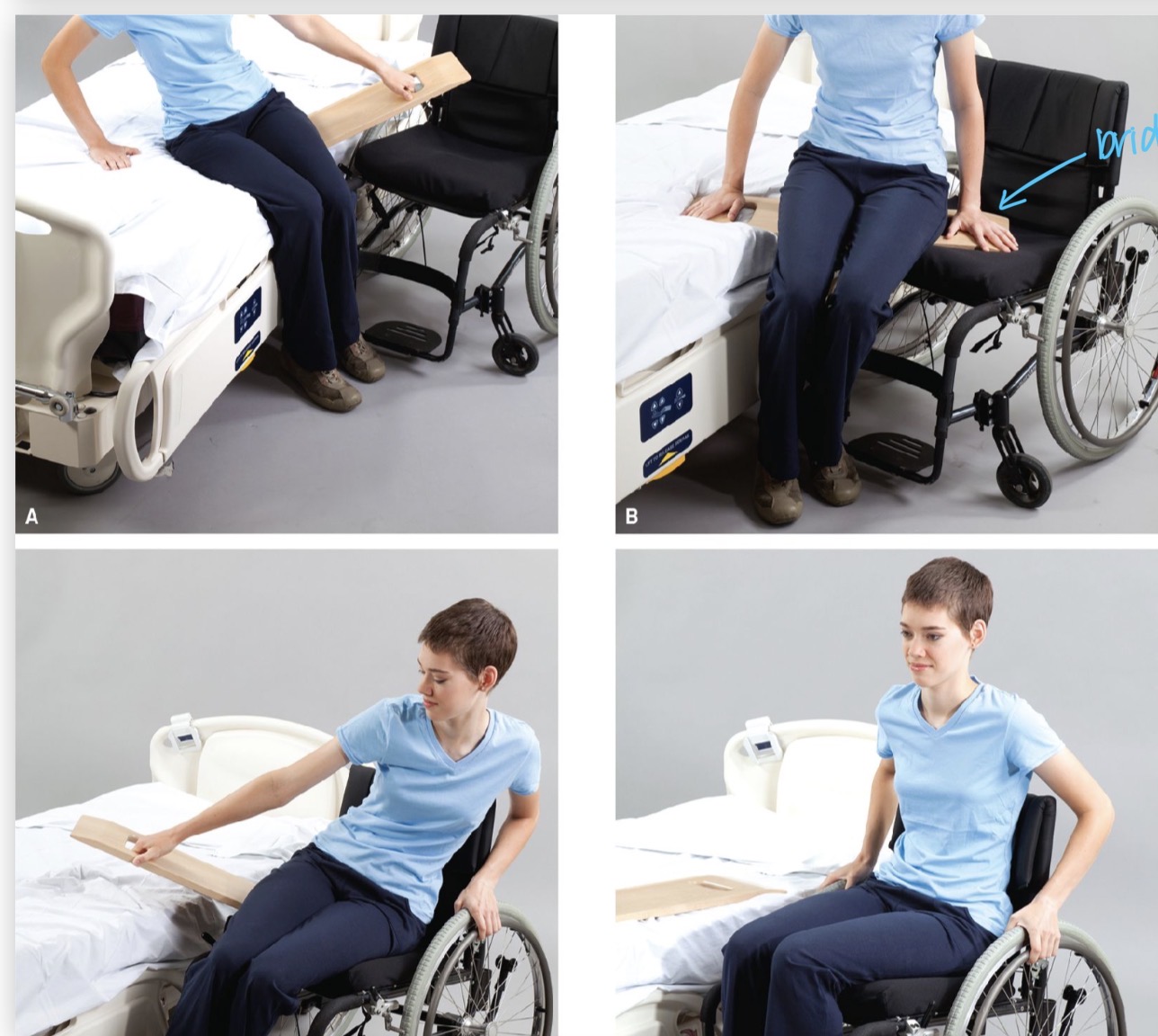
Name 2 patient populations that commonly use transfer boards
Patients with spinal cord injuries
Bilateral amputees
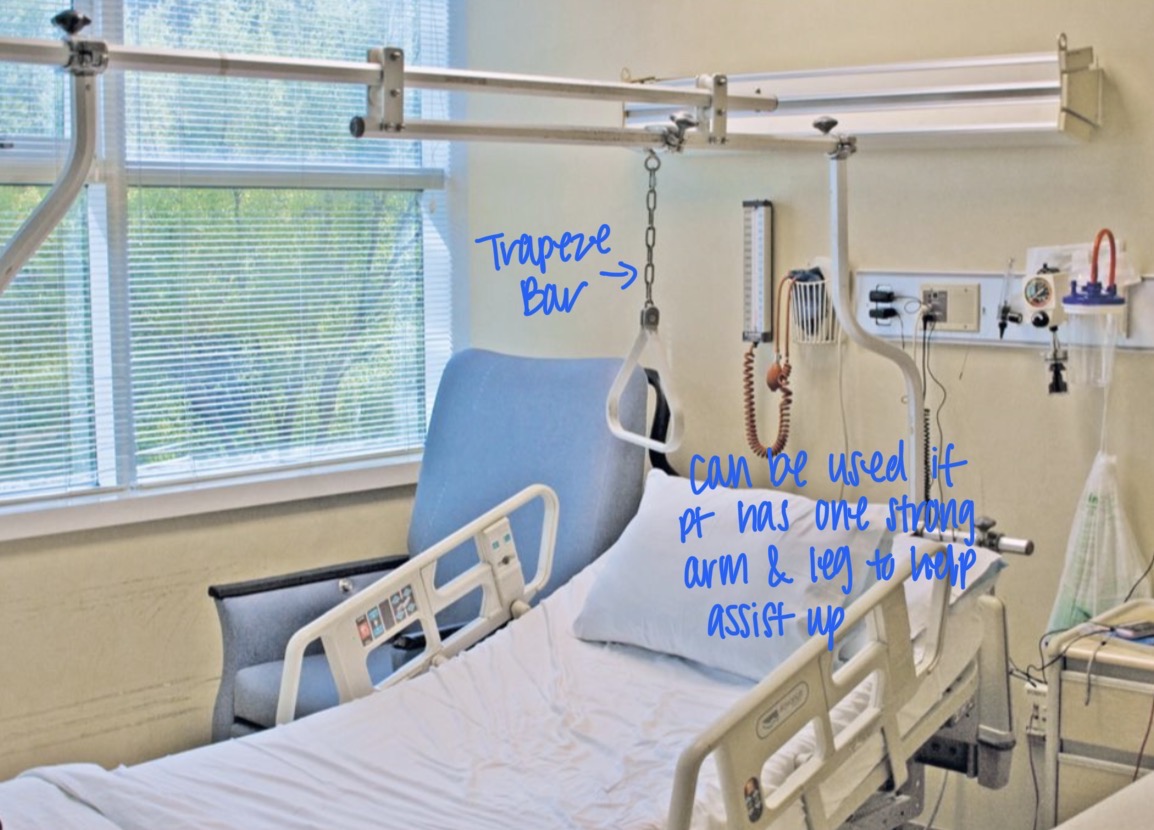
What transfer device is appropriate for a patient who has one strong arm & one strong leg to assist themselves when moving up in the bed?
Trapeze bar
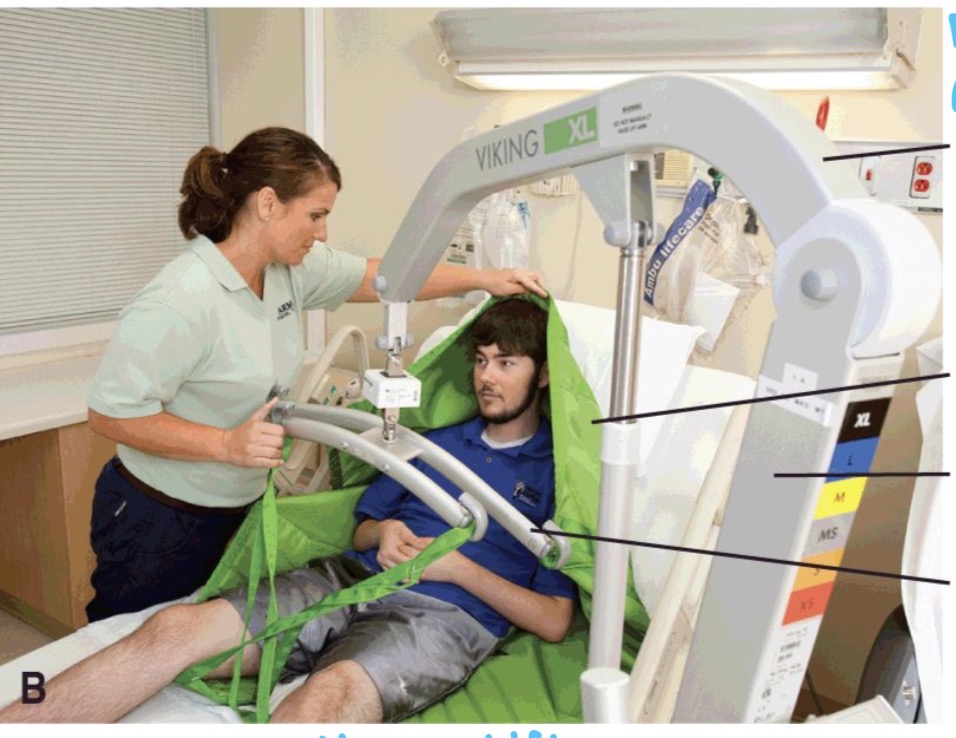
What is the primary clinical reason for using a Hoyer Lift for patient transfers?
To reduce the physical demand & risk of injury for both the patient & the provider
Where do you put the axis of the goniometer?
At the center of the joint being measured
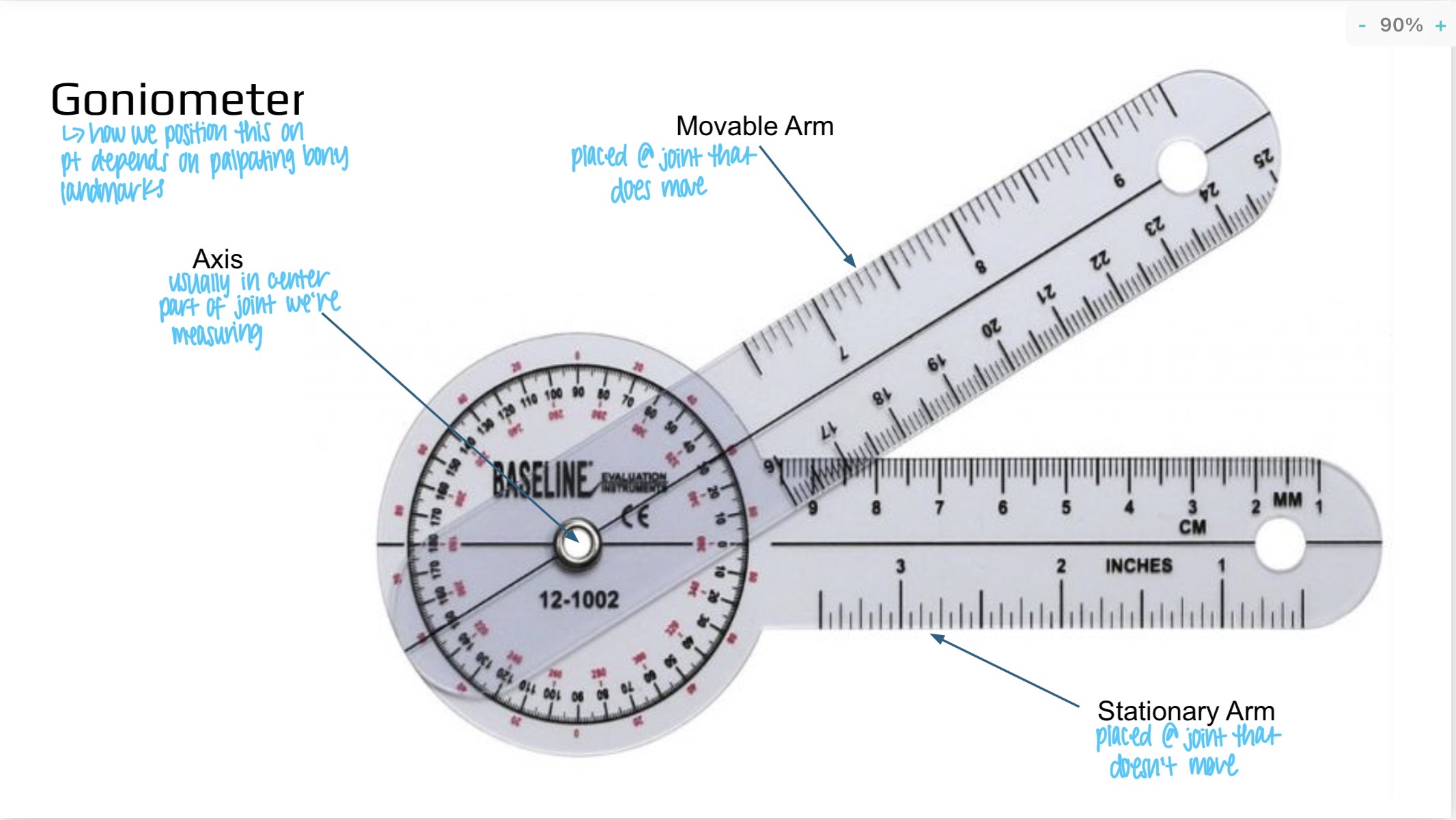
Where should the stationary arm of the goniometer be aligned?
Along the part of the joint body segment that does not move
Where should the moveable arm of the goniometer be aligned?
Along the part of the joint or body segment that performs the movement (the part of the body that’s actually moving)

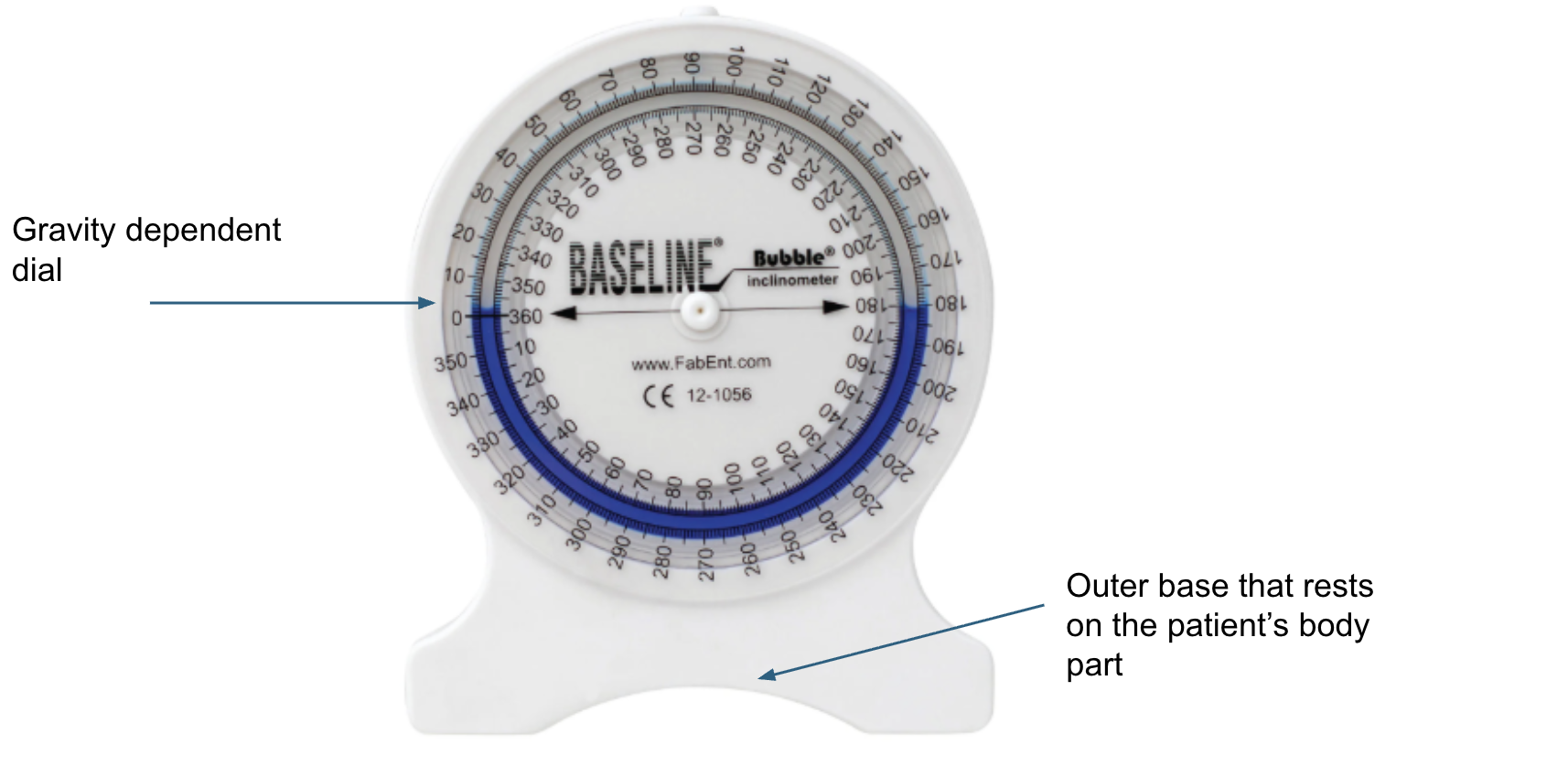
How does an inclinometer differ from a goniometer regarding the alignment of arms?
An inclinometer doesn’t have arms to line up; it uses a gravity-dependent dial instead

Which tool is most commonly used specifically for measuring Range of Motion (ROM) in the cervical, thoracic, or lumbar spine?
Inclinometer

What is muscle endurance?
The ability to sustain repeated contractions or hold a position over time without fatiguing
What tool is used to provide objective, quantifiable data during manual muscle testing?
Handheld Dynamometer

What is a biodex (for isokinetic training)?
A machine that tests dynamic muscle strength by providing matching resistance while controlling the speed of movement

Name 3 tools used for sensory testing of the nervous system
2-point discrimination tools
Monofilaments (nylon filaments that poke you)
Reflex hammers

What is a sock donner (sock aid)?
An ADL device that allows a patient to slide a sock onto their foot by pulling on the attached strings
What is the function of a long-handed reacher?
It acts as a pincher to pick up items from the floor or from overhead/far away
Scenario: A patient is 3 days post-op from a bilateral total knee arthroplasty. They have 4/5 strength in both arms. Which transfer device is best for moving them to a wheelchair?
Transfer board (sliding board)
The patient has a 4-5 strength so that’s pretty normal to support their body weight to move across the board
Since both knees were just operated on (3 days ago), a standing transfer might be too painful or physically demanding right now (since it requires weight bearing & knee stability)
Scenario: A patient has severe balance deficits following a stroke. Which device should they use first to begin standing activities?
Parallel bars
Parallel bars are the gold standard for beginning to stand and do gait activities with patients who have significant balance deficits or neurological impairments, such as those following a stroke
Why is a large base quad cane more stable (more restrictive) than a small base quad cane?
The large base quad cane is wider, providing a larger base of support
What is torque?
The ability of a muscle to pull on bones to rotate a joint
What is an inclinometer?
A measurement tool that involves a gravity-dependent dial & an outer base that rests on the patient
List 3 examples of ADL equipment commonly used to help patients dress independently
Sock aid
Dressing sticks
Shoehorns
What is the primary purpose of two-point discrimination testing?
To determine if a patient can feel how many distinct points are being pushed against their skin
When using a goniometer, how does the clinician determine the correct positioning on the patient?
By palpating specific bony landmarks
A patient with a significant balance deficit who needs to move quickly, but safely, would most likely use a…
Rolling Walker
Which device is intended for short sitting times & portability, such as moving a patient between two locations in a hospital?
Transport wheelchair
Which side should a patient hold their cane?
The opposite side of the involved side
This reduces weight & stress placed on the involved leg while mimicking natural walking movements
What is a two-point gait pattern?
A walking pattern typically shown by using 2 crutches or canes where you move one crutch (ex. left crutch) & the opposite foot (right foot) at the same time, & vice versa
It’s two steps, one by the crutch, then by the opposite foot

What is a three-point gait?
A walking method used with crutches or a walker where a patient has decreased weight bearing on one leg
Assistive device moves first, then the involved lower extremity, then the uninvolved lower extremity
For NWB on crutches, the crutches move first, then the uninvolved LE
It’s 3 steps

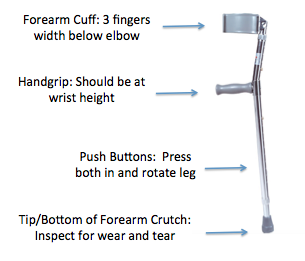
How should Lofstrand crutches be positioned?
Pt’s elbows should have 20-25° of elbow flexion, with the crutches placed 6 in. to the front & 2 in. lateral to the pt’s foot
Arm cuff should be positioned 1-1.5 in. below the olecranon process (so it doesn’t interfere with elbow flexion)