Wildlife Management- Exam 2
 Call Kai
 Learn
 Practice Test
 Spaced Repetition
 Match
 Flashcards
 Knowt Play
1/75

There's no tags or description
Looks like no tags are added yet.
76 Terms
Woodlot Management
Managed forests (public)- fiber production important consideration
Woodlot- small (<100 ha) forest fragment in area converted to other land use (private ownership)
Wildlife generally main objective for most woodlot owners
General Woodlot Considerations
Interior spp seldom occur in woodlots unless adjacent to larger forest tracts
Management of woodlots = management for edge spp (edge effect often extends throughout woodlot)
$ for management often limited
Woodlot should be viewed as part of surrounding area
Avoid invasive spp- invasive spp of concern include:
Buckthorn
Garlic mustard
Spotted knapweed
General Mgmt Treatments that Benefit Wildlife in Many Woodlots
Selected tree harvest to release best mast trees & shrubs
Creating snags and logs
Plantings (game mixes, apple trees, alfalfa, etc.)
Construction of a farm pond
Exclusion of cattle
Creating openings for forbs/grasses (if woodlot big enough)
Inventory and Planning in Woodlots
Existing Habitat Inventory
Types and amount of each available
Wildlife spp (densities) supported by each
Spp (densities) desired
Can existing habitat be improved/modified to meet goals?
Develop Plan- completed should include:
Landowner objectives
Inventory and arrangement of plants (important individuals), plant communities, wildlife spp
List of any plants needed for plantings and procedures for planting and maintenance
Timber harvest methods and improvements
Plant to protect from/deal with livestock grazing, fire, insects, disease, etc.
Ex. Oak Wilt
No cutting/wounding Apr 15 - 1 Oct
Trenching around infected stands
Removing infected stands
Other treatment required- burning, lime, etc.
Divide Woodlot
Woodlot divided into compartments (similar veg spp/age classes, soil types, topography, etc.)
Should have easily identified or marked boundaries
Inventory records and management prescriptions should be maintained by compartment
Covert
Junction of 3 or more desirable habitat types- best provide food, water, and cover
Coverts should be provided in plan
2 habitat types generally there by default
2 age classes of trees bordering field = covert
Field, pond/stream, woodlot = covert
Woodlot Cutting Considerations
Small area may mean no cutting is best
$ return may be low
Wildlife improvement nature of the cut should be indicated in contract (selection cuts)- local DNR/conservation district forester can help
General Guidelines
Woodlot Cutting Considerations: General Guidelines
Shelterwood cuts best 0.04-0.4 ha (double height of trees)
Border trees should be left
Leave stumps and allow sprouting
Establish patchwork of age/spp classes
No cutting in riparian areas

Additional Woodlot “Pieces”
Evergreens/Conifers- provide thermal cover
0.8-2 ha (clumped)/40 hectares of deciduous trees
Planted along edge of field
Shade tolerant spp can be underplanted
Mast Trees- should be maintained and “freed” from competition for sunlight
Oak, hickory, beech, walnut, cheery, ash, butternut
Red/Black oaks produce acorns every 2 years, white oaks every year (less tannins)
Aspen, birch, hazel, alder produce catkins
Additional mast producing spp
Rubus spp (raspberry)
Blueberry
Grapes (female)
Elder berry
Spice bush
Etc.
Food Plots
Need dependent on woodlot and surrounding area
Veg spp composition depends on wildlife spp desired
Unharvested strips in ag fields adjacent woodlot work well
Many ag crops beneficial to wildlife
Strips maximize edge
Many commercial mixes available
“Special” Forest Features
Openings
Course Woody Debris (CWD)
“Special” Forest Features: Openings
Natural- permanent
Constructed- permanent or temporary
Maintain 1-5% of forest in openings dependent on wildlife spp desired and size of forest (not needed <100 ha)
Opening <10% trees and <30% brush, mainly grass and forbs
Forb- herbaceous flowering plant that is not a graminoid (grass, sedge, etc.), normally broad-leafed
Creating/Maintaining Openings
Maximize location
Minimize creation effort
Minimize maintenance effort
Mowing
Herbicide
Grazing/Browsing
Fertilizing
“Special” Forest Features: Course Woody Debris (CWD)
Dead logs, limbs, bark, etc on forest floor
Important to various spp of wildlife
Marten
Grouse
Herps
Small mammals
Amount needed and type varies
Maintain approx what would occur in “natural” setting
Removal of too much decreases habitat quality
Leaving too much increases fuel load for fire
Components of Developing Stand Prescriptions (Mgmt Plans)
Species Background
Plant and animal spp intended for this stand/property
Habitat needs of these spp
Over what scale must habitat needs be met (nesting sites, foraging patches, home ranges, etc.)
Current Stand Conditions- habitat conditions for species of interest
Tree and shrub spp composition
Stocking rates (dbh, density of trees, etc.)
Site index (soil quality, growing conditions, etc.)
Existing/Future regeneration
Estimate/Quantification of habitat suitability
Factors limiting habitat suitability for spp of interest
Desired Future Conditions
Be specific (spp composition, stocking rates, age classes, etc.)
Management Actions to Achieve Desired Conditions
Be specific (should be a “cookbook”)
How long will it take?
How long will it last?
Cost?
Monitoring Plans- what will you measure/how will you measure it to evaluate plan success?
Budget- cost of implementation and monitoring plan
Schedule/Timeline- when will management and monitoring actions take place?
References- provide context of why decisions were made
Management Plan Case Study: Species Background
7 ha pine stand, management for red cockaded woodpecker USFS in LA
RC Woodpecker- associated with old yellow pine forests with abundant red heart disease (fungal)
25-100ha home range based around nest tree
Clan social structure with nest helpers
Diet- insects and fruit
Forage in trees >60 years old and >25cm dbh
Nest trees >100 years old and >100cm dbh
Nest in live trees (avoid snags)
Make shallow excavations around nest cavity opening → sticky resin ring → rat snake barrier
Stand around nest tree dominated by pine (mean 16m sq ba) with a few (1.1m sq ba) midstory pines
Clan size, density, and productivity related to ground cover composition and pine regeneration
Productive ground layer, minimal pine regen (local fire history maintains)
Bachman’s Sparrow- associated with mature pine woodlands- well-spaced pines, open midstory, dense grass/forb understory (ground nester)
Burning initiates/maintains grass/forb understory
Pops disappear 4-5 years after burn
Brown-headed Nuthatch- associated with pine stands
3 ha home range
Nest in cavities in pine snags >20cm dbh
Forage on live pines
Most often found in open, mature, old-growth pine forest with snags where natural fire patterns exist
Management Plan Case Study: Current Stand Conditions
7 ha pine stand, management for red cockaded woodpecker USFS in LA
Has shrub layer, but little overstory regen
Hardwoods indicate no recent burns
Adequate fuel load for a fire?
Potential foraging site for RCWP
Not nesting site- stocking too high, hardwoods in midstory, trees not old enough for heart rot
Too little grass forb layer for BS
Good BHNH habitat (especially if snags present)

Management Plan Case Study: Desired Future Condition
7 ha pine stand, management for red cockaded woodpecker USFS in LA
Trees >100 yo (disease)
16 ≤m2 BA (grass/forb understory)
A few mid story pines, no hardwoods
Reestablish longleaf pine (LLP)
Presence of snags
Management Plan Case Study: Management Actions 2015 - 2035
7 ha pine stand, management for red cockaded woodpecker USFS in LA
Group selection (LLP) stands or irregular shelterwood (loblolly - shortleaf pine stands (SLP)) cuts
2015- Irregular Shelterwood Cut
Leave 25 loblolly pines/ha (8m2/ha), cut all hardwoods
Site prep- cool winter burn
Plant 250 LLP seedlings/ha
Allows natural regen of loblolly and SLP
After 3-5 years begin spring burns every 2-3 years to control hardwood, SLP regen, and brownspot disease
LLP resistant to low intensity burns
2025- basal area lower than pre 2015 (LLP regen)
20 mature pines/ha (future nest trees) and high density pine regen
Burning- increased BS habitat
5 snags/ha- BHNH nesting trees
Maintain burning regime
2035- overstory loblolly and regenerating LLP showing increased growth
RCW foraging habitat, BS, BHNH habitat
Potential need for light overstory thinning (10% canopy removal) and/or precommercial thinning of saplings, seedlings…

Management Plan Case Study: Management Actions 2045 - 2065
7 ha pine stand, management for red cockaded woodpecker USFS in LA
2045- if regen of LLP not adequate (BA/density?), create gaps and plant seedlings, maintain BS habitat
2055- Precommercial Trimming
Remove 25-50% of regenerating pines to maintain grass forb layer and provide growing space for pine seedlings
2065

Management Plan Case Study: Management Actions 2075 - 2125
7 ha pine stand, management for red cockaded woodpecker USFS in LA
2075- begin group selection cuts (10-15 year cycle) to maintain trees in all age classes
Maintain old/”original” loblolly pine (now old/large enough for RCWP nests)
2125- BA nearly target of 16m2/ha
LLP- 80% (density), 50% (ba)
Original loblolly pines >60cm dbh, >150 yo
Grass forb layers persists due to burning
Natural snags adequate for BHNH nesting

Management Plan Case Study: Monitoring Plans
7 ha pine stand, management for red cockaded woodpecker USFS in LA
Implementation
Were unmarked trees harvested?
Were burns conducted in the correct season?
Were cuts conducted in the right cycle?
Effectiveness
Vegetation Growth, Survival, Structure, etc.
10-20 random circular plots to monitor seedling survival for first 5 years
10-20 permanent plots (fixed or variable radius) to monitor tree growth, ba, density, species composition, snags, understory
Monitor every 5-10 years
Wildlife Use
RCWP nest tree survey every 5 years (search for resin marks on trees)
Bird point counts every 5 years
3-5 survey points, visit 5 times early mornings in breeding season
Record all birds heard or see with estimate of distance to bird
Potential nest searches for BS and BHNH
Dead Wood Management
Trees (snags) continually decay
Different age trees and snags provide habitat elements for different species
Continuous supply of “new” snags must be available
Up to 40% of bird species in forests are cavity nesters
3 Broad Types of Dead Wood “Users”
Primary Cavity Users
Secondary Cavity Users
Log Users
Primary Cavity Users
Excavators, create cavities
Almost always excavate fungi softened areas of trees
Generally excavate in ≥ 10cm/4in dbh
Generally excavate new nest cavity each year
May excavate cavities for roost/rest
Most feed on woodboring insect larvae
Biggest/most important group in MI is woodpeckers
Secondary Cavity Users
Cavities from natural decay or primary excavators
Opportunistic Cavity Users- benefit from cavities
Ex. Black bears, raccoons, peromyscus, invertebrates, some bat spp
Obligate Cavity Users- require cavities as a resource for something (reproduction, thermal cover through winter, etc.)
Ex. Wood duck, tufted titmouse, flying squirrels
Log Users
Cavities, space underneath & between bark and wood in logs provide cover, nesting, foraging, display sites
Interior of hollow logs and area under them provide stable, moist microclimate (important for herps)
Importance of Log Size
Area/Volume available (4in min)
Persistence
Size of cavities/spaces beneath
Number of Cavities Used
Number used by individual varies widely by spp
Most bird species use new cavity for each clutch/brood
Mammals often use multiple cavities in a breeding season or year
Cavity may be used by multiple individuals at diff times
Other Factors Influencing Value of Logs to Wildlife
Piece Size and Decay State
Wildlife species prefer different sizes & decay states
Longer pieces provide connectivity
Successional Stage in Which Log Occurs
More valuable when scarce
Suppression mortality → most dead trees 50% (but similar length) dbh of dominant trees
Dead Wood Recruitment
Driven by:
Suppression Mortality (Competition)
Increases after stand initiation, then declines
Disturbance
Big pulse, drop off then slight recovery as trees age
Species of Tree Influences Density of Snags and Rate of Decay
Conifer stands → more snags than hardwood
Hardwoods (generally) decay slower than conifers
Aspen may live 125 years, stand as a snag for 35, exist as log for 35
Oak may live for 300 years, stand as a snag for 75, exist as log for 75
Fall rates vary- 10 year fall rates for some snag species of snag >50%
Management of Cavities and Dead Wood
Two approaches:
Maintain Conditions Within Historical Range of Variability (HRV)
Density, size, decay conditions, etc. of snags, logs, etc. maintained at “normal” levels
Conduct at larger scale than stand level- at least forest compartment level
Establish/Estimate functional relationships between animals and dead wood → manage for levels that meet wildlife needs
Steps in Management Process
(Don’t need to memorize)

Live Tree Cavity Management
Managing for primary cavity users generally doesn’t provide enough cavities for secondary cavity users
Some larger than primary users
More species → often occur at higher density
Nest boxes offer short term (expensive) solution
Managing live tree cavity abundance is more challenging than dead wood
Harder to inventory
Rate of gain/loss unpredictable
Generally larger trees with signs of injury (limb loss) more likely to have cavities
Arrangement/Distribution of dead wood/cavity trees should also be considered
May not mesh with most efficient harvest methods
Monitoring should be conducted just like in any other aspect of management
Woody Vegetation/Brush Removal
Change structure
Remove species (often invasive)
Grassland/Opening creation/maintenance
Physical Removal Techniques
Hand Cutting- usually requires herbicide treatment for deciduous species; usually small scale
Bulldozing- tends to pull roots up so no suckering, can be bad for soil
Masticator/Forestry Mulcher
Herbicide
Various regulations on commercial application (vary by location)
Two Main Types
Glysophate (Roundup)- both herbaceous and woody
Triclopyr (Garlon, Element, etc.)- woody
Herbicide Oil Mixes
Both herbicide types normally (necessary for basal bark spray) mixed with oil to promote sticking to surface of treated plant
Nuclear Options- work well but bad for environment
Diesel
Kerosene
More Environmentally Friendly Options
Bark oil
Vegetable oil
Mineral oil
Methylated seed oil
Crop oil concentrate
Herbicide Application Methods and Sprayer
Application Methods
Foliar spraying
Basal bark/band spraying
Stump treating
Drill and fill- hack and squirt
Sprayers
Backpack
Hand
Daubers

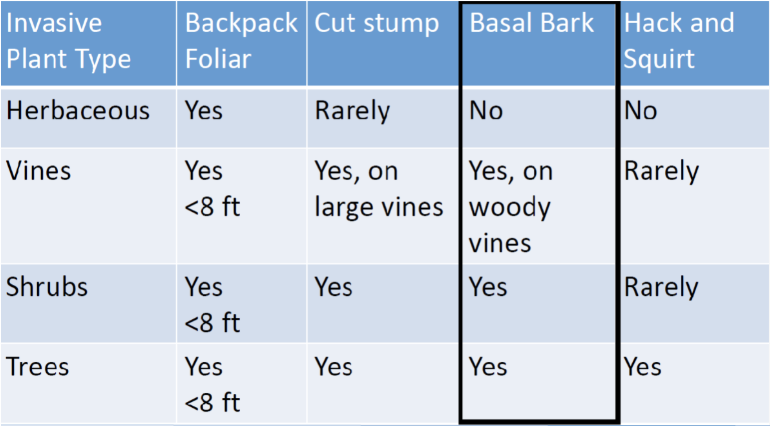
Basal Bark/Band Spraying
Target tree size- <6 in dbh
Bark thickness is the more critical issue
Smooth, thin bark = easier to penetrate
Ridged, plat park = tougher to penetrate
Extreme Trees Diseases in MI
Beech Bark Disease
Emerald Ash Borer
Hemlock Woolly Adelgid
Oak Wilt
Beech Bark Disease
Initial infection by Cryptococcus fagisuga- sap feeding insect
Allows infection by Nectria coccinia- fungus that girdles tree
Gets into vascular tissue (xylem and phloem)
Insects can be treated with insecticide- only small scale (time and effort)
3% of beech trees are resistant
Can use these trees to (re)populate stands
32 millions beech trees, 2.5 million killed

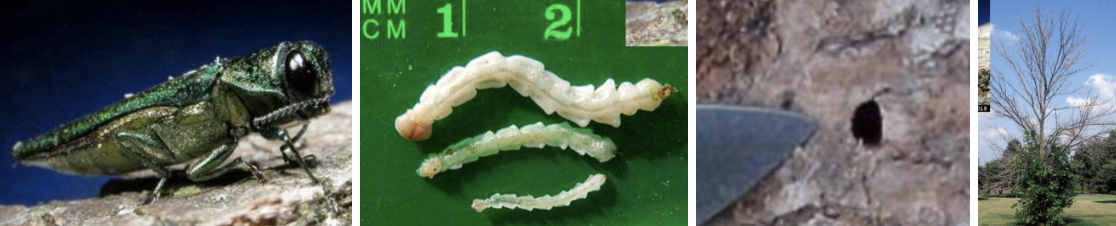
Emerald Ash Borer
Invasive wood-boring beetle whose larvae burrow in and feed on phloem and girdles tree
Larva leave D-shaped holes in tree
Don’t spread widely on their own
Spread(usually in larval stage) through wood products
Kill the main trunk but roots still viable so sprout can occur
Hemlock Woolly Adelgid
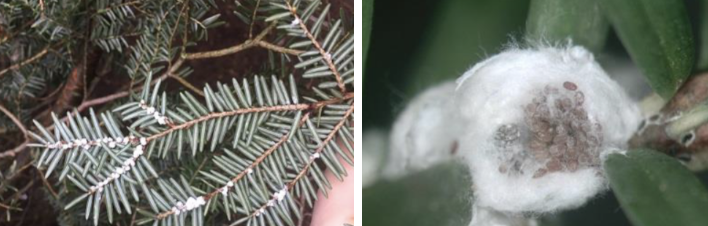
Invasive aphid-like, sap feeding insects drain tree nutrients and preventing the production of new buds/needles
White fuzz = waxy wool-like protective masses secreted by females for both adults and eggs
Tree death in 4-10 years
Natural and human spread
Can be treated with insecticide- only small scale (time and effort)
Oak Wilt
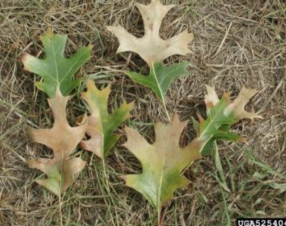
Fungal disease that clogs vascular tissue, functionally girdling the tree from the inside
Spread by sap-feeding/picnic beetles, which are attracted by fresh wounds
Also spread by grafted roots of infected trees
Once it gets under the bark, the fungal matt begins and girdles tree
Potential Diseases
In the US but not in MI
Asian Longhorn Beetle
Thousand Cankers Disease
Spotted Lanternfly
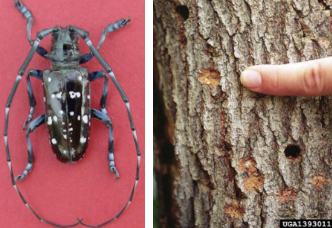
Asian Longhorn Beetle
Kills maple trees by boring deep tunnels through the wood and destroying vascular tissue/structural integrity
1.5 billion maples in state- so would be very bad
Thousand Cankers Disease
Kills walnut trees through walnut twig beetles tunneling into bark to feed/reproduce and transmitting fungus that infects phloem
Fungus creates small localized cankers around each beetle entry and exit hole

Spotted Lanternfly
Infects various ag crops and tree species
Damage from feeding and mold growth on feces
Promotes fungal infection
Has been detected a few times in MI
Love tree of heaven

Values of Wetlands
Biologically productive and heavily used by wildlife
Required component of many vert and invert life cycles
Waterfowl- game species (= funding)
Amphibians
Invertebrates- provide food for all sorts of spp
Economic value to humans
⅔ of fish and shellfish spp commercially harvested associated with wetlands of some sort
Reduce flooding- help buffer when flood happens, absorbing much of the water
Riparian zones, floodplains, mangrove swamps
Improve water quality
Provide recreation sites- good for $ (hunting/fishing)
55 Technical Types of Wetlands
Based on below classification scheme (categories and subcategories)
Wetland Categories
Marine
Estuarine
Riverine
Lacustrine
Palustrine
Wetland Subcategories- based on:
Hydrologic Regime- when, how deep, variability
Substrate Type- soil
Water Chemistry
Vegetation
Marine
Open ocean
Estuarine
Semi-enclosed by land, but influenced by open ocean (river mouth, etc.)
Where freshwater and ocean water mix
Riverine
Within channel generally along river/stream
Lacustrine
In depression or damned river channel (lakes)
Palustrine
Stereotypical wetland (marshes, swamps)
Common Wetland Categories Used by MI DNR
Each type of wetland potentially supports diff wildlife spp and needs diff management strategies
Marshes
Swamps
Bogs
Fens
Marshes
Standing water < an inch to several feet deep, can fluctuate seasonally or from year to year
“Flooded grasslands”
Dominated by herbaceous veg- might be some trees/woody veg but not lots
Common Veg- cattails, grasses, sedges, rushes, arrowhead, pickerel weed, and smartweed
Common Wildlife- fish (not always, need year round standing water), water birds (ducks, geese, herons, cranes, rails), song birds (marsh wren and yellow warbler), frog species, reptiles (turtles, water snakes), muskrats (like open water), beaver (less common), like woody veg), and otter (also less common)
Some spp more general, other more keyed in to specific habitat
Swamps
Flooded woodlands or shrublands, more likely to be flooded year round
Dominated by shrubs in MI but all swamps are dominated by woody spp- some herbaceous but only flood-tolerant adapted
Common Veg- red and silver maple, cedar, balsam, willow, alder, black ash, elm, and dogwood
Common Wildlife- wood frogs, gray treefrogs, salamanders, barred owls, waterthrushes, prothonotary warblers, water shrews (big back feet with hair, can run across still water), and raccoons
Some spp more general, other more keyed in to specific habitat
Bogs
Accumulations of decaying veg form mats that fill in old ponds or kettle lakes
Rare = species here are of high conservation concern
Open water may be surrounded by floating veg, others are totally grown over and consist of spongy, waterlogged peaty soil covered by sphagnum moss
Bog soils are usually highly acidic, and oxygen and nutrient deficient- leads to distinct veg community
High acidity = low decay rate = wet dead veg mat = more acidic
Common Veg- labrador tea, poison sumac, tamarack and black spruce, orchids, insect eating sundews and pitcher plants (carnivorous plants)
Common Wildlife- spotted turtle, southern bog lemming
Fens
Bogs that are less acidic (calcium soils)
Rarest
Common Veg- prairie plants- prairie white fringed orchid, sweet grass, the bluestems, and blazing star
Common Wildlife- EMR, butterflies such as Mitchell’s satyr and the Powesheik skipper
Functioning of wetland from wildlife perspective based on 3 components:
Hydrology- amount and timing of water determine nearly everything else
Vegetation- food and cover (for wildlife and invertebrates)
Macroinvertebrates- food especially for young animals
Abundance/Diversity primarily determined by hydrologic cycle, veg, and water chemistry/quality
Wetland Management
Requires understanding interrelationships among habitats and resources needed by wetland wildlife to survive and reproduce
Wetland function
Requirements of spp being managed
Successfully managed wetland mimics naturally occurring wetlands
Natural wetlands are often best managed passively
Passively = monitoring, maybe invasive species or brush removal (depending on goals)
Since so little natural wetland remains, much management deals with wetland restoration
Wetland Restoration: MI Figures
Originally 11 million acres of wetland (⅓ of state)
Currently 35% lost statewide- losses in southern MI greater, some counties > 75% lost
3 Requirements of a Wetland
Hydrology
Hydric Soils
Wetland Vegetation
Requirements of a Wetland: Hydrology
Water at or near surface during at least part of the year (saturated soil or above ground, standing H2O)
Returning water to area is most common method of wetland restoration
Requirements of a Wetland: Hydric Soils
Developed under saturated conditions
Hold water for at least part of year
Difficult to artificially create and take long periods to develop → wetland restorations only feasible in areas with hydric soils
Can return water but won’t work if soil isn’t holding it → no water for veg
Requirements of a Wetland: Wetland Vegetation
Adapted to grow in wet soils/water
Seeds of many wetland plants are viable for decades
USFWS Partners for Fish and Wildlife Program
Technical expertise and some funding for habitat improvement on private (and tribal) lands
“Assist with projects in all habitat types which conserve or restore native veg, hydrology, and soils associated with imperiled ecosystems”
“Imperiled ecosystems” usually = wetlands
Federally funded- funding probably cut
Michigan Wetlands Reserve Program
“To provide a wide diversity of high quality wetland, and associated upland as habitat for migratory birds and wildlife”
Provides some funds for restorations, may pay farmers to convert (restore) marginal cropland into wetland
Emphasizes partnerships- encourage donations and work with land owners and communities
Easements and Restorations
Easement
Piece of language attached to a deed or property that adds a condition/restriction/privilege
Attached to deed- legally binding forever (cannot be changed by new owner)
Protects management decisions outside of actual property owned or if sold
Owner may get $ or lower property tax
Ex. Can’t develop certain area on property (left as wetland/“wild”)
“Can’t develop”- usually best practice
Land owners responsible
Org that put easement must monitor yearly
Mitigated Wetland
Restored wetland that was restored to compensate for the loss/degraded of another wetland
Drain Tiles
Structures that collect rain and routes it to drainage ditches which flow to stream/river; largely how wetlands drain
In a restoration, need to be broken/removed so water starts to accumulate again
Effort to remove/break depends on tile amount/depth, etc.
Usually have to be found by probing the earth

Reservoir/Impoundment Management (Waterfowl)
Water level management yearly and within year (seasons)
Nesting area management
Meet water level, cover, and food populations for various waterfowl spp
Invasive spp control
If herbicide gets into water then it gets into whole wetland system- must use specific formulations, etc
Which areas open to hunting
Accessibility for hunters
Zones → # hunters in a zone
Crop damage control
Reservoir/Impoundment Management (Waterfowl): Water Level Management
Accomplished using water control structures that allow control of water levels in reservoirs throughout the year
Build up of decaying aquatic veg leads to flocculant bottom → nutrients tied up → difficult for new veg to get established
Flocculant bottom- muck of partially decayed organic material that is not yet soil
Drawing down water lets bottom dry out and decay (get firmer) → releases nutrients → flush of new veg
Provides mud flats used heavily for feeding
Reservoir/Impoundment Management (Waterfowl): Crop Damage Control
Creation of mud flats and pulse of vegetation growth aids in lessening crop damage
“Lure” Fields- planted by management agency to keep birds out of farm fields (essentially food plots)
Noise Makers- propane cannons
Other hazing methodologies also employed
Try to scare birds out
Only effective short term
Water and Wildlife: Impacts (of Precipitation) on Reproduction
Cottontails higher March and September → lower hunter harvest that year (Applegate and Trout 76)
50% of North American waterfowl produced in prairie pothole region → most ponds are ephemeral
Drier years mean less ponds for breeding- July Pond Index (Crissey 1969) used to estimate amount of breeding habitat for ducks
Bobwhite quail “boom or bust” years determined by amount of late-spring early summer rainfall (more is better- Stanford 72)
Wild turkey egg production influenced by preceding late summer/fall precipitation in TX (Pattee 80)
Early spring rainfall reduces most gallinaceous spp chick survival
Mechanisms are generally either direct (starvation, reduced growth, etc.) or evolutionary
Energy invested in laying/incubation is wasted if there is insufficient food for chicks